



Toyota Prius Plug-in (fifth-generation XW6)
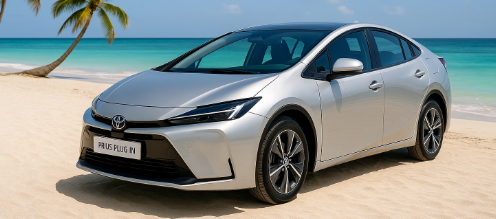
Toyota’s latest plug-in Prius is a sleek liftback that pairs a 2.0-litre petrol engine with an electric motor for a combined 223 hp and 0-100 km/h in roughly 6.8 s. A 13.6 kWh lithium-ion pack delivers up to 86 km of electric range (WLTP), while official fuel use drops to 0.5–0.7 l/100 km and CO₂ to about 11–17 g/km.
PRO
What works well | Why it matters |
|---|---|
Class-leading efficiency | Owners see 14–15 kWh/100 km in EV mode and 22–25 km/l once the battery is depleted, trimming both fuel and power bills |
Strong performance | Instant electric torque makes overtakes effortless; 6-second sprints rival many turbo diesels |
Comprehensive ADAS | Toyota Safety Sense 3.0 (adaptive cruise, lane-trace, AEB, sign recognition) is standard across the range. |
Aerodynamic design & optional solar roof | A Cd of 0.27 and a roof panel that can add up to 8.7 km of range per sunny day boost real-world efficiency. |
Battery warranty extension | Annual Hybrid/EV checks allow coverage to stretch to 250 000 km, easing long-term ownership anxiety. |
Transparent servicing costs | Scheduled maintenance runs roughly €250–300 per 15 000 km, on par with simpler full-hybrids. |
CON
Possible irritants | Details |
|---|---|
Tight boot & rear head-room | The sloping roof leaves just 284 l of luggage space and limited headroom for tall passengers. |
Restricted rear visibility | Small back window and thick pillars mean the reversing camera is essential. |
Entry price | List starts around €43 000 and climbs past €51 000 when fully optioned.Toyota IE |
Needs frequent charging | Skipping nightly top-ups blunts the fuel-saving advantage versus a regular hybrid. |
12 V battery drain reports | Some early cars experienced auxiliary-battery discharge, fixed with a software update or replacement battery. |
Rear-door latch recall | A recent service action replaces both rear door opener switches to prevent accidental opening. |
Common issues & indicative costs
Area / part | Typical symptoms | Parts (€) | Labour (€) | Total (€) |
|---|---|---|---|---|
High-voltage battery (13.6 kWh) | Reduced EV range beyond very high mileages | 1 500–3 500 (reman/new) | ≈250 | 1 800–3 750 |
Auxiliary 12 V battery | Car fails to “wake up” after long park | 150–220 | 30 | 180–250 |
Brake pads (axle) | Squeal or longer stopping distances | 30–90 | 60–90 | 95–180 |
Discs + pads (axle) | Vibration when braking | 110–200 | 90–135 | 200–335 |
Rear-door latch recall | Door may unlatch in motion | parts free | free | 0 |
Pricing snapshot
Trim | Indicative list price |
|---|---|
Active | ≈ €43 000 |
Lounge | ≈ €44 000 |
Lounge + | ≈ €51 000 |
Nearly-new, delivery-mileage cars | from high-€30k region |
Verdict
The Prius Plug-in lets most commuters drive electrically all week yet keeps a petrol engine on tap for long hauls, achieving exceptional real-world economy without range anxiety. Rapid acceleration, a full ADAS suite and Toyota’s extended battery warranty add further appeal. Downsides are a modest boot, coupe-like rear head-room and a price tag that eclipses many standard hybrids—plus you must plug in regularly to realise the headline 0.5 l/100 km promise. If your daily round trip is under 70 km and home charging is easy, the Prius Plug-in can slash fuel stops to just a handful per year; otherwise a conventional hybrid Corolla may deliver 90 % of the savings for less outlay.

