

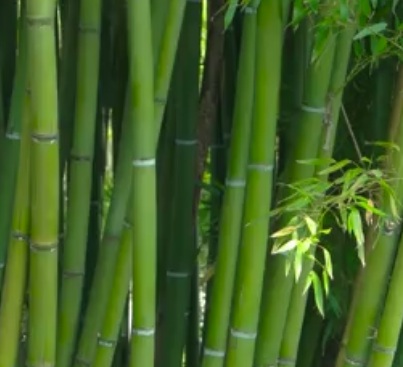
Bamboo (Bambusa, Dendrocalamus, Phyllostachys spp.)
(primarily edible shoots; family Poaceae)
Description
• Group of fast-growing grasses; in food use the young shoots are most common (fresh, pre-cooked, brined, or fermented). Leaves are used for infusions, and bamboo fiber appears as a technological ingredient.
• Sensory profile: delicate flavor with herbaceous/woody notes; pronounced crunch when properly processed.

Indicative nutrition values (shoots, per 100 g drained; typical ranges)
• Energy: ~20–35 kcal
• Carbohydrate: ~3–6 g (sugars <2 g)
• Dietary fiber: ~2–4 g (mainly insoluble)
• Protein: ~2–3 g
• Fat: ~0.2–0.5 g — SFA, MUFA, PUFA all negligible
• Sodium: very low in fresh; can increase in brined products
• Minerals: contains potassium and manganese; trace silica naturally associated with tissues
Key constituents
• Dietary fibers (cellulose, hemicelluloses, lignin); non-starch polysaccharides.
• Phytochemicals: phenolic acids and low-level flavonoids; volatile aroma constituents in leaves.
• Cyanogenic glycosides (e.g., taxiphyllin) in raw shoots → inactivated by adequate boiling/cooking.
• Silica (biogenic) associated with tissues; “bamboo powder” standardized in silica is used in some cosmetic/supplement contexts.
Production process
• Harvest very young shoots (size/age critical for tenderness) → defoliation and peeling.
• Boiling/blanching to reduce cyanogenic glycosides and bitterness → cutting (slices/strips/cubes).
• Destinations: chilled ready-to-cook, brined/canned, frozen, or lactic-fermented traditional products.
• For bamboo fiber: select insoluble fraction from culms or shoots → drying and micronization.
• Manufactured under GMP/HACCP and commercial specifications.
Physical properties
• Appearance: layered texture; ivory to pale yellow (darker in fermented items).
• Consistency: crisp when properly blanched; may be fibrous if over-mature.
• pH: ~5.5–6.5 (fresh); lower in fermented forms.
• Stability: risk of browning/oxidation in raw state; cooking/acidification mitigates it.
Sensory and technological properties
• Texture retention in stir-fries and wok cooking; good cut resistance in ready-meal assemblies.
• Low energy, high volume → useful as bulking vegetable.
• Bamboo fiber: moderate water binding, improves structure in bakery/fillings, reduces syneresis in fillings.
Food applications
• Asian cuisines: stir-fries, curries, ramen/pho, spring rolls, dumplings; pickled/fermented as a side.
• Soups/sauces: crisp texturizer.
• Ready meals and chilled/fifth-range products: pre-cooked strips/cubes.
• Bakery & plant-based meats: bamboo fiber for structure and water holding.
Nutrition & health
Bamboo shoots are low-calorie, water-rich, and a source of fiber; fats—including sfa, mufa, and pufa—are trivial. They contribute to satiety and can help lower dish energy density.
Safety: Raw shoots may contain cyanogenic glycosides (taxiphyllin) that release HCN; boiling (e.g., 20–30 minutes with a water change) or industrial pre-cooking renders them safe. Brined products are already detoxified but may deliver sodium. Hypersensitivity is uncommon; individuals with IBS may tolerate insoluble fiber less well. For leaf infusions, nutritional contribution is modest; prioritize raw-material quality.
Portion note: As a side within a recipe, 80–120 g drained shoots per serving. For bamboo fiber in bakery, 1–3% on flour weight (optimize in trials).
Quality and specifications (typical topics)
• Raw material: shoot age (avoid woody pieces); uniform color; fresh, non-fermentative odor (unless fermentation is intended).
• Parameters: moisture and drained solids, sodium (for brined items), pH, fiber content (for bamboo fiber), metals within limits.
• Microbiology: low counts; pathogens absent/25 g; for fermented products, lactic species control.
• Residues: pesticides ≤ MRL; heavy metals within limits; free of foreign matter.
Storage and shelf-life
• Fresh pre-cooked: chill at 0–4 °C, use within a few days.
• Brined/canned: ambient; once opened refrigerate in clean brine and consume within 3–4 days.
• Frozen: ≤ −18 °C.
• Bamboo fiber: store dry and dark in barrier packaging.
Safety and regulatory
• Bamboo shoots and derivatives are permitted foods; processing under GMP/HACCP; meet process limits for cyanogens.
• For fermented products: comply with hygiene and labeling (pH, salt).
• Allergens: none intrinsic; manage cross-contact risks.
Labeling
• Names: “bamboo shoots” (fresh/pre-cooked/brined/fermented); “bamboo fiber” for the dry ingredient.
• Declare covering liquid and salt for brined goods; provide rinsing/cooking instructions where helpful.
Troubleshooting
• Bitter/pungent taste → insufficient boiling of fresh → extend cook and change water.
• Woody texture → over-mature shoots → source younger material; increase cook time.
• Over-salty flavor (brined) → brine carryover → rinse and/or parboil before use.
• Loss of crunch → overcooking or prolonged hot holding → add near end of cook; reduce holding time.
Sustainability and supply chain
• Bamboo grows rapidly, needs low inputs, and contributes to CO₂ sequestration; by-products (leaves/culms) can be valorized for fiber or energy.
• In-plant: water/heat recovery, wastewater to BOD/COD targets, recyclable packaging, optimized logistics.
• Supplier traceability and audits per GMP/HACCP.
INCI functions (cosmetics)
• Bambusa Arundinacea Stem Extract/Powder, Bambusa Vulgaris Leaf/Stem Extract, Bamboo Charcoal Powder: absorbent/opacifying, skin-conditioning, light sebum-regulating, purifying (charcoal). Use per cosmetic regulations and tolerability assessments.
Conclusion
Bamboo (especially shoots) is a light, crunchy, versatile ingredient. Proper thermal detoxification, sound raw-material selection, and managing salt and cook time determine safety, flavor, and texture. Bamboo fiber broadens technological applications in bakery and ready meals.
Mini-glossary
• SFA: Saturated fatty acids — Keep overall intake low to support LDL control; bamboo shoots contribute negligible amounts.
• MUFA: Monounsaturated fatty acids — Generally favorable when replacing saturates.
• PUFA: Polyunsaturated fatty acids — Beneficial when balanced and protected from oxidation.
• GMP/HACCP: Good manufacturing practice / hazard analysis and critical control points — Preventive hygiene and process-control systems.
• MRL: Maximum residue limits — Legal limits for pesticide residues.
• BOD/COD: Biochemical/chemical oxygen demand — Wastewater metrics guiding treatment.
• Syneresis: Serum weeping from gels/fillings due to network contraction.
References__________________________________________________________________________
Behera P, Balaji S. Health Benefits of Fermented Bamboo Shoots: The Twenty-First Century Green Gold of Northeast India. Appl Biochem Biotechnol. 2021 Jun;193(6):1800-1812. doi: 10.1007/s12010-021-03506-y.
Abstract. The word "bamboo" reminds us of "a hollow stick," but it is filled with a plethora of health benefits. The tribals of northeastern India ferment these beneficial bamboo shoots for the goodness of mankind. Fermentation is an important age-old biotechnological procedure used for the preservation of food products. Fermented bamboo shoots form the niche for many microorganisms, and this confers positive effects and advantages in many ways. These magical shoots have tremendous health benefits like anti-cancer, anti-oxidant, anti-aging, cardioprotective, weight loss, probiotics, to name a few. Apart from health benefits, fermented bamboo shoots form important functional foods and have industrial and economical values. Though these are commonly found and started in the tribal area, and local markets, today, they are valuable all around the world, as popular as gold. Hence, fermented bamboo shoots are referred as "green gold" of India. This review briefs about various health benefits, advantages, disadvantages, future scope, and finally the economic values of fermented bamboo shoots, the "green gold" of the twenty-first century.
Singhal P, Bal LM, Satya S, Sudhakar P, Naik SN. Bamboo shoots: a novel source of nutrition and medicine. Crit Rev Food Sci Nutr. 2013;53(5):517-34. doi: 10.1080/10408398.2010.531488.
Abstract. Bamboos, a group of large woody grasses belonging to the family Poaceae and subfamily Bambusoideae, are much talked about for their contribution to the environment. However, the food potential of Bamboo shoot per se remains unexploited. Literature on the nutritional and medicinal potential of bamboo shoots is scarce. This paper therefore provides insight on bamboo shoot as a food resource. Various edible species and exotic food products (fermented shoots, pickle, etc.) and recipes of bamboo shoots (bamboo beer, bamboo cookies) are consumed worldwide. Change in nutritional composition of different species of bamboo shoots with processing has also been reviewed. Bamboo shoots possess high protein, moderate fiber, and less fat content. They are also endowed for having essential amino acids, selenium, a potent antioxidant, and potassium, a healthy heart mineral. Occurrence of taxiphyllin, a cyanogenic glycoside in raw shoots, and its side effect on human health calls for the demand to innovate processing ways using scientific input to eliminate the toxic compound without disturbing the nutrient reserve. Lastly, the paper also reviews the utilization of medicinal properties acquired by bamboo shoot. Using the traditional knowledge, pharmaceutical preparations of bamboo shoots like bamboo salt, bamboo vinegar, bamboo extracts for diabetes and cholesterol control, etc. are now gaining importance. Further investigation is required by the researchers to make novel nutraceutical products and benefit the society.
Nongdam P, Tikendra L. The Nutritional Facts of Bamboo Shoots and Their Usage as Important Traditional Foods of Northeast India. Int Sch Res Notices. 2014 Jul 20;2014:679073. doi: 10.1155/2014/679073.
Abstract. Bamboo shoots are considered as one of the useful health foods because of their rich contents of proteins, carbohydrates, vitamins, fibres, and minerals and very low fat. Though bamboo shoots provide lots of health benefits, their consumption is confined mostly to Southeast Asian and East Asian countries. The acceptability of bamboo shoots as popular vegetable crop is very less due to their high pungent smell and bitter acidic taste. The use of bamboo as food in India is mainly restricted to Northeastern part of the country where they form an indispensable part of several traditional speciality dishes. The different ethnic communities take fresh or fermented bamboo shoot as one of most preferred traditional food items. Some of the important bamboo based traditional foods are ushoi, soibum, rep, mesu, eup, ekhung, hirring, and so forth. Bamboo shoots should be properly processed before they are consumed as freshly harvested shoots have high content of toxic cyanogenic glycosides which may pose serious health problems. The prospect of bamboo shoot industry in Northeast India is bright due to its rich genetic resources of bamboos. However, habitat destruction and extensive use of bamboos for food, handicraft, and construction purposes have resulted in severe depletion of natural bamboo resources. This review stresses upon the high nutritive values and health benefits of bamboo shoots and their usage as important traditional foods in Northeast India. The bamboo market potential of the region and use of in vitro plant micropropagation methods as effective means of bamboo conservation are also emphasized in this paper.
Ma T, Mo W, Lv B, Wang W, He H, Jian C, Liu X, Li S, Guo Y. A Review of the Nutritional Composition, Storage Challenges, Processing Technology and Widespread Use of Bamboo Shoots. Foods. 2024 Nov 6;13(22):3539. doi: 10.3390/foods13223539.
Abstract. Bamboo shoots, as the young bamboo stems, are rich in protein, fiber, vitamins, and minerals, as well as many bioactive substances beneficial to health, and are gaining in importance worldwide as a healthy food and dietary supplement. However, fresh bamboo shoots lignify rapidly after harvesting and contain cyanogenic glycosides, limiting the safe and healthy consumption of bamboo shoots. To this end, based on the changes in nutritional composition and the physiological properties of fresh and post-harvest bamboo shoots, factors affecting the preservation of post-harvest bamboo shoots are emphasized, including a series of physical and chemical regimes and various processing methods for post-harvest preservation. Furthermore, a systematic biorefinery approach for using bamboo shoot processing residue to prepare value-added products is also discussed. Finally, the article also discusses issues related to sustainable development, safeguarding food security, and addressing potential health impacts in order to provide a scientific basis for researchers to further develop and increase the added value of bamboo shoots.
Xue KY, Quan F, Tang JX, Xiao CH, Lu CX, Cui J. Bamboo-based medicinal moxibustion for chronic fatigue syndrome: a randomized controlled trial. Zhongguo Zhen Jiu. 2023 May 12;43(5):493-8. Chinese. doi: 10.13703/j.0255-2930.20220818-k0001.
Abstract. Objective: To observe the clinical efficacy of bamboo-based medicinal moxibustion for chronic fatigue syndrome (CFS), and to preliminarily explore its action mechanism. Methods: Sixty-four patients with CFS were randomly divided into a moxibustion group (32 cases, 1 case dropped off, 1 case excluded) and an acupuncture group (32 cases, 2 cases dropped off). The patients in the moxibustion group were treated with bamboo-based medicinal moxibustion, while the patients in the acupuncture group were treated with routine acupuncture. Both groups were treated once a day, 6 days as a course of treatment with 1 day interval, for a total of 2 courses of treatment. Before treatment, 1 and 2 courses into treatment and in the follow-up of 14 days after treatment, the fatigue scale-14 (FS-14) and somatic and psychological health report (SPHERE) scores were observed in the two groups. Before and after treatment, the contents of CD+3, CD+4, CD+8 of peripheral blood T lymphocyte subsets were measured and CD+4/CD+8 ratio was calculated; the clinical efficacy of the two groups was compared. Results: Compared before treatment, the FS-14 and SPHERE scores in the two groups were decreased 1 and 2 courses into treatment and in the follow-up (P<0.01), and the FS-14 and SPHERE scores in the moxibustion group were lower than those in the acupuncture group (P<0.01, P<0.05). Compared before treatment, the contents of CD+3, CD+4 and CD+4/CD+8 ratio in the moxibustion group were increased after treatment (P<0.01). There was no significant difference of CD+3, CD+4, CD+8 and CD+4/CD+8 ratio between before and after treatment in the acupuncture group (P>0.05). After treatment, the contents of CD+3 and CD+4 in the moxibustion group were higher than those in the acupuncture group (P<0.05). The total effective rate was 93.3% (28/30) in the moxibustion group, which was higher than 73.3% (22/30) in the acupuncture group (P<0.05). Conclusion: Bamboo-based medicinal moxibustion could improve the physical and mental fatigue symptoms and psychological status in patients with CFS. Its effect may be related to regulating the contents of CD+3, CD+4 of peripheral blood T lymphocyte subsets and CD+4/CD+8 ratio.
Chen C, Guan X, Liu X, Zhuang W, Xiao Y, Zheng Y, Wang Q. Polysaccharides from Bamboo Shoot (Leleba oldhami Nakal) Byproducts Alleviate Antibiotic-Associated Diarrhea in Mice through Their Interactions with Gut Microbiota. Foods. 2022 Aug 31;11(17):2647. doi: 10.3390/foods11172647.
Abstract. A water-soluble polysaccharide BSP was extracted from the basal part of bamboo shoot, a main by-product of bamboo shoot processing. BSP is composed of glucose (72.8%), xylose (19.43%) and a small amount of galactose, arabinose, glucuronic acid and mannose. The effects of BSP on mice with antibiotic-associated diarrhea (AAD) were investigated. The mice fed with BSP exhibited significant higher bodyweight gain, lower pH value and higher concentrations of SCFAs in the feces compared with those fed with saline. BSP administration reduced the inflammatory cells in the small intestine and colon in the AAD mice, and Firmicutes/Bacteroidetes ratio in the gut was decreased from 0.56 to 0.19. Moreover, BSP administration affected the composition and diversity of the gut microbiota in the AAD mice, particularly on the improvement of beneficial bacteria such as Bacteroides, Lactobacillus and Lachnospiraceae_NK4A136_group. Our results suggest that the polysaccharides from bamboo shoot by-products could be an attractive natural component for gut health and AAD treatment.