

Caper
Rating : 10
| Evaluation | N. Experts | Evaluation | N. Experts |
|---|---|---|---|
| 1 | 6 | ||
| 2 | 7 | ||
| 3 | 8 | ||
| 4 | 9 | ||
| 5 | 10 |
Pros:
Antioxidant (1)10 pts from A_Partyns
| Sign up to vote this object, vote his reviews and to contribute to Tiiips.Evaluate | Where is this found? |
| "Caper studies" about Caper Review Consensus 8 by A_Partyns (13031 pt) | 2019-Jul-14 16:37 |
| Read the full Tiiip | (Send your comment) |
Nutraceutical Value of Pantelleria Capers (Capparis spinosa L.).
Lo Bosco F, Guarrasi V, Moschetti M, Germanà MA, Butera D, Corana F, Papetti A.
J Food Sci. 2019 Jul 11. doi: 10.1111/1750-3841.14718.
In Vitro Regeneration of Capparis spinosa L. by Using a Temporary Immersion System.
Gianguzzi V, Inglese P, Barone E, Sottile F.
Plants (Basel). 2019 Jun 16;8(6). pii: E177. doi: 10.3390/plants8060177.
Effect of Capparis spinosa Extract on Metabolic Parameters in Patients with Type-2 Diabetes: A Randomized Controlled Trial.
Vahid H, Bonakdaran S, Khorasani ZM, Jarahi L, Rakhshandeh H, Ghorbani A, Zarghi N, Yousefi M.
Endocr Metab Immune Disord Drug Targets. 2019;19(1):100-107. doi: 10.2174/1871530318666180821131201
Novel insight into wound healing properties of methanol extract of Capparis ovata Desf. var. palaestina Zohary fruits.
Okur ME, Ayla Ş, Çiçek Polat D, Günal MY, Yoltaş A, Biçeroğlu Ö.
J Pharm Pharmacol. 2018 Oct;70(10):1401-1413. doi: 10.1111/jphp.12977.
Evaluation of the Antidiabetic Property of Capparis Ovata Desf. Var. Palaestina Zoh. Extracts Using In vivo and In vitro Approaches.
Okur ME, Polat DC, Ozbek H, Yilmaz S, Yoltas A, Arslan R.
Endocr Metab Immune Disord Drug Targets. 2018;18(5):489-501. doi: 10.2174/1871530318666180328110524.
Phytochemical profile and antioxidant activity of caper berries (Capparis spinosa L.): Evaluation of the influence of the fermentation process.
Jiménez-López J, Ruiz-Medina A, Ortega-Barrales P, Llorent-Martínez EJ.
Food Chem. 2018 Jun 1;250:54-59. doi: 10.1016/j.foodchem.2018.01.010.
Antioxidant and hepatoprotective effects of Capparis spinosa L. fractions and Quercetin on tert-butyl hydroperoxide- induced acute liver damage in mice.
Kalantari H, Foruozandeh H, Khodayar MJ, Siahpoosh A, Saki N, Kheradmand P.
J Tradit Complement Med. 2017 May 19;8(1):120-127. doi: 10.1016/j.jtcme.2017.04.010.
| Sign up to vote this object, vote his reviews and to contribute to Tiiips.EvaluateClose | (0 comments) |
| "Descrizione" about Caper Review Consensus 10 by A_Partyns (13031 pt) | 2025-Dec-01 18:33 |
| Read the full Tiiip | (Send your comment) |
Caper (Capparis spinosa)
(English common name: Caper / Caper bud; plant: Caper bush)
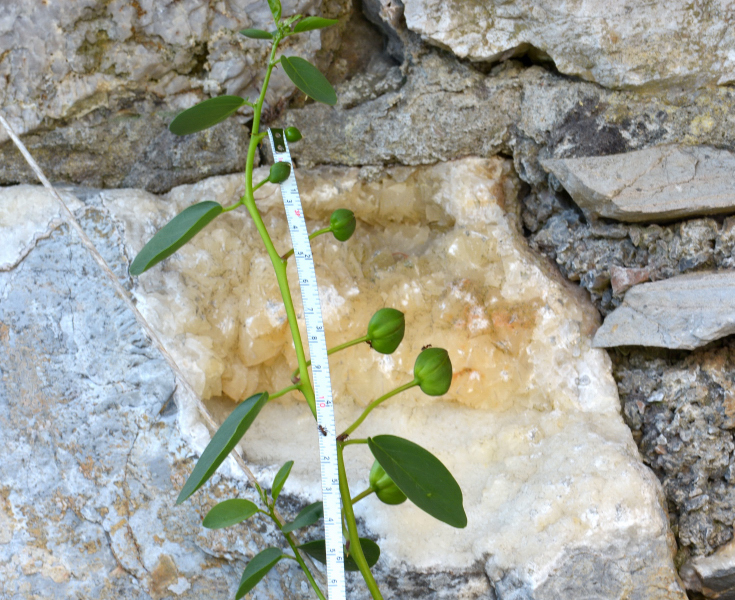
The caper is the unopened flower bud of the perennial shrub Capparis spinosa, commonly known in English as the caper bush. The plant belongs to the family Capparaceae and is typical of arid, rocky environments in the Mediterranean basin and parts of Western Asia. It thrives on rocky cliffs, dry stone walls, limestone outcrops and poor, stony soils, thanks to its excellent drought resistance and deep root system.
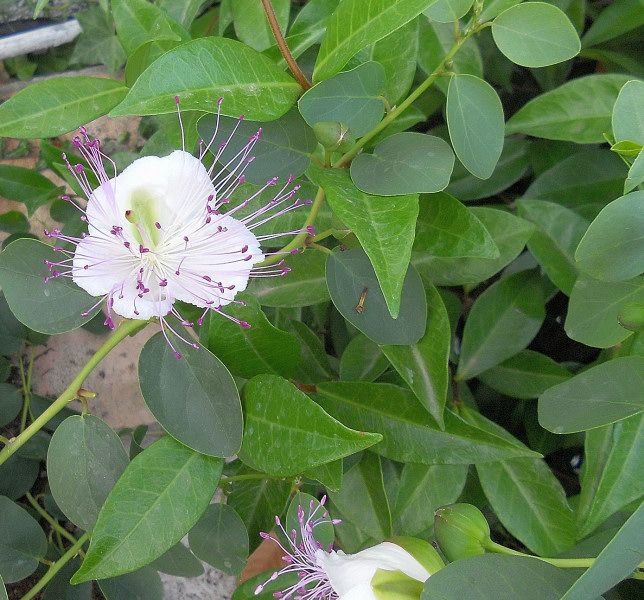
The shrub has a prostrate to trailing growth habit, with thin, flexible woody branches that may extend over rock faces and walls. The leaves are simple, entire, often rounded to oval, with a rather leathery texture and a grey-green color. Small spines (modified stipules) are often present near the leaf bases, making manual harvesting of the buds a slow and delicate operation.
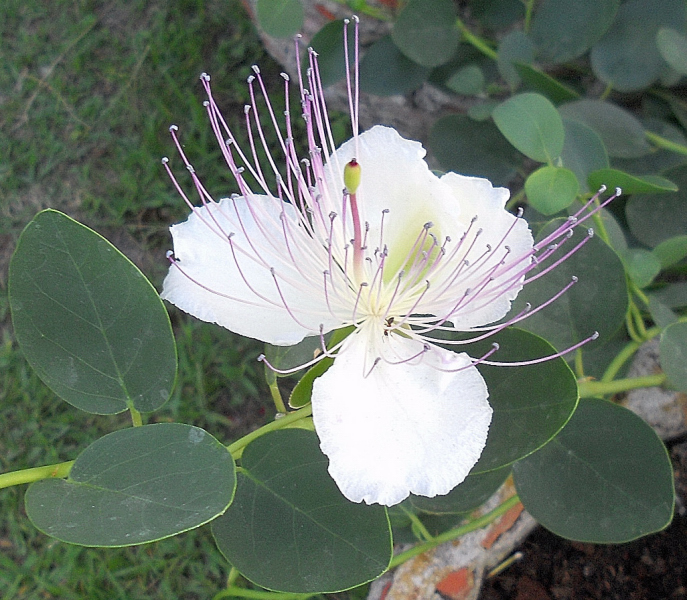
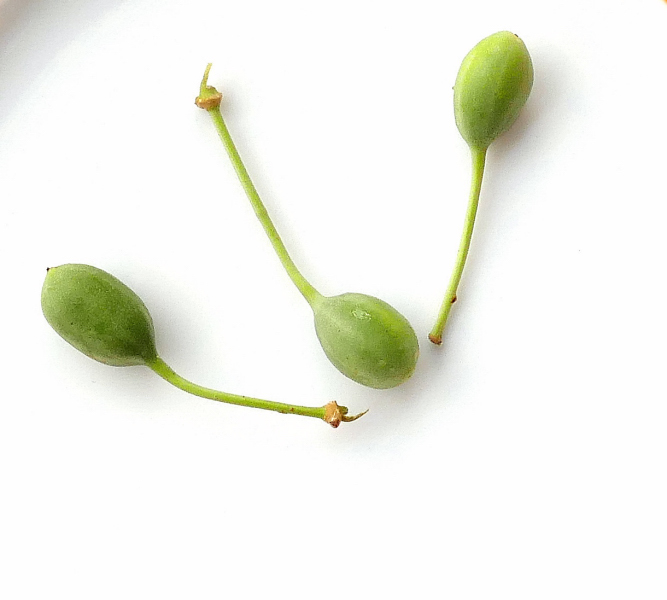
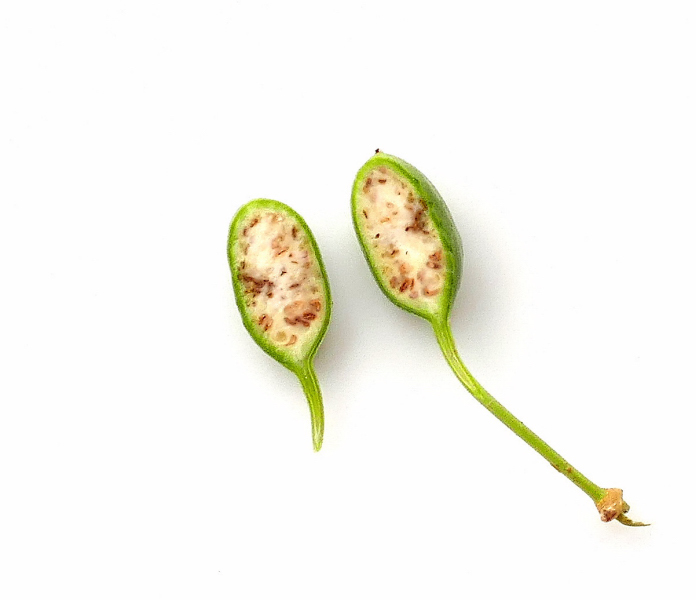
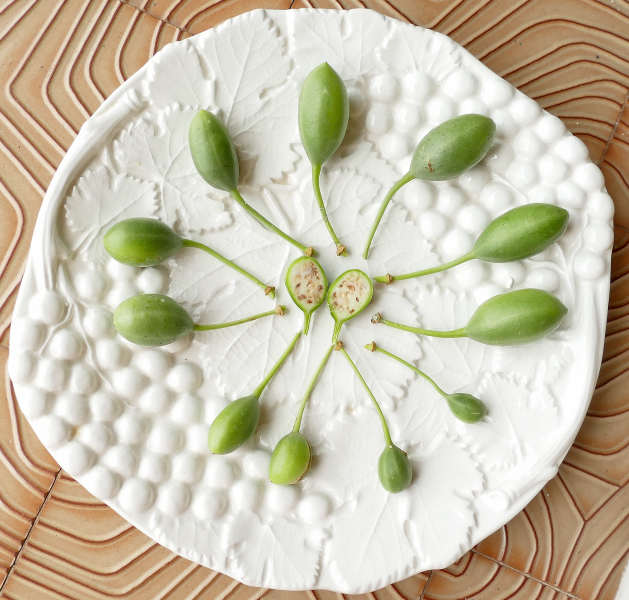
The plant produces large, ornamental flowers with four white or slightly pink petals and numerous long, violet stamens. The unopened flower buds are the capers used in food; after fertilization, the plant produces an elongated fruit, the caper berry (Italian: cucuncio), which is also edible once preserved in brine, salt, or vinegar. In some traditional cuisines, young leaves are also used as a vegetable after brief cooking or pickling.
Cultivation of capers has a long history in Mediterranean cultures, and today it represents both a regional specialty product and an important ingredient in Italian and Mediterranean cuisine, especially on islands and coastal regions (for example, some areas of Sicily and the Aeolian islands are renowned for high-quality capers).

Botanical classification
Common name: Caper
Clade: Angiospermae
Order: Brassicales
Family: Capparaceae
Genus: Capparis
Species: Capparis spinosa L.
Climate
The caper is a typically Mediterranean species and prefers warm, arid or semi–arid climates, with long, sunny summers and mild winters. It tolerates drought and high temperatures very well, while it is sensitive to intense, prolonged cold: severe frosts can damage the aerial parts, although the plant often manages to regrow from the base in spring.
Exposure
The ideal exposure is full sun, a fundamental condition to obtain abundant flowering and good bud production. The caper adapts well to exposed, windy and rocky positions, such as dry stone walls or embankments, where light is intense for most of the day. Marked shading reduces vegetative vigour and the number of flowers.
Soil
Caper plants grow well in poor, stony, calcareous and very well drained soils, where many other crops would struggle. They prefer soils with a generally alkaline reaction and tolerate salinity well. Waterlogging is poorly tolerated and can cause root rot; for this reason the plant is often found in raised sites, rock crevices or walls where water drains away rapidly.
Irrigation
Once established in open ground, caper plants require very little irrigation and can live almost entirely on rainfall, thanks to their deep root system and natural drought resistance. In pot culture or in the early stages of growth, however, it is necessary to water moderately, allowing the substrate to dry out between waterings and always avoiding standing water.
Temperature
The optimal temperature range for caper development is between 20 and 30 °C. The plant tolerates summer heat and direct sunlight very well, while temperatures below 0 °C, especially if prolonged, can damage the vegetation. In areas at risk of frost, plants should be placed in sheltered positions, for example at the base of south–facing walls.
Fertilization
Caper plants are not very demanding in terms of nutrients and adapt well to relatively poor soils. A modest application of well–matured organic matter before planting or in early spring is generally sufficient to support growth and flowering. Excess fertilization, especially with nitrogen, tends to produce excessively soft vegetation that is less resistant to drought and may reduce bud production.
Crop care
Crop care is usually limited. It is important to maintain a very well drained substrate, to control weeds in the early establishment phase and, if necessary, to carry out light pruning to remove dead or badly placed branches and keep the crown compact. In very humid environments, attention should be paid to any root rot or fungal diseases, which can be reduced by improving aeration and drainage.
Harvest
Harvesting mainly concerns the flower buds, which are the “capers” used as a seasoning. Repeated pickings are carried out throughout the season, collecting the buds when they are well formed but still closed, preferably in the morning. They are then preserved in salt or brine. Sometimes the mature fruits (cucunci), larger and elongated, are also harvested and used after appropriate curing.
Propagation
Caper plants can be propagated by seed or cuttings. Seed propagation requires patience, as seeds have slow, irregular germination and often need pre–soaking or scarification treatments. Propagation by semi–hardwood cuttings, taken in spring or late summer, makes it possible to obtain plants with uniform characteristics compared to the mother plant, provided that cuttings are placed in a light, very well drained substrate and kept in a warm, airy environment until rooting.
(Capers preserved and drained – average indicative values)
Energy: ~ 23–30 kcal
Water: ~ 84–93 g
Total carbohydrates: ~ 4.5–5 g
Dietary fiber: ~ 3.0–3.2 g
Proteins: ~ 2.3–2.4 g
Total fats: ~ 0.8–0.9 g (very low lipid fraction, mostly unsaturated fatty acids)
Sodium: ~ 2,300–2,900 mg (very high value due to brining/salting)
Calcium: ~ 40 mg
Magnesium: ~ 30–35 mg
Vitamin C: ~ 4 mg
Values depend strongly on the preservation method (dry salt, brine, vinegar), product type and degree of desalting before consumption.
Water
Carbohydrates (small amount)
Dietary fiber
Proteins (low but not negligible)
Minerals: very high sodium in salted or brined products; calcium, magnesium, potassium, iron (traces)
Vitamins: mainly vitamin C, other water-soluble vitamins in smaller quantities
Aromatic and secondary metabolites: flavonoids such as rutin, quercetin and other phenolic compounds with potential antioxidant activity
Trace volatile compounds and minor essential oil fractions contributing to the intense characteristic aroma
Cultivation
xerophilous, sun-loving plant adapted to calcareous, stony, well-drained soils
best suited to warm, dry climates; highly tolerant of drought and poor soils
Propagation
by seeds (slow, variable) or more commonly by cuttings, which preserve varietal traits and ensure more uniform production
Harvest of buds
capers are harvested when the flower buds are still tightly closed
picking occurs frequently (every few days) during flowering season, typically from late spring to summer
manual harvest is labor-intensive and must be done carefully because of the plant’s spines
Salting and preservation
freshly harvested buds are not eaten directly; they are preserved by dry salting, brine, or vinegar
salting triggers fermentation processes and biochemical transformations that develop the typical complex aroma and flavor of capers
after a proper maturation period, they are packed in jars or containers for distribution
buds: small, compact spheres or ovoid shapes
size: a few millimetres up to about 1 cm, depending on category (smaller capers are often considered higher quality)
texture: fleshy, firm and slightly resistant to bite; should not be excessively soft if adequately processed
color: green, olive-green or greenish-brown, with variation influenced by brine, salt or vinegar
caper berries: elongated, olive-like fruits with a stalk, generally softer and larger than the bud
intense flavour, salty, slightly bitter and tangy, with a characteristic fermented note
strong, distinctive aroma, able to enhance dishes even in small quantities
pleasant, slightly firm texture, with a bite that can add points of contrast in a dish
natural flavour enhancer due to high sapidity, acidity and aromatic complexity
in culinary applications, capers provide both aromatic complexity and local, concentrated bursts of flavour, especially in sauces and condiments
condiment and garnish in fish and meat dishes, mixed salads, grilled vegetables
key ingredient in Mediterranean sauces (e.g. with olives, anchovies, tomato, garlic, herbs)
widely used in pasta dishes, braised meats, stews, vegetable sautés
caper berries served as appetizers or antipasti, in salads or as a side to cured meats and cheeses
in some local cuisines, young leaves are cooked or pickled and consumed as a vegetable
Because of their intense flavour and high salt content, capers are used in small quantities.
Although capers are usually consumed in small portions, they provide:
low energy per 100 g, with very high flavour density
a meaningful contribution of dietary fiber
a supply of phenolic compounds and flavonoids (including rutin and quercetin) associated with antioxidant properties
minor amounts of vitamin C and minerals such as calcium, magnesium and potassium
The main nutritional concern is the very high sodium content due to salting and brining. Excessive consumption, especially without adequate desalting, may significantly increase daily salt intake. Therefore, it is often recommended to:
rinse capers under running water
or soak briefly and then drain before using in recipes
This is especially important for individuals who need to limit sodium intake (for example, under medical advice for hypertension or cardiovascular conditions).
A typical culinary portion is very small: generally 5–15 g (about 1–2 scant tablespoons) of drained capers. In this range, total calories are negligible, but the salt contribution can still be nutritionally relevant.
Capers are not among the major mandatory allergens. However:
individual sensitivity to plants of the Capparaceae family or to specific compounds in capers may occur
the high salt content may be problematic in salt-restricted diets or for people with certain cardiovascular or kidney conditions
In these cases, moderate use and, where appropriate, professional medical guidance are recommended.
Capers in dry salt
stored at room temperature in a cool, dry place, in well-sealed containers
generally long shelf-life (several months), thanks to the very high salt concentration
Capers in brine
once opened, should be kept refrigerated, ensuring capers remain fully covered with brine
best used within a few months for optimal flavor and texture
Capers in vinegar or oil
follow producer instructions; once opened, refrigerate and consume within recommended time
protect from excessive heat and light to avoid loss of aroma and quality
Capers are considered safe as a traditional food. Key points include:
compliance with good hygienic practices during harvesting, processing and packing
proper management of salting and acidification parameters to control microbiological stability
observance of legislation on food additives, contaminants and food contact materials for processed products
There are no specific restrictions on capers as a food ingredient beyond general food law requirements and sodium-related dietary warnings where applicable.
For caper-based products, labels typically include:
product name (e.g. “Capers in brine”, “Capers in salt”, “Caper berries in vinegar”)
ingredients list (capers, salt, water, vinegar, possible herbs or other components)
net weight and, where required, drained weight
country of origin or production region when applicable
storage conditions and minimum durability date (“best before…”)
any additional mandatory statements (e.g. if other allergens are present in the recipe)
In the kitchen
capers too salty → rinse under running water or soak briefly, then drain before use
excessively dominant flavour in a dish → reduce the quantity used or balance with milder components (oil, vegetables, potatoes, dairy)
mushy texture → may indicate overly long storage, poor-quality processing, or low-grade product
In processing / production
insufficient salting → risk of undesired fermentation and microbiological spoilage
excessive or uneven salting → product unpleasantly salty or inconsistent in quality
inadequate storage temperatures or poor protection from light/air → aroma loss, color changes, brine deterioration
Extracts derived from Capparis spinosa (for example Capparis Spinosa Fruit Extract, Capparis Spinosa Bud Extract) are used in cosmetics primarily for:
skin conditioning: helping maintain skin in good condition, contributing to softness and comfort
potential soothing and anti-irritant effects in products for sensitive or reactive skin
contribution to hydration support, by helping the skin barrier maintain moisture balance
additional antioxidant support in formulas designed to protect against environmental stressors
These uses are typical of botanical active ingredients and appear in creams, serums, lotions and after-sun or after-shave products.
The caper is a small bud with a high density of sensory and cultural value. It is emblematic of Mediterranean gastronomy, where it functions as a powerful flavouring agent, transforming dishes with very limited quantities. From a nutritional perspective, capers provide fiber, phenolic compounds and minor vitamins and minerals, while their caloric contribution is minimal. The main concern is their high sodium content, which requires thoughtful use, especially for those on salt-restricted diets.
Botanically, the caper bush is a remarkable plant, able to colonize rocky, dry and difficult environments, helping characterize coastal landscapes and historic walls, particularly in southern Europe. In addition to its culinary role, Capparis spinosa extracts also find a place in cosmetics, where they are valued as soothing, skin-conditioning and antioxidant ingredients.
Overall, capers are a distinctive ingredient that enriches cuisine, terroir and product formulation. They offer a bridge between traditional food culture, modern gastronomy and cosmetic innovation, maintaining their reputation as a symbolic Mediterranean product with strong identity and multiple uses.
Caper: unopened flower bud of Capparis spinosa, preserved in salt, brine or vinegar, used as a condiment
Caper berry: the elongated fruit of the caper bush, edible after preservation, milder in taste than the bud
Brine: salt–water solution used to preserve foods and stabilize flavor and texture
Skin conditioning: cosmetic function describing ingredients that help keep the skin in good condition, soft and comfortable
Desalting: process of reducing the salt content of preserved foods by rinsing or soaking in fresh water
Studies
This study analysed antioxidant potential of methanol extracts and the total phenol and flavonoid content of 15 common spices. The caper showed clear effective antioxidant activity for urinary tract infections (1).
The leaves and stems of another species of caper, Capparis erythrocarpos, also belonging to the Capparidaceae family, has anti-arthritic and analgesic effects (2).
In the caper there are flavonoids (kaempferol and quercetin) which exert an antioxidant action.
References____________________________________________________
(1) Mickymaray S, Al Aboody MS. In Vitro Antioxidant and Bactericidal Efficacy of 15 Common Spices: Novel Therapeutics for Urinary Tract Infections? Medicina (Kaunas). 2019 Jun 19;55(6). pii: E289. doi: 10.3390/medicina55060289.
Abstract. Background and Objectives: Bacterial urinary tract infection (UTI) is the most common ailment affecting all age groups in males and females. The commercial antibiotics usage augments antibiotics resistance and creates higher recurrence rates of such communal infections. Hence, this study is aimed at investigating the antibacterial and antioxidant potentials of 15 common spices against 11 UTI-causing bacterial pathogens. Materials and Methods: The antioxidant potential of the methanolic extracts was analyzed as contents of total phenols and flavonoids; radical scavenging, total reducing power, the ferric reducing power assay. Urinary pathogens were subjected to spice extracts to investigate antibacterial assays. Results: Preliminary phytochemical study of spices was performed to find those containing alkaloids, flavonoids, phenolic compounds, and steroids that can be recognized for their noteworthy bactericidal effects. The outcome of the antioxidative potential from the four methods demonstrated the sequence of potent antioxidant activity: Acorus calamus > Alpinia galanga > Armoracia rusticana > Capparis spinosa > Aframomum melegueta. The total polyphenols and flavonoids in the studied species positively correlated with their antioxidant properties. The four most effective spices (A. calamus, A. galanga, A. rusticana, and C. spinosa) had a zone of inhibition of at least 22 mm. A. calamus, A. melegueta, and C. spinosa had the lowest minimum inhibitory concentration (MIC) value against Enterobacter aerogenes, Staphylococcus aureus and Proteus mirabilis. All 15 spices had the lowest minimum bactericidal concentration (MBC) value against most of the pathogenic bacteria. Conclusion: The four highly potent and unique spices noted for the in vitro control of UTI-causing pathogens could be pursued further in the development of complementary and alternative medicine against UTI-causing pathogens.
(2) Twumasi MA, Tandoh A, Mante PK, Ekuadzi E, Boakye-Gyasi ME, Benneh CK, Kumadoh D, Woode E. Leaves and stems of Capparis erythrocarpos, more sustainable than roots, show antiarthritic effects. J Ethnopharmacol. 2019 Jun 28;238:111890. doi: 10.1016/j.jep.2019.111890
Merlino M, Condurso C, Cincotta F, Nalbone L, Ziino G, Verzera A. Essential Oil Emulsion from Caper (Capparis spinosa L.) Leaves: Exploration of Its Antibacterial and Antioxidant Properties for Possible Application as a Natural Food Preservative. Antioxidants (Basel). 2024 Jun 13;13(6):718. doi: 10.3390/antiox13060718.
Abstract. This study explored, for the first time, the chemical composition and in vitro antioxidant and antibacterial activities of a caper leaf essential oil (EO) emulsion for possible food applications as a natural preservative. The EO was extracted by hydrodistillation from the leaves of Capparis spinosa growing wild in the Aeolian Archipelago (Sicily, Italy) and exhibited a pungent, sulphurous odour. The volatile fraction of the emulsion, analysed by SPME-GC-MS, consisted of over 100 compounds and was dominated by compounds with recognised antibacterial and antioxidant properties, namely dimethyl tetrasulfide (18.41%), dimethyl trisulfide (12.58%), methyl isothiocyanate (7.97%), and terpinen-4-ol (6.76%). The emulsion was effective against all bacterial strains tested (Listeria monocytogenes, Staphylococcus aureus, Escherichia coli, Salmonella enterica subsp. enterica serovar Enteritidis, Pseudomonas fluorescens), with L. monocytogenes exhibiting the lowest minimum inhibitory concentration (MIC = 0.02 mg/mL) while E. coli had the highest (MIC = 0.06 mg/mL). The emulsion had a good DPPH (2,2-diphenyl-1-picrylhydrazine) radical scavenging activity that was dose-dependent and equal to 42.98% at the 0.08 mg/mL level with an IC50 value of 0.099 mg/mL. Based on the results, the caper leaf EO emulsion has the potential to be proposed as a natural alternative to chemical preservatives in the food industry.
| Sign up to vote this object, vote his reviews and to contribute to Tiiips.EvaluateClose | (0 comments) |
Read other Tiiips about this object in __Italiano (2)
Content:   Last update:   2021-12-13 21:23:44 | Kcal/100g:   23 Family:   Threat factors:   |


