

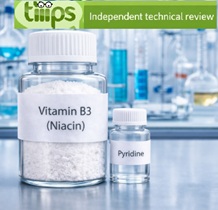
Vitamin B3
Rating : 10
| Evaluation | N. Experts | Evaluation | N. Experts |
|---|---|---|---|
| 1 | 6 | ||
| 2 | 7 | ||
| 3 | 8 | ||
| 4 | 9 | ||
| 5 | 10 |
Pros:
Possible anti-cancer (1) Cardioprotective (1) Antidiabetic (1)10 pts from FRanier
| Sign up to vote this object, vote his reviews and to contribute to Tiiips.Evaluate | Where is this found? |
| "Vitamin B3 studies" about Vitamin B3 Review Consensus 10 by FRanier (9960 pt) | 2023-Jan-21 10:54 |
| Read the full Tiiip | (Send your comment) |
Compendium of the most significant studies with reference to properties, intake, effects.
Fania L, Mazzanti C, Campione E, Candi E, Abeni D, Dellambra E. Role of Nicotinamide in Genomic Stability and Skin Cancer Chemoprevention. Int J Mol Sci. 2019 Nov 26;20(23):5946. doi: 10.3390/ijms20235946.
Abstract. Nicotinamide (NAM) is an amide form of vitamin B3 and the precursor of nicotinamide adenine dinucleotide (NAD+), an essential co-enzyme of redox reactions for adenosine triphosphate (ATP) production and for other metabolic processes. As NAD+ status is critical in maintaining cellular energy, vitamin B3 deficiency mainly affects tissues that need high cellular energy causing pellagra and skin sun sensitivity. In animal models, NAD+ deficiency leads to UV sensitivity of the skin, impairs DNA damage response, and increases genomic instability and cancer incidence. Furthermore, NAD+ depletion is associated with human skin aging and cancer. NAM prevents the UV-induced ATP depletion boosting cellular energy and enhances DNA repair activity in vitro and in vivo. Moreover, NAM reduces skin cancer incidence and prevents the immune-suppressive effects of UV in mice. Thus, NAM is involved in the maintenance of genomic stability and may have beneficial effects against skin aging changes and tumor development. Clinical studies showed that topical use of NAM reduces cutaneous aging. Furthermore, oral NAM administration reduces the level of UV-mediated immunosuppression and lowers the rate of non-melanoma skin cancers in high-risk patients. Therefore, NAM replenishment strategy may be a promising approach for skin cancer chemoprevention.
Doroftei B, Ilie OD, Cojocariu RO, Ciobica A, Maftei R, Grab D, Anton E, McKenna J, Dhunna N, Simionescu G. Minireview Exploring the Biological Cycle of Vitamin B3 and Its Influence on Oxidative Stress: Further Molecular and Clinical Aspects. Molecules. 2020 Jul 22;25(15):3323. doi: 10.3390/molecules25153323.
Abstract. Vitamin B3, or niacin, is one of the most important compounds of the B-vitamin complex. Recent reports have demonstrated the involvement of vitamin B3 in a number of pivotal functions which ensure that homeostasis is maintained. In addition, the intriguing nature of its synthesis and the underlying mechanism of action of vitamin B3 have encouraged further studies aimed at deepening our understanding of the close link between the exogenous supply of B3 and how it activates dependent enzymes. This crucial role can be attributed to the gut microflora and its ability to shape human behavior and development by mediating the bioavailability of metabolites. Recent studies have indicated a possible interconnection between the novel coronavirus and commensal bacteria. As such, we have attempted to explain how the gastrointestinal deficiencies displayed by SARS-CoV-2-infected patients arise. It seems that the stimulation of a proinflammatory cascade and the production of large amounts of reactive oxygen species culminates in the subsequent loss of host eubiosis. Studies of the relationhip between ROS, SARS-CoV-2, and gut flora are sparse in the current literature. As an integrated component, oxidative stress (OS) has been found to negatively influence host eubiosis, in vitro fertilization outcomes, and oocyte quality, but to act as a sentinel against infections. In conclusion, research suggests that in the future, a healthy diet may be considered a reliable tool for maintaining and optimizing our key internal parameters.
Novak Kujundžić R. COVID-19: Are We Facing Secondary Pellagra Which Cannot Simply Be Cured by Vitamin B3? Int J Mol Sci. 2022 Apr 13;23(8):4309. doi: 10.3390/ijms23084309.
Abstract. Immune response to SARS-CoV-2 and ensuing inflammation pose a huge challenge to the host’s nicotinamide adenine dinucleotide (NAD+) metabolism. Humans depend on vitamin B3 for biosynthesis of NAD+, indispensable for many metabolic and NAD+-consuming signaling reactions. The balance between its utilization and resynthesis is vitally important. Many extra-pulmonary symptoms of COVID-19 strikingly resemble those of pellagra, vitamin B3 deficiency (e.g., diarrhoea, dermatitis, oral cavity and tongue manifestations, loss of smell and taste, mental confusion). In most developed countries, pellagra is successfully eradicated by vitamin B3 fortification programs. Thus, conceivably, it has not been suspected as a cause of COVID-19 symptoms. Here, the deregulation of the NAD+ metabolism in response to the SARS-CoV-2 infection is reviewed, with special emphasis on the differences in the NAD+ biosynthetic pathway’s efficiency in conditions predisposing for the development of serious COVID-19. SARS-CoV-2 infection-induced NAD+ depletion and the elevated levels of its metabolites contribute to the development of a systemic disease. Acute liberation of nicotinamide (NAM) in antiviral NAD+-consuming reactions potentiates “NAM drain”, cooperatively mediated by nicotinamide N-methyltransferase and aldehyde oxidase. “NAM drain” compromises the NAD+ salvage pathway’s fail-safe function. The robustness of the host’s NAD+ salvage pathway, prior to the SARS-CoV-2 infection, is an important determinant of COVID-19 severity and persistence of certain symptoms upon resolution of infection.
Lorenzen A, Stannek C, Lang H, Andrianov V, Kalvinsh I, Schwabe U. Characterization of a G protein-coupled receptor for nicotinic acid. Mol Pharmacol. 2001 Feb;59(2):349-57. doi: 10.1124/mol.59.2.349.
Abstract. Nicotinic acid is a lipid-lowering agent widely used to treat hypertriglyceridemia and to elevate low high density lipoprotein levels. However, the underlying mechanisms are poorly understood. In this study, G protein activation by nicotinic acid and derivatives was assessed as stimulation of guanosine 5'-(gamma-[(35)S]-thio)triphosphate ([(35)S]GTPgammaS) binding, and [(3)H]nicotinic acid was used for specific labeling of binding sites. Nicotinic acid (EC(50) approximately 1 microM) stimulated [(35)S]GTPgammaS binding in membranes from rat adipocytes and spleen, but not from other tissues. G protein activation in adipocyte membranes in the presence of maximally activating concentrations of the selective A(1) adenosine receptor agonist 2-chloro-N(6)-cyclopentyladenosine and nicotinic acid was almost additive, indicating that G proteins of mostly distinct pools were activated by these agonists. G protein activation by nicotinic acid and related substances in spleen and adipocytes revealed identical pharmacological profiles. [(3)H]Nicotinic acid specifically detected guanine nucleotide-sensitive binding sites of identical pharmacology in adipocyte and spleen membranes. The site of action of nicotinic acid is distinct from other G protein-coupled receptors. These data indicate that nicotinic acid most probably acts on a specific G protein-coupled receptor.
Sallabi SM, Alhmoudi A, Alshekaili M, Shah I. Determination of Vitamin B3 Vitamer (Nicotinamide) and Vitamin B6 Vitamers in Human Hair Using LC-MS/MS. Molecules. 2021 Jul 25;26(15):4487. doi: 10.3390/molecules26154487.
Abstract. Water-soluble B vitamins participate in numerous crucial metabolic reactions and are critical for maintaining our health. Vitamin B deficiencies cause many different types of diseases, such as dementia, anaemia, cardiovascular disease, neural tube defects, Crohn's disease, celiac disease, and HIV. Vitamin B3 deficiency is linked to pellagra and cancer, while niacin (or nicotinic acid) lowers low-density lipoprotein (LDL) and triglycerides in the blood and increases high-density lipoprotein (HDL). A highly sensitive and robust liquid chromatography-tandem mass spectroscopy (LC/MS-MS) method was developed to detect and quantify a vitamin B3 vitamer (nicotinamide) and vitamin B6 vitamers (pyridoxial 5'-phosphate (PLP), pyridoxal hydrochloride (PL), pyridoxamine dihydrochloride (PM), pridoxamine-5'-phosphate (PMP), and pyridoxine hydrochloride (PN)) in human hair samples of the UAE population. Forty students' volunteers took part in the study and donated their hair samples. The analytes were extracted and then separated using a reversed-phase Poroshell EC-C18 column, eluted using two mobile phases, and quantified using LC/MS-MS system. The method was validated in human hair using parameters such as linearity, intra- and inter-day accuracy, and precision and recovery. The method was then used to detect vitamin B3 and B6 vitamers in the human hair samples. Of all the vitamin B3 and B6 vitamers tested, only nicotinamide was detected and quantified in human hair. Of the 40 samples analysed, 12 were in the range 100-200 pg/mg, 15 in the range 200-500 pg/mg, 9 in the range of 500-4000 pg/mg. The LC/MS-MS method is effective, sensitive, and robust for the detection of vitamin B3 and its vitamer nicotinamide in human hair samples. This developed hair test can be used in clinical examination to complement blood and urine tests for the long-term deficiency, detection, and quantification of nicotinamide.
Williams PA, Harder JM, Foxworth NE, Cochran KE, Philip VM, Porciatti V, Smithies O, John SW. Vitamin B3 modulates mitochondrial vulnerability and prevents glaucoma in aged mice. Science. 2017 Feb 17;355(6326):756-760. doi: 10.1126/science.aal0092.
Abstract. Glaucomas are neurodegenerative diseases that cause vision loss, especially in the elderly. The mechanisms initiating glaucoma and driving neuronal vulnerability during normal aging are unknown. Studying glaucoma-prone mice, we show that mitochondrial abnormalities are an early driver of neuronal dysfunction, occurring before detectable degeneration. Retinal levels of nicotinamide adenine dinucleotide (NAD+, a key molecule in energy and redox metabolism) decrease with age and render aging neurons vulnerable to disease-related insults. Oral administration of the NAD+ precursor nicotinamide (vitamin B3), and/or gene therapy (driving expression of Nmnat1, a key NAD+-producing enzyme), was protective both prophylactically and as an intervention. At the highest dose tested, 93% of eyes did not develop glaucoma. This supports therapeutic use of vitamin B3 in glaucoma and potentially other age-related neurodegenerations. Copyright © 2017, American Association for the Advancement of Science.
Huber R, Wong A. Nicotinamide: An Update and Review of Safety & Differences from Niacin. Skin Therapy Lett. 2020 Nov;25(5):7-11.
Abstract. Nicotinamide (or niacinamide), a form of vitamin B3 that is often confused with its precursor nicotinic acid (or niacin), is a low-cost, evidence-based oral treatment option for actinic keratosis, squamous cell carcinomas, basal cell carcinomas, and bullous pemphigoid. Despite its favorable safety profile and affordability, the integration of nicotinamide into clinical practice is an ongoing process, and like many over-the-counter supplements it has faced some barriers. The purpose of this article is to address some of those barriers by reviewing its efficacy, safety profile, and emphasizing the difference between nicotinamide and niacin. Lastly, we offer practical guidance around recommendations and the availability of nicotinamide, which can be hard to find for patients and providers alike.
Zandona A, Lihtar G, Maraković N, Miš K, Bušić V, Gašo-Sokač D, Pirkmajer S, Katalinić M. Vitamin B3-Based Biologically Active Compounds as Inhibitors of Human Cholinesterases. Int J Mol Sci. 2020 Oct 29;21(21):8088. doi: 10.3390/ijms21218088.
Abstract. We evaluated the potential of nine vitamin B3 scaffold-based derivatives as acetylcholinesterase (AChE) and butyrylcholinesterase (BChE) inhibitors, as a starting point for the development of novel drugs for treating disorders with cholinergic neurotransmission-linked pathology. As the results indicate, all compounds reversibly inhibited both enzymes in the micromolar range pointing to the preference of AChE over BChE for binding the tested derivatives. Molecular docking studies revealed the importance of interactions with AChE active site residues Tyr337 and Tyr124, which dictated most of the observed differences. The most potent inhibitor of both enzymes with Ki of 4 μM for AChE and 8 μM for BChE was the nicotinamide derivative 1-(4'-phenylphenacyl)-3-carbamoylpyridinium bromide. Such a result places it within the range of several currently studied novel cholinesterase inhibitors. Cytotoxicity profiling did not classify this compound as highly toxic, but the induced effects on cells should not be neglected in any future detailed studies and when considering this scaffold for drug development.
Tykhonenko T, Guzyk M, Tykhomyrov A, Korsa V, Yanitska L, Kuchmerovska T. Modulatory effects of vitamin B3 and its derivative on the levels of apoptotic and vascular regulators and cytoskeletal proteins in diabetic rat brain as signs of neuroprotection. Biochim Biophys Acta Gen Subj. 2022 Nov;1866(11):130207. doi: 10.1016/j.bbagen.2022.130207.
Abstract. Background: Beneficial effects of nicotinamide (NAm) and its derivates have been earlier shown in animal models of diabetes mellitus (DM), but the mechanisms of their neuroprotective activities are still largely unknown. The aim of the present study was to investigate if NAm and conjugate of nicotinic acid with gamma-aminobutyric acid (N-GABA) are able to modulate expression levels of apoptosis regulators, angiogenesis-related molecules, and specific cytoskeletal proteins in diabetic rat brain....Conclusion: Thus, NAm and N-GABA may exert neuroprotective effects by decreasing pro-apoptotic regulators levels and improving expression of angiogenic and cytoskeletal proteins impaired by hyperglycemia in rat brain. Copyright © 2022 The Authors. Published by Elsevier B.V. All rights reserved.
Nazarali S, Kuzel P. Vitamin B Derivative (Nicotinamide)Appears to Reduce Skin Cancer Risk. Skin Therapy Lett. 2017 Sep;22(5):1-4.
Abstract. Nicotinamide, an amide form of vitamin B3, has shown the potential to treat a variety of dermatological conditions, including acne, rosacea, and atopic dermatitis. Recent studies have demonstrated the role of nicotinamide, in both topical and oral forms, as a chemopreventive agent against skin cancer. Its anti-carcinogenic role may be due to its ability to enhance DNA repair and prevent ultraviolet (UV)-induced immunosuppression, which is known to contribute to the progression of pre-malignant lesions. Furthermore, nicotinamide is a precursor of essential coenzymes for many important reactions in the body, including the production of nicotinamide adenine dinucleotide (NAD). NAD is a key coenzyme in the synthesis of adenosine triphosphate (ATP), which transports chemical energy within cells. Therefore, nicotinamide plays a significant role in supporting energy-dependent cellular processes, including DNA repair.
| Sign up to vote this object, vote his reviews and to contribute to Tiiips.EvaluateClose | (0 comments) |
| "Descrizione" about Vitamin B3 Review Consensus 10 by FRanier (9960 pt) | 2026-Apr-01 09:57 |
| Read the full Tiiip | (Send your comment) |
Vitamin B3 (Niacin): properties, uses, pros, cons, safety
Vitamin B3, also known as niacin, is a water-soluble vitamin of the B group. The term “niacin” is often used broadly to refer mainly to nicotinic acid and nicotinamide (niacinamide), two forms that are closely related from a biological point of view. In the body, vitamin B3 is essential because it contributes to the formation of the coenzymes NAD and NADP, which are central to energy metabolism and numerous cellular reactions.

From a practical point of view, when speaking about the food focus, the reference is often to niacin as an essential vitamin; when speaking about the cosmetic focus, the form of greatest practical interest is generally niacinamide, because it is more suitable for topical use than nicotinic acid.
Description
Vitamin B3 is essential for proper cellular function and contributes to nutrient metabolism, energy production, and the maintenance of skin and mucous membranes under normal physiological conditions. From a nutritional point of view, it can be obtained directly from foods or partly formed from tryptophan, although this conversion alone is not sufficient to fully cover requirements.
From a technical point of view, it is important to distinguish between:
This distinction is important because the two forms share some biological similarities, but differ in tolerability and practical applications.
Production process
Vitamin B3 can be produced industrially through chemical synthesis processes starting from pyridine-based structural precursors, or through controlled production routes specific to the food, nutraceutical, or cosmetic grade required. The raw materials and starting components depend on the final form to be obtained:
After the synthesis or conversion step, the process normally includes purification, crystallization, drying, and analytical controls for identity, purity, assay, contaminants, and stability. In food or nutraceutical grades, the priority is compliance with regulatory specifications and microbiological quality. In cosmetic grades, especially for niacinamide, important factors also include formulation compatibility, stability in the finished product, and the suitability of the commercial grade for topical use.
In practice, the raw material may be marketed as a crystalline powder or incorporated into premixes, functional bases, or pre-formulated systems. In cosmetics, the most widely used form is niacinamide, whereas niacin itself is much less common for topical use because it is more likely to cause redness and a warming sensation.
Key constituents
In the case of Vitamin B3, the main reference compounds are:
From a food point of view, both contribute to vitamin B3 intake. From a cosmetic point of view, the practically most relevant form is almost always niacinamide. For this reason, in a complete technical assessment, it is useful to discuss Vitamin B3 / Niacin as a functional family, while specifying that modern topical use focuses mainly on niacinamide.
Identification data and specifications
| Characteristic | Value | Note |
|---|---|---|
| Main name | Vitamin B3 / Niacin | general nutritional term |
| Main forms | nicotinic acid and niacinamide | both biologically relevant |
| Molecular formula of niacin | C6H5NO2 | nicotinic acid |
| Molecular weight of niacin | 123.11 g/mol | theoretical value |
| Molecular formula of niacinamide | C6H6N2O | nicotinamide |
| Molecular weight of niacinamide | 122.12 g/mol | theoretical value |
| Nutritional category | water-soluble vitamin | B-group vitamin |
| Commercial form | crystalline powder | the most common |
| Calories | not significant as a vitamin ingredient | micronutrient role, not energy role |
| Main cosmetic application | niacinamide | more used than niacin |
Physico-chemical properties (indicative)
| Characteristic | Indicative value | Note |
|---|---|---|
| Appearance | white or off-white powder | depends on the form |
| Odor | absent or very slight | generally neutral |
| Solubility | good in water | useful in aqueous systems |
| Stability | good if properly stored | depends on form and matrix |
| Food compatibility | good in fortified systems | to be verified in the finished product |
| Cosmetic compatibility | very good for niacinamide | more delicate for nicotinic acid |
| Topical tolerability | generally good for niacinamide | niacin may cause flushing |
Food focus
In the food focus, Vitamin B3 is important because it contributes to energy metabolism and normal cellular function. It is naturally present in many foods, especially meat, fish, poultry, peanuts, legumes, whole grains, and fortified products. In addition, part of vitamin B3 can be produced by the body from tryptophan.
From a nutritional point of view, niacin is essential for preventing deficiency states. A severe deficiency of vitamin B3 historically leads to pellagra, characterized by skin, digestive, and neurological alterations. In modern nutrition, frank deficiency is less common in populations with access to a varied diet, but insufficient intake can still be relevant in unbalanced diets, malabsorption, or particular clinical conditions.
In supplementation, it is important to distinguish between vitamin use and pharmacological use. Niacin at high doses has also been used in medicine, but these levels do not correspond to normal nutritional use and require caution because they may increase the risk of adverse effects. In practical terms, for most people the main goal remains ensuring adequate intake through diet or appropriate supplementation, not necessarily high intake.
Cosmetic focus
In the cosmetic focus, the truly important form is mainly niacinamide. From a formulation and dermatological point of view, niacinamide is widely used because it may contribute to improvement of the skin barrier, maintenance of hydration, support of the overall appearance of the skin, and, in some formulations, also to improvement in the appearance of discoloration, uneven texture, and blemish-prone skin.
INCI Functions
Skin conditioning agent - Mixed. This ingredient is responsible for modifying the condition of the skin when it is damaged or dry by reducing flaking and restoring elasticity.
In practice, it is used in:
Niacin in the strict sense, that is, nicotinic acid, is instead much less used in modern cosmetics because it may cause redness, a feeling of warmth, or stinging. For this reason, when speaking about vitamin B3 in cosmetics, in the vast majority of cases one is למעשה referring to niacinamide.
Cosmetics
Cosmetic functions commonly associated with niacinamide: skin conditioning; in modern formulation practice it is mainly valued for support of the barrier, hydration, and the visual quality of the skin.
Pros
Cons
Safety, regulatory aspects and environment
From a food safety point of view, vitamin B3 is safe at normal dietary levels. However, at high doses, especially in the case of nicotinic acid, adverse effects such as flushing, itching, headache, gastrointestinal disturbances, and, at very high levels and in specific contexts, more serious effects may occur. For this reason, high-dose use should not be considered equivalent to normal vitamin use.
In the cosmetic sector, the form of greatest interest, namely niacinamide, is generally well tolerated and widely used. Tolerability must nevertheless always be referred to the finished product, the concentration used, and the skin type. In very sensitive subjects or in overly aggressive formulas, irritation or discomfort may occur, even though the niacinamide profile is generally favorable.
From an industrial point of view, this is a widely established raw material. The actual environmental impact depends on the production process, the commercial grade, and the final formulation, more than on the vitamin identity alone.
Conclusion
Vitamin B3 (Niacin) is a micronutrient of great biological importance, with a central role in the food focus as an essential vitamin for energy metabolism and cellular function. In the cosmetic field, however, the form of greatest practical relevance is mainly niacinamide, now widely used for support of the skin barrier, hydration, and the overall quality of the skin.
Studies
It is important for the conversion of proteins, carbohydrates and fats into energy.
It can reduce harmful LDL-cholesterol (which thickens and clogs the arteries), improve HDL-cholesterol values and thus reduce the risks for the cardiovascular system (1).
It also has positive indications for diabetes mellitus by bringing glycaemic values back to normal (2).
About fifty years ago, Kaufman reported high doses of niacinamide to effectively treat osteoarthritis and rheumatoid arthritis. Nowadays, after studies carried out on a significant number of cases, it is possible to confirm what Kaufman claimed, even though it cannot be assumed, at the moment, that Niacinamide can also be used for prevention (3).
Niacin helps restore the efficiency of impaired immune cells, enhancing their ability to recognize and eliminate tumor cells (4). The researchers also highlighted some limitations of the study, including the small sample size, the limited follow-up period, and the absence of a randomized control group.
Animal feed
Feed additive, which can improve milk production, poultry and meat quality.
The most relevant studies on this vitamin have been selected with a summary of the contents:
Molecular Formula C6H5NO2 C5H4NCOOH HOOC5H4N
Molecular Weight 123.111 g/mol
CAS 59-67-6
EC Number 200-441-0
UNII 2679MF687A
PubChem Substance ID 329823272
MDL number MFCD00006391
Beilstein Registry Number 109591
Synonyms:
References____________________________________________________________________
(1) Landray MJ, Haynes R, Armitage J. Niacin for reduction of cardiovascular risk. N Engl J Med. 2014 Nov 13;371(20):1943-4. doi: 10.1056/NEJMc1411240.
Niacin for reduction of cardiovascular risk.
Mayer L.
N Engl J Med. 2014 Nov 13;371(20):1943. doi: 10.1056/NEJMc1411240#SA6.
Niacin for reduction of cardiovascular risk.
Santos-Gallego CG, Badimon J.
N Engl J Med. 2014 Nov 13;371(20):1943. doi: 10.1056/NEJMc1411240#SA5.
Niacin for reduction of cardiovascular risk.
van den Oever IA, Nurmohamed MT, Lems WF.
N Engl J Med. 2014 Nov 13;371(20):1942. doi: 10.1056/NEJMc1411240#SA4.
(2) Ding Y, Li Y, Wen A. Effect of niacin on lipids and glucose in patients with type 2 diabetes: A meta-analysis of randomized, controlled clinical trials. Clin Nutr. 2014 Sep 28. pii: S0261-5614(14)00247-7. doi: 10.1016/j.clnu.2014.09.019.
(3) McCarty MF, Russell AL. Niacinamide therapy for osteoarthritis--does it inhibit nitric oxide synthase induction by interleukin 1 in chondrocytes? Med Hypotheses. 1999 Oct;53(4):350-60.
Wu L, Parhofer KG. Diabetic dyslipidemia. Metabolism. 2014 Aug 29. pii: S0026-0495(14)00258-3. doi: 10.1016/j.metabol.2014.08.010.
(4) Roldan Urgoiti, Gloria, et al. A phase I-II study of niacin in patients with newly diagnosed glioblastoma: safety and interim phase II analysis. Journal of Neuro-Oncology 176.1 (2026): 101.
Abstract. Purpose. Survival of patients with glioblastoma (GB) treated with standard of care (SOC) surgery, radiotherapy, and temozolomide is 15 months with progression free survival at 6 months (PFS-6 M) of 53.9%. In vivo studies showed increased survival in mice with GB treated with niacin. This is a first in human Phase I-II study aiming to evaluate safety and efficacy of controlled-release niacin (NiacinCRT ™) added to SOC. Methods. Patients 18–75 years old with newly diagnosed glioblastoma eligible for SOC treatment were included. Phase I evaluated intra-patient dose escalation of niacin (500–3000 mg/d) to determine dose limiting toxicity (DLT), maximum tolerated dose (MTD) and recommended phase II dose (RP2D). Phase II aims to determine if niacin adds ≥ 20% absolute increase in PFS-6 M over historical controls. Interim/futility analysis was planned when 24 patients become evaluable for PFS-6 M. The study would stop if the conditional power (one-sided Z test) < 20% or futility index > 80%.. Results. Phase I included 15 patients; median age: 57 years (37–68), 40% women, and 47% with MGMT promoter methylated. The most common side effect was flushing (10/15; 9 grade 1). Two DLTs occurred at 2,500 mg/d niacin (grade 3 thrombocytopenia and hyperbilirubinemia). Niacin dose escalated up to 2000 mg/d is the ongoing RP2D. Interim analysis by central radiology review reported PFS-6 M of 82.3% (CI95% 82.14–82.46%). Conclusion. The MTD dose of niacin added to first line treatment in patients with GB is 2000 mg/d. The interim analysis already showed an absolute increase in PFS-6 M of 28%.
| Sign up to vote this object, vote his reviews and to contribute to Tiiips.EvaluateClose | (0 comments) |
Read other Tiiips about this object in __Italiano (2)
Component type:   Natural Main substances:   Last update:   2023-01-21 09:49:42 | Chemical Risk:   |

