

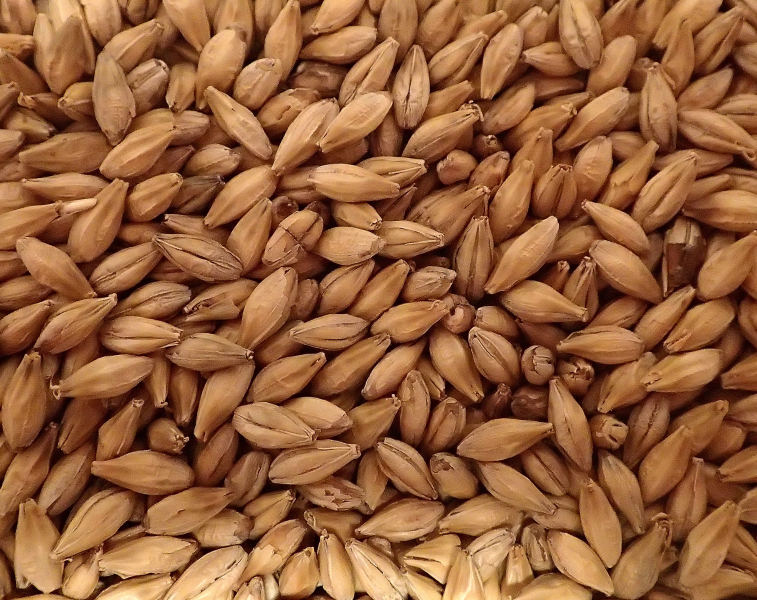
Barley malt
Rating : 8.3
| Evaluation | N. Experts | Evaluation | N. Experts |
|---|---|---|---|
| 1 | 6 | ||
| 2 | 7 | ||
| 3 | 8 | ||
| 4 | 9 | ||
| 5 | 10 |
Pros:
Antioxidant (1)Cons:
Possible specific allergy (1) Contains gluten (1)9 pts from Ottika11
| Sign up to vote this object, vote his reviews and to contribute to Tiiips.Evaluate | Where is this found? |
| " Barley malt studies" about Barley malt Review Consensus 8 by Ottika11 (2106 pt) | 2019-Aug-04 10:03 |
| Read the full Tiiip | (Send your comment) |
Fermentation profile of Saccharomyces cerevisiae and Candida tropicalis as starter cultures on barley malt medium
Wazé Aimée Mireille Alloue-Boraud, Kouadio Florent N’Guessan, N’Dédé Théodore Djeni, Serge Hiligsmann, Koffi Marcellin Djè, Franck Delvigne
J Food Sci Technol. 2015 Aug; 52(8): 5236–5242. Published online 2014 Aug 31. doi: 10.1007/s13197-014-1526-0
Investigation of Barley, Malt and Beer for Vitamins B and C
Arthur Harden, Sylvester Solomon Zilva
Biochem J. 1924; 18(5): 1129–1132. doi: 10.1042/bj0181129
The Microbiology of Malting and Brewing
Nicholas A. Bokulich, Charles W. Bamforth
Microbiol Mol Biol Rev. 2013 Jun; 77(2): 157–172. doi: 10.1128/MMBR.00060-12
Analysis of β-glucan molar mass from barley malt and brewer's spent grain with asymmetric flow field-flow fractionation (AF4) and their association to proteins.
Zielke C, Teixeira C, Ding H, Cui S, Nyman M, Nilsson L.
Carbohydr Polym. 2017 Feb 10;157:541-549. doi: 10.1016/j.carbpol.2016.10.045.
Barley malt increases hindgut and portal butyric acid, modulates gene expression of gut tight junction proteins and Toll-like receptors in rats fed high-fat diets, but high advanced glycation end-products partially attenuate the effects.
Zhong Y, Teixeira C, Marungruang N, Sae-Lim W, Tareke E, Andersson R, Fåk F, Nyman M.
Food Funct. 2015 Sep;6(9):3165-76. doi: 10.1039/c5fo00150a.
Genetic Diversity of Individual Phenolic Acids in Barley and Their Correlation with Barley Malt Quality.
Cai S, Han Z, Huang Y, Chen ZH, Zhang G, Dai F.
J Agric Food Chem. 2015 Aug 12;63(31):7051-7. doi: 10.1021/acs.jafc.5b02960.
Further insights into the role of melanoidins on the antioxidant potential of barley malt.
Carvalho DO, Correia E, Lopes L, Guido LF.
Food Chem. 2014 Oct 1;160:127-33. doi: 10.1016/j.foodchem.2014.03.074.
Comparison of beer quality attributes between beers brewed with 100% barley malt and 100% barley raw material.
Steiner E, Auer A, Becker T, Gastl M.
J Sci Food Agric. 2012 Mar 15;92(4):803-13. doi: 10.1002/jsfa.4651.
| Sign up to vote this object, vote his reviews and to contribute to Tiiips.EvaluateClose | (0 comments) |
| "Descrizione" about Barley malt Review Consensus 9 by Ottika11 (2106 pt) | 2025-Dec-10 18:30 |
| Read the full Tiiip | (Send your comment) |
Barley malt, Hordeum vulgare (Poaceae)
Barley malt, obtained from the cereal Hordeum vulgare, is a foundational ingredient in the food and beverage industry, particularly in fermentation-related applications. As a member of the family Poaceae, barley offers structural and biochemical characteristics that make it especially suitable for starch conversion, the development of complex aromas, and the formation of fermentable substrates. Barley malt is available in numerous varieties, ranging from pale to dark malts, each with distinctive colour and flavour profiles.
Morphologically and sensorially, barley malt appears as grains or milled material with colours ranging from straw yellow to deep brown, depending on the degree of drying and roasting. The aromatic profile spans from sweet, cereal-like notes in pale malts to toasted, caramel-like, or cocoa-like characteristics in darker varieties.
![]() | ![]() |
Compositionally, barley malt contains:
– complex carbohydrates and sugars derived from starch conversion;
– proteins and peptides that contribute to foam stability in fermented beverages;
– varying levels of residual enzymatic activity, depending on malt type;
– aromatic compounds formed through Maillard reactions;
– minerals such as magnesium, phosphorus, potassium, and trace elements;
– fibre and β-glucan fractions typical of barley.
Nutritionally, barley malt provides a source of readily available energy due to its simple sugars and dextrins. Barley’s soluble fibres, including β-glucans, may support cholesterol regulation and modulate carbohydrate absorption. Its protein and mineral content also makes malt a useful ingredient in fortified or functional food formulations.
From a technological and culinary perspective, barley malt is used in:
– brewing, as the primary source of fermentable sugars and aroma precursors;
– baking, where it enhances crust colour, dough development, and flavour;
– the production of malt extracts, employed as natural sweeteners or functional ingredients;
– confectionery, cereal bars, and breakfast mixes;
– artisanal and industrial baked goods, for its sensory and structural contributions.
The colour, aromatic intensity, and enzymatic profile vary according to the type of malt, offering broad versatility across the food and brewing sectors.
(Classification refers to the cereal grain used for malting.)
| Category | Data |
|---|---|
| Common name | barley; barley malt |
| Botanical name | Hordeum vulgare L. |
| Kingdom | Plantae |
| Clade | Angiosperms → monocots |
| Order | Poales |
| Family | Poaceae |
| Genus | Hordeum |
| Species | Hordeum vulgare L. |
Average values refer to malt obtained through controlled germination of barley grains followed by drying. Values may vary depending on cultivar and degree of malt modification.
| Component | Approximate value per 100 g |
|---|---|
| Energy | ~ 360–380 kcal |
| Water | ~ 4–6 g |
| Total carbohydrates | ~ 75–80 g |
| — of which sugars (maltose, glucose) | ~ 10–15 g |
| Dietary fiber | ~ 5–8 g |
| Protein | ~ 10–12 g |
| Total lipids | ~ 1–2 g |
| — saturated fatty acids (SFA) | ~ 0.2–0.3 g |
| — monounsaturated fatty acids (MUFA) | ~ 0.1–0.2 g |
| — polyunsaturated fatty acids (PUFA) | ~ 0.5–0.7 g |
| Sodium | ~ 10 mg |
| Main minerals | phosphorus (≈ 300 mg), magnesium (≈ 100 mg), potassium (≈ 250 mg), iron, zinc |
| Relevant vitamins | B-vitamins (B1, B3, B6), traces of vitamin E |
Barley malt is rich in fermentable carbohydrates, especially maltose, produced during germination through enzymatic activity.
Provides a good amount of protein and moderate fiber, carried over from the whole grain.
Very low in fat, with minimal SFA, MUFA, and PUFA.
A useful source of minerals and B-vitamins supporting energy metabolism.
Production process
The production of barley malt consists essentially of three main stages:
Steeping: selected barley grains are soaked in water (often with alternating air/water cycles) to reach a moisture content suitable for germination.
Germination: grains are held under controlled temperature, humidity and aeration so that they germinate. During this stage, amylolytic and proteolytic enzymes develop, converting part of the starch into simple sugars (maltose, maltotriose, dextrins) and modifying the kernel structure.
Kilning: germination is stopped by controlled heating. Drying stabilises the malt and, depending on time and temperature profile, determines the final colour (from pale to dark) and aromatic profile.
To produce barley malt extract, dried malt is milled, mixed with hot water (mashing) to extract soluble components, then filtered and concentrated to a thick syrup or further spray-dried into a powder.
Physical properties
Physical characteristics depend on the commercial form:
Malted grain: modified kernels, with colour ranging from straw-yellow to amber-brown or dark brown, depending on kilning/toasting degree.
Malted flour: fine powder, usually yellow–brown, hygroscopic.
Liquid malt extract: viscous syrup, amber to dark brown, with typical malty odour and taste.
Dried malt extract: hygroscopic powder, colour from beige to light brown, readily water-soluble.
In general, barley malt shows low water activity in dry form, high sugar content and sufficient physical stability for handling and storage under appropriate conditions.
Sensory and technological properties
From a sensory point of view, barley malt is characterised by:
sweet, malty taste with caramel and sometimes toasted notes;
warm cereal-like aroma, more intense in darker malts;
contribution to golden–amber–brown colour shades in the finished product.
From a technological perspective, barley malt:
supplies fermentable sugars and, in diastatic forms, enzymes useful in yeasted processes (faster fermentation, improved dough rise);
contributes to colour development via Maillard reactions and caramelisation during baking or thermal processing;
enhances aroma and flavour in bread, beer, snacks, breakfast cereals and confectionery;
in extract form, acts as a less-sweet sweetener compared with sucrose, with a characteristic malty–caramel profile;
can affect crumb structure and moisture in baked goods through its sugar and dextrin content.
Food applications
Barley malt is widely used in:
Beer and fermented beverages: the primary source of fermentable sugars, colour and aroma in brewing.
Bread and bakery: malted flour or malt extract to improve crust colour, dough development, aroma and, in some cases, shelf-life.
Breakfast cereals and cereal bars: for moderate sweetness, malty notes and amber colour.
Savoury snacks and crackers: for flavour, colour and textural support.
Confectionery and desserts (e.g. malt loaf, biscuits, candies, malted drinks): for sweetness and distinct malty character.
Malt extract is also used as a functional carbohydrate source in beverage mixes, powdered preparations and dietary products where rapidly available energy is desired.
Nutrition and health
Barley malt is derived from barley grain and its composition is dominated by carbohydrates, partially converted into simple sugars during germination. Depending on the type of product (grain, liquid extract, dried extract), it provides:
Carbohydrates (simple sugars and dextrins) as a source of readily available energy.
A portion of protein and minerals (e.g. magnesium, potassium, phosphorus) inherited from barley.
Small amounts of B vitamins and residual bioactive compounds.
Nutritionally, barley malt:
increases the sugar content of the finished product relative to unmalted flour;
contributes significantly to overall energy intake and must be considered in caloric balance;
is not ideal in high amounts for diets that strictly limit simple sugars.
For individuals with specific needs (e.g. diabetes, weight management), the use of malt should be evaluated in the context of the whole diet, considering both quantity and form of intake.
Serving note
Typical use levels depend strongly on application:
In bread and bakery, technological dosages are often in the range of 1–5% on flour weight (for malted flour or dried malt extract), adjusted according to recipe and desired effect.
When used as a sweetening/flavouring ingredient (e.g. malt extract in beverages or cereals), the amount per portion of finished product is often in the range of 5–20 g, depending on target sweetness and product concept.
Final serving definitions must align with the specific food category and nutritional guidelines.
Allergens and intolerances
Barley malt is produced from barley, a cereal that contains gluten (in particular hordeins) and potentially allergenic proteins.
It is not suitable for people with coeliac disease or gluten sensitivity: even products with modest levels of barley malt can contain gluten amounts incompatible with strict gluten-free diets.
It may be problematic for individuals with cereal or barley allergy.
On the label, the presence of BARLEY / BARLEY MALT must be clearly indicated as an allergen, in line with regulatory requirements.
Storage and shelf-life
Storage requirements depend on the malt form:
Malted grain / malted flour: store in a cool, dry, well-ventilated place, protected from light and foreign odours, in closed containers. Under appropriate conditions, shelf-life is typically 12–18 months.
Liquid malt extract: requires tightly closed containers, a cool environment and protection from heat. Once opened, it should be used within a reasonable time to minimise darkening and off-flavour development.
Dried malt extract: hygroscopic and sensitive to moisture uptake. In well-sealed packaging, shelf-life can be around 18–24 months, with attention to lump formation and oxidation.
Signs of deterioration include atypical off-odours (excessively burnt, stale), excessive darkening inconsistent with the malt specification, and very hard agglomerates in the dry product.
Safety and regulatory
Barley malt is a traditional ingredient widely used in food manufacture. From a safety standpoint, it must:
Comply with limits for contaminants such as mycotoxins, heavy metals and pesticide residues applicable to cereals and cereal derivatives.
Meet microbiological criteria, especially for liquid extracts and high–water-activity products.
Be manufactured under Good Manufacturing Practice (GMP) and HACCP-based systems to ensure safety, traceability and consistent quality.
For alcoholic beverages (e.g. beer), specific rules govern allergen declaration related to barley malt and gluten.
Labelling
On ingredient lists, barley malt may appear as:
“barley malt”, “malted barley”, “barley malt extract”, “malt extract” (often with origin specified).
Component of compound ingredients (e.g. “glucose–malt syrup”, “malt extract” in breakfast cereals).
Key labelling aspects:
Clearly declare BARLEY / BARLEY MALT as an allergen.
Use “gluten-free” claims only if the finished product complies with legal thresholds (typically <20 ppm gluten) and if the use of malt is compatible with that limit (in many cases, it is not).
Ensure any nutrition or marketing claims (“with barley malt”, “with malted barley”) are not misleading and do not overstate health effects of the ingredient alone.
Troubleshooting
Common practical issues and possible corrective actions:
Product too dark: use of overly high-colour malt or excessive dosage; switch to paler malts or reduce inclusion level.
Bitter or burnt taste: excessively dark malt for the application or overly harsh baking/thermal conditions; review malt specification and baking curve.
Over-rapid or irregular fermentation in bread doughs: too much diastatic malt can increase fermentable sugars excessively; reduce dosage or switch to non-diastatic malt.
Sticky or gummy texture in baked goods: high levels of liquid or dried malt extract can increase hygroscopicity and moisture retention; re-balance total sugars and water.
Gluten-free declaration issues: presence of barley malt often makes it impossible to guarantee <20 ppm gluten; in such cases, either remove gluten-free claims or replace malt with ingredients compatible with gluten-free standards.
Main INCI functions (cosmetics)
In cosmetics, “barley malt” is usually present as part of ingredients derived from barley seeds, such as Hordeum Vulgare Seed Extract, Hordeum Vulgare Seed Flour or similar raw materials that may incorporate malt components. Based on current safety assessments, barley-seed-derived ingredients are considered safe at typical use levels in cosmetic products.
Main INCI-related functions for barley/malt-derived cosmetic ingredients include:
Skin conditioning: supporting skin feel and appearance (softness, comfort).
Hair conditioning: improving manageability and perceived body in some hair-care products.
Antioxidant: contributing to formula protection (and partly skin protection) against oxidative processes via phenolic components.
Film forming (for certain polysaccharide/protein fractions): creating a light film on skin or hair with conditioning and sensory effects.
Viscosity controlling: contributing to the rheological structure of gels and lotions in some systems.
Actual function depends on the extract type, purification level and concentration in the formula.
Conclusion
Barley malt is a key ingredient in several food categories, especially beer, bread, breakfast cereals, snacks and confectionery. Its unique combination of fermentable sugars, enzymes, malty aroma and capacity to influence colour and texture makes it a highly versatile technological tool.
Nutritionally, barley malt contributes mainly carbohydrates and a fraction of protein and micronutrients, but it is also a source of simple sugars that must be factored into total energy intake. The critical safety aspects are the presence of gluten and potential barley-related allergens, which require special care for consumers with coeliac disease or cereal allergies and demand clear, compliant labelling.
In cosmetics, barley/malt-derived ingredients are valued as conditioning and antioxidant agents with a favourable safety profile at standard use levels. Robust control of process, raw-material quality, storage and labelling allows manufacturers to fully exploit the potential of barley malt across both food and personal-care supply chains.
Mini-glossary
Malting: process that includes steeping, germination and kilning of barley to produce malt, activating enzymes that convert starch into sugars.
Diastatic malt: malt with significant enzymatic activity (especially amylases), able to further convert starch into sugars during baking or brewing.
Non-diastatic malt: malt treated to have negligible enzyme activity, used mainly for flavour, colour and sweetness.
Malt extract: liquid or powdered product obtained by extracting soluble components from malt (rich in sugars and dextrins).
Gluten: protein complex present in certain cereals (wheat, barley, rye, etc.), responsible for adverse reactions in individuals with coeliac disease or gluten sensitivity.
GMP (Good Manufacturing Practice): set of rules and procedures ensuring products are manufactured consistently according to defined quality and safety standards.
HACCP (Hazard Analysis and Critical Control Points): food-safety management system based on risk analysis and control of critical points in the production process.
20 ppm: common threshold for defining a food as “gluten-free”, corresponding to 20 parts per million of gluten in the finished product.
Studies
Barley malt is traditionally used in the brewing industry and it is the product of the germination of barley. During germination, the non-starch polysaccharides (NSPs) in the cell wall of barley, constituting mainly arabinoxylans and β-glucans, are solubilised and partly degraded into smaller molecules (1). Barley and germinated barley contain large quantities of glutamine (2) an important substrate for colonic mucosa. Glutamine is easily degraded by the low pH in the stomach, but some of the glutamine is protected by the dietary fibre during digestion in the stomach (3) and therefore reaches the colon. In this study, starting from the premise that Butyric acid, one of the key products formed when β-glucans are degraded by the microbiota in the colon, has been proposed to be important for colonic health. Glutamine bound to the fibre may have similar effects once it has been liberated from the fibre in the colon. Both β-glucans and glutamine are found in high amounts in malted barley. Lactobacillus rhamnosus together with malt has been shown to increase the formation of butyric acid further in rats (4). The malted grain contains a significantly higher amount of reducing sugars in comparison with the unmalted grain (p < 0.05). The percentage of reducing sugars in total sugars in barley grain of the Karakan variety and in barley malt were 10% and 25%, respectively (5).
Phenolic acids have been extensively studied in food science research for their antioxidant effect. In this study (6), the genotype difference and the genetic control of phenolic acids and their correlation with malt quality have been studied. Ferulic acid (FA) and p-cumaric acid (p-CA) have been identified as two major phenolic acids, showing wide variations between the 68 barley genotypes. The mean content of FA and p-CA was 2.15 μg g (-1) and 1.10 μg g (-1) in the granules and 4.07 μg g (-1) and 1.44 μg g -1) respectively in barley malt (6).
References_________________________________________________________
(1) Jamar C, Jardin Pd, Fauconnier M. Cell wall polysaccharides hydrolysis of malting barley (Hordeum vulgare L.): a review. Biotechnol Agron Soc Environ. 2011;15:301–13
(2) Robertson JA, I'Anson KJA, Treimo J, Faulds CB, Brocklehurst TF, Eijsink VGH, et al. Profiling brewers’ spent grain for composition and microbial ecology at the site of production. LWT Food Sci Technol. 2010;43:890–6
Abstract. Brewers' spent grain (BSG) is a readily available, high volume low cost byproduct of brewing and is a potentially valuable resource for industrial exploitation. The variation in BSG composition and the implications for microbiological spoilage by a resident microflora might affect the potential to use BSG as a reliable food-grade industrial feedstock for value-added downstream processing. Fresh samples of BSG from a range of 10 breweries have been analysed for their microbial and chemical composition. The results show that a resident microflora of mainly thermophilic aerobic bacteria (<107g-1 fresh weight) persists on BSG. This population is susceptible to rapid change but at the point of production BSG can be considered microbiologically stable. Chemically, BSG is rich in polysaccharides, protein and lignin. Residual starch can contribute up to 13% of the dry weight and BSG from lager malts has higher protein content than that from ale. In general, at the point of production, BSG is a relatively uniform chemical feedstock available for industrial upgrading. Differences between breweries should not present problems when considering BSG for industrial exploitation but susceptibility to microbial colonisation is identified as a potential problem area which might restrict its successful exploitation.
(3) Kanauchi O, Agata K Protein, and dietary fiber-rich new foodstuff from brewer's spent grain increased excretion of feces and jejunum mucosal protein content in rats. Biosci Biotechnol Biochem. 1997 Jan; 61(1):29-33.
Abstract. We made a new protein-rich and fibrous foodstuff by milling and sieving brewer’s spent grain. This product contained glutamine-rich protein and the dietary fibers cellulose, hemicellulose, and lignin. We called this product germinated barley foodstuff (GBF). GBF had the effect of increasing fecal dry weight and number of feces and of significantly increasing jejunum mucosal protein content in rats over the cellulose group. In GBF, Gln-rich protein is thought to have strong chemical bonds with dietary fiber, an arrangement which would be important in the way these physiological effects arise. As dietary supplements of Gln or dietary fibers (i.e., cellulose, hemicellulose, lignin, and a mixture of these) did not improve defecation and jejunum mucosal protein simultaneously, the effects of GBF are thought to be caused not by the individual ingredients, but by the combination of protein with dietary fiber.
(4) Zhong Y, Nyman M. Prebiotic and synbiotic effects on rats fed malted barley with selected bacteria strains. Food Nutr Res. 2014 Oct 6;58. doi: 10.3402/fnr.v58.24848.
(5) Pielech-Przybylska K, Balcerek M, Nowak A, Wojtczak M, Czyżowska A, Dziekońska-Kubczak U, Patelski P. The Effect of Different Starch Liberation and Saccharification Methods on the Microbial Contaminations of Distillery Mashes, Fermentation Efficiency, and Spirits Quality. Molecules. 2017 Sep 30;22(10). pii: E1647. doi: 10.3390/molecules22101647.
(6) Cai S, Han Z, Huang Y, Chen ZH, Zhang G, Dai F. Genetic Diversity of Individual Phenolic Acids in Barley and Their Correlation with Barley Malt Quality. J Agric Food Chem. 2015 Aug 12;63(31):7051-7. doi: 10.1021/acs.jafc.5b02960.
| Sign up to vote this object, vote his reviews and to contribute to Tiiips.EvaluateClose | (0 comments) |
Read other Tiiips about this object in __Italiano (2)
Content:  
Last update:   2025-12-10 18:12:48 | Kcal/100g:   380 Family:   Threat factors:   |

