



An overview of the Leonardo AW139, a medium twin-engine helicopter widely used for civil, government, and military applications. The following information provides a general summary; for exact performance data, maintenance procedures, and operational limits, refer to the official documentation and regulatory publications.

1. Introduction and Development
The AW139 was originally developed by AgustaWestland (now part of Leonardo) as a new-generation medium-lift helicopter. It conducted its maiden flight on February 8, 2001, and received certification in 2003. Thanks to its modern design, advanced avionics, and versatile mission profiles, the AW139 has become one of the most successful multirole rotorcraft in its class, with hundreds of units delivered and operating worldwide.
2. Airframe and Configuration
Fuselage
- Modular airframe composed of lightweight alloys and composite materials.
- Large, unobstructed cabin with sliding doors on both sides, supporting flexible interior layouts.
Main Rotor
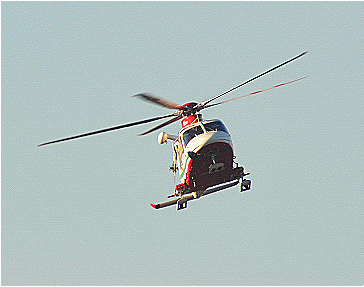
- Five-blade fully articulated main rotor, typically constructed from composite materials to reduce vibration and maintenance while maximizing aerodynamic efficiency.
- The rotor head design incorporates elastomeric bearings, minimizing the need for lubrication and regular maintenance tasks.
Tail Rotor
- A four-blade tail rotor optimized for low noise and high yaw authority.
- Positioned on the left side of the tail fin for conventional anti-torque and directional control.
Landing Gear
- Retractable tricycle landing gear to reduce drag and improve cruise performance.
- Dual-wheel nose gear and single wheels on the main gear struts, each housed in dedicated fairings when retracted.
3. Powerplant and Systems
Engines
- Typically powered by two Pratt & Whitney Canada PT6C-67C turboshaft engines.
- Each engine produces approximately 1,679 shp (shaft horsepower), providing substantial power margins for hot-and-high operations.
Transmission and Drive
- A main gearbox combining power from both engines, designed for high reliability and extended service life.
- Capable of running for a specified duration (often 30 minutes or more) following oil loss, in compliance with certification standards for safety.
Fuel System
- Standard internal tanks beneath the cabin floor, with optional auxiliary tanks available for extended-range missions.
- Dual-feed design allows continued engine supply if one feed is compromised.
Hydraulics and Electrical
- Redundant hydraulic circuits for flight controls.
- Multiple AC/DC electrical buses supported by generators on each engine, plus an APU (Auxiliary Power Unit) option in certain configurations.
4. Avionics and Cockpit
Integrated Glass Cockpit
- Usually features a Honeywell Primus Epic or Rockwell Collins Pro Line–based integrated avionics suite (depending on variant).
- Large color multifunction displays (MFDs) and electronic flight instrument system (EFIS), providing pilots with primary flight, engine, navigation, and systems data.
Advanced Flight Management
- Capable of full IFR (Instrument Flight Rules) operations, including Category A (Class 1) performance for commercial passenger flights.
- Optional synthetic vision, enhanced vision systems (EVS), weather radar, and autopilot with 4-axis control for complex missions.
Communication and Mission Equipment
- Multiple comm/navigation radios, standard or HF, plus mission-specific options (e.g., maritime radar, searchlight, hoist operator station).
- Integrated Health and Usage Monitoring System (HUMS) for advanced diagnostic and maintenance planning.
5. Performance Highlights
Note: Performance figures vary with aircraft configuration, weight, and environmental conditions (ISA, altitude, temperature).
- Max Cruise Speed: Approximately 165 knots (about 305 km/h).
- Range: Up to ~573 nm (1,061 km) with standard fuel; can be extended with auxiliary tanks.
- Service Ceiling: Around 20,000 ft (6,100 m).
- Hover Ceiling: Varies depending on weight; capable of hover OGE (Out of Ground Effect) in many operational conditions.
- Payload: Cabins can accommodate up to 15 passengers in high-density layout, plus 2 flight crew. VIP or special mission configurations adjust seating and payload accordingly.
6. Mission Configurations
Search and Rescue (SAR) / EMS
- Spacious cabin for stretchers, rescue personnel, and life-support equipment.
- Side hoist installations (commonly Goodrich or Breeze-Eastern) for overwater or mountain rescue.
- Optional floatation gear for overwater operations.
Offshore Support
- Widely used to transport personnel to and from oil and gas platforms.
- Certified for adverse weather and IFR conditions, with advanced autopilot features aiding maritime landings.
Law Enforcement / Paramilitary
- Configurable with surveillance radars, electro-optical/infrared (EO/IR) sensor turrets, loudspeakers, and fast-rope kits.
- Cabin layout adaptable for tactical teams or specialized mission equipment.
VIP / Corporate Transport
- High-end cabin finishes, tailored seating, soundproofing, inflight entertainment, and dedicated climate controls.
- Often employed by corporate operators and governmental VIP transport fleets.
Military / Government Variants
- Armored crew seats, ballistic protection, defensive aids, and integrated mission management systems for homeland security or combat search and rescue.
- Known in some cases as AW139M, featuring specialized avionics and weapons stations (if required).
7. Maintenance and Lifecycle Support
Maintenance Intervals
- Scheduled inspections at hourly and/or calendar-based intervals (e.g., 50/100/300/600-hour checks), plus major overhaul cycles for engines, gearboxes, and rotor components.
- HUMS data helps operators preemptively address component wear.
Global Support Network
- Leonardo offers an extensive worldwide service infrastructure, including authorized service centers, spare parts distribution hubs, and field support teams.
- Customizable power-by-the-hour programs for predictable operating costs.
Upgrades and Retrofits
- Avionics upgrades, mission kit installations, engine power improvements, and modernization packages are regularly developed to keep older aircraft aligned with newer standards.
8. Conclusion
The Leonardo AW139 stands out as a modern, high-performance, and reliable helicopter in the medium twin-engine category. Its versatile mission profiles, comprehensive avionics suite, and robust support network have made it a preferred choice among commercial, government, and military operators worldwide. Its success is anchored in:
- Robust Airframe and Systems: Advanced composites, cutting-edge avionics, and powerful turboshafts provide strong performance in challenging environments.
- Flexible Configurations: Easily adapted to SAR, EMS, offshore, VIP, or law enforcement missions with minimal downtime.
- Continuous Evolution: Ongoing upgrades, new mission kits, and Leonardo’s commitment to product improvement help maintain the AW139’s competitiveness.
When operated and maintained according to manufacturer guidance and regulatory standards, the AW139 delivers an excellent balance of safety, payload capability, and mission flexibility, cementing its reputation as one of the leading helicopters in its class.

