

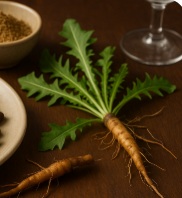
Radice di tarassaco tostata
Media gradimento : 6
| Valutazione | N. Esperti | Valutazione | N. Esperti |
|---|---|---|---|
| 1 | 6 | ||
| 2 | 7 | ||
| 3 | 8 | ||
| 4 | 9 | ||
| 5 | 10 |
0 pt da Al222
| Iscriviti per poter valutare questo oggetto, le sue recensioni e per contribuire a Tiiips.Valuta | Dove si trova? |
| "Descrizione" su Radice di tarassaco tostata di Al222 (23254 pt) | 22-nov-2025 12:48 |
| Leggi il Tiiip completo | (Invia il tuo commento) |
Radice di tarassaco tostata
Descrizione
La radice di tarassaco tostata è un ingrediente erboristico alimentare ottenuto dalle radici della comune pianta di tarassaco (Taraxacum officinale), accuratamente pulite, essiccate e sottoposte a tostatura controllata.
Tradizionalmente utilizzata come sostituto del caffè senza caffeina e come infuso erboristico, offre un sapore tostato, leggermente amaro e nocciolato, simile a caffè e cicoria.
È commercializzata come radice tagliata sfusa, in filtri per tisana o in polvere per bevande e prodotti funzionali.
Naturalmente priva di caffeina e fonte di fibre prebiotiche, in particolare inulina (in parte ridotta dalla tostatura).

Valori nutrizionali indicativi per 100 g
(radice essiccata e tostata; valori indicativi, variabili per origine e tostatura)
Energia: 250–330 kcal
Proteine: 2–5 g
Carboidrati: 60–80 g
zuccheri: 10–25 g
Lipidi: 1–3 g
SFA (prima occorrenza): contenuto basso
MUFA: tracce
PUFA: piccola quota
TFA: non attesi
Fibre alimentari (incl. inulina): 10–25 g
Minerali: potassio, calcio, ferro, magnesio (in quantità da tracce a moderate)
Nei normali usi in infusione il contributo nutrizionale per tazza è modesto, ad eccezione di alcuni componenti solubili (polifenoli, parte dei minerali).
Principali sostanze contenute
Inulina e altri fruttani (fibre solubili a potenziale azione prebiotica, parzialmente degradati dalla tostatura).
Lattone sesquiterpenici (es. derivati dell’acido taraxinico), responsabili delle note amare.
Acidi fenolici: acido clorogenico, caffeico e composti correlati.
Flavonoidi: derivati di luteolina e apigenina (in quantità inferiori rispetto alle foglie).
Triterpeni e steroli: come il taraxasterolo (da tracce a piccole quantità).
Minerali: in particolare potassio, oltre a calcio, ferro, magnesio.
Prodotti di reazione di Maillard formati durante la tostatura, che contribuiscono a colore e aroma tostato.
Processo di produzione
Raccolta delle radici di tarassaco da coltivazioni o raccolta controllata.
Pulizia e mondatura per rimuovere terra, parti danneggiate o marcescenti.
Taglio o affettatura in scaglie, cubetti o piccoli pezzi.
Essiccazione a temperatura controllata per stabilizzare la materia prima.
Tostatura in forni o tostatori a tamburo, con tempo e temperatura calibrati per sviluppare aroma e colore senza carbonizzare.
Raffreddamento, selezione e eventuale macinazione (per la forma in polvere).
Confezionamento in materiali barriera all’umidità (sacchetti, bustine filtro, scatole).
Produzione in regime GMP/HACCP, con controllo di contaminanti (metalli pesanti, carica microbica, corpi estranei) e, se pertinente, residui di fitofarmaci.
Proprietà fisiche
Aspetto: pezzi o polvere di colore marrone scuro fino a quasi nero, a seconda del grado di tostatura; prodotto asciutto, non appiccicoso.
Aroma: tostato, leggermente caramellato, che richiama caffè/cicoria, con lieve nota erbacea.
Sapore: moderatamente amaro, tostato, nocciolato, con dolcezza leggera da zuccheri caramellati.
Solubilità: la radice intera è insolubile in acqua; i componenti solubili si estraggono per infusione in acqua calda.
Densità apparente: medio-bassa, variabile in funzione del taglio e della macinazione.
Proprietà sensoriali e tecnologiche
Fornisce un infuso scuro, simile nell’aspetto a caffè o orzo.
Apporta note tostate, amare e nocciolate, arricchendo il profilo aromatico delle bevande.
Totalmente decaffeinata, adatta come alternativa alla bevanda di caffè.
Contribuisce a colore naturale e complessità aromatica in tisane e surrogati del caffè.
In forma di polvere, può essere usata in mix istantanei e aromatizzazioni per alimenti dolci e salati.
Impieghi alimentari
Infusi erboristici / tisane: radice tostata pura o in blend con cicoria, orzo, spezie, altre radici.
Surrogato del caffè: “caffè di tarassaco” come bevanda calda senza caffeina.
Blend con caffè: sostituzione parziale per modulare gusto e contenuto di caffeina.
Bevande funzionali: prodotti posizionati su digestione/benessere (claims regolati dalla normativa locale).
Prodotti da forno, barrette, granola: come nota aromatica tostata/amara in impasti o ripieni.
Ristorazione e coffee shop: bevanda calda alternativa per chi non consuma caffeina.
Nutrizione e salute
Fonte di fibre prebiotiche (inulina e fruttani correlati), potenzialmente utili a supportare il microbiota intestinale, se l’apporto complessivo è sufficiente; la tostatura riduce ma non azzera questa frazione.
Priva di caffeina, indicata per chi deve limitarne l’assunzione (gravidanza, ipertensione, sensibilità individuale).
Contiene composti fenolici con attività antiossidante in vitro; l’impatto reale dipende da quantità assunte e dieta complessiva.
Tradizionalmente associata, in ambito erboristico, a supporto digestivo ed epatobiliare; tali aspetti rientrano però nelle indicazioni salutistiche/fitoterapiche e non nelle semplici informazioni alimentari.
Dosi elevate di ingredienti ricchi in inulina e fruttani possono causare gonfiore, gas o fastidio intestinale nei soggetti sensibili.
In uso come normale tisana, il contributo calorico è trascurabile; il ruolo è soprattutto sensoriale e funzionale.
Nota porzione
Per infuso: 2–5 g di radice tostata per 200–250 mL di acqua calda.
Come surrogato del caffè: 5–10 g per 200–250 mL, in funzione del grado di macinazione e dell’intensità desiderata.
In miscele secche o prodotti da forno: tipicamente 1–5% del peso dell’impasto o del mix.
Allergeni e intolleranze
Il tarassaco appartiene alla famiglia delle Asteraceae (Composite): soggetti allergici ad altre piante della stessa famiglia (es. ambrosia, camomilla) possono manifestare reattività crociata.
In sé è naturalmente privo di glutine, salvo contaminazioni crociate lungo la filiera.
L’elevato contenuto di fruttani/inulina può causare disturbi gastrointestinali (gonfiore, meteorismo) in individui sensibili o in caso di assunzioni abbondanti.
Come per altri botanici, chi presenta allergie specifiche alle piante dovrebbe usare prudenza e verificare la tollerabilità individuale.
Conservazione e shelf-life
Conservare in luogo fresco, asciutto, al riparo da luce diretta, umidità e odori penetranti.
Utilizzare contenitori ermetici (buste multistrato richiudibili, barattoli, latte) per proteggere l’aroma e limitare l’ossidazione.
Shelf-life tipica: 18–24 mesi per radice ben essiccata e tostata, in imballo integro e adeguatamente stoccata.
Dopo l’apertura, è consigliabile il consumo entro 6–12 mesi per mantenere al meglio aroma e colore.
Sensibile a:
assorbimento di umidità (rischio muffe, perdita di fragranza, formazione grumi);
temperature elevate (accelerazione dell’ossidazione e perdita di componenti volatili).
Sicurezza e regolatorio
Generalmente considerata sicura come ingrediente alimentare / tisana erboristica se usata in quantità d’uso tradizionali.
Soggetta alla normativa per ingredienti botanici:
rispetto dei limiti per metalli pesanti, pesticidi, micotossine;
conformità ai criteri microbiologici;
assenza di adulterazioni e corpi estranei.
Eventuali indicazioni salutistiche (es. “detox”, “drenante”, “depurativo”) sono disciplinate separatamente e potrebbero non essere consentite come claim su alimenti standard in alcune giurisdizioni.
La produzione deve seguire GMP/HACCP, con tracciabilità dalla materia prima al prodotto finito.
Etichettatura
Denominazione tipica: “radice di tarassaco tostata”, eventualmente accompagnata dal nome botanico Taraxacum officinale.
Nelle tisane: indicata in elenco ingredienti, con eventuale evidenza grafica come ingrediente caratterizzante e indicazione “senza caffeina” ove pertinente.
Nei surrogati del caffè: dichiarata insieme ad altri ingredienti (cicoria, orzo, segale, spezie).
Non vi sono allergeni obbligatori intrinseci, ma vanno indicati eventuali allergeni derivanti da cross-contaminazioni o da altri ingredienti presenti nella miscela.
Troubleshooting
Infuso troppo debole / pallido:
tostatura troppo leggera o dosaggio insufficiente → aumentare la dose, macinare più finemente o utilizzare un grado di tostatura più spinto.
Gusto troppo amaro o bruciato:
tostatura eccessiva o tempo di infusione troppo lungo → ridurre intensità di tostatura o abbreviare il tempo di estrazione.
Perdita di aroma nel tempo:
packaging non adeguato o stoccaggio improprio → usare imballaggi barriera a luce/ossigeno, richiudere bene dopo l’uso, evitare alte temperature.
Residui e sedimenti in tazza:
particelle troppo fini o filtrazione insufficiente → regolare la granulometria o utilizzare filtri/filtro-buste a maglia più fine.
Formazione di grumi o comparsa di muffe:
esposizione a umidità → migliorare essiccazione iniziale, condizioni di stoccaggio e tenuta delle confezioni.
Sostenibilità e filiera
Il tarassaco è una pianta rustica e adattabile, potenzialmente coltivabile con input agricoli contenuti.
Aspetti di sostenibilità:
gestione responsabile della raccolta spontanea o coltivazione controllata;
pratiche agronomiche a basso impatto e tutela della biodiversità;
consumo energetico per essiccazione e tostatura;
scelta di materiali di imballaggio e ottimizzazione dei trasporti.
Gli stabilimenti di trasformazione devono gestire reflui e acque di lavaggio, monitorando l’impatto con indicatori quali BOD/COD quando necessario.
L’utilizzo della radice di tarassaco può favorire diversificazione colturale e inserirsi in sistemi agricoli più resilienti.
Principali funzioni INCI (cosmesi)
(come “Taraxacum Officinale (Dandelion) Root Extract” o analoghi)
Condizionante cutaneo e blando lenitivo in formulazioni skincare.
Utilizzato in prodotti “botanical”, “herbal” o a tema “detox” (tonici, creme, maschere, detergenti viso).
Gli estratti possono essere associati, a livello di marketing, a una presenza di antiossidanti (polifenoli).
Conclusione
La radice di tarassaco tostata è un ingrediente botanico versatile, apprezzato soprattutto come alternativa al caffè senza caffeina e componente di tisane aromatiche, con un profilo sensoriale tostato, leggermente amaro e complesso. Apporta fibre prebiotiche e composti fenolici, anche se il suo ruolo principale nei normali consumi è sensoriale e funzionale più che nutrizionale. Se approvvigionata responsabilmente, trasformata secondo GMP/HACCP e conservata in condizioni idonee, offre una soluzione stabile, caratterizzante e distintiva per bevande calde e alcune applicazioni in alimenti funzionali.
Mini-glossario
SFA – Saturated Fatty Acids (acidi grassi saturi): piccola frazione dei lipidi della radice, rilevanza nutrizionale minima alle dosi d’uso.
MUFA – Mono-unsaturated Fatty Acids (acidi grassi monoinsaturi): componente minoritaria dei lipidi della radice.
PUFA – Poly-unsaturated Fatty Acids (acidi grassi polinsaturi): quota più sensibile all’ossidazione, comunque presente in piccole quantità.
TFA – Trans Fatty Acids (acidi grassi trans): non caratteristici di questo ingrediente.
GMP/HACCP – Sistemi di buone pratiche di fabbricazione e analisi dei rischi/punti critici per garantire igiene, sicurezza e qualità.
BOD/COD – Biological / Chemical Oxygen Demand: parametri usati per valutare l’impatto ambientale dei reflui industriali.
Prebiotico – Sostanza utilizzata selettivamente da microrganismi dell’ospite, in grado di conferire un beneficio per la salute (es. inulina e fruttani).
Bibliografia__________________________________________________________________________
Fan M, Zhang X, Song H, Zhang Y. Dandelion (Taraxacum Genus): A Review of Chemical Constituents and Pharmacological Effects. Molecules. 2023 Jun 27;28(13):5022. doi: 10.3390/molecules28135022.
Abstract. Dandelion (Taraxacum genus) is a perennial herb belonging to the Asteraceae family. As a well-known and extensively studied genus, dandelion comprises numerous species. Some species have been widely used in both complementary and alternative medicine to clear heat, detoxify, activate blood circulation, dispel stasis, and discharge urine. Multiple pharmacological studies have highlighted its therapeutic potential, including anti-bacterial, anti-oxidant, anti-cancer, and anti-rheumatic activities. Furthermore, bioactive compounds associated with these effects include sesquiterpenoids, phenolic compounds, essential oils, saccharides, flavonoids, sphingolipids, triterpenoids, sterols, coumarins, etc. Based on recent studies about the Taraxacum genus, the present review critically evaluates the current state of dandelion utilization and summarizes the significant roles of dandelion and its constituents in different diseases. We also focus on the reported phytology, chemical composition, pharmacology, and toxicity of dandelion, along with the main possible action mechanisms behind their therapeutic activities. Meanwhile, the challenges and future directions of the Taraxacum genus are also prospected in this review, thus highlighting its pharmaceutical research and practical clinical applications.
Wirngo FE, Lambert MN, Jeppesen PB. The Physiological Effects of Dandelion (Taraxacum Officinale) in Type 2 Diabetes. Rev Diabet Stud. 2016 Summer-Fall;13(2-3):113-131. doi: 10.1900/RDS.2016.13.113.
Abstract. The tremendous rise in the economic burden of type 2 diabetes (T2D) has prompted a search for alternative and less expensive medicines. Dandelion offers a compelling profile of bioactive components with potential anti-diabetic properties. The Taraxacum genus from the Asteraceae family is found in the temperate zone of the Northern hemisphere. It is available in several areas around the world. In many countries, it is used as food and in some countries as therapeutics for the control and treatment of T2D. The anti-diabetic properties of dandelion are attributed to bioactive chemical components; these include chicoric acid, taraxasterol (TS), chlorogenic acid, and sesquiterpene lactones. Studies have outlined the useful pharmacological profile of dandelion for the treatment of an array of diseases, although little attention has been paid to the effects of its bioactive components on T2D to date. This review recapitulates previous work on dandelion and its potential for the treatment and prevention of T2D, highlighting its anti-diabetic properties, the structures of its chemical components, and their potential mechanisms of action in T2D. Although initial research appears promising, data on the cellular impact of dandelion are limited, necessitating further work on clonal β-cell lines (INS-1E), α-cell lines, and human skeletal cell lines for better identification of the active components that could be of use in the control and treatment of T2D. In fact, extensive in-vitro, in-vivo, and clinical research is required to investigate further the pharmacological, physiological, and biochemical mechanisms underlying the effects of dandelion-derived compounds on T2D.
Laquale S, Avato P, Argentieri MP, Candido V, Perniola M, D'Addabbo T. Nematicidal potential of Taraxacum officinale. Environ Sci Pollut Res Int. 2018 Oct;25(30):30056-30065. doi: 10.1007/s11356-018-2903-4.
Abstract. This study was aimed to investigate the activity of the Asteraceae species Taraxacum officinale against the root-knot nematode Meloidogyne incognita. Leaf and root extracts of T. officinale were tested in vitro at a range of 62.5-1000 and 250-1000 μg mL-1 concentrations on nematode juveniles and eggs, respectively, whereas treatments with 10-40 g kg-1 soil rates of dry leaf and root T. officinale biomass were applied to soil infested by M. incognita in greenhouse experiments on potted tomato. Peak 36 and 50% juvenile mortality and 14.8 and 23.8% egg hatchability reduction were recorded at the maximum concentration of leaf and root extracts, respectively. Soil treatments with T. officinale leaf and root material strongly suppressed nematode multiplication and gall formation on tomato roots and significantly increased plant growth. Chicoric acid and 3-O- and 3,5-di-O-caffeoylquinic acid were found to be the main components of leaf and root extract, respectively, and proved, as the total hydroalcoholic extracts from T. officinale leaf and root material, for an antioxidant activity. Data from this study indicate the suitability of plant materials from T. officinale for a potential formulation of nematicidal products to include in sustainable nematode management strategies.
Lis B, Jedrejek D, Rywaniak J, Soluch A, Stochmal A, Olas B. Flavonoid Preparations from Taraxacum officinale L. Fruits-A Phytochemical, Antioxidant and Hemostasis Studies. Molecules. 2020 Nov 18;25(22):5402. doi: 10.3390/molecules25225402.
Abstract. Dandelion (Taraxacum officinale L.) roots, leaves, and flowers have a long history of use in traditional medicine. Compared to the above organs, dandelion fruits are the least known and used. Hence, the present paper was aimed at the phytochemical analysis of T. officinale fruit extract and estimating its antiradical, antiplatelet, and antioxidant properties related to hemostasis. Methanolic extract of fruits (E1), enriched with polyphenols (188 mg gallic acid equivalents (GAE)/g), was successfully separated into cinnamic acids (E2; 448 mg GAE/g) and flavonoids (E3; 377 mg GAE/g) extracts. Flavonoid extract was further divided into four fractions characterized by individual content: A (luteolin fraction; 880 mg GAE/g), B (philonotisflavone fraction; 516 mg GAE/g), C (flavonolignans fraction; 384 mg GAE/g), and D (flavone aglycones fraction; 632 mg GAE/g). High DPPH radical scavenging activity was evaluated for fractions A and B (A > B > Trolox), medium for extracts (Trolox > E3 > E2 > E1), and low for fractions C and D. No simple correlation between polyphenol content and antiradical activity was observed, indicating a significant influence of qualitative factor, including higher anti-oxidative effect of flavonoids with B-ring catechol system compared to hydroxycinnamic acids. No cytotoxic effect on platelets was observed for any dandelion preparation tested. In experiments on plasma and platelets, using several different parameters (lipid peroxidation, protein carbonylation, oxidation of thiols, and platelet adhesion), the highest antioxidant and antiplatelet potential was demonstrated by three fruit preparations-hydroxycinnamic acids extract (E2), flavonoid extract (E3), and luteolin fraction (A). The results of this paper provide new information on dandelion metabolites, as well as their biological potential and possible use concerning cardiovascular diseases.
Kamal FZ, Lefter R, Mihai CT, Farah H, Ciobica A, Ali A, Radu I, Mavroudis I, Ech-Chahad A. Chemical Composition, Antioxidant and Antiproliferative Activities of Taraxacum officinale Essential Oil. Molecules. 2022 Oct 1;27(19):6477. doi: 10.3390/molecules27196477.
Abstract. Taraxacum officinale (TO) has been historically used for medicinal purposes due to its biological activity against specific disorders. To investigate the antioxidant and the antiproliferativepotential of TO essential oil in vitro and in vivo, the chemical composition of the essential oil was analyzed by GC-MS. The in vivo antioxidant capacity was assessed on liver and kidney homogenate samples from mice subjected to acetaminophen-induced oxidative stress and treated with TO essential oil (600 and 12,000 mg/kg BW) for 14 days. The in vitro scavenging activity was assayed using the 1,1-diphenyl-2-picrylhydrazyl (DPPH) and the reducing power methods. The cytotoxic effects against the HeLa cancer cell line were analyzed. The GC-MS analysis showed the presence of 34 compounds, 8 of which were identified as major constituents. The TO essential oil protected mice's liver and kidneys from acetaminophen-induced oxidative stress by enhancing antioxidant enzymes (catalase, superoxide dismutase, and glutathione) and lowering malondialdehyde levels. In vitro, the TO essential oil demonstrated low scavenging activity against DPPH (IC50 = 2.00 ± 0.05 mg/mL) and modest reducing power (EC50 = 0.963 ± 0.006 mg/mL). The growth of the HeLa cells was also reduced by the TO essential oil with an inhibition rate of 83.58% at 95 µg/mL. Current results reveal significant antioxidant and antiproliferative effects in a dose-dependent manner and suggest that Taraxacum officinale essential oil could be useful in formulations for cancer therapy.
Hao F, Deng X, Yu X, Wang W, Yan W, Zhao X, Wang X, Bai C, Wang Z, Han L. Taraxacum: A Review of Ethnopharmacology, Phytochemistry and Pharmacological Activity. Am J Chin Med. 2024;52(1):183-215. doi: 10.1142/S0192415X24500083.
Abstract. Taraxacum refers to the genus Taraxacum, which has a long history of use as a medicinal plant and is widely distributed around the world. There are over 2500 species in the genus Taraxacum recorded as medicinal plants in China, Central Asia, Europe, and the Americas. It has traditionally been used for detoxification, diuresis, liver protection, the treatment of various inflammations, antimicrobial properties, and so on. We used the most typically reported Taraxacum officinale as an example and assembled its chemical makeup, including sesquiterpene, triterpene, steroids, flavone, sugar and its derivatives, phenolic acids, fatty acids, and other compounds, which are also the material basis for its pharmacological effects. Pharmacological investigations have revealed that Taraxacum crude extracts and chemical compounds contain antimicrobial infection, anti-inflammatory, antitumor, anti-oxidative, liver protective, and blood sugar and blood lipid management properties. These findings adequately confirm the previously described traditional uses and aid in explaining its therapeutic applications.
Jeon HJ, Kang HJ, Jung HJ, Kang YS, Lim CJ, Kim YM, Park EH. Anti-inflammatory activity of Taraxacum officinale. J Ethnopharmacol. 2008 Jan 4;115(1):82-8. doi: 10.1016/j.jep.2007.09.006.
Abstract. Taraxacum officinale has been widely used as a folkloric medicine for the treatment of diverse diseases. The dried plant was extracted with 70% ethanol to generate its ethanol extract (TEE). For some experiments, ethyl acetate (EA), n-butanol (BuOH) and aqueous (Aq) fractions were prepared in succession from TEE. TEE showed a scavenging activity in the 1,1-diphenyl-2-picrylhydrazyl (DPPH) assay, a diminishing effect on intracellular reactive oxygen species (ROS) level, and an anti-angiogenic activity in the chicken chorioallantoic (CAM) assay. In the carrageenan-induced air pouch model, TEE inhibited production of exudate, and significantly diminished nitric oxide (NO) and leukocyte levels in the exudate. It also possessed an inhibitory effect on acetic acid-induced vascular permeability and caused a dose-dependent inhibition on acetic acid-induced abdominal writhing in mice. Suppressive effects of TEE on the production of NO and expression of inducible nitric oxide synthase (iNOS) and cyclooxygenase-2 (COX-2) in lipopolysaccharide (LPS)-stimulated macrophages were also assessed. Among the fractions, the n-butanol fraction (BuOH) was identified to be most effective in the CAM assay. Collectively, Taraxacum officinale contains anti-angiogenic, anti-inflammatory and anti-nociceptive activities through its inhibition of NO production and COX-2 expression and/or its antioxidative activity.
Martinez M, Poirrier P, Chamy R, Prüfer D, Schulze-Gronover C, Jorquera L, Ruiz G. Taraxacum officinale and related species-An ethnopharmacological review and its potential as a commercial medicinal plant. J Ethnopharmacol. 2015 Jul 1;169:244-62. doi: 10.1016/j.jep.2015.03.067. Epub 2015 Apr 6. PMID: 25858507.
Li Y, Chen Y, Sun-Waterhouse D. The potential of dandelion in the fight against gastrointestinal diseases: A review. J Ethnopharmacol. 2022 Jul 15;293:115272. doi: 10.1016/j.jep.2022.115272.
Menke K, Schwermer M, Felenda J, Beckmann C, Stintzing F, Schramm A, Zuzak TJ. Taraxacum officinale extract shows antitumor effects on pediatric cancer cells and enhance mistletoe therapy. Complement Ther Med. 2018 Oct;40:158-164. doi: 10.1016/j.ctim.2018.03.005. Epub 2018 Mar 13. PMID: 30219442.
| Iscriviti per poter valutare questo oggetto, le sue recensioni e per contribuire a Tiiips.ValutaChiudi | (0 commenti) |
Leggi altri Tiiips su questo oggetto in Inglese (1)
Tipologia:   Natural Principali sostanze contenute:   Ultimo aggiornamento:   2025-11-22 12:45:43 | Rischio chimico:   |

