

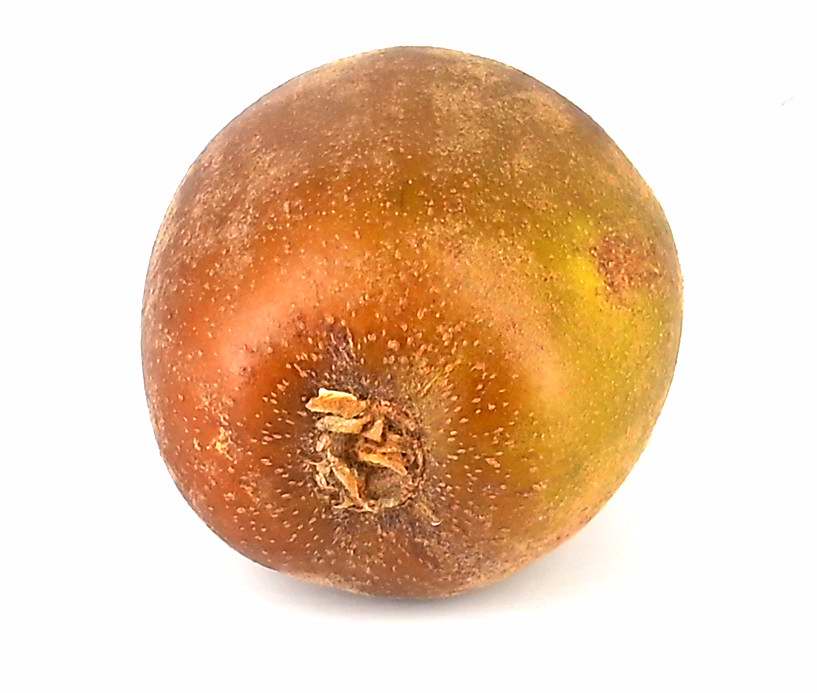
Actinidia chinensis (Actinidiaceae) – golden kiwi fruit / Chinese kiwifruit
Actinidia chinensis, commonly known as golden kiwi fruit or Chinese kiwifruit, is a climbing shrub native to central–southern China and a member of the family Actinidiaceae. It is the species from which most modern yellow-fleshed cultivars have been developed, selected for their sweetness, tropical aroma, and improved storability compared with the green kiwifruit (Actinidia deliciosa). Today, the plant is of major agronomic and nutritional importance and is cultivated extensively in China, New Zealand, Italy, and other regions with temperate or mild subtropical climates.
Morphologically, A. chinensis is a vigorous woody vine, capable of reaching several metres, with flexible canes that require support structures for proper orchard management. Its large, alternate, slightly cordate leaves, often bearing fine pubescence during early growth, sustain the plant’s strong vegetative development. The species is dioecious, meaning that male and female plants are separate; therefore, orchard planning must ensure adequate pollination. The flowers, creamy white and delicately fragrant, appear in spring and are highly attractive to pollinating insects. The fruits, oval berries with smooth or slightly velvety skin, display a flesh colour ranging from green-gold to deep yellow depending on the cultivar, with an aromatic profile marked by tropical notes and a balanced sweetness/acidity ratio.

From an ecological and agronomic standpoint, A. chinensis prefers temperate climates with winters that are not excessively cold and springs free from late frosts, to which the species is particularly sensitive during flowering. It requires deep, well-drained soils, rich in organic matter, and a steady water supply, especially during fruit enlargement. Modern cultivation relies on targeted pruning, careful canopy management, and optimized pollination practices, all of which are essential to achieving high yields and consistent fruit quality. The species may be susceptible to specific pathogens, including bacterial canker and root rots, necessitating attentive phytosanitary management.
Phytochemically, the fruit of A. chinensis is distinguished by a high content of vitamin C, often exceeding that of many citrus fruits, as well as carotenoids, polyphenols, citrus-like flavonoids, and various aromatic constituents that determine its sensory and functional properties. Soluble and insoluble fibres in both pulp and seeds contribute to digestive health. Its sugar profile—dominated by glucose and fructose—provides characteristic sweetness, while organic acids contribute to its freshness and flavour balance.
From a nutritional and health perspective, golden kiwifruit is valued as a functional food, owing to its combined content of antioxidants, vitamins, and dietary fibre. Research highlights potential benefits such as supporting immune function, reducing oxidative stress, promoting digestive well-being, and contributing to improved intestinal motility. The fruit is generally well tolerated and easily digested, although individuals with specific kiwifruit allergies should avoid consumption.
Botanical classification (APG IV system)
| Category | Data |
|---|
| Common name | yellow kiwi, golden kiwi |
| Botanical name | Actinidia chinensis Planch. |
| Kingdom | Plantae |
| Clade | Angiosperms → eudicots |
| Order | Ericales |
| Family | Actinidiaceae |
| Genus | Actinidia |
| Species | Actinidia chinensis Planch. |
Indicative nutritional values per 100 g (ripe fresh fruit of Actinidia chinensis)
Average values refer to the fresh pulp of yellow kiwi; figures may vary depending on cultivar and ripeness stage.
| Component | Approximate value per 100 g |
|---|
| Energy | ~ 55–60 kcal |
| Water | ~ 82–84 g |
| Total carbohydrates | ~ 14–15 g |
| — of which sugars | ~ 12–13 g |
| Dietary fiber | ~ 2.5–3 g |
| Protein | ~ 1.0–1.2 g |
| Total lipids | ~ 0.3–0.4 g |
| — of which saturated fatty acids (SFA – saturated fatty acids) | ~ 0.03–0.04 g |
| — monounsaturated fatty acids (MUFA – monounsaturated fatty acids) | ~ 0.02 g |
| — polyunsaturated fatty acids (PUFA – polyunsaturated fatty acids) | ~ 0.15–0.18 g |
| Sodium | ~ 3–5 mg |
| Main minerals | potassium (≈ 300–320 mg), calcium (≈ 25–35 mg), phosphorus, magnesium, iron |
| Relevant vitamins | very high vitamin C (≈ 100–160 mg), vitamin E, folates, vitamin K, carotenoids |
A typical serving (1 fruit ≈ 100–130 g) provides an excellent supply of vitamin C, along with fiber, folates, and antioxidants.
Note on the lipid profile
Yellow kiwi contains very low amounts of fat:
Saturated fatty acids (SFA) occur only in trace levels; excessive intake in the overall diet may be less favorable for cardiovascular health.
Monounsaturated (MUFA) and polyunsaturated (PUFA) fatty acids are also present in minimal quantities and do not meaningfully affect daily lipid intake.
The nutritional value of yellow kiwi is therefore primarily linked to its remarkably high vitamin C content, antioxidants, dietary fiber, and micronutrients rather than to its lipid content.

How to Cultivate It
To obtain this fruit, two plants are needed: a male and the other female that will be pollinated by bees.
- Soil: Prefers well-drained, fertile soils rich in organic matter.
- Light: Requires full sun to partial shade.
- Water: Needs regular, consistent watering, especially during the growing season, to maintain moist but not waterlogged soil.
- Temperature: Frost-sensitive, requiring protection in colder climates. Thrives in temperate to subtropical regions.
Uses and Benefits
Golden kiwi is primarily consumed fresh but is also popular in juices, smoothies, and desserts. Its high vitamin C content makes it excellent for boosting immune health. Additionally, the natural digestive enzyme actinidin makes it beneficial for improving digestion.
Applications
- Culinary: Widely used in fresh salads, desserts, and as a garnish due to its vibrant color and sweet flavor.
- Nutritional Supplements: Often included in health supplements for its high antioxidant and vitamin content.
- Cosmetic: Extracts of golden kiwi are used in skin care products for their antioxidant properties, promoting skin health and vitality.
Environmental and Safety Considerations
Actinidia chinensis should be grown with consideration for local ecosystems, as it can become invasive under certain conditions. Sustainable agricultural practices are encouraged to minimize environmental impact. The fruit is generally safe for consumption by most people, but those with a kiwi allergy should avoid it. Care should also be taken in handling and pruning the plants, as the sap can cause dermatitis in sensitive individuals.
Attention: those suffering from Crohn's disease must abstain from consuming it.
Studies
Kiwis contain on average:
- Vitamin C Ascorbic acid in the following measures (Cultivar Actinidia chinenssis Plach, Gaivard): mg/g 5,44 in the juice, 1,14 in the skin, 4,20 in the pulp (1).
- Vitamin E
- Potassium
It has good antioxidant and anti-inflammatory properties due to the presence of ascorbic acid.
Flavonoids, vitamin C and carotenoids have a preventive effect against cardiovascular diseases (2).
Kiwi has proven effective in relieving chronic constipation (3) with these benefits:
- decreased in days of laxative used
- satisfaction of bowel habit
- improvement in transit time
- improvement in rectal sensation
Kiwi studies
References_________________________________________________________________________
(1) Kvesitatdze GI, Kalandiia AG, Papunidze SG, Vanidze MR. Use of HPLC for identification and quantitative determination of ascorbic acid in kiwi fruit. Prikl Biokhim Mikrobiol. 2001 Mar-Apr;37(2):243-6. Russian. PMID: 11357433.
(2) Jung KA, Song TC, Han D, Kim IH, Kim YE, Lee CH. Cardiovascular protective properties of kiwifruit extracts in vitro. Biol Pharm Bull. 2005 Sep;28(9):1782-5. doi: 10.1248/bpb.28.1782.
Abstract. It is currently accepted that the consumption of fruit-derived antioxidants such as vitamin C, carotenoids, and flavonoids provides a preventive effect against cardiovascular disease. The purpose of the present study was to investigate potential cardiovascular protective properties of aqueous and 70% ethanol extracts from kiwifruit by analyzing the antioxidative, antihypertensive, hypocholesterolemic, and fibrinolytic activities in vitro. Aqueous and 70% ethanol extracts at 50 mg/ml showed DPPH-radical scavenging activities of 72.31% and 70.75%, respectively. Total antioxidant activity in linoleic acid emulsion was 85-88% at 10 mg/ml and 96-98% at 50 mg/ml of kiwifruit extract. Inhibitory activities against angiogensin I-converting enzyme of kiwifruit extracts were 21-26% at 10 mg/ml and 46-49% at 50 mg/ml, and inhibitory activities on HMG-CoA reductase were 13-14% at 10 mg/ml and 19-30% at 50 mg/ml. Fibrinolytic activity of kiwifruit was also observed at a high concentration of 100 mg/ml in both aqueous and 70% EtOH extracts. Based on our results, kiwifruit have potential cardiovascular protective properties in vitro.
(3) Chan AO, Leung G, Tong T, Wong NY. Increasing dietary fiber intake in terms of kiwifruit improves constipation in Chinese patients. World J Gastroenterol. 2007 Sep 21;13(35):4771-5. doi: 10.3748/wjg.v13.i35.4771.
Abstract. Aim: To investigate if increased dietary fiber, in terms of kiwifruit, is effective in Chinese constipated patients. Methods: 33 constipated patients and 20 healthy volunteers were recruited for a 4-wk treatment of kiwi fruit twice daily. Response during wk 1-4 was defined as an increase in complete spontaneous bowl, motion (CSBM) > or = 1/wk. Secondary efficacy included response during wk 1-4, individual symptoms and scores of bowel habits and constipation. Responses were compared with the baseline run-in period. Colonic transit time and anorectal manometry were performed before and after treatment.....Conclusion: Increasing dietary fiber intake is effective in relieving chronic constipation in Chinese population.