

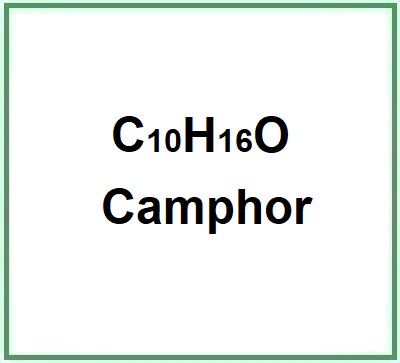
Canfora
Media gradimento : 6.5
| Valutazione | N. Esperti | Valutazione | N. Esperti |
|---|---|---|---|
| 1 | 6 | ||
| 2 | 7 | ||
| 3 | 8 | ||
| 4 | 9 | ||
| 5 | 10 |
Pro:
Antimicrobico (1) Antifungino (1)10 pt da CarPas
| Iscriviti per poter valutare questo oggetto, le sue recensioni e per contribuire a Tiiips.Valuta | Dove si trova? |
| "Canfora studi" su Canfora Consenso relazione 10 di CarPas (5257 pt) | 01-set-2022 17:32 |
| Leggi il Tiiip completo | (Invia il tuo commento) |
Compendio degli studi più significativi con riferimento a proprietà, assunzione, effetti.
Chen W, Vermaak I, Viljoen A. Camphor--a fumigant during the Black Death and a coveted fragrant wood in ancient Egypt and Babylon--a review. Molecules. 2013 May 10;18(5):5434-54. doi: 10.3390/molecules18055434.
Abstract. This review briefly summarises the uses and synthesis of camphor and discusses the biological properties and toxicity of this valuable molecule.
Ivanov M, Kannan A, Stojković DS, Glamočlija J, Calhelha RC, Ferreira ICFR, Sanglard D, Soković M. Camphor and Eucalyptol-Anticandidal Spectrum, Antivirulence Effect, Efflux Pumps Interference and Cytotoxicity. Int J Mol Sci. 2021 Jan 6;22(2):483. doi: 10.3390/ijms22020483.
Abstract. ... The beneficial antifungal activities of camphor were achieved with an amount that was non-toxic to porcine liver cells, making it a promising antifungal compound for future development. The antifungal concentration of eucalyptol caused cytotoxic effects and increased expression of efflux pump genes, which suggests that it is an unsuitable antifungal candidate.
Ağuş HH, Yilmaz S, Şengöz CO. Crosstalk between autophagy and apoptosis induced by camphor in Schizosaccharomyces pombe. Turk J Biol. 2019 Dec 13;43(6):382-390. doi: 10.3906/biy-1908-11.
Abstract. Camphor is widely used in pharmacy, the food industry, and cosmetics. In this study, we evaluate inhibitory and cytotoxic effects of camphor in the fission yeast (Schizosaccharomyces pombe), which presents a unicellular model in mechanistic toxicology and cell biology.
Smith A, Matthews O. Aromatic ointments for the common cold: what does the science say? Drugs Context. 2022 Aug 1;11:2022-5-6. doi: 10.7573/dic.2022-5-6.
Abstract. ...Whilst not affecting objective measures of nasal airway resistance, the use of aromatics leads to improvements in a number of subjective sensations associated with the common cold. Such benefits result in better sleep, which likely aids recovery. Therefore, aromatics remain a well tolerated and effective option for the symptomatic relief of upper respiratory tract infections.....
Moayedi Y, Greenberg SA, Jenkins BA, Marshall KL, Dimitrov LV, Nelson AM, Owens DM, Lumpkin EA. Camphor white oil induces tumor regression through cytotoxic T cell-dependent mechanisms. Mol Carcinog. 2019 May;58(5):722-734. doi: 10.1002/mc.22965.
Abstract. Bioactive derivatives from the camphor laurel tree, Cinnamomum camphora, are posited to exhibit chemopreventive properties but the efficacy and mechanism of these natural products are not fully understood. We tested an essential-oil derivative, camphor white oil (CWO), for anti-tumor activity in a mouse model of keratinocyte-derived skin cancer. ...
Dos Santos E, Leitão MM, Aguero Ito CN, Silva-Filho SE, Arena AC, Silva-Comar FMS, Nakamura Cuman RK, Oliveira RJ, Nazari Formagio AS, Leite Kassuya CA. Analgesic and anti-inflammatory articular effects of essential oil and camphor isolated from Ocimum kilimandscharicum Gürke leaves. J Ethnopharmacol. 2021 Apr 6;269:113697. doi: 10.1016/j.jep.2020.113697.
Abstract. ...The aim of this study was to test the anti-inflammatory and anti-hyperalgesic (analgesic) properties of the essential oil and camphor isolated from O. Kilimandscharicum leaves (EOOK) in 4 models including zymosan induced-articular inflammation model in mice....
Karaca N, Şener G, Demirci B, Demirci F. Synergistic antibacterial combination of Lavandula latifolia Medik. essential oil with camphor. Z Naturforsch C J Biosci. 2020 Nov 2;76(3-4):169-173. doi: 10.1515/znc-2020-0051.
Abstract. ... In this present study, it was aimed to evaluate the in vitro potential synergistic antibacterial effect of Lavandula latifolia (spike lavender) essential oil with camphor by using the checkerboard method against the human pathogens; Staphylococcus aureus and Listeria monocytogenes....
Twiss J, McKenna S, Ganderton L, Jenkins S, Ben-L'amri M, Gain K, Fowler R, Gabbay E. Psychometric performance of the CAMPHOR and SF-36 in pulmonary hypertension. BMC Pulm Med. 2013 Jul 12;13:45. doi: 10.1186/1471-2466-13-45.
Abstract. Background: The Cambridge Pulmonary Hypertension Outcome Review (CAMPHOR) and the Medical Outcomes Study Short Form 36 (SF-36) are widely used to assess patient-reported outcome in individuals with pulmonary hypertension (PH). The aim of the study was to compare the psychometric properties of the two measures. Methods: Participants were recruited from specialist PH centres in Australia and New Zealand. Participants completed the CAMPHOR and SF-36 at two time points two weeks apart. The SF-36 is a generic health status questionnaire consisting of 36 items split into 8 sections. The CAMPHOR is a PH-specific measure consisting of 3 scales; symptoms, activity limitations and needs-based QoL. The questionnaires were assessed for distributional properties (floor and ceiling effects), internal consistency (Cronbach's alpha), test-retest reliability and construct validity (scores by World Health Organisation functional classification). Results: The sample comprised 65 participants (mean (SD) age = 57.2 (14.5) years; n(%) male = 14 (21.5%)). Most of the patients were in WHO class 2 (27.7%) and 3 (61.5%). High ceiling effects were observed for the SF-36 bodily pain, social functioning and role emotional domains. Test-retest reliability was poor for six of the eight SF-36 domains, indicating high levels of random measurement error. Three of the SF-36 domains did not distinguish between WHO classes. In contrast, all CAMPHOR scales exhibited good distributional properties, test retest reliability and distinguished between WHO functional classes. Conclusions: The CAMPHOR exhibited superior psychometric properties, compared with the SF-36, in the assessment of PH patient-reported outcome.
Dosoky NS, Setzer WN. Maternal Reproductive Toxicity of Some Essential Oils and Their Constituents. Int J Mol Sci. 2021 Feb 27;22(5):2380. doi: 10.3390/ijms22052380.
Abstract. Even though several plants can improve the female reproductive function, the use of herbs, herbal preparations, or essential oils during pregnancy is questionable. This review is focused on the effects of some essential oils and their constituents on the female reproductive system during pregnancy and on the development of the fetus. The major concerns include causing abortion, reproductive hormone modulation, maternal toxicity, teratogenicity, and embryo-fetotoxicity. This work summarizes the important studies on the reproductive effects of essential oil constituents anethole, apiole, citral, camphor, thymoquinone, trans-sabinyl acetate, methyl salicylate, thujone, pulegone, β-elemene, β-eudesmol, and costus lactone, among others.
| Iscriviti per poter valutare questo oggetto, le sue recensioni e per contribuire a Tiiips.ValutaChiudi | (0 commenti) |
| "Descrizione" su Canfora Consenso relazione 10 di CarPas (5257 pt) | 01-set-2022 17:22 |
| Leggi il Tiiip completo | (Invia il tuo commento) |
Canfora o Camphora è un prodotto naturale, chetone biciclico monoterpene che si ricava tradizionalmente dalla distillazione del legno e della corteccia dall'albero Cinnamomum camphora che cresce in Taiwan, Borneo, Asia e Giappone ed è anche componente dell'olio essenziale di molte specie di piante aromatiche. E' sintetizzata utilizzando l'alfa pinene che si ricava dall'olio della trementina attraverso un procedimento chimico e la canfora naturale si ottiene ancora oggi attraverso la distillazione del legno dell'albero Cinnamomum camphora.
Si presenta in forma sintetica di polvere cristallina bianca o incolore , con odore di naftalina. Stabile. Incompatibile con agenti ossidanti forti, sostanze organiche sali metallici, materiali combustibili, . Infiammabile. Solubile in alcool, cloroformio, etere ed altri solventi organici

A cosa serve e dove si usa
Intermedio nella sintesi di sostanze chimiche aromatiche.
Alimentazione
Fragranza utilizzata come antielmintico e conservante.
Cosmetica
L'olio di canfora è utilizzato come fragranza e rinfrescante in prodotti per aromaterapia, detergenti, oli per massaggi. Sulle etichette di alcuni prodotti cosmetici contenenti questo olio sono riportate proprietà astringenti e migliorative dell'aspetto della pelle. Studi clinici hanno dimostrato che la canfora è un potente agente antirughe in quanto induce la proliferazione dei fibroblasti dermici primari (1)
Come per altri composti chimici inseriti in prodotti cosmetici, anche la canfora non è indenne da potenziale tossicità e questo studio fornisce l'attuale panoramica delle attuali conoscenze sull'argomento (2).
Medicina
La canfora ha una lunga storia come antico rimedio analettico e stimolante circolatorio, i suoi fumi vennero usati durante la peste nera del 1346 e durante le epidemie di colera e vaiolo.
La canfora produce un leggero effetto anestetico, analgesico ed antipruriginoso locale, è utilizzata in prodotti farmaceutici per alleviare il bruciore ed il prurito delle punture di insetti e si è dimostrata repellente contro alcuni insetti (3). Sia la canfora che il suo olio essenziale hanno dimostrato proprietà antivirali, antimicrobiche ed antifungine (4).
Questo studio del Cardiovascular Pharmacology, ZekaPha GmbH, Mainz-Wiesbaden, Germany, ha accertato che la canfora estratta da bacche di biancospino contrasta una caduta ortostatica della pressione sanguigna (5).
Per via orale ha un leggero effetto espettorante, ma l'efficacia degli effetti antitosse sono risultati, da studi clinici, piuttosto contrastanti.
La canfora si è mostrata un moderato potenziatore della penetrazione cutanea (6).
Altri usi
In PVC, produzione di celluloide, gomma sintetica, nitrocellulosa, è utilizzata come plastificante
Nella produzione della ballistite è un agente stabilizzatore.
Sicurezza
La canfora ha un grado di tossicità elevato (7).
Per approfondire: Canfora studi
Caratteristiche tipiche del prodotto commerciale Synthetic camphor
| Appearance | White crystalline powder |
| Boiling Point | 207.4±0.0°C at 760 mmHg |
| Melting Point | 175-177 °C |
| Flash Point | 64.4±0.0°C |
| Density | 1.0±0.1 g/cm3 |
| PSA | 17.07000 |
| LogP | 22.13 |
| Refraction Index | 1.485 |
| Vapor Pressure | 0.2±0.4 mmHg at 25°C |
| Vapor density | 5.2 |
| Water Solubility | 0.12 g/100 mL (25 ºC) |
| Specific Optical Rotation | -2°~+5° |
| Specific Rotation (20°C) | +41° -- +44° |
| Chloride | ≤0.035% |
| Reside solvent | 0.217% |
| Safety | ![]() |
![]() | ![]() |
![]() | ![]() |
Prezzo
100 g €31.20
500 g €84.00
Sinonimi
Bibliografia_________________________________________________________________
(1) Tran TA, Ho MT, Song YW, Cho M, Cho SK. Camphor Induces Proliferative and Anti-senescence Activities in Human Primary Dermal Fibroblasts and Inhibits UV-Induced Wrinkle Formation in Mouse Skin. Phytother Res. 2015 Dec;29(12):1917-25. doi: 10.1002/ptr.5484.
(2) Barbaud A, Lafforgue C. Risks associated with cosmetic ingredients. Ann Dermatol Venereol. 2021 Jun;148(2):77-93. doi: 10.1016/j.annder.2020.04.027.
(3) Ojimelukwe, P. C., & Adler, C. (2000). Toxicity and repellent effects of eugenol, thymol, linalool, menthol and other pure compounds on Dinoderus bifloveatus (Coleoptera: Bostrichidae). Journal of Sustainable Agriculture and the Environment, 2(1), 47-54.
(4) Viljoen A, van Vuuren S, Ernst E, Klepser M, Demirci B, Başer H, van Wyk BE. Osmitopsis asteriscoides (Asteraceae)-the antimicrobial activity and essential oil composition of a Cape-Dutch remedy. J Ethnopharmacol. 2003 Oct;88(2-3):137-43. doi: 10.1016/s0378-8741(03)00191-0.
(5) Belz GG, Loew D. Dose-response related efficacy in orthostatic hypotension of a fixed combination of D-camphor and an extract from fresh crataegus berries and the contribution of the single components. Phytomedicine. 2003;10 Suppl 4:61-7. doi: 10.1078/1433-187x-00303.
(6) Ramesh, G., Vamshi Vishnu, Y., Kishan, V., & Rao, Y. M. (2007). Studies on the influence of penetration enhancers on in vitro permeation of carvedilol across rat abdominal skin. Current Trends in Biotechnology and Pharmacy, 1(1), 62-69.
(7) Siegel E, Wason S. Camphor toxicity. Pediatr Clin North Am. 1986 Apr;33(2):375-9. doi: 10.1016/s0031-3955(16)35008-8.
| Iscriviti per poter valutare questo oggetto, le sue recensioni e per contribuire a Tiiips.ValutaChiudi | (0 commenti) |
Leggi altri Tiiips su questo oggetto in Inglese (2)
Tipologia:   Natural Principali sostanze contenute:   Ultimo aggiornamento:   2022-11-28 21:29:02 | Rischio chimico:   |

