

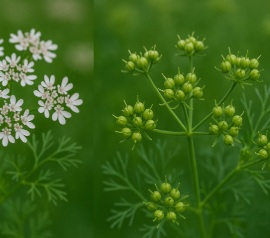
Coriander
Rating : 7
| Evaluation | N. Experts | Evaluation | N. Experts |
|---|---|---|---|
| 1 | 6 | ||
| 2 | 7 | ||
| 3 | 8 | ||
| 4 | 9 | ||
| 5 | 10 |
Pros:
Antimicrobial (1) Antioxidant (1) Cardioprotective (1)10 pts from Frank123
| Sign up to vote this object, vote his reviews and to contribute to Tiiips.Evaluate | Where is this found? |
| "Coriander studies" about Coriander Review Consensus 8 by Frank123 (12488 pt) | 2019-Jul-17 21:08 |
| Read the full Tiiip | (Send your comment) |
Evaluation of the synergistic effects of antioxidant activity on mixtures of the essential oil from Apium graveolens L., Thymus vulgaris L. and Coriandrum sativum L. using simplex-lattice design.
Crespo YA, Bravo Sánchez LR, Quintana YG, Cabrera AST, Bermúdez Del Sol A, Mayancha DMG.
Heliyon. 2019 Jun 15;5(6):e01942. doi: 10.1016/j.heliyon.2019.e01942.
Phytochemical and bioactive profile of Coriandrum sativum L.
Wei JN, Liu ZH, Zhao YP, Zhao LL, Xue TK, Lan QK.
Food Chem. 2019 Jul 15;286:260-267. doi: 10.1016/j.foodchem.2019.01.171
Intake of Heated Leaf Extract of Coriandrum sativum Contributes to Resistance to Oxidative Stress via Decreases in Heavy Metal Concentrations in the Kidney.
Nishio R, Tamano H, Morioka H, Takeuchi A, Takeda A.
Plant Foods Hum Nutr. 2019 Jun;74(2):204-209. doi: 10.1007/s11130-019-00720-2.
Exploring Ecological Alternatives for Crop Protection Using Coriandrum sativum Essential Oil.
Sumalan RM, Alexa E, Popescu I, Negrea M, Radulov I, Obistioiu D, Cocan I.
Molecules. 2019 May 28;24(11). pii: E2040. doi: 10.3390/molecules24112040.
Encapsulation in chitosan-based nanomatrix as an efficient green technology to boost the antimicrobial, antioxidant and in situ efficacy of Coriandrum sativum essential oil.
Das S, Singh VK, Dwivedy AK, Chaudhari AK, Upadhyay N, Singh P, Sharma S, Dubey NK.
Int J Biol Macromol. 2019 Jul 15;133:294-305. doi: 10.1016/j.ijbiomac.2019.04.070.
Identification of Hypotensive Biofunctional Compounds of Coriandrum sativum and Evaluation of Their Angiotensin-Converting Enzyme (ACE) Inhibition Potential.
Hussain F, Jahan N, Rahman KU, Sultana B, Jamil S.
Oxid Med Cell Longev. 2018 Nov 15;2018:4643736. doi: 10.1155/2018/4643736
Synthesis, characterization, and antibacterial potential of silver nanoparticles synthesized from Coriandrum sativum L.
Ashraf A, Zafar S, Zahid K, Salahuddin Shah M, Al-Ghanim KA, Al-Misned F, Mahboob S.
J Infect Public Health. 2019 Mar - Apr;12(2):275-281. doi: 10.1016/j.jiph.2018.11.002.
Coriander essential oil and linalool - interactions with antibiotics against Gram-positive and Gram-negative bacteria.
Aelenei P, Rimbu CM, Guguianu E, Dimitriu G, Aprotosoaie AC, Brebu M, Horhogea CE, Miron A.
Lett Appl Microbiol. 2019 Feb;68(2):156-164. doi: 10.1111/lam.13100.
The determination of the potential anticancer effects of Coriandrum sativum in PC-3 and LNCaP prostate cancer cell lines.
Elmas L, Secme M, Mammadov R, Fahrioglu U, Dodurga Y.
J Cell Biochem. 2019 Mar;120(3):3506-3513. doi: 10.1002/jcb.27625.
Cardioprotective Efficacy of Coriandrum sativum (L.) Seed Extract in Heart Failure Rats Through Modulation of Endothelin Receptors and Antioxidant Potential.
Dhyani N, Parveen A, Siddiqi A, Hussain ME, Fahim M.
J Diet Suppl. 2018 Oct 9:1-14. doi: 10.1080/19390211.2018.1481483
| Sign up to vote this object, vote his reviews and to contribute to Tiiips.EvaluateClose | (0 comments) |
| "Descrizione" about Coriander Review Consensus 10 by Frank123 (12488 pt) | 2025-Nov-29 19:40 |
| Read the full Tiiip | (Send your comment) |
Coriander (Coriandrum sativum)
Description
Coriander is the name of Coriandrum sativum, the same plant that produces coriander seeds. It is a small annual herb in the Apiaceae family, with slender stems and delicate, finely divided leaves of bright green colour and a very distinctive aroma. The flavour is herbal, fresh and slightly citrusy, but a portion of the population, due to specific genetic variants, perceives it as “soapy” or unpleasant. Cilantro is widely used in Latin American, Middle Eastern, Indian and South-East Asian cuisines, most often added raw at the end of cooking to preserve its volatile aroma. Nutritionally, it is a very low-calorie food, rich in water, vitamin C, vitamin K, folate, phenolic compounds and essential oils (especially linalool), with negligible fat and a modest amount of fibre relative to the small quantities usually consumed.
![]() | ![]() |
Botanical classification
Common name (English): cilantro (for fresh leaves), coriander (for seeds and dried form)
Botanical name: Coriandrum sativum
Family: Apiaceae
Origin: Mediterranean area and Western Asia, now cultivated and naturalised in many temperate and subtropical regions
General features: Annual herb with a relatively short cycle, basal leaves finely divided and aromatic (used fresh as a herb), upper leaves more finely dissected, and small white or pink umbel flowers producing spherical, highly aromatic seeds used as a spice.
Cultivation and growing conditions
Climate
Prefers mild temperate climates.
Tolerates light cold, especially in the early stages, but severe frosts can damage young plants.
High temperatures and long days favour early bolting (premature flowering), reducing leaf production.
Well suited as a late winter–spring or late summer–autumn crop in warm regions.
Exposure
Performs best in full sun, which enhances aroma and overall development.
In very hot climates, light partial shade during the hottest hours can help delay bolting.
Very exposed, windy sites should be avoided, as they dry the surface soil rapidly.
Soil
Adapts to various soil types, but prefers medium-textured, well-drained soils.
Heavy, compact, waterlogged soils increase the risk of root diseases and poor growth.
Optimal pH from slightly acidic to neutral (about 6–7).
A good organic matter content improves both foliage growth and seed yield.
Irrigation
Needs regular soil moisture, especially in early growth and during leaf production.
Soil should be kept evenly moist but never saturated: excessive water favours fungal diseases and weak tissues.
In summer, frequent light irrigations are preferable to avoid water stress, which accelerates bolting.
Temperature
Optimal germination around 10–20 °C.
Best growth between about 15 and 25 °C.
Above roughly 28–30 °C, especially with strong sun, plants tend to flower quickly at the expense of leaves.
Seedlings tolerate brief drops near 0 °C, but severe frost can be damaging.
Fertilization
Moderately demanding: requires balanced nutrition without excesses.
A good base dressing of well-matured compost is usually sufficient for leaf production.
Nitrogen should be used sparingly: it encourages leafy growth but, in excess, makes tissues soft and more disease-prone.
Phosphorus and potassium support root development, flowering and seed formation in crops grown for spice production.
Crop care
Light, regular hoeing to control weeds, especially in the first weeks after emergence.
Mulching with organic materials or biodegradable films helps maintain soil moisture and limit weed growth.
For leaf production, repeated cuttings should always leave some foliage to allow regrowth.
Monitoring of aphids and foliar diseases (spots, rots) and adoption of integrated pest management where necessary.
Harvest
For leaves (cilantro):
Harvest when plants are well established but before flowering, cutting apical portions or whole bunches.
Harvest can be staggered over time if plants are managed so as not to exhaust vegetative growth completely.
For seeds (coriander):
Harvest when umbels are fully mature and seeds turn straw–brown.
Stems are cut and dried in a ventilated place, then threshed to collect the seed.
Dry seeds are stored in airtight containers, protected from humidity and light.
Propagation
Propagated exclusively by seed, sown directly in the field or in pots.
Sowing can be:
in rows (with later thinning),
broadcast, for harvesting as bunches.
Seeds are sown shallowly (about 1–2 cm) in well-prepared soil.
Several sowings (spring and late summer) can be made to ensure a prolonged supply of fresh cilantro.
Indicative nutritional values per 100 g (fresh cilantro leaves, raw)
(Average values; will vary with origin, variety and plant part.)
Energy: ~20–25 kcal
Water: ~90–92 g
Protein: ~2–3 g
Total carbohydrates: ~3–4 g
Sugars: ~0.9–1.5 g
Dietary fibre: ~2–3 g
Total fat: ~0.5–0.6 g
First occurrence of acronyms: SFA (saturated fatty acids, which should be limited when overall intake is high), MUFA (monounsaturated fatty acids, generally favourable for cardiometabolic health when they replace saturates), PUFA (polyunsaturated fatty acids, involved in vascular and inflammatory regulation). Later in the text these acronyms will appear without bold.
SFA: traces
MUFA: traces
PUFA: ~0.3 g
Minerals (typical ranges)
Potassium: ~500–550 mg
Calcium: ~60–70 mg
Magnesium: ~25–30 mg
Iron: ~1–2 mg
Main vitamins
Vitamin K: very high (well above 200% of daily reference intake in 100 g)
Vitamin C: ~25–30 mg
Provitamin A (carotenoids)
Folate and other B-group vitamins in appreciable amounts
(Real intakes are much lower, since typical portions are only a few grams.)
Key constituents
Nutrients
High water content.
Modest carbohydrates (mainly simple sugars and fibre).
Small amount of plant protein.
Trace levels of lipids, mostly mufa and pufa.
Micronutrients
Vitamins: vitamin K, vitamin C, carotenoids (provitamin A), folate and other B vitamins.
Minerals: potassium, calcium, magnesium, iron and trace elements.
Phytochemicals and essential oils
Essential oil with major component linalool (an oxygenated monoterpene), plus other terpenes (γ-terpinene, α-pinene, limonene, etc.).
Polyphenols (phenolic acids, flavonoids) contributing to antioxidant potential.
Small amounts of phytosterols and other secondary metabolites that contribute to the functional profile of the plant.
Production process
Cultivation
Annual herb grown in temperate and subtropical climates, in open fields or protected cultivation.
Prefers well-drained soils, full sun or partial shade and regular irrigation.
Sowing and growth
Direct seeding in the field or in nurseries with subsequent transplanting.
Leaf harvest begins a few weeks after germination, once enough leaf mass has developed.
Harvesting
Usually done by hand, cutting stems above the crown or picking bunches.
In intensive systems, mechanical harvesting may be used.
Post-harvest handling
Removal of damaged material, careful washing and draining.
Bundling or packing in trays/punnets with protective film.
Refrigerated storage to limit wilting and aroma loss.
Processing
Production of sauces and condiments (e.g. chutneys, green sauces, pestos).
Freezing (whole leaves or chopped).
Freeze-drying or gentle drying for dried seasonings.
Steam distillation or other extraction methods to obtain essential oils and extracts for food, flavour and cosmetic industries.
Physical properties
Appearance: bunches of green, tender leaves; upper leaves are finely divided and “feathery”, basal leaves are fuller.
Very low apparent density, light weight compared with volume.
Very high water content, leading to rapid loss of turgor and wilting without refrigeration.
Essential oils concentrated in leaf and young stem tissues.
Essential oil: clear, colourless to pale yellow liquid with a fresh, herbal, citrus-like odour.
Sensory and technological properties
Flavour profile
Herbal, fresh, slightly citrusy, with notes reminiscent of lime and spices.
In some individuals, due to genetic variations in olfactory receptors, soapy or detergent-like notes dominate.
Aroma
Very intense yet delicate to heat: prolonged cooking degrades volatiles; therefore cilantro is usually added raw, at the end of cooking or as garnish.
Texture
Thin, tender leaves that chop easily and blend well into sauces, doughs and cooked dishes.
Technological functions
Provides bright green colour and a fresh visual impact on dishes.
Essential oil contributes mild antimicrobial and antioxidant activity in some preparations.
In sauces and condiments, plant solids and fibre offer slight thickening.
Food uses
Traditional cuisines (Mexico, Peru, Middle East, India, Pakistan, Thailand, Vietnam and many others):
Fresh topping for soups, curries, rice dishes, legumes and meats.
Core ingredient in guacamole, chutneys, green sauces and herb salads.
Mediterranean and modern Western cooking:
Used as an alternative or complement to parsley in sauces, marinades, dressings for fish and vegetables.
Industrial products:
Mixed fresh or frozen herbs.
Ready-made sauces and condiments, ethnic ready meals, flavoured snacks, soups and sauces.
Beverages and infusions:
Occasional use in vegetable juices, smoothies or herbal infusions combined with other herbs.
Nutrition and health
Energy contribution
Very low in calories; even generous culinary use makes only a negligible contribution to total energy intake.
Vitamins and minerals
High vitamin K can significantly contribute to daily intake and normal blood-coagulation function (people on vitamin K–sensitive anticoagulant therapy should avoid large, sudden changes in intake).
Vitamin C and carotenoids support antioxidant defence, immune function and tissue health. (1)
Potassium and magnesium support muscle function and electrolyte balance.
Fibre and bioactives
Although absolute fibre intake per portion is small, it adds to overall dietary quality.
Polyphenols and terpenes (especially linalool) are being studied for potential antioxidant, digestive and anxiolytic/modulating effects on oxidative stress.
Fats
Very low fat content overall, with a predominance of mufa and pufa and minimal sfa, so cilantro has virtually no impact on dietary fat profile.
Portion note
Realistic culinary portions range from 2–5 g as garnish or herb (a small chopped handful) up to 10–15 g where it is a major component of sauces or herb salads. At these levels, energy impact is minimal while flavour and micronutrient contribution are significant relative to quantity.
Allergens and intolerances
Cilantro/coriander belongs to the Apiaceae family (with celery, parsley, carrot, fennel, anise). In sensitive individuals, cross-reactions with other spices or apiaceous plants may occur.(2)
Cilantro-specific allergy is considered uncommon but cases of urticaria, oedema and, rarely, more severe reactions have been reported.
People with spice allergies or oral allergy syndrome related to certain pollens may experience oral itching, lip swelling or throat discomfort after cilantro consumption.
Anyone with known coriander or related-spice allergy should follow medical advice regarding consumption.
Storage and shelf-life
Fresh product (bunches or trays)
Highly perishable: quickly wilts and loses colour and aroma.
Store refrigerated (about 2–5 °C), ideally with stems wrapped in slightly damp paper and placed in a loosely closed bag or container to maintain humidity without heavy condensation.
Typical domestic shelf-life: 3–5 days after purchase/harvest; longer under modified atmosphere.
Frozen product
Whole or chopped frozen leaves retain acceptable colour and aroma for several months at –18 °C.
Dried product
Dried leaves lose a significant part of fresh aroma but keep for many months in airtight containers, away from light, heat and moisture.
Safety and regulatory aspects
As a fresh herb, cilantro is considered safe when produced under good hygiene practices (clean water for irrigation, washing, cold-chain management, microbiological control).
Legal limits for pesticide residues and contaminants (e.g. heavy metals, nitrates) must be respected.
Essential oils and concentrated extracts intended for supplements or herbal use are subject to specific safety evaluation, and recommended doses should follow manufacturer instructions and regulatory guidance.
Labelling
Fresh herb
Typically labelled as “coriander leaves”, “fresh coriander” or “cilantro” depending on market and product style.
Processed foods
Must be listed in the ingredient list as “coriander”, “coriander (leaves)” or similar, according to local language rules.
Flavourings
Natural flavours based on cilantro may be declared as “natural coriander flavour” or under generic “natural flavouring” where permitted by law.
Troubleshooting
Cilantro blackens or wilts quickly in the fridge
Likely causes: excessive dehydration, mechanical damage, suboptimal temperature.
Solutions: avoid crushing; keep stems in lightly damp paper, use perforated bags or containers, and consume within a few days.
Loss of aroma during cooking
Cause: thermal degradation and volatilisation of essential oils.
Solution: add cilantro at the end of cooking or use raw as a finishing herb.
Soapy taste for some diners
Cause: genetic variation in olfactory receptors affecting aroma perception.
Solutions: reduce the amount used for those individuals, chop leaves finely and combine with citrus, garlic and other herbs, or substitute with parsley/other herbs where necessary.
Sustainability and supply chain
Short-cycle crop suitable for intensive production but also for home gardens and urban agriculture, allowing staggered harvests.
Requires moderate water and fertiliser inputs; integrated or organic farming practices reduce pesticide impact and support biodiversity.
High perishability makes efficient cold-chain management important, as well as processing options (freezing, sauces, pastes) to reduce waste.
Processing by-products (stems, less visual-quality leaves) can be used in green juices, cooked preparations or compost, supporting circular-economy models.
Main INCI functions (cosmetics)
(For ingredients such as Coriandrum Sativum Leaf Extract, Coriandrum Sativum Leaf/Stem Oil, Coriandrum Sativum Extract.)
Fragrance: provides green, herbal, lightly citrus notes in perfumes and body/hair products.
Skin conditioning: leaf extracts help keep skin soft and hydrated thanks to natural sugars, organic acids and antioxidant components.
Antioxidant: polyphenols, vitamin C and other compounds support protection against oxidative stress and help stabilise formulations.
Mild soothing/toning: some extracts are used in lotions and toners for combination or tired skin, with a fresh, comforting effect.
Mild antibacterial/deodorising: leaf/stem essential oil can contribute to odour reduction and gentle antimicrobial protection in specific products (within safe concentration limits).
Conclusion
Coriander (Coriandrum sativum leaves) is an aromatic herb with a strong, polarising sensory profile yet remarkable culinary versatility and minimal caloric impact. Its primary role is not to supply energy but to enrich dishes with fresh, citrusy aromas while providing targeted amounts of vitamins, minerals and bioactive compounds. High vitamin K, vitamin C, folate and polyphenols make cilantro an interesting component of plant-rich diets, provided medical advice is followed in people on vitamin K–sensitive anticoagulant therapy or with specific spice allergies. In cosmetics, cilantro-derived extracts and essential oils offer fragrance, skin-conditioning and antioxidant functions. Thanks to local cultivation potential, modest resource requirements and processing options that reduce waste, cilantro fits well with modern, flavourful and sustainability-oriented food and cosmetic systems.
Studies
The chemical composition of Coriander's essential oil sees Linalool 57.57%, Geramil acetate 15.09% and Camphor 3.02% as the main ingredient. There are also small amounts of Geraniol 0.24%, Limonene 0.62%, Menthol 0.54%, Eugenol 0.76% (1).
This study examines the effects of essential oil chemically characterized by Coriandrum sativum leaves on the viability and adhesion of candida albicans and non-albicans strains, both in planktonic and biofilm crops and assessed its antifungal mode of action. This essential oil has demonstrated strong antifungal and anti-stick activity against Candida spp., as well as anti-proteolitic activity against C. albicans and works by increasing the ion permeability of the cell membrane rather than disturbing the biosynthesis of cell walls (2).
Studies have attributed to coriander and its essential oil sedative-hypnotic, anti-anxiety and antioxidant activities (3).
Mini-glossary
SFA – Saturated fatty acids; fats that, when consumed in excess, tend to raise LDL (“bad”) cholesterol and cardiovascular risk.
MUFA – Monounsaturated fatty acids; fats that can improve blood lipid profiles when they replace saturated fats in the diet.
PUFA – Polyunsaturated fatty acids; include omega-3 and omega-6 families, important for cell membranes, inflammation modulation and cardiovascular health.
INCI – International Nomenclature of Cosmetic Ingredients; the international system used to name cosmetic ingredients on product labels.
References____________________________________________________________________
(1) Khani A. and Rahdari T. (2012) Chemical composition and insecticidal activity of essential Oil from Coriandrum sativum seeds against Tribolium confusum and Callosobruchus maculatus. ISRN. Pharm. 263517.
Abstract. The biological activity of essential oil extracted from coriander, Coriandrum sativum L. (Apiaceae), seeds against adults of Tribolium confusum Duval (Coleoptera: Tenebrionidae) and Callosobruchus maculatus F. (Coleoptera: Bruchidae) was investigated in a series of laboratory experiments. Fumigant toxicity was assessed at 27 ± 1°C and 65 ± 5% R.H., in dark condition. Dry seeds of the plant were subject to hydrodistillation using a Clevenger-type apparatus. The composition of essential oil was analyzed by gas chromatography mass spectrometry. The predominant components in the oil were linalool (57.57%) and geranyl acetate (15.09%). The mortality of 1-7-day-old adults of the insect pests increased with concentration from 43 to 357 μL/L air and with exposure time from 3 to 24 h. In the probit analysis, LC(50) values (lethal concentration for 50% mortality) showed that C. maculatus (LC(50) = 1.34 μL/L air) was more susceptible than T. confusum (LC(50) = 318.02 μL/L air) to seed essential oil of this plant. The essential oil of C. sativum can play an important role in stored grain protection and reduce the risks associated with the use of synthetic insecticides.
(2) Freires I.de.A., Murata R.M., Furletti V.F., Sartoratto A., Alencar S.M., Figueira G.M. et al. (2014) Coriandrum sativum L. (Coriander) essential oil: antifungal activity and mode of action on Candida spp., and molecular targets affected in human whole-genome expression. PLoS ONE 9, e99086.
Abstract. Oral candidiasis is an opportunistic fungal infection of the oral cavity with increasingly worldwide prevalence and incidence rates. Novel specifically-targeted strategies to manage this ailment have been proposed using essential oils (EO) known to have antifungal properties. In this study, we aim to investigate the antifungal activity and mode of action of the EO from Coriandrum sativum L. (coriander) leaves on Candida spp. In addition, we detected the molecular targets affected in whole-genome expression in human cells. The EO phytochemical profile indicates monoterpenes and sesquiterpenes as major components, which are likely to negatively impact the viability of yeast cells. There seems to be a synergistic activity of the EO chemical compounds as their isolation into fractions led to a decreased antimicrobial effect. C. sativum EO may bind to membrane ergosterol, increasing ionic permeability and causing membrane damage leading to cell death, but it does not act on cell wall biosynthesis-related pathways. This mode of action is illustrated by photomicrographs showing disruption in biofilm integrity caused by the EO at varied concentrations. The EO also inhibited Candida biofilm adherence to a polystyrene substrate at low concentrations, and decreased the proteolytic activity of Candida albicans at minimum inhibitory concentration. Finally, the EO and its selected active fraction had low cytotoxicity on human cells, with putative mechanisms affecting gene expression in pathways involving chemokines and MAP-kinase (proliferation/apoptosis), as well as adhesion proteins. These findings highlight the potential antifungal activity of the EO from C. sativum leaves and suggest avenues for future translational toxicological research.
(3) Gastón MS, Cid MP, Vázquez AM, Decarlini MF, Demmel GI, Rossi LI, Aimar ML, Salvatierra NA. Sedative effect of central administration of Coriandrum sativum essential oil and its major component linalool in neonatal chicks. Pharm Biol. 2016 Oct;54(10):1954-61. doi: 10.3109/13880209.2015.1137602.
Abstract. Context Coriandrum sativum L. (Apiaceae) (coriander) is an herb grown throughout the world as a culinary, medicinal or essential crop. In traditional medicine, it is used for the relief of anxiety and insomnia. Systemic hydro-alcoholic and aqueous extract from aerial parts and seeds had anxiolytic and sedative action in rodents, but little is known about its central effect in chicks. Objective To study the effects of intracerebroventricular administration of essential oil from coriander seeds and its major component linalool on locomotor activity and emotionality of neonatal chicks. Materials and methods The chemical composition of coriander essential oil was determined by a gas-chromatographic analysis (> 80% linalool). Behavioural effects of central administration of coriander oil and linalool (both at doses of 0.86, 8.6 and 86 μg/chick) versus saline and a sedative diazepam dose (17.5 μg/chick, standard drug) in an open field test for 10 min were observed. Results Doses of 8.6 and 86 μg from coriander oil and linalool significantly decreased (p < 0.05) squares crossed number, attempted escapes, defecation number and distress calls, and significantly increased (p < 0.05) the sleeping posture on an open field compared with saline and were similar to the diazepam group. Discussion and conclusion The results indicate that intracerebroventricular injection of essential oil from Coriandrum sativum seeds induced a sedative effect at 8.6 and 86 μg doses. This effect may be due to monoterpene linalool, which also induced a similar sedative effect, and, therefore, could be considered as a potential therapeutic agent similar to diazepam.
_______________________
Farias JHA, Simões MM, Marques FMC, Santos B, Medeiros MAA, Alves MS, Pereira CT, Silva DR, Silva JKS, Medeiros RKS, Gomes PHM, Silva MNS, Nelo MDP, Pessoa HLF, Anjos RM, Oliveira-Filho A. Antibacterial potential of Coriandrum sativum essential oil against foodborne pathogens: A systematic review. Braz J Biol. 2025 Oct 17;85:e294958. doi: 10.1590/1519-6984.294958.
Abstract. The objective was to carry out a systematic review on the antibacterial potential presented by Coriandrum sativum essential oil, against bacteria of food origin. The Cochrane Institute methodology and the PRISMA protocol were followed. The search for articles was carried out in the electronic databases Web of science, MEDLINE/PubMed and Scopus (Elsevier). The inclusion criteria adopted for sample selection were: studies that made use of essential oil obtained from the species Coriandrum sativum and bacteria of food origin, with a clearly described methodology, published in journals in English or Portuguese, with a time frame over the last 10 years (2014-2024). Based on the proposed methodology, initially 1.374 articles were identified, based on the inclusion criteria used, 66 articles were assessed for eligibility, and 7 studies were chosen for construction of the review. The main results show that the essential oil of C. sativum has antibacterial activity, both against gram-positive and gram-negative bacteria of food origin, and could become a promising source for technological prospection of antibacterial drugs.
Barbosa DHX, Gondim CR, Silva-Henriques MQ, Soares CS, Alves DN, Santos SG, Castro RD. Coriandrum sativum L. essential oil obtained from organic culture shows antifungal activity against planktonic and multi-biofilm Candida. Braz J Biol. 2023 Jan 16;83:e264875. doi: 10.1590/1519-6984.264875.
Abstract. This study aimed to analyze the phytochemical profile of essential oil obtained from the leaves of Coriandrum sativum L., and its antifungal activity against Candida spp. The research consisted of an in vitro study including collecting the vegetable product, analysis of its macronutrients, extraction, and chemical analysis of the essential oil, and assaying antifungal activity through minimum inhibitory concentration (MIC) and minimum fungicidal concentration (MFC), with growth inhibition kinetics, and the product's effects on multi-speci
| Sign up to vote this object, vote his reviews and to contribute to Tiiips.EvaluateClose | (0 comments) |
Read other Tiiips about this object in __Italiano (2)
Content:   Last update:   2023-10-04 18:53:10 | Kcal/100g:   22 Family:   Threat factors:   |

