

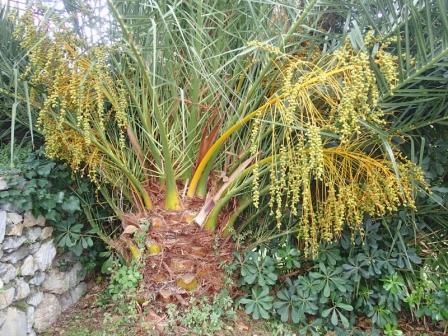
Palm kernel oil
Rating : 6.5
| Evaluation | N. Experts | Evaluation | N. Experts |
|---|---|---|---|
| 1 | 6 | ||
| 2 | 7 | ||
| 3 | 8 | ||
| 4 | 9 | ||
| 5 | 10 |
Pros:
Skin protective (1)10 pts from Nat45
| Sign up to vote this object, vote his reviews and to contribute to Tiiips.Evaluate | Where is this found? |
| "Descrizione" about Palm kernel oil Review Consensus 10 by Nat45 (5785 pt) | 2025-Nov-20 10:23 |
| Read the full Tiiip | (Send your comment) |
(Oil extracted from the kernel/seed of the oil palm, Elaeis guineensis)
Palm kernel oil (PKO) is a vegetable oil extracted from the seed (kernel) of the oil palm fruit.
It differs chemically and functionally from palm oil, which comes from the fruit pulp.
PKO is naturally semi-solid or solid at room temperature due to its high content of saturated fatty acids, making it valuable in confectionery, bakery fats, shortenings, and frying applications.
It has high oxidative stability, a clean taste, and an excellent performance in high-temperature processes.

Energy: ~900 kcal
Lipids: 100 g
SFA (first occurrence): ~80–82% (mainly lauric acid)
MUFA: ~15%
PUFA: ~2–3%
TFA: naturally absent
Carbohydrates: 0 g
Proteins: 0 g
Sodium: 0 g
Vitamins/minerals: minor amounts of tocopherols and tocotrienols
No cholesterol (being a plant oil)
Medium-chain saturated fatty acids:
lauric acid (C12:0) — major fraction
myristic acid (C14:0)
palmitic acid (C16:0)
Unsaturated fatty acids: oleic acid, linoleic acid
Minor components:
tocopherols and tocotrienols
sterols
phenolic compounds
Low moisture and low impurity content in refined grades
Harvesting oil palm fruit bunches.
Fruit separation and kernel recovery (cracking the shell).
Kernel drying to reduce moisture.
Oil extraction:
mechanical pressing and/or solvent extraction.
Refining:
degumming
neutralisation
bleaching
deodorisation
removal of impurities, free fatty acids and off-odours
Fractionation (optional):
splits PKO into palm kernel stearin and palm kernel olein, each with different melting points.
Quality checks: fatty acid profile, moisture, peroxide value, colour, residual solvents, microbiology (for food applications).
Appearance: white to pale-yellow solid or semi-solid fat at room temperature.
Melting point: ~24–30 °C (varies by fraction).
Odour/flavour: neutral, clean, slightly nutty when unrefined.
Density: ~0.90 g/mL at 40 °C.
Oxidative stability: high due to high SFA content.
Solubility: insoluble in water; fully fat-soluble.
Excellent stability during frying and high-temperature cooking.
Neutral sensory profile — does not mask other flavours.
Desirable melting behaviour in confectionery and coatings.
Aeration and creaming ability in shortenings and bakery fats.
High resistance to oxidation and rancidity.
Good plasticity, especially after fractionation.
Confectionery:
chocolate coatings, compound chocolates, glazes
ice-cream coatings
Bakery:
shortenings, margarine bases, biscuits, pastries
Frying: deep-frying of snacks, doughnuts, extruded snacks
Dairy alternatives:
coffee creamers, whipping toppings
Infant nutrition: certain fractions used in specialised formulas
Processed foods: ready-meals, sauces, spreads
Fractionated products:
palm kernel stearin — hard stock for bakery fats
palm kernel olein — frying and liquid applications
PKO is high in saturated fats, especially medium-chain fatty acids such as lauric acid.
Medium-chain fats are metabolised differently from long-chain fats, but PKO is not equivalent to pure MCT oil.
It is free of cholesterol and trans fats.
Excessive intake of saturated fats is associated with increased cardiovascular risk; portion control is recommended.
Refined PKO is generally recognised as safe when consumed within dietary guidelines.
It contains small amounts of antioxidant components (tocopherols/tocotrienols).
Frying use: 5–15 g per serving (depending on product absorption).
Bakery fats/shortenings: inclusion levels vary from 10–40% of the fat phase.
Confectionery coatings: up to 100% of the fat component.
Palm kernel oil is not an allergen, nor does it contain proteins.
Allergen risks are mainly due to cross-contamination in the processing facility.
Suitable for vegan, vegetarian, and lactose-free formulations.
Store in closed, light-protected containers.
Ideal temperature: 20–25 °C (avoid high heat).
Shelf-life:
refined PKO: 18–24 months
unrefined: shorter due to higher impurity content
Sensitive to:
oxidation (slow due to high SFA, but still possible)
heat exposure
contamination with water
PKO must comply with standards for refined edible oils, including limits for:
peroxides
free fatty acids
contaminants (3-MCPD esters, glycidyl esters, heavy metals)
pesticide residues
Production must follow GMP/HACCP.
Fractionated products must meet purity and melting-profile specifications for intended uses.
Labelling must follow local legislation (ingredient listing, allergen declaration if cross-contamination applies).
May appear as:
“palm kernel oil”
“refined palm kernel oil”
“palm kernel stearin”
“palm kernel olein”
In fat blends, must be listed in descending order by weight.
“Vegetable fat” declarations may require specification of palm kernel depending on regional rules.
Soft or unstable texture in coatings:
incorrect fraction used → choose stearin for harder textures.
Oil weeping in confectionery:
poor tempering or incorrect solid fat composition → adjust formulation.
Off-flavours:
oxidation or poor refining → improve storage or switch supplier.
Crystallisation problems:
rapid cooling or inadequate tempering → control cooling curves.
Derived from oil palm plantations with significant environmental considerations:
deforestation, land-use change, biodiversity impact
water usage and effluent treatment monitored via BOD/COD
Sustainable certifications available: RSPO, ISCC, Rainforest Alliance.
Palm kernel valorises a by-product of palm fruit processing, supporting resource efficiency.
(INCI: “Elaeis Guineensis Kernel Oil” and derivatives)
Emollient
Skin-conditioning agent
Occlusive protective barrier
Viscosity modifier
Used in soaps (high lauric content), creams, lotions, balms, and surfactant production.
Palm kernel oil is a widely used food fat characterised by high saturated fat content, excellent heat stability, and neutral flavour. It plays a central role in confectionery, frying, bakery shortenings, and non-dairy creamers. When produced under strict refining and sustainability standards, PKO is a reliable, functional, and versatile ingredient for modern food systems.
SFA – Saturated fatty acids: high in PKO; excessive intake should be moderated.
MUFA – Monounsaturated fatty acids: contribute to stability and mild nutritional benefits.
PUFA – Polyunsaturated fatty acids: present in low amounts in PKO.
TFA – Trans fatty acids: not naturally present; may appear only if hydrogenated.
GMP/HACCP – Quality and safety management systems in food production.
BOD/COD – Environmental indicators of wastewater impact in production.
RSPO – Roundtable on Sustainable Palm Oil certification.
Studies
The various oils extracted from the palm fruit have long been used in food, medicine and industry, for example in the production of soaps. Palm kernel or Palm kernel oil is an edible vegetable oil, derived from the kernel of the African palm tree Elaeis guineensis. This tree is believed to have originated in the jungle of East African forests and there is some evidence that its oils were used in Egypt some 5000 years ago at the time of the pharaohs (1).
African palm oil produces two different types of oil, namely palm oil and palm kernel oil. The palm oil is extracted from the mesocarp of the fruit, that is the pulp, which contains 45% -55% of oil, while the palm kernel oil is obtained from the stones enclosed in the endocarp, that is the woody part.
Palm kernel oil has a high content of saturated fatty acids of about 80% which include: Lauric acid (48.7%), Myristic acid (15.6%), Palmitic acid (7.5%), Acid stearic (1.8%) and other saturated fats.
In the remaining 20% we find monounsaturated Oleic Acid and polyunsaturated Linoleic Acid (2).
References____________________________________
(1) Pantzaris TP, Mohd JA. Properties and utilization of palm kernel oil. Palm Oil Dev 2001
(2) Chiabi A, Kenmogne MH, Nguefack S, Obadeyi B, Mah E, Meka FZ, Tchokoteu PF, Mbonda E, Ekoe T. The Empiric Use of Palm Kernel Oil in Neonatal Skin Care: Justifiable or Not?
Chin J Integr Med. 2011 Dec;17(12):950-4. doi: 10.1007/s11655-011-0938-1.
Abstract. Palm kernel oil is a vegetable oil derived from Elaeis guineensis and widely used in neonatal settings for skin care. It is a good emollient with a beneficial effect in moisturizing the skin and preventing transdermal heat and water loss. However, it's putative roles in the prevention or treatment of fatty acid defificiency is still controversial. So is its function in the improvement of neurological development from its longchain polyunsaturated fatty acids? We set out in this review to verify whether its empiric use in this context has any scientific justification and is recommendable. Although there is evidence that it has emollient and moisturizing properties necessary for softening the skin and restoring elasticity, controversy subsists on its other nutritional and neurodevelopmental properties.
Wattanapenpaiboon N, Wahlqvist MW. Phytonutrient deficiency: the place of palm fruit. Asia Pac J Clin Nutr. 2003;12(3):363-8.
Abstract. The oil palm (Elaeis guineensis) is native to many West African countries, where local populations have used its oil for culinary and other purposes. Large-scale plantations, established principally in tropical regions (Asia, Africa and Latin America), are mostly aimed at the production of oil, which is extracted from the fleshy mesocarp of the palm fruit, and endosperm or kernel oil. Palm oil is different from other plant and animal oils in that it contains 50% saturated fatty acids, 40% unsaturated fatty acids, and 10% polyunsaturated fatty acids. The fruit also contains components that can endow the oil with nutritional and health beneficial properties. These phytonutrients include carotenoids (alpha-,beta-,and gamma-carotenes), vitamin E (tocopherols and tocotrienols), sterols (sitosterol, stigmasterol and campesterol), phospholipids, glycolipids and squalene. In addition, it is recently reported that certain water-soluble powerful antioxidants, phenolic acids and flavonoids, can be recovered from palm oil mill effluent. Owing to its high content of phytonutrients with antioxidant properties, the possibility exists that palm fruit offers some health advantages by reducing lipid oxidation, oxidative stress and free radical damage. Accordingly, use of palm fruit or its phytonutrient-rich fractions, particularly water-soluble antioxidants, may confer some protection against a number of disorders or diseases including cardiovascular disease, cancers, cataracts and macular degeneration, cognitive impairment and Alzheimer's disease. However, whilst prevention of disease through use of these phytonutrients as in either food ingredients or nutraceuticals may be a worthwhile objective, dose response data are required to evaluate their pharmacologic and toxicologic effects. In addition, one area of concern about use of antioxidant phytonutrients is how much suppression of oxidation may be compatible with good health, as toxic free radicals are required for defence mechanisms. These food-health concepts would probably spur the large-scale oil palm (and monoculture) plantations, which are already seen to be a major cause of deforestation and replacement of diverse ecosystems in many countries. However, the environmental advantages of palm phytonutrients are that they are prepared from the readily available raw material from palm oil milling processes. Palm fruit, one of only a few fatty fruits, is likely to have an increasingly substantiated place in human health, not only through the provision of acceptable dietary fats, but also its characteristic protective phytonutrients.
Oguntibeju OO, Esterhuyse AJ, Truter EJ. Red palm oil: nutritional, physiological and therapeutic roles in improving human wellbeing and quality of life. Br J Biomed Sci. 2009;66(4):216-22. doi: 10.1080/09674845.2009.11730279.
Abstract. The link between dietary fats and cardiovascular disease has created a growing interest in dietary red palm oil research. Also, the link between nutrition and health, oxidative stress and the severity or progression of disease has stimulated further interest in the potential role of red palm oil (a natural antioxidant product) to improve oxidative status by reducing oxidative stress in patients with cardiovascular disease, cancer and other chronic diseases. In spite of its level of saturated fatty acid content (50%), red palm oil has not been found to promote atherosclerosis and/or arterial thrombosis. This is probably due to the ratio of its saturated fatty acid to unsaturated fatty acid content and its high concentration of antioxidants such as beta-carotene, tocotrienols, tocopherols and vitamin E. It has also been reported that the consumption of red palm oil reduces the level of endogenous cholesterol, and this seems to be due to the presence of the tocotrienols and the peculiar isomeric position of its fatty acids. The benefits of red palm oil to health include a reduction in the risk of arterial thrombosis and/or atherosclerosis, inhibition of endogenous cholesterol biosynthesis, platelet aggregation, a reduction in oxidative stress and a reduction in blood pressure. It has also been shown that dietary red palm oil, taken in moderation in animals and humans, promotes the efficient utilisation of nutrients, activates hepatic drug metabolising enzymes, facilitates the haemoglobinisation of red blood cells and improves immune function. This review provides a comprehensive overview of the nutritional, physiological and biochemical roles of red palm oil in improving wellbeing and quality of life.
| Sign up to vote this object, vote his reviews and to contribute to Tiiips.EvaluateClose | (0 comments) |
Read other Tiiips about this object in __Italiano (1)
Component type:   Chemical Main substances:   Last update:   2025-11-20 10:21:58 | Chemical Risk:   |

