

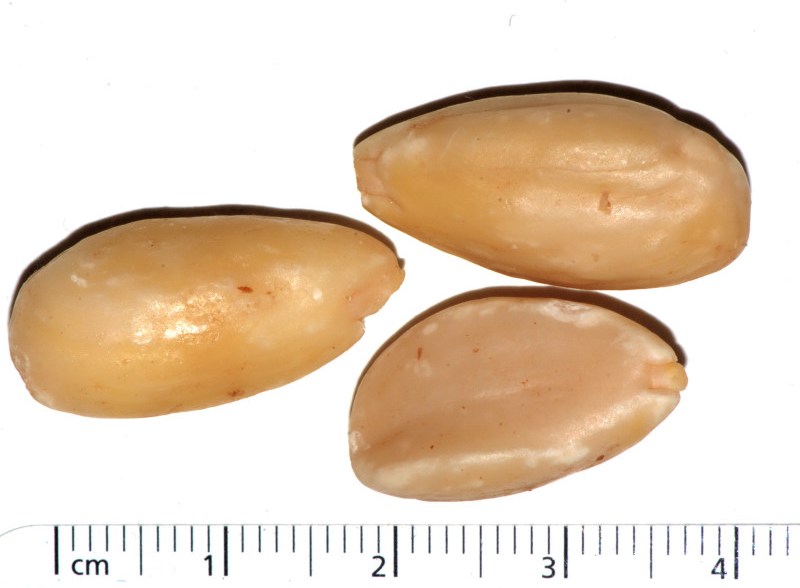
Olio di mandorla
Media gradimento : 7.5
| Valutazione | N. Esperti | Valutazione | N. Esperti |
|---|---|---|---|
| 1 | 6 | ||
| 2 | 7 | ||
| 3 | 8 | ||
| 4 | 9 | ||
| 5 | 10 |
Pro:
Protettivo della pelle (1)10 pt da A_Partyns
| Iscriviti per poter valutare questo oggetto, le sue recensioni e per contribuire a Tiiips.Valuta | Dove si trova? |
| "Descrizione" su Olio di mandorla Consenso relazione 10 di A_Partyns (13035 pt) | 03-ago-2025 12:45 |
| Leggi il Tiiip completo | (Invia il tuo commento) |
L'olio di mandorla si ricava dalla spremitura a freddo delle mandorle. Recentemente sono state utilizzate nuove tecnologie di estrazione quali l'estrazione di fluidi supercritici, l'estrazione assistita da ultrasuoni, l'estrazione acquosa assistita da sale.

Definizione
L’olio di mandorla è un olio vegetale estratto dai semi del frutto del mandorlo dolce (Prunus amygdalus dulcis). È molto usato in cosmetica per le sue proprietà emollienti, nutrienti e lenitive.
Composizione chimica
L’olio di mandorla contiene principalmente:
Acido oleico (omega-9): 55–70%
Acido linoleico (omega-6): 20–30%
Acido palmitico: 4–9%
Acido stearico: 1–3%
Fitosteroli (beta-sitosterolo)
Tocoferoli (vitamina E)
Squalene
Polifenoli e flavonoidi (in tracce)
Caratteristiche fisiche
Aspetto: liquido limpido
Colore: da giallo chiaro ad ambrato
Odore: tenue, dolce, leggermente nocciolato
Densità: circa 0,91 g/cm³
Punto di fumo: circa 215 °C
Solubilità: insolubile in acqua, solubile in oli e solventi organici
Metodo di estrazione
Spremitura a freddo: preserva i nutrienti termolabili (versione cosmetica e alimentare)
Estrazione con solventi: meno pregiata, utilizzata per prodotti industriali o raffinati
Può essere successivamente raffinato o deodorizzato, ma la versione vergine e non raffinata è la più ricca in principi attivi.
Cosmetica
Utilizzato come emolliente e sclerosante, produce un'azione di levigatura della pelle. Gli emollienti hanno la caratteristica di migliorare la barriera cutanea tramite una fonte di lipidi esogeni che aderiscono alla pelle migliorando le proprietà della barriera, proteggendo dall'insorgenza di infiammazioni. Come agente condizionante della pelle ne può migliorare il tono e la carnagione in generale senza controindicazioni.
Funzioni INCI
Emolliente
Condizionante cutaneo
Condizionante per capelli
Agente nutriente
Veicolo per attivi liposolubili
Altre applicazioni:
Sicurezza e regolamentazione
Generalmente ben tollerato, anche da pelli sensibili o neonatali
Non comedogenico (grado 2)
Possibile allergia crociata in soggetti allergici alle noci (raro, ma segnalato)
INCI name: Prunus Amygdalus Dulcis Oil
Regolato dal Regolamento (CE) n. 1223/2009 come ingrediente sicuro
Nessun obbligo di etichettatura allergenica specifica, a meno di combinazioni con profumi
Considerazioni ambientali
Biodegradabile
Ricavato da fonte vegetale sostenibile
Prodotto disponibile in versione bio e fair-trade
Studi
Medicina
Studi clinici hanno dimostrato proprietà di contrasto ad alcune patologie importanti, riduzione dello stress ossidativo, omeostasi del glucosio, protezione nel rischio cardiovascolare, neuroprotezione. Inoltre riduce i sintomi della sindrome dell'intestino irritabile.
Non ha alcuna controindicazione allergica.
L'analisi fotochimica ha evidenziato una serie di composti utili per la salute: acidi fenolici (acidi idrobenzoici), acidi polifenolici (acido ellagico, acido gallico, acido caffeico), isoflavoni, antocianine (cianidina e delfinidina), bioflavonoidi, flavanoli (epicatechina e procianidine), glicosidi dei flavonoli (kaempferol,quercetina, isorhamnetin-3-O-glucoside), triterpeni, tannini, tutti con attività antiossidante ed antinfiammatoria.
Gli acidi grassi insaturi sono risultati pari all'89,4% e all'89,7%, mentre la percentuale degli acidi grassi saturi è del 10,6% e del 10,3% per l'olio di semi immaturo e maturo, rispettivamente (1).
Inoltre è presente un'importante quantità di tocoferolo e un buon contenuto di fitosterolo.
Bibliografia________________________________________________________________
(1) Malisiova F, Hatziantoniou S, Dimas K, Kletstas D, Demetzos C. Liposomal formulations from phospholipids of Greek almond oil. Properties and biological activity. Z Naturforsch C J Biosci. 2004 May-Jun;59(5-6):330-4. doi: 10.1515/znc-2004-5-607.
Abstract. The seeds of the almond tree [(Prunus dulcis (Mill.) D. A. Webb. (syn. Prunus amygdalus)] were collected in two different periods of maturity and were studied for their lipid content. The total lipids (TL) were extracted by the Bligh-Dyer method and the lipid classes have been isolated by chromatographic techniques and were analyzed by HPTLC coupled with a flame ionization detector (HPTLC/FID) and GC-MS. The oils were found to be rich in neutral lipids (89.9% and 96.3% of total lipids) and low in polar lipids (10.1% and 3.7% of total lipids) for the immature and mature seed oils, respectively. The neutral lipid fraction consisted mainly of triacylglycerides whereas the polar lipids mainly consisted of phospholipids. GC-MS data showed that the main fatty acid for both oils was 9-octadecenoic acid (oleic acid). The unsaturated fatty acids were found as high as 89.4% and 89.7%, while the percentage of the saturated fatty acids was found 10.6% and 10.3% for the immature and mature seed oils, respectively. Liposomes were prepared from the isolated phospholipids using the thin lipid film methodology, and their physical properties were characterized. Cytotoxicity was found absent when assayed against normal and cancerous cell lines. These new formulations may have future applications for encapsulation and delivery of drugs and cosmetically active ingredients.
Riedler K, Hecker A, Bauer B, Tax C, Gmainer DG, Pignet AL, Kamolz LP, Lumenta DB. The Efficacy of Regeneration Oil and Almond Oil on Split-Thickness Skin Graft Donor Sites: A Single-Blinded Randomized Controlled Trial. Clin Pract. 2023 May 25;13(3):648-655. doi: 10.3390/clinpract13030059.
Abstract. Background and objectives: Essential oils are a complementary treatment and can play an important role in scar care. The aim of this study was to evaluate and compare the efficacy of a new essential oil (regeneration oil) with a control group on scar quality in healed split-thickness skin graft donor sites. Materials and methods: A single-center blinded randomized controlled study was performed on 30 patients with healed split-thickness skin graft donor site. The patients were randomly allocated into blended regeneration oil (n = 14) and pure almond oil (n = 16) groups. Application of the assigned oil occurred twice a day for 6 months. Scarring (Patient and Observer Scar Assessment Scale), itching (ITCH Assessment Scale) and scar discoloration (colorimetry) of the donor sites were assessed after 1, 3 and 6 months. Results: We found no statistically significant differences between the groups in any applied parameter. We observed comparable outcomes (scar quality, itchiness, colorit) in healed split-thickness skin graft donor sites for both oils. Conclusions: Regeneration oil and control oil presented comparable results regarding scar quality, itchiness and colorit in healed split-thickness skin graft donor sites after 6 months of application. Both oils are suitable for skin/scar care in split-thickness skin graft donor sites.
Roncero JM, Álvarez-Ortí M, Pardo-Giménez A, Rabadán A, Pardo JE. Influence of Pressure Extraction Systems on the Performance, Quality and Composition of Virgin Almond Oil and Defatted Flours. Foods. 2021 May 11;10(5):1049. doi: 10.3390/foods10051049. PMID: 34064705;
Abstract. Almond is the most cultivated nut throughout the world. The oil content of almonds in most varieties exceeds 50%, which encourages the oil extraction to be used in gastronomy or in the cosmetic industry. The preferred system to extract almond oil is by means of pressure, which leads to obtaining a virgin oil ready for consumption. In this work, almond oil has been obtained using two pressure systems: screw press (SP) and hydraulic press (HP). The performance of both methods, as well as their influence on quality and composition characteristics of the almond oils obtained are analyzed from both a physical-chemical and sensory point of view. From an industry perspective, the highest oil yield is obtained with the SP when it operates at temperatures of 100-150 °C. Regarding the quality and chemical composition, the oils obtained by HP showed better quality indices, as they are subjected to a less aggressive treatment without influence of temperature, but lower content in total sterols. Fatty acid pattern, characterized by the predominance of unsaturated fatty acids (>90%), was not affected by the pressing system. The different operational conditions tested did not greatly affect the performance or composition of the oils obtained, but sensory tests showed two clearly differentiated products, the oil obtained by HP and that obtained by SP, according to consumer preferences. The defatted almond flours obtained as a by-product of the oil extraction process are characterized by a high content in protein and fiber, and a higher content in fat when the flour is produced from the pressing cake of HP.
Gallier S, Singh H. Behavior of almond oil bodies during in vitro gastric and intestinal digestion. Food Funct. 2012 May;3(5):547-55. doi: 10.1039/c2fo10259e.
Abstract. An aqueous suspension of almond oil bodies (about 10% lipids) was prepared and subjected to in vitro gastric (with pepsin) and intestinal (with bile salts and pancreatin) digestion, simulating fasting conditions. The physicochemical and structural changes of the almond oil body emulsion were examined. The almond oil body emulsion behaved similarly to a protein-stabilized emulsion, with flocculation of the oil bodies occurring under gastric conditions. Proteins, peptides, and phospholipids covered the surface of the oil bodies throughout gastric digestion. Under intestinal conditions, bile salts displaced the interfacial peptides and phospholipids, and disrupted the flocs. Gastric pepsinolysis of almond proteins was a prerequisite for their digestion in the duodenum. The oil body membrane had a negative impact on the efficiency of gastric digestion, and long chain fatty acids, the main lipolytic products, accumulated at the surface of the oil bodies and therefore limited the activity of pancreatic lipase.
Kato K, Vo PHT, Furuyashiki T, Kamasaka H, Kuriki T. Co-ingestion of whole almonds and almond oil with carbohydrate suppresses postprandial glycaemia in mice in an insulin-dependent and insulin-independent manner. J Nutr Sci. 2019 Jul 31;8:e25. doi: 10.1017/jns.2019.22.
Abstract. Co-ingestion of almonds with carbohydrate prevents excessive increase in plasma glucose level (PGL), but information about the functional fraction is limited. Identifying the functional fraction is necessary to use almonds more efficiently in terms of controlling postprandial glycaemia after a high-carbohydrate meal. In the present study, we evaluated the effects of almond skin, oil, water-soluble fraction and water-insoluble fraction on both postprandial glycaemia and insulinaemia. The effect of almond skin was tested by comparing the effect of whole almonds with the effect of skinless almonds. Male ICR mice were administered dextrin and 4 g/kg body weight test samples. After the administration, 2-h postprandial changes in glycaemia and insulinaemia were measured. Oil was the only fraction being able to blunt postprandial glycaemia. Interestingly, when co-ingesting with dextrin, almond oil did not change the insulin level compared with the control but whole almonds or skinless almonds triggered a 4-fold increase in insulin level. The co-ingestion of whole almonds or skinless almonds similarly suppressed the PGL at 15 and 30 min (P < 0·05), which means almond skin has no effect on postprandial glycaemia. Neither soluble nor insoluble fractions lead to any significant changes in postprandial glycaemia and insulinaemia. In conclusion, oil is the main functional component accounting for the glycaemia-lowering effect without altering insulin level.
| Iscriviti per poter valutare questo oggetto, le sue recensioni e per contribuire a Tiiips.ValutaChiudi | (0 commenti) |
Leggi altri Tiiips su questo oggetto in Inglese (2)
Tipologia:   Natural Principali sostanze contenute:   Ultimo aggiornamento:   2023-09-17 19:41:18 | Rischio chimico:   |

