

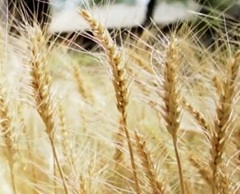
Whole barley flour
Rating : 8
| Evaluation | N. Experts | Evaluation | N. Experts |
|---|---|---|---|
| 1 | 6 | ||
| 2 | 7 | ||
| 3 | 8 | ||
| 4 | 9 | ||
| 5 | 10 |
0 pts from Al222
| Sign up to vote this object, vote his reviews and to contribute to Tiiips.Evaluate | Where is this found? |
| "Descrizione" about Whole barley flour by Al222 (24812 pt) | 2026-Feb-24 10:49 |
| Read the full Tiiip | (Send your comment) |
Whole barley flour: properties, uses, pros, cons, safety
Definition
Whole barley flour is obtained by milling the caryopsis of barley (Hordeum vulgare, botanical family Poaceae), while retaining a significant portion of the outer layers and the germ. Compared with more refined flours, it generally has a higher fiber content, a greater presence of compounds from the outer part of the grain, and a more pronounced sensory profile, with cereal-like and sometimes slightly toasted notes.
From a technological standpoint, it is a flour with good water absorption capacity, but with behavior different from bread wheat flour: barley contains gluten but does not develop a strong gluten network like bread wheat, so in leavened products it is often used in blends with other flours to balance structure, volume, and texture.

Production process
The production process of whole barley flour generally includes:
Selection and cleaning of the cereal (removal of dust, foreign seeds, foreign bodies).
Possible brushing and conditioning.
Possible technological stabilization (in some processes) to improve storage stability.
Milling (roller or stone) with particle size control.
Possible controlled sieving to standardize fineness while maintaining the whole-grain profile according to specification.
Packaging under suitable conditions to limit moisture uptake and oxidation.
Key controls include moisture, particle size, fiber/ash content (depending on specification), microbiological load, absence of pests/foreign bodies, and storage stability (odor, rancidity, flowability).
Key constituents
The composition of whole barley flour depends on barley variety, actual degree of whole-grain retention, milling process, and storage. In general, the most relevant components are:
Starch: the main energy component of the matrix.
Favorable aspect: provides structure and an energy base in preparations.
Less favorable aspect: it remains a starchy matrix; metabolic impact depends on recipe, processing, and portion size.
Dietary fiber (including a significant share of beta-glucans / beta-glucan):
Favorable aspect: contributes to satiety, bowel regularity, and technological behavior (water absorption/viscosity).
Less favorable aspect: rapid increases in fiber intake may cause bloating in sensitive individuals; the effect depends on dose and dietary context.
Beta-glucans (soluble fiber characteristic of barley):
Favorable aspect: nutritionally and technologically relevant component; may increase matrix viscosity.
Less favorable aspect: in excess, they may alter texture undesirably (denser doughs, more compact products).
Barley proteins:
Favorable aspect: contribute to the overall protein content of the flour.
Less favorable aspect: their ability to form an elastic structure is lower than that of bread wheat flours; blends are often needed in leavened products.
Lipids (variable amount, generally higher than in very refined flours due to germ presence):
Favorable aspect: contribute to the nutritional and sensory profile.
Less favorable aspect: may increase sensitivity to oxidation/rancidity during storage.
Minerals (e.g., phosphorus, magnesium, potassium, in variable amounts):
Favorable aspect: support the micronutrient profile of whole flour.
Less favorable aspect: practical contribution depends on the percentage in the recipe and the consumed portion.
Vitamins (especially some B vitamins, in variable amounts):
Favorable aspect: contribute to the nutritional profile of the whole cereal matrix.
Less favorable aspect: they may decrease during processing and storage.
Phenolic compounds (including phenolic acids and flavonoids, more associated with the outer layers):
Favorable aspect: contribute to matrix complexity and the overall antioxidant profile.
Less favorable aspect: strong variability among batches/varieties and possible reduction with severe processing.
Phenolic acids (e.g., caffeic acid, ferulic acid, vanillic acid; in variable amounts):
Favorable aspect: representative components of the phenolic fraction of whole cereals, with technological and compositional interest.
Less favorable aspect: content is influenced by variety, grain fraction, and milling/storage process.
Flavonoids (variable amount):
Favorable aspect: contribute to the phenolic profile of whole flour.
Less favorable aspect: amounts are generally variable and often lower than in other plant matrices (e.g., pigmented fruits).
Anthocyanins (possible in some pigmented barley varieties, not necessarily representative of all whole barley flours):
Favorable aspect: may contribute to the phenolic profile and coloration in specific varieties.
Less favorable aspect: presence is highly variable and often limited/absent in common non-pigmented varieties.
Benzoic acid (traces/variable amounts, not a main characteristic component of barley flour):
Favorable aspect: aromatic/phenolic compound that may be found in traces in some plant matrices.
Less favorable aspect: in whole barley flour it is generally not a primary marker; practical relevance depends on the specific analytical profile.
Phytates (variable amount in the outer layers):
Favorable aspect: natural component of the whole-grain matrix.
Less favorable aspect: in some contexts may reduce the bioavailability of some minerals, especially in poorly varied diets.
Important technical note
The ingredients (e.g., beta-glucan, phenolic acids, caffeic acid, ferulic acid, vanillic acid, flavonoids) are consistent with the profile of a whole cereal flour. The presence of anthocyanins and benzoic acid may instead be more variable and depend on specific varieties (including possible pigmented cultivars), analytical method, and process conditions.
In a food-technical sheet, it is useful to distinguish between:
main matrix components (starch, fiber, beta-glucans, proteins),
minor/representative components (phenolic compounds such as ferulic acid, caffeic acid, flavonoids, other trace compounds).
In whole barley flour, in addition to composition, particle size, hydration capacity, and storage stability remain central.
Identification data and specifications
| Parameter | Value | Note |
|---|---|---|
| Ingredient name | Whole barley flour | Flour obtained from milled barley with retention of outer layers and germ |
| Botanical name | Hordeum vulgare | Botanical family: Poaceae |
| Plant part | Caryopsis | Cereal grain |
| Nature | Starchy-protein-fibrous powder | Generally darker beige/grayish than refined flours |
| Key components | Starch, fiber (including beta-glucans), proteins, lipids, minerals | Variable profile by variety and process |
| Allergen | Yes (gluten) | Gluten-containing cereal; not suitable for a celiac diet |
| Calories | Indicatively ~320–370 kcal/100 g | Variable depending on moisture, degree of whole-grain retention, and specification |
| Key parameters | Moisture, particle size, fiber, ash, microbiology, oxidative stability | Quality and batch consistency drivers |
Indicative physicochemical properties
| Parameter | Indicative value | Note |
|---|---|---|
| Physical state | Powder | Fine → medium, according to specification |
| Color | Beige / grayish beige / light brown | Darker than refined flours |
| Odor | Characteristic cereal odor | Rancid notes may indicate oxidation/alteration |
| Taste | Cereal-like, sometimes slightly bitter/nutty | Variable with variety and particle size |
| Water solubility | Not soluble | Forms dispersions; contributes to viscosity and dough structure |
| Water absorption | Medium–high | Influenced by fiber, beta-glucans, and fineness |
| Viscosity/Dough behavior | Variable, often denser than refined flours | Beta-glucans may increase viscosity |
| Stability | Good if dry and properly stored | Critical: moisture, infestations, rancidity |
| Typical critical issues | Compact doughs, lower volume in leavened products, possible graininess | Depends on blend, hydration, and process |
Main uses
Food use
Whole barley flour is used in various food applications, including:
Bread, flatbreads, and baked goods in blends with other flours.
Biscuits, shortcrust products, and crackers, where it can provide a more rustic profile.
Pancakes, flatbreads, and quick doughs.
Porridge, creams, and thick preparations.
Baked goods with higher fiber content or a “whole-grain” character.
Bakery mixes and domestic/industrial preparations.
In leavened products, use in blends is often useful to improve volume and structure, because barley does not have baking strength comparable to strong wheat flours.
Industrial use
The main industrial drivers are:
consistent particle size,
water absorption capacity,
repeatable rheological behavior,
shelf-life stability,
microbiological quality control,
consistency of the sensory profile.
Nutrition and health
Whole barley flour is a cereal base that may provide fiber (including beta-glucans) and micronutrients generally to a greater extent than more refined flours. However, real nutritional evaluation should refer to the finished product and the consumed portion.
Practical aspects:
beta-glucans are one of the main nutritional points of interest in barley;
the overall recipe (sugars, fats, salt) can substantially modify the profile of the final product;
as a flour containing gluten, it is not suitable for those who need a gluten-free diet.
Pros
Good fiber content and presence of beta-glucans.
Characteristic sensory profile useful in rustic/whole-grain products.
Good versatility in bakery and blends.
May improve the nutritional profile compared with more refined flours (with the same recipe).
Cons
Contains gluten (not suitable for celiac disease).
In leavened products it may produce reduced volume and denser doughs if used alone.
Sensitive to poor storage conditions (moisture/oxidation).
Rapid increases in fiber intake may cause gastrointestinal discomfort in sensitive individuals.
Portion note
Portion should be evaluated on the finished product (bread, biscuits, pancakes, etc.), considering:
percentage of whole barley flour in the recipe,
presence of other ingredients (sugars, fats, salt),
consumption frequency,
overall dietary context.
Safety (allergens, contraindications)
Allergens: barley is a gluten-containing cereal; it is not suitable for people with celiac disease and may be unsuitable in cases of specific gluten sensitivities.
Cross-contamination: in blends and along the supply chain, allergen management should be verified.
Microbiological safety and quality: proper moisture level, process hygiene, absence of pests/foreign bodies, and good storage are essential.
Digestive tolerance: high fiber content may require gradual adaptation in sensitive individuals.
Storage and shelf-life
Store in a cool, dry place, protected from light, heat, and moisture, in a well-closed package.
Key points:
avoid moisture absorption (risk of clumping and deterioration);
protect from air to limit aroma loss and oxidation;
rotate stock (FIFO) to maintain sensory quality;
monitor for abnormal odors (rancid/moldy).
Labelling
On the ingredient label, it may appear as:
whole barley flour
equivalent wording according to regulations and product specification
Elements to evaluate:
correct declaration of the gluten allergen (barley),
consistency with any nutrition claims (e.g., fiber) on the finished product,
declaration of mix/blend if other flours are present,
consistency between commercial name and actual degree of whole-grain retention.
Functional role and rationale for use
Whole barley flour is chosen to combine:
a cereal base with a whole-grain profile,
contribution of fiber and beta-glucans,
characteristic cereal-like sensory note,
contribution to body and water absorption,
“rustic/whole-grain” formulation positioning.
In formulation, it is often an ingredient of nutritional and sensory identity, rather than a “strong” flour for breadmaking.
Formulation compatibility
The main points are:
Hydration: the amount of fiber and beta-glucans may require more water.
Blend with other flours: useful to improve structure, volume, and workability.
Particle size: affects final texture and perception of rusticity/graininess.
Thermal process: influences aroma development, color, and consistency.
Dosage: high amounts may make dough denser and less expanded.
Shelf-life: attention to moisture and oxidative stability, especially in sensitive products.
Safety, regulation, and quality
GMP/HACCP management is recommended with clear specifications on:
moisture,
particle size,
microbiology,
absence of foreign bodies/pests,
storage stability,
batch traceability and allergen management (gluten).
For practical quality, batch consistency, predictable dough behavior, coherent sensory profile, and good storage stability are crucial.
Conclusion
Whole barley flour (Hordeum vulgare, botanical family Poaceae) is a versatile cereal flour, useful for providing fiber, beta-glucans, and a distinctive cereal-like sensory profile in many food applications.
Its technical value depends mainly on particle size, hydration capacity, process quality, and proper storage. From a nutritional standpoint, it may improve the profile of baked goods and mixes compared with more refined flours, but real evaluation should always refer to the finished product and the consumed portion.
Mini-glossary
Caryopsis: the dry fruit typical of cereals, commonly called a “grain.”
Whole-grain: product that retains a significant portion of the outer layers and germ of the cereal.
Beta-glucans: soluble fibers characteristic of cereals such as barley and oats.
Particle size: size/distribution of flour particles.
Blend: mixture of flours/ingredients to obtain a desired technological or sensory profile.
Rancidity: degradation of lipids with development of undesirable odors/flavors.
Studies
In barley there are functional ingredients interesting for human health such as beta-glucans, polysaccarids, the main components of the soluble part of dietary fiber. Their characteristic is to facilitate the regular function of the gastrointestinal tract, the homeostasis of glucose and the regulation of energy in the human body (1). They can prevent oncogenesis due to the protective effect against powerful genotoxic carcinogens (2).
But while a high beta-glucan content is positive for human health, the brewing industry that uses malt, needs a low concentration of beta-glucans as high levels can negatively affect malt filtration.
In addition, phenolic compounds found in barley, as well as producing an antioxidant effect in the human body, have probiotic and gastroprotective effects (3).
Another interesting aspect of the other ingredients present in barley concerns the effect that fermented barley extract produces on the colon mucosa. It has been noted that the extract can relieve constipation (4).
With regard to wholemeal barley flour, the main characteristic concerning human health is the antioxidant property confirmed by numerous studies (5).
With "malted" processing, grains of many cereals, in this case barley, are germinated by their immersion into water. This procedure softens the outer casing of the seed and allows no sugar to be added to the infusion, enabling the enzymes to act on the seeds, converting the starch into sugars.
Then it goes to the drying phase and to their use.
Since it can not have a sugar-free fermentation, the malted barley flour will have less starch and a sweeter taste, just the taste of the malt.
It find countless applications in the food field in bakery products, weaning foods (6) and more.
References_____________________________________________________________________
(1) Baldassano S, Accardi G, Vasto S Beta-glucans and cancer: The influence of inflammation and gut peptide. Eur J Med Chem. 2017 Dec 15;142:486-492. doi: 10.1016/j.ejmech.2017.09.013.
(2) Akramiene D, Kondrotas A, Didziapetriene J, Kevelaitis Effects of beta-glucans on the immune system. E. Medicina (Kaunas). 2007;43(8):597-606.
(3) Charalampopoulos D, Pandiella SS, Webb C Evaluation of the effect of malt, wheat and barley extracts on the viability of potentially probiotic lactic acid bacteria under acidic conditions. Int J Food Microbiol. 2003 Apr 25;82(2):133-41.
(4) Lim JM, Kim YD, Song CH, Park SJ, Park DC, Cho HR, Jung GW, Bashir KMI, Ku SK, Choi JS.
Laxative effects of triple fermented barley extracts (FBe) on loperamide (LP)-induced constipation in rats. BMC Complement Altern Med. 2019 Jun 21;19(1):143. doi: 10.1186/s12906-019-2557-x.
(5) Holtekjølen AK, Bævre AB, Rødbotten M, Berg H, Knutsen SH. Antioxidant properties and sensory profiles of breads containing barley flour. Food Chem. 2008 Sep 15;110(2):414-21. doi: 10.1016/j.foodchem.2008.02.054
(6) Balasubramanian S, Kaur J, Singh D. Optimization of weaning mix based on malted and extruded pearl millet and barley. J Food Sci Technol. 2014 Apr
| Sign up to vote this object, vote his reviews and to contribute to Tiiips.EvaluateClose | (0 comments) |
Read other Tiiips about this object in __Italiano (1)
Content:   Last update:   2026-02-24 10:34:27 | Kcal/100g:   370 Family:   Threat factors:   |

