

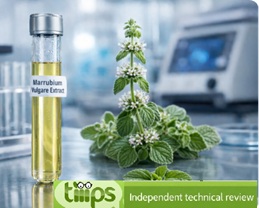
Marrubium vulgare extract: properties, uses, pros, cons, safety
Marrubium vulgare extract is an extract obtained from the herb (aerial parts) of horehound (Marrubium vulgare L., family Lamiaceae; historical synonym Labiatae). In cosmetics it is used mainly as a skin conditioning and soothing ingredient, with a use profile aimed at supporting skin comfort and reducing the perception of “stressed skin,” depending on grade and supplier standardization.

For more information: White horehound
Definition
“Extract” refers to a preparation obtained from the aerial parts using suitable solvents, then filtered and standardized. Composition depends strongly on: the plant part actually used, harvest season, solvent system (water, glycols, hydroalcoholic), drug/extract ratio, and the manufacturer’s specifications.
Production process and key constituents
How it is produced (in brief)
Typical production includes: selection and QC of the botanical raw material, drying and milling, solvent extraction (cold or with mild controlled heating), filtration/pressing, optional concentration, and standardization (solids, markers, chromatographic fingerprint), with attention to microbial load and contaminants.
Key constituents (representative, by category)
Labdane diterpenoids
Marrubiin
Marrubenol
Marrubic acid
Phenylpropanoid glycosides
Verbascoside (acteoside)
Forsythoside B
Flavonoids
Phenolic acids
Rosmarinic acid
Caffeic acid
Technical note. Cosmetic suppliers often standardize the extract on one or more markers (for example marrubiin or phenolic fractions), because botanical variability can affect odor/color and performance.
Main uses
Cosmetics
Typical use in leave-on and rinse-off products designed for comfort and “more even-looking skin”: creams, serums, gels, toners, after-sun products, gentle cleansers. In some lines it is also used in “urban/anti-pollution” concepts, where the goal is to improve the perception of less dull and more comfortable skin.
INCI functions
Skin conditioning agent. It is the mainstay of topical skin treatment as it has the function of restoring, increasing or improving skin tolerance to external factors, including melanocyte tolerance. The most important function of the conditioning agent is to prevent skin dehydration, but the subject is rather complex and involves emollients and humectants that can be added in the formulation.
Soothing. Ingredient with the task of restoring moisture to the skin, helping in the healing process of irritation, inflammation and skin disorders.
Industrial use
Raw material for cosmetic formulations with botanical positioning, often paired with hydrating and soothing systems (humectants, emollients, film formers, barrier-support ingredients), depending on the brand’s claim strategy.
Identification data and specifications
| Characteristic | Value | Note |
|---|
| INCI name | Marrubium vulgare extract | Cosmetic denomination |
| Botanical origin | Marrubium vulgare L. | Herb (aerial parts) |
| Botanical family | Lamiaceae | Syn. Labiatae |
| CAS number | 84696-20-8 | Associated with the extract |
| EC number (EINECS) | 283-638-4 | EU identifier |
| Preparation type | extract | Solvent and carrier depend on grade |
| Main functions | skin conditioning, soothing | Ingredient-function framing |
| Variability note | high | Raw material, solvent, standardization |
Chemical-physical properties (indicative)
| Characteristic | Indicative value | Note |
|---|
| Physical state | liquid or powder | Depends on carrier and drying |
| Color | yellow-brown / amber | Variable by batch and phenolic markers |
| Odor | herbal, characteristic | May require masking in leave-on |
| Solubility | variable (often good in water/glycols) | Depends on solvent and carrier |
| pH (solutions) | typically slightly acidic–neutral | Depends on base and supplier |
| Stability | good if properly stored | Light/oxygen sensitive if phenolic-rich |
| Key criticalities | variability and microbiology | Controls and preservation are important |
Functional role and mechanism of action
In cosmetics, the action is mainly supportive: the polyphenolic fraction and phenylpropanoid glycosides contribute to a soothing and “skin comfort” profile (reduced perception of skin stress), while the overall extract fractions can improve the feel of “more balanced skin” (skin conditioning). Perceived efficacy depends on dose, matrix (emulsion/gel), and marker standardization.
Formulation compatibility
Generally compatible with O/W emulsions, aqueous gels, serums, and gentle cleansers. Development points to verify include:
color/odor stability (possible batch-to-batch shifts)
compatibility with preservative systems (polyphenols can interact with some preservatives)
compatibility with pH-/electrolyte-sensitive polymers
management of sensory impact (herbal odor) in leave-on formulas
Pros and cons
Pros
Good support ingredient for comfort and soothing claims.
Suitable for botanical formulas and “urban care/anti-stress” concepts (depending on supplier dossier).
Good versatility in aqueous systems and emulsions.
Cons
Batch variability (color/odor/markers) if not well standardized.
Possible interference with certain preservation choices and olfactory stability.
Performance strongly depends on grade quality: technical documentation (TDS/COA) is needed.
Safety, regulatory, and environmental aspects
Allergen.
Not typically a “classic” single fragrance allergen; however, like many botanical extracts, it may contribute to irritation or sensitization in predisposed individuals, especially on reactive skin and at higher use levels.
Contraindications (brief).
Use caution on very sensitive skin or where the barrier is compromised; select doses and vehicles consistent with a soothing goal and verify tolerability on the finished product according to brand procedures.
Formulation troubleshooting
Herbal odor noticeable in leave-on products.
Action: optimize fragrance/masking, reduce dosage, choose a more deodorized or more standardized grade.
Color instability over time.
Action: reduce exposure to light/oxygen, evaluate compatible chelators/antioxidants, verify packaging and headspace.
Microbiological issues in aqueous bases.
Action: recalibrate preservation, control water/process hygiene, verify incoming batch microbial load.
Conclusion
Marrubium vulgare extract is a botanical extract used in cosmetics mainly for skin conditioning and soothing functions. Its practical value is linked to integration in skin comfort-oriented formulas, with performance depending on standardization, batch quality, and formulation compatibility (odor, color, preservation)