

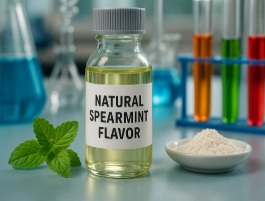
Natural Spearmint Flavor
Rating : 6
| Evaluation | N. Experts | Evaluation | N. Experts |
|---|---|---|---|
| 1 | 6 | ||
| 2 | 7 | ||
| 3 | 8 | ||
| 4 | 9 | ||
| 5 | 10 |
0 pts from Al222
| Sign up to vote this object, vote his reviews and to contribute to Tiiips.Evaluate | Where is this found? |
| "Descrizione" about Natural Spearmint Flavor by Al222 (23249 pt) | 2025-Nov-23 10:53 |
| Read the full Tiiip | (Send your comment) |
Natural spearmint flavor
(From Mentha spicata leaves and other natural sources)
Description
Natural spearmint flavor is a flavor preparation obtained exclusively from natural sources, primarily from the essential oil and extracts of Mentha spicata (spearmint).
It has a fresh, sweet, herbal, minty profile, softer and less sharp than peppermint, and is used to flavor beverages, confectionery, dairy, bakery products and functional foods.
It may be supplied as a liquid flavor, water-soluble/emulsified flavor or encapsulated powder.

Indicative nutritional values per 100 g
(flavor concentrate; in practice used at very low dosage)
Energy: 250–350 kcal (depends on essential oil and carrier)
Protein: <1 g
Carbohydrates: <5 g
Lipids: 20–30 g (from essential oil and carriers)
SFA (first occurrence – saturated fatty acids): minor fraction of total fat, high intake of SFA is generally negative for cardiovascular health, but here intake is negligible
MUFA: low to moderate, carrier-dependent
PUFA: low to moderate, carrier-dependent
TFA: not expected
Fibre: 0 g
Vitamins/minerals: nutritionally negligible
At typical use levels (0.01–0.3% in finished products), the nutritional impact is essentially zero.
Key constituents
Natural spearmint essential oil components, mainly:
Carvone (key spearmint character)
Limonene
Menthone and related terpenes
Menthyl acetate and other esters
Optional carriers and solvents:
ethanol, water, glycerol, triacetin, vegetable oil, or emulsifiers
In encapsulated forms:
maltodextrin, gum arabic, modified starches and other permitted encapsulating agents.
Production process
Cultivation and harvesting of spearmint leaves (Mentha spicata).
Steam distillation of fresh or dried leaves to obtain natural spearmint essential oil.
Purification and standardisation of the oil to achieve a consistent flavor profile (e.g., standard levels of carvone).
Flavor formulation:
dilution of the essential oil in food-grade solvents;
or emulsification into water-soluble systems;
or spray-drying/microencapsulation onto carriers (for powders).
Quality control under GMP/HACCP:
identity and purity;
sensory profile;
contaminants and residues (pesticides, heavy metals, solvents);
microbiological status (especially for powders).
Packaging in light- and oxygen-protective containers (amber glass, coated drums, multilayer bags).
Physical properties
Appearance:
liquid: clear to slightly yellow liquid;
powdered: white to off-white powder (encapsulated).
Odour: fresh, sweet, minty, herbal (typical spearmint).
Taste: sweet, mild mint, less aggressive than peppermint.
Solubility:
oil-based flavors: fat-soluble, partially soluble in alcohol;
water-soluble/emulsified versions: dispersible in aqueous systems;
powders: dispersible in water and dry mixes.
Stability: sensitive to light, heat and oxygen; stability improved in encapsulated forms and with antioxidants.
Sensory and technological properties
Provides a clean, sweet, cooling mint note with herbal and slightly fruity undertones.
Less “sharp” and medicinal than peppermint, making it suitable for kid-friendly and soft-flavored products.
Works very well with sugar, polyols, chocolate, citrus, berry flavors and green herbal notes.
Encapsulated forms show improved heat stability and are suitable for baked goods and dry powdered mixes.
Liquid forms integrate easily into beverages, syrups and emulsions.
Food applications
Beverages: iced teas, herbal teas, flavored waters, lemonades, soft drinks, energy and functional drinks.
Confectionery: chewing gum, hard and soft candies, fondants, chocolate, gels and jellies.
Bakery: cookies, biscuits, sandwich creams, cakes and dessert bases.
Dairy and frozen desserts: ice cream, sorbets, yogurts, milkshakes and dairy desserts.
Sauces and condiments: light sauces, yogurt dips, salad dressings with a fresh note.
Functional and sports products: bars, chews, compressed tablets, gums and RTD beverages to improve palatability.
Nutrition & health
At normal use levels, natural spearmint flavor does not contribute meaningful macro- or micronutrients.
Spearmint essential oil constituents (particularly carvone and other terpenes) are considered safe at regulated flavor use levels.
Any traditional associations with digestive comfort or “fresh breath” relate more to herbal use and oral-care context than to nutritional value and usually cannot be used as food health claims.
Intake from flavored foods remains very low compared with herbal preparations or essential oil use in aromatherapy.
Portion note
Typical inclusion levels in finished foods:
0.01–0.3% (0.1–3 g per kg) depending on matrix and desired flavor intensity.
In beverages:
often 0.05–0.15%; higher levels can become too herbal or overpowering.
In chewing gum and candy:
dosages are optimised based on release profile and cooling perception.
Allergens and intolerances
Natural spearmint flavor does not inherently contain major allergens.
Rare individual sensitivities to mint essential oils (skin or mucosal irritation at high concentration) can occur, especially in very sensitive consumers.
Naturally gluten-free and lactose-free, unless carriers or processing introduce allergens.
For compound flavors or premixes, carriers and additives (e.g., soy-based emulsifiers, milk-derived powders) must be checked and declared if allergenic.
Storage and shelf-life
Store in tightly closed containers, protected from light, heat and air.
Recommended storage temperature: 10–20 °C, in a dry place.
Typical shelf-life:
liquids: 12–24 months under recommended conditions;
encapsulated flavors: 18–36 months with appropriate packaging.
Main degradation pathways:
oxidation (loss of freshness, off-notes);
volatilisation of key aroma components;
potential colour changes in some matrices.
Safety & regulatory
Classified as a natural flavoring according to flavor regulations (e.g., EU Regulation 1334/2008 and similar).
Must be obtained from natural raw materials by physical, enzymatic or microbiological processes allowed for natural flavors.
Subject to limits for:
pesticide residues in botanical raw material;
heavy metals;
residual solvents (if used);
microbiological quality for powder forms.
Production must follow GMP/HACCP, with full traceability from plant material to finished flavor.
Labeling
In the EU, can be declared as:
“natural flavoring” or
“natural spearmint flavoring” / “natural spearmint flavor” if at least 95% of the flavor part comes from spearmint.
In English ingredient lists: typically “natural flavor”, “natural spearmint flavor” or similar.
Flavors are usually grouped under “flavoring(s)” in the ingredient list; detailed naming is sometimes used for marketing (“with natural spearmint flavor”).
Troubleshooting
Weak spearmint note in finished product:
dosage too low or flavor degraded → increase dosage within sensory limits, verify storage conditions and shelf-life of the flavor.
Too herbal or grassy character:
excessive dosage or unbalanced profile → reduce level, select a more refined or standardised flavor.
Instability in acidic beverages:
phase separation or turbidity with oil-based flavors → use water-soluble/emulsified spearmint flavor or microemulsions.
Loss of mint freshness during baking:
high temperature for long time → use encapsulated flavor systems designed for bakery and/or add part of the flavor post-bake (e.g., in fillings or toppings).
Sustainability & supply chain
Spearmint cultivation can be integrated into crop rotation systems; main sustainability aspects include:
efficient water management;
careful use of plant protection products;
soil fertility and biodiversity protection.
Distillation and processing generate aromatic waters and plant residues that must be managed responsibly.
Wastewater treatment may be monitored with indicators such as BOD/COD.
Organic and fair-trade or sustainability certifications can support responsible sourcing and market differentiation.
Main INCI functions (cosmetics)
(as “Mentha Viridis (Spearmint) Leaf Oil”, “Mentha Viridis Extract”, “Spearmint Oil”)
Fragrance component with fresh, sweet, minty note.
Refreshing and toning sensory effect in oral care and body care products.
Widely used in toothpastes, mouthwashes, deodorants, shampoos, shower gels and creams.
Must be dosed carefully to avoid irritation in very sensitive individuals, especially around mucous membranes.
Conclusion
Natural spearmint flavor is a versatile, clean-label flavor ingredient that delivers a sweet, fresh and pleasant mint profile to a wide variety of foods and beverages. It is softer and less aggressive than peppermint, making it suitable for products aimed at both children and adults. With appropriate sourcing, processing under GMP/HACCP, good storage practices and correct dosing, it provides a stable, safe and high-quality natural flavor solution for industrial and artisanal applications.
Mini-glossary
SFA – Saturated fatty acids: a type of dietary fat associated with cardiovascular risk when consumed in excess; present only in tiny amounts here and nutritionally negligible.
MUFA – Monounsaturated fatty acids: generally considered neutral or beneficial fats; minor component of carriers if present.
PUFA – Polyunsaturated fatty acids: more oxidation-prone fats, present at low levels in some carrier systems.
TFA – Trans fatty acids: a fat type associated with negative health effects; not characteristic of natural spearmint flavors.
GMP/HACCP – Good Manufacturing Practices / Hazard Analysis and Critical Control Points, systems that ensure hygiene, safety and quality in food production.
BOD/COD – Biological / Chemical Oxygen Demand, indicators of the pollution load of wastewater from industrial processes.
Carvone – The main aromatic compound in spearmint oil, responsible for its characteristic sweet, cooling spearmint note.
| Sign up to vote this object, vote his reviews and to contribute to Tiiips.EvaluateClose | (0 comments) |
Read other Tiiips about this object in __Italiano (1)
Component type:   Natural Main substances:   Last update:   2025-11-23 10:46:26 | Chemical Risk:   |

