

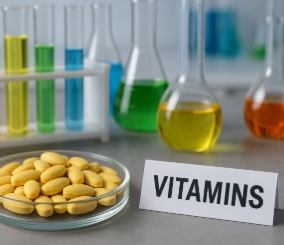
Vitamins
Rating : 9
| Evaluation | N. Experts | Evaluation | N. Experts |
|---|---|---|---|
| 1 | 6 | ||
| 2 | 7 | ||
| 3 | 8 | ||
| 4 | 9 | ||
| 5 | 10 |
Cons:
To be taken in controlled quantity (1)0 pts from Al222
| Sign up to vote this object, vote his reviews and to contribute to Tiiips.Evaluate | Where is this found? |
| "Descrizione" about Vitamins by Al222 (23254 pt) | 2025-Nov-07 15:22 |
| Read the full Tiiip | (Send your comment) |
Vitamins
(essential organic micronutrients; fat-soluble: A, D, E, K; water-soluble: C and B-complex)
Description
• Vitamins are indispensable micronutrients required in small amounts for enzymatic cofactors, gene regulation, vision, immunity, antioxidant defense, and bone metabolism. Humans cannot synthesize sufficient amounts, so intake must come from diet, fortified foods, or supplements.
• Multiple vitamers share biological activity (e.g., retinol/retinyl esters for A; tocopherols/tocotrienols for E; phylloquinone/menaquinones for K; niacin as nicotinic acid/niacinamide).
• In foods and supplements, vitamins are supplied as crystalline powders, oil dispersions, or premixes, often microencapsulated to enhance stability and bioavailability.

Indicative nutrition values (typical adult reference ranges; examples, not exhaustive)
• Vitamin A (RAE): 700–900 μg/day; UL 3,000 μg RAE/day (retinol).
• Vitamin D (D₂/D₃): 10–20 μg/day (400–800 IU/day); UL 100 μg/day.
• Vitamin E (α-TE): 12–15 mg/day; UL ~300 mg/day (α-tocopherol).
• Vitamin K: 70–120 μg/day (no established UL for K1).
• Vitamin C: 80–100 mg/day; UL 1,000–2,000 mg/day (tolerance varies).
• B-group (illustrative) — B1 1.1–1.3 mg; B2 1.1–1.6 mg; B3 14–18 mg NE; B5 5 mg; B6 1.3–1.7 mg (UL 12–25 mg); B7 30–50 μg; B9 400 μg DFE (UL 1,000 μg synthetic folic acid); B12 2–4 μg.
• In fortified foods, claims like “source of” or “high in” generally require ≥15% or ≥30% of the NRV per serving/100 g.
Key constituents
• Fat-soluble:
– Vitamin A: retinol; retinyl acetate/palmitate; provitamins β-carotene and other carotenoids.
– Vitamin D: D₃ (cholecalciferol) from 7-dehydrocholesterol; D₂ (ergocalciferol).
– Vitamin E: α/β/γ/δ-tocopherols, tocotrienols; ester forms (tocopheryl acetate).
– Vitamin K: K1 (phylloquinone); K2 (menaquinones, MK-4…MK-7).
• Water-soluble:
– Vitamin C (L-ascorbic acid; ascorbate salts; stabilized derivatives).
– B-complex: B1 thiamine, B2 riboflavin, B3 niacin (nicotinic acid/niacinamide), B5 D-pantothenate, B6 pyridoxine/P-5-P, B7 biotin, B9 folate (folic acid/5-MTHF), B12 cyano-/methyl-/adenosylcobalamin.
Production process
• Chemical synthesis: retinol/retinyl esters; all-rac-α-tocopheryl acetate; niacin/niacinamide; folic acid; microencapsulated A/D/E.
• Fermentation/bioconversion: riboflavin (B2) by Bacillus/Ashbya; vitamin C via modern biotransformations; K2 (MK-7) by Bacillus; B12 by selected microbes.
• Extraction: mixed tocopherols from vegetable-oil distillates; K1 from plant sources; β-carotene from algae or fermentation.
• D₃ origin: photoconversion of 7-dehydrocholesterol from lanolin (sheep) or lichens for vegan grades.
• Finishing: premix with carriers (maltodextrin, modified starch), micronization, microencapsulation, antioxidants and anti-caking agents; standardized potency.
Physical properties
• Form: crystalline powders (A esters, C, many Bs), viscous oils (some E).
• Solubility: fat-solubles in oils/organics; water-solubles in water (some require salts/derivatives for dispersion).
• Stability: sensitive to light, oxygen, heat, pH (C, B1, B6, folates notably labile; B2 photosensitive; A/D/E/K oxidation-sensitive → protect with antioxidants and packaging).
• Color/odor: riboflavin intensely yellow; β-carotene orange; most are odorless.
Food applications
• Fortification: breakfast cereals/flours (B-complex, iron + folic acid), beverages (C, B, D), dairy and plant-based (A, D, B12), margarines/oils (A, D, E).
• Technological: antioxidant roles (C/E) to preserve color/flavor; natural coloring (riboflavin, β-carotene).
• Premixes for bakery, clinical/sports nutrition, and infant products (tighter standards).
Nutrition & health
• Vitamins are naturally obtained from food, fruit and vegetables, and only a doctor can determine whether you have a vitamin deficiency and prescribe vitamins. Avoid DIY.
Vitamins support energy metabolism (B1, B2, B3, B5, B6, biotin), antioxidant defenses (C, E), vision/cell differentiation (A), calcium homeostasis and bone health (D, K), hematopoiesis (B9, B12), and immune function (A, C, D, B6, folate).
• Deficiency spans from subtle (fatigue, poor wound healing, dry skin) to severe (rickets/osteomalacia for D, megaloblastic anemia for B12/folate, xerophthalmia for A). At-risk groups include restrictive diets, pregnancy/lactation, older adults, malabsorption, alcohol use disorder, and vegans (B12).
• Excess risks concern mainly fat-solubles (A, D, E, K) and high doses of some water-solubles (B6 neuropathy, niacin flushing/hepatotoxicity). Respect ULs and evidence-based dosing.
• Bioavailability improves with matrix and cofactors (e.g., carotenoids with dietary lipids; vitamin C enhances non-heme iron absorption; folates are heat-labile).
• Drug interactions: anticonvulsants/anticoagulants with folates/K; metformin with B12; alcohol depletes B1.
Quality and specifications (typical topics)
• Assay/potency (IU/μg/mg) with defined overage to cover processing/shelf-life losses.
• Impurities/solvents within limits; heavy metals compliant; low peroxide values for oily forms.
• Stability: accelerated and real-time studies; compatibility with pH, water activity, light; photostability validation (B2).
• Microbiology: low counts; pathogens absent; control aw in moist premixes.
• Physical: crystallinity, particle size, dispersibility; for capsules/tablets: hardness, friability, disintegration.
Storage and shelf-life
• Store cool, dry, and dark in inert/low-oxygen conditions; use amber/barrier packaging, well sealed.
• Avoid heat, humidity, and catalytic metals; respect best-by and reseal with desiccant.
• Encapsulated forms retain potency better in acidic foods, dairy, and beverages.
Safety and regulatory
• Fortification/claims follow regional rules (e.g., EU authorized vitamin forms, maximum levels; claims only under conditions of use).
• Supplements: label with dose, %NRV, warnings; observe ULs and population specifics (e.g., pregnancy: retinol limits).
• Manufactured under GMP/HACCP with full traceability; SDS available.
Labeling
• Declare the vitamin name and chemical form (e.g., “vitamin D₃ cholecalciferol,” “niacinamide,” “retinyl palmitate”), potency, and %NRV per serving.
• Include storage, lot, best-by; in fortified foods, declare in ingredients and nutrition facts.
• Health/function claims only if authorized and used at qualifying levels.
Troubleshooting
• Potency loss (C, folates, B1) → excessive heat/oxygen/unfavorable pH → use stabilized derivatives, encapsulation, lower T/time.
• Discoloration/odor (E, A) → oxidation → add compatible antioxidants, reduce O₂, improve barrier packaging.
• Process interactions (riboflavin photochemistry; niacin flushing in beverages) → adjust dose and light/pH management.
• Precipitation in beverages → choose more soluble salts/derivatives or emulsional systems (for fat-solubles).
• Claim non-compliance → end-of-life potency < label → increase overage and re-validate stability.
Sustainability and supply chain
• Favor fermentation/biocatalysis where feasible (riboflavin, C, K2), green solvents, and renewable energy.
• Valorize by-products (tocopherols from oil distillates); manage wastewater to BOD/COD targets; use recyclable packaging.
• Ensure raw-material traceability (e.g., D₃ from lanolin vs lichens), audited suppliers, and impurity-control programs under GMP/HACCP.
INCI functions (cosmetics)
• Ascorbic Acid / Sodium/Magnesium Ascorbyl Phosphate / Ascorbyl Tetraisopalmitate — antioxidant, brightening, collagen support.
• Tocopherol / Tocopheryl Acetate — lipid antioxidant, oxidative protection.
• Retinol / Retinyl Palmitate/Acetate — epidermal renewal, photoaging care (controlled use).
• Niacinamide — barrier support, tone uniformity.
• Panthenol — humectant, soothing.
• Biotin / Folic Acid / Pyridoxine HCl / Thiamine / Riboflavin / Cyanocobalamin — conditioning, metabolic support in skin/hair (cosmetic claims, non-therapeutic).
Conclusion
When correctly selected, stabilized, dosed, and integrated into compatible matrices, vitamins are powerful tools for public health and food technology. Success hinges on choosing the right form, safeguarding stability (encapsulation, packaging), optimizing bioavailability, and enforcing rigorous quality control from sourcing to finished product.
Mini-glossary
• NRV: Nutrient reference value for labeling (EU).
• RDA/PRI: Recommended daily allowance / population reference intake.
• UL: Tolerable upper intake level — do not exceed without medical oversight.
• RAE: Retinol activity equivalents for vitamin A (harmonizes retinol/carotenoids).
• DFE: Dietary folate equivalents — compares natural folates vs folic acid.
• NE: Niacin equivalents (from niacin + tryptophan).
• IU: International units (legacy potency units for A, D, E).
• GMP/HACCP: Good manufacturing practice / hazard analysis and critical control points — preventive hygiene/process-control systems.
• BOD/COD: Biochemical/chemical oxygen demand — wastewater impact metrics guiding treatment and discharge.
References__________________________________________________________________________
Dattola A, Silvestri M, Bennardo L, Passante M, Scali E, Patruno C, Nisticò SP. Role of Vitamins in Skin Health: a Systematic Review. Curr Nutr Rep. 2020 Sep;9(3):226-235. doi: 10.1007/s13668-020-00322-4.
Abstract. Purpose of review: Skin is the main defense organ of the human body against external insults (ultraviolet radiations, infections by pathogenic microorganisms, and mechanical and chemical stress). The integrity and functions of the skin barrier are supported by an adequate supply of micronutrients, such as several vitamins. The purpose of this review was to analyze all vitamin-related skin problems. Recent findings: The World Health Organization has estimated that more than 2 billion people worldwide experience deficiencies in the intake of essential vitamins and minerals; the percentage of adults all over the world using daily vitamin supplements, for treatment or prevention of chronic disease, has increased very rapidly in recent years. In this review, 65 studies have been selected in order to examine the role of the main vitamins and their derivatives involved in maintaining the well-being of the skin and their use as prophylactic and therapeutic agents in the management of skin disorders.
Cagetti MG, Wolf TG, Tennert C, Camoni N, Lingström P, Campus G. The Role of Vitamins in Oral Health. A Systematic Review and Meta-Analysis. Int J Environ Res Public Health. 2020 Feb 3;17(3):938. doi: 10.3390/ijerph17030938.
Abstract. The association between vitamins and oral health have recently been discussed, yielding increased attention from medical and dental perspectives. The present review aimed to systematically evaluate and appraise the most recently scientific papers investigating the role of vitamins in the prevention and treatment of the main oral diseases as hard dental pathological processes and gum/periodontal disease. Randomized controlled trials, cross-sectional studies, cohort studies, comparative studies, validation studies and evaluation studies, following the Preferred Reporting Items for Systematic Reviews and Meta-Analyses (PRISMA) guidelines, reporting associations between vitamins and oral diseases or the use of vitamins to prevent or treat oral diseases in patients of any age were included. PubMed, Embase and Scopus were searched to November 2019 using an ad hoc prepared search string. All the papers meeting the inclusion criteria were subjected to a quality assessment. The search identified 1597 papers; 741 were selected after removing duplicates. A total of 334 articles were excluded after title and abstract evaluation; 407 were assessed and 73 papers were full-text assessed; other 14 papers were discharged after full text evaluation, leaving finally 58 papers included. In general, there is weak evidence supporting the association between vitamins and both gingival/periodontal disease and hard dental pathological processes.
Semba RD. The discovery of the vitamins. Int J Vitam Nutr Res. 2012 Oct;82(5):310-5. doi: 10.1024/0300-9831/a000124.
Abstract. The discovery of the vitamins was a major scientific achievement in our understanding of health and disease. In 1912, Casimir Funk originally coined the term "vitamine". The major period of discovery began in the early nineteenth century and ended at the mid-twentieth century. The puzzle of each vitamin was solved through the work and contributions of epidemiologists, physicians, physiologists, and chemists. Rather than a mythical story of crowning scientific breakthroughs, the reality was a slow, stepwise progress that included setbacks, contradictions, refutations, and some chicanery. Research on the vitamins that are related to major deficiency syndromes began when the germ theory of disease was dominant and dogma held that only four nutritional factors were essential: proteins, carbohydrates, fats, and minerals. Clinicians soon recognized scurvy, beriberi, rickets, pellagra, and xerophthalmia as specific vitamin deficiencies, rather than diseases due to infections or toxins. Experimental physiology with animal models played a fundamental role in nutrition research and greatly shortened the period of human suffering from vitamin deficiencies. Ultimately it was the chemists who isolated the various vitamins, deduced their chemical structure, and developed methods for synthesis of vitamins. Our understanding of the vitamins continues to evolve from the initial period of discovery.
Pullar JM, Carr AC, Vissers MCM. The Roles of Vitamin C in Skin Health. Nutrients. 2017 Aug 12;9(8):866. doi: 10.3390/nu9080866
Abstract. The primary function of the skin is to act as a barrier against insults from the environment, and its unique structure reflects this. The skin is composed of two layers: the epidermal outer layer is highly cellular and provides the barrier function, and the inner dermal layer ensures strength and elasticity and gives nutritional support to the epidermis. Normal skin contains high concentrations of vitamin C, which supports important and well-known functions, stimulating collagen synthesis and assisting in antioxidant protection against UV-induced photodamage. This knowledge is often used as a rationale for the addition of vitamin C to topical applications, but the efficacy of such treatment, as opposed to optimising dietary vitamin C intake, is poorly understood. This review discusses the potential roles for vitamin C in skin health and summarises the in vitro and in vivo research to date. We compare the efficacy of nutritional intake of vitamin C versus topical application, identify the areas where lack of evidence limits our understanding of the potential benefits of vitamin C on skin health, and suggest which skin properties are most likely to benefit from improved nutritional vitamin C intake.
Jiang M, Li G, Yang K, Tao L. Role of vitamins in the development and treatment of osteoporosis (Review). Int J Mol Med. 2025 Jul;56(1):109. doi: 10.3892/ijmm.2025.5550. Epub 2025 May 16.
Abstract. Osteoporosis has escalated into a pressing public health challenge amidst global demographic aging. Conventional diagnostic approaches and therapeutic interventions demonstrate growing limitations in both risk stratification and epidemiological control. In this context, serological monitoring and targeted nutrient supplementation emerge as promising preventive strategies. Vitamins, fundamental regulators of cellular homeostasis, demonstrate particular significance in bone remodeling processes. The present comprehensive review elucidates the pathophysiological mechanisms through which specific vitamins differentially modulate osteoblastic activity and osteoclastic regulation, summarizing contemporary evidence from the molecular to clinical research levels. While vitamin A exhibits dual effects, other vitamins predominantly show positive impacts on bone homeostasis. Oxidative stress and inflammation are key pathological changes associated with osteoporosis. Vitamins play a protective role by enhancing the expression of antioxidant enzymes, activating antioxidant pathways and inhibiting the secretion of inflammatory cytokines, thereby mitigating these conditions. Serum vitamin concentrations exhibit significant correlations with bone mineral density alterations and osteoporosis progression, providing predictive biomarkers for fracture risk assessment. However, serum vitamin profiles exhibit marked heterogeneity across osteoporosis risk strata, necessitating population‑specific therapeutic protocols. Precision‑adjusted supplementation strategies effectively attenuate pathological bone resorption while preserving physiological remodeling homeostasis. The present review systematically delineates the therapeutic potential of vitamins in osteoporotic management, underscoring the necessity for evidence‑based precision nutrient protocols tailored to at‑risk populations to prevent disease progression.
Amerikanou C, Gioxari A, Kleftaki SA, Valsamidou E, Zeaki A, Kaliora AC. Mental Health Component Scale Is Positively Associated with Riboflavin Intake in People with Central Obesity. Nutrients. 2023 Oct 21;15(20):4464. doi: 10.3390/nu15204464.
Abstract. Micronutrient deficiencies are a well-established fact in obesity. However, few studies exist on the relationship between micronutrient intake and mental health. In this study, we investigated the associations between daily intakes of vitamins and minerals and scoring items that measure mental health in people living with central obesity. One hundred males and females with central obesity and metabolic abnormalities were included in the study. Demographic, clinical, anthropometric, and biochemical data were collected. Mental health statuses were assessed with validated questionnaires, and daily micronutrient intakes were assessed with food diaries and Nutritionist ProTM software v7.9. The mental component score (MCS-12) positively correlated with vitamin A (Rho = 0.249, p = 0.038), vitamin C (Rho = 0.293, p = 0.014), riboflavin (Rho = 0.264, p = 0.026), and folate (Rho = 0.238, p = 0.046). Rosenberg Self-Esteem Scale (RSES) correlated with sodium (Rho = 0.269, p = 0.026), and the Center for Epidemiologic Studies Depression Scale Revised (CESD-R) correlated with chromium (Rho = 0.313, p = 0.009). In the regression analysis, after potential confounders were adjusted for, only riboflavin was positively associated with the MCS-12 log (beta ± SD = 0.047 ± 0.023, p = 0.044). Our study provides evidence of the link between dietary riboflavin and mental health in people with obesity, and it highlights the importance of monitoring both nutritional status and mental health when managing obesity.
Chai Y, Chen C, Yin X, Wang X, Yu W, Pan H, Qin R, Yang X, Wang Q. Effects of water-soluble vitamins on glycemic control and insulin resistance in adult type 2 diabetes: an umbrella review of meta-analyses. Asia Pac J Clin Nutr. 2025 Feb;34(1):118-130. doi: 10.6133/apjcn.202502_34(1).0012.
Abstract. Background and objectives: Growing evidence has explored the effects of water-soluble vitamins supplementation on glycemic control and insulin resistance in diabetic patients; however, the results of previous meta-analyses are inconsistent. To address this, we conducted an umbrella review to synthesize the evidence on these effects. Methods and study design: A systematic literature search in Web of science, PubMed, and Cochrane Database of Systematic Reviews was performed from 2012 to November 2022. he quality of the meta-analyses was assessed using AMSTAR-2 and GRADE. Results: Fourteen systematic reviews and meta-analyses met the inclusion criteria, examining the effects of five water-soluble vitamins (B-1, B-3, biotin, B-9, and C) on glycemic control and insulin resistance. The findings suggest that vitamin C supplementation can improve glycemic control in type 2 diabetes, as indicated by reduced FBG and HbA1c, with more significant effects observed for durations longer than 30 days. Conclusions: Insulin resistance is improved by folic acid supplementations. More well-designed individual randomized controlled trials are needed in the future, as well as meta-analysis of higher quality.
Wróblewska J, Długosz A, Wróblewski M, Nuszkiewicz J, Wróblewska W, Woźniak A. Sex Differences in Vitamin Metabolism and Their Role in Oxidative Stress Regulation and Cardiometabolic Health. Nutrients. 2025 Aug 20;17(16):2697. doi: 10.3390/nu17162697.
Abstract. Vitamins A, D, E, K, B2, B12, and C play a key role in regulating metabolism and oxidative stress, significantly impacting cardiometabolic health. This review uniquely integrates mechanistic and epidemiological data to examine sex-specific differences in the bioavailability, metabolism, and physiological effects of these vitamins. By linking hormonal and genetic factors with oxidative stress modulation, lipid metabolism, and endothelial function, we outline how individualized vitamin intake strategies may help prevent cardiovascular and metabolic disorders. The paper also identifies natural dietary sources and optimal intake recommendations for each vitamin, emphasizing the importance of tailoring supplementation to sex-related needs. This sex-focused perspective provides a basis for developing personalized nutrition approaches to optimize cardiometabolic outcomes.
| Sign up to vote this object, vote his reviews and to contribute to Tiiips.EvaluateClose | (0 comments) |
Read other Tiiips about this object in __Italiano (1)
Component type:   Natural Main substances:   Last update:   2025-11-07 11:27:02 | Chemical Risk:   |

