

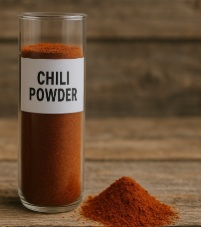
Chili
Media gradimento : 7
| Valutazione | N. Esperti | Valutazione | N. Esperti |
|---|---|---|---|
| 1 | 6 | ||
| 2 | 7 | ||
| 3 | 8 | ||
| 4 | 9 | ||
| 5 | 10 |
Contro:
Evitare quantità eccessive (1)0 pt da Al222
| Iscriviti per poter valutare questo oggetto, le sue recensioni e per contribuire a Tiiips.Valuta | Dove si trova? |
| "Descrizione" su Chili di Al222 (23254 pt) | 07-nov-2025 15:38 |
| Leggi il Tiiip completo | (Invia il tuo commento) |
Chili
(frutti di Capsicum annuum/C. frutescens/C. chinense e specie affini; famiglia Solanaceae )
Descrizione
• Spezia/ortaggio piccante ottenuto da baccelli maturi o verdi, usato fresco, essiccato/fiocchi, in polvere, come paste/salse, affumicato (es. chipotle) o come oleoresina/estratti di capsaicinoidi.
• La piccantezza è dovuta ai capsaicinoidi (capsaicina, diidrocapsaicina), espressa in Scoville Heat Units (SHU) o in mg/kg (HPLC).
• Indicatori di qualità: intensità di colore (ASTA color), granulometria, livello di piccantezza, pulizia e assenza di odori anomali/contaminanti.

Valori nutrizionali indicativi (tipici; per 100 g di chili fresco salvo diversa indicazione)
• Energia: ~35–45 kcal
• Carboidrati: 8–10 g (di cui zuccheri 4–6 g) • Fibre: 1,5–3 g
• Proteine: 1–2 g
• Grassi: 0,3–0,6 g — SFA (acidi grassi saturi; mantenerli bassi supporta il controllo dell’LDL) molto bassi; mufa/pufa trascurabili in uso culinario
• Vitamina C: 80–150 mg (sensibile a calore/ossigeno) • Vitamina A (carotenoidi provitaminici): variabile/alta nei frutti rossi maturi
• Sodio: naturalmente basso
• Polvere essiccata (100 g): nutrienti/energia concentrati; l’attività dell’acqua va mantenuta bassa per sicurezza/qualità.
Principali sostanze contenute
• Capsaicinoidi: capsaicina, diidrocapsaicina, nordiidrocapsaicina (piccantezza, attivazione TRPV1).
• Carotenoidi: capsantina, capsorubina, β-carotene (colore rosso/arancio; sensibili a ossidazione).
• Fenolici/flavonoidi: derivati della quercetina, acidi fenolici; acido ascorbico.
• Volatili: note verdi, fruttate, affumicate secondo varietà/processo.
• Da controllare: corpi estranei, pesticidi ≤ MRL, aflatossine/ocratossina A (spezie essiccate), coloranti Sudan (adulterazione), metalli nei limiti.
Processo di produzione
• Fresco: raccolta a maturazione target → cernita, lavaggio, rifilo.
• Essiccazione: al sole/tunnel solare o meccanica (T/aria controllate); affumicatura per chipotle; target aw bassa e disidratazione uniforme.
• Macinazione: detorsolatura/estensio di semi se richiesti → fioccatura o macinazione a specifica; opzionale sterilizzazione a vapore o irradiazione approvata per spezie.
• Oleoresine/estratti: estrazione con solvente (es. etanolo) o CO₂ supercritica; standardizzazione di piccantezza/colore; filtrazione e confezionamento.
• Salse/paste: frantumazione, aggiunta sale/acido, fermentazione o cottura-pastorizzazione; hot-fill o asettico.
• Packaging: materiali barriera a luce/ossigeno con ridotto headspace; evitare contatto metallo per salse molto acide se non rivestite.
Proprietà sensoriali e tecnologiche
• Piccantezza: da lieve a estrema; percezione influenzata da SHU, grassi della matrice e temperatura di servizio.
• Colore: da verde (clorofilla) a rosso vivo (carotenoidi); schiarisce con luce/ossigeno/calore.
• Funzionalità: conferisce calore, colore e contributo antiossidante; lieve effetto antimicrobico in sistemi molto speziati; i grassi aiutano a disperdere i capsaicinoidi.
• Stabilità: capsaicinoidi relativamente termostabili; carotenoidi e vitamina C no → proteggere da O₂, luce e T elevate.
Impieghi alimentari
• Fresco: salse, insalate, sottaceti, curry, saltati, ripieni.
• Essiccato/fiocchi/polveri: rub, marinade, salumi, snack seasoning, blend di spezie (nota: in alcuni mercati “chili powder” è un mix).
• Paste/salse: gochujang, harissa, sambal, hot sauces.
• Oleoresina/estratto: piccantezza/colore standardizzati per carni trasformate, salse e snack.
• Confetteria/bevande: cioccolato al chili, drink speziati (micro-dosaggi).
Nutrizione e salute
Il chili apporta sapore e calore con poche calorie e grassi trascurabili; i frutti freschi sono ricchi di vitamina C e carotenoidi (soprattutto nei rossi maturi), ma entrambi sono sensibili ai processi. I capsaicinoidi attivano i recettori TRPV1, responsabili della sensazione di bruciore; in letteratura sono associati a termogenesi transitoria e percezione di sazietà, con effetti pratici variabili e dipendenti dalla ricetta.
In soggetti sensibili, la capsaicina può aggravare reflusso, irritazione gastrica o sintomi tipo IBS; contatto con occhi/pelle causa irritazione intensa. Chi è sensibile alle solanacee dovrebbe usare cautela.
Il tenore di grassi è molto basso, quindi i saturi (sfa) sono minimi; l’impatto lipidico dipende dagli altri ingredienti (es. oli usati). Prodotti eccessivamente piccanti possono coprire difetti e indurre sovrasalatura: bilanciare piccantezza, aroma e colore sulla tolleranza del consumatore.
Nota porzione: guida pratica 1–3 g di chili essiccato (¼–1 cucchiaino) o 10–30 g di chili fresco mite per porzione; per varietà hot/super-hot iniziare molto più in basso e tarare con prove sensoriali.
Qualità e specifiche (temi tipici)
• Identità/piccantezza: bande SHU (es. mite 500–5.000; piccante 30.000–100.000; molto piccante >100.000) e/o capsaicinoidi HPLC (mg/kg).
• Colore: ASTA color; indice di tonalità per paprika-like.
• Fisiche: umidità (spezie ≤10–12%), aw, granulometria (D10/D50/D90), densità apparente, corpi estranei.
• Chimiche: oli volatili, perossidi (per salse oleose), acidità/ceneri/ceneri insolubili in acido; profilo carotenoidi se rivendicato.
• Microbiologia: Salmonella assente/25 g; APC/lieviti/muffe bassi; step di abbattimento convalidato (vapore/irradiazione) per spezie.
• Contaminanti: pesticidi ≤ MRL, aflatossine/ocratossina A per legge, metalli; test Sudan dye negativo.
Conservazione e shelf-life
• Conservare al fresco, al buio e all’asciutto; pack barriera a ossigeno/luce altamente consigliati.
• I baccelli interi essiccati mantengono colore/aroma più a lungo della polvere; macinare vicino all’uso quando possibile.
• Shelf-life tipica: 12–24 mesi (macinati) e più lunga per interi; salse secondo processo (hot-fill/pastorizzate/fermentate).
• Rischi principali: scolorimento, staling aromatico, impaccamento (polveri), muffe se entra umidità.
Sicurezza e regolatorio
• Irritante: la capsaicina provoca bruciore cutaneo/oculare; DPI in produzione; evitare aerosol in macinazione.
• Allergeni: il chili non è un allergene prioritario, ma esiste cross-reattività con altre spezie e sensibilità alle solanacee.
• Adulterazioni: monitorare coloranti illegali (es. Sudan), oli minerali e filler.
• Standard: produrre in GMP/HACCP; per spezie rispettare gli standard locali (umidità/ceneri/limiti contaminanti/micro).
• Claim: “senza coloranti aggiunti”/“colore naturale” solo se conforme; i claim di piccantezza devono riflettere SHU/HPLC.
Etichettatura
• Nome prodotto/ingrediente: “chili peppers”, “crushed chili”, “chili powder” (dichiarare se blend con sale, cumino, aglio, ecc.), “chili paste/sauce” o “capsicum oleoresin”.
• Indicare Paese/varietà quando rilevante (es. cayenna, jalapeño, habanero), livello di piccantezza (banda SHU), affumicato se applicabile e eventuali coadiuvanti.
• Lotto/data, istruzioni di conservazione; politica di cross-contact allergeni se pertinente.
Troubleshooting
• Scolorimento → esposizione a luce/O₂/calore → usare pack opachi/barriera O₂; aggiungere antiossidanti consentiti; ridurre tempi a caldo.
• Piccantezza irregolare → mix varietale o rapporto semi/placenta variabile → standardizzare blend; usare oleoresina per controllo stretto.
• Positivi microbi su spezie → letalità insufficiente → implementare vapore/irradiazione approvata; migliorare sanificazione/essiccazione.
• Impaccamento → umidità alta → antiagglomeranti consentiti, barriera umidità migliorata, essiccante nel secondario.
• Amaro/ruvido ad alto dosaggio → bilanciare con zucchero/acido/grasso; scegliere profili meno aspri; ottimizzare cottura.
Sostenibilità e filiera
• Preferire essiccazione solare/meccanica controllata per ridurre scarti e rischio micotossine; pratiche agronomiche per minimizzare pesticidi.
• Valorizzare semi/placenta (recupero capsaicinoidi, olio) e sottoprodotti; garantire reflui entro target BOD/COD.
• Packaging riciclabili/leggeri; audit fornitori per tracciabilità, programmi residui e pratiche etiche in GMP/HACCP.
Principali funzioni INCI (cosmesi)
• Capsicum Annuum/Capsicum Frutescens (Fruit) Extract / Capsicum Oleoresin: rubefacente/riscaldante per topici (percentuali molto basse); può aumentare la microcircolazione locale. Richiede valutazione irritativa, limiti d’uso per giurisdizione e no su cute lesa.
Conclusione
Il chili è uno strumento ad alto impatto per sapore e colore, dalla materia prima fresca agli estratti standardizzati. La riuscita dipende da controllo di piccantezza/colore, essiccazione e macinazione igieniche, protezione da luce/ossigeno e formulazione precisa per bilanciare calore, aroma e colore per il target.
Mini-glossario
• SFA: acidi grassi saturi — assunzioni elevate si associano a LDL più alto; il chili ne apporta quantità minime.
• MUFA: acidi grassi monoinsaturi — favorevoli quando sostituiscono i saturi (rilevanza minore nel chili stesso).
• PUFA: acidi grassi polinsaturi — benefici se bilanciati e protetti da ossidazione (rilevanza minore nel chili stesso).
• SHU: Scoville Heat Units — scala sensoriale (o convertita da HPLC) della piccantezza.
• ASTA color: misura industriale dell’intensità del colore rosso nelle spezie (più alto = più intenso).
• TRPV1: recettore del calore/dolore attivato dalla capsaicina.
• MRL: maximum residue limits per pesticidi negli alimenti.
• GMP/HACCP: good manufacturing practice / hazard analysis and critical control points — sistemi igienico–preventivi e di controllo di processo.
• BOD/COD: domanda biochimica/chimica di ossigeno — metriche dell’impatto dei reflui che guidano trattamento e scarico.
Bibliografia__________________________________________________________________________
Azlan A, Sultana S, Huei CS, Razman MR. Antioxidant, Anti-Obesity, Nutritional and Other Beneficial Effects of Different Chili Pepper: A Review. Molecules. 2022 Jan 28;27(3):898. doi: 10.3390/molecules27030898.
Abstract. Fruits and vegetables are important components of a healthy diet. They are rich sources of vitamins and minerals, dietary fibre and a host of beneficial non-nutrient substances including plant sterols, flavonoids and other antioxidants. It has been reported that reduced intake of fruits and vegetables may increase the risk of non-communicable diseases (NCDs). Chili pepper, is a common and important spice used to enhance taste and nutrition. Over the years, reports have shown its potential as antioxidant and an anti-obesity agent. Obesity is a serious health concern as it may initiate other common chronic diseases. Due to the side effects of synthetic antioxidants and anti-obesity drugs, scientists are now focusing on natural products which produce similar effects to synthetic chemicals. This up-to-date review addresses this research gap and presents, in an accessible format, the nutritional, antioxidant and anti-obesity properties of different chili peppers. This review article serves as a reference guide for use of chili peppers as anti-obesity agents.
Valková V, Ďúranová H, Ivanišová E, Galovičová L, Godočíková L, Borotová P, Kunová S, Miklášová K, Lopašovský ĽL, Mňahončáková E, Kačániová M. Antioxidant and antimicrobial activities of fruit extracts from different fresh chili peppers. Acta Sci Pol Technol Aliment. 2021 Oct-Dec;20(4):465-472. doi: 10.17306/J.AFS.0977.
Abstract. Background: The aim of the current study was to assess the antimicrobial and antioxidant potential of ethanol extracts obtained from the fruit of five species of fresh chili pepper, Capsicum (C.) baccatum L. (Aji Amarillo), C. chinense (Fidalgo Roxa), C. annuum (Cherry Chocolate), C. pubescens (Rocoto Orange) and C. frutescens (Peruvian Purple). Methods: To obtain the ethanol extracts, accelerated solvent extraction (ASE) was applied. DPPH assay was used to determine the antioxidant activity of the extract samples. The disc diffusion method was used to measure antimicrobial activity against nine investigated microorganism species. Results: The tested extract samples exhibited DPPH radical scavenging activities ranging from 0.24 ±0.01 (Peruvian Purple) to 0.72 ±0.02 (Aji Amarillo) mg TEAC∙g–1 dw. The differences between all the varieties were statistically significant (P < 0.05; except for the Cherry Chocolate and Rocoto Orange), and the potential of antioxidant capacity increased in the following manner: Peruvian Purple < Fidalgo Roxa < Rocoto Orange < Cherry Chocolate < Aji Amarillo. The results from the antimicrobial evaluation showed that the Capsicum extracts had no uniform inhibition activity against tested gram-negative, gram-positive bacteria, and yeast. Specifically, Aji Amarillo fruit extract revealed the strongest antimicrobial activity against S. pneumoniae (6.33 ±0.58 mm), followed by Cherry Chocolate against S. pneumoniae (5.33 ±0.58 mm), Rocoto Orange against S. enterica (5.27 ±0.58 mm), Fidalgo Roxa against C. albicans (4.67 ±0.58 mm), and Peruvian Purple against S. pneumoniae (4.57 ±0.58 mm). Conclusions: Considering these results, Capsicum spp. can be used as a source of novel antioxidant and antimicrobial compounds.
Kang C, Zhang Y, Zhu X, Liu K, Wang X, Chen M, Wang J, Chen H, Hui S, Huang L, Zhang Q, Zhu J, Wang B, Mi M. Healthy Subjects Differentially Respond to Dietary Capsaicin Correlating with Specific Gut Enterotypes. J Clin Endocrinol Metab. 2016 Dec;101(12):4681-4689. doi: 10.1210/jc.2016-2786.
Abstract. Context: Previous population studies in evaluating the beneficial effects of capsaicin (CAP) have yielded inconclusive results, and the mechanisms responsible for possible benefit remain unclear. Objective: The objective was to assess the effect of dietary CAP on metabolic and immune profiles and its potential associations with gut microbial patterns in healthy adults. Design: In a 6-week controlled feeding trial, subjects were given the weight maintenance diet sequentially contained with 0, 5, 0, and 10 mg/d CAP from chili powder. Setting and participants: The study was conducted in 12 healthy subjects enrolled in Third Military Medical University in Chongqing. Main outcome measures: At the end of each period, anthropometric and basal metabolism measures together with blood and fecal samples were collected. Plasma metabolic and inflammatory markers and gut microbial ecology of each subject were subsequently assessed. Result: Dietary CAP increased the Firmicutes/Bacteroidetes ratio and Faecalibacterium abundance, accompanied with increased plasma levels of glucagon-like peptide 1 and gastric inhibitory polypeptide and decreased plasma ghrelin level. Further enterotype analysis revealed that these subjects could be clustered into Bacteroides enterotype (E1) and Prevotella enterotype (E2), and the above beneficial effects were mainly obtained in E1 subjects. Moreover, E1 subjects had significantly higher fecal Faecalibacterium abundance and butyrate concentration after CAP interventions than those in E2 subjects. Conclusion: Our study showed that gut enterotypes may influence the beneficial effects of dietary CAP, providing new evidence for the personalized nutrition guidance of CAP intervention on health promotion linking with gut microbiota patterns.
Hernández Gómez YF, González Espinosa J, Ramos López MÁ, Arvizu Gómez JL, Saldaña C, Rodríguez Morales JA, García Gutiérrez MC, Pérez Moreno V, Álvarez Hidalgo E, Nuñez Ramírez J, Jones GH, Hernández Flores JL, Campos Guillén J. Insights into the Bacterial Diversity and Detection of Opportunistic Pathogens in Mexican Chili Powder. Microorganisms. 2022 Aug 20;10(8):1677. doi: 10.3390/microorganisms10081677.
Abstract. Chili powder is the most frequently consumed spice in Mexican diets. Thus, the dissemination of microorganisms associated with chili powder derived from Capsicum annuum L. is significant during microbial quality analysis, with special attention on detection of potential pathogens. The results presented here describe the initial characterization of bacterial community structure in commercial chili powder samples. Our results demonstrate that, within the domain Bacteria, the most abundant family was Bacillaceae, with a relative abundance of 99% in 71.4% of chili powder samples, while 28.6% of samples showed an average relative abundance of 60% for the Enterobacteriaceae family. Bacterial load for aerobic mesophilic bacteria (AMB) ranged from 104 to 106 cfu/g, while for sporulated mesophilic bacteria (SMB), the count ranged from 102 to 105 cfu/g. Bacillus cereus sensu lato (s.l.) was observed at ca. ˂600 cfu/g, while the count for Enterobacteriaceae ranged from 103 to 106 cfu/g, Escherichia coli and Salmonella were not detected. Fungal and yeast counts ranged from 102 to 105 cfu/g. Further analysis of the opportunistic pathogens isolated, such as B. cereus s.l. and Kosakonia cowanii, using antibiotic-resistance profiles and toxinogenic characteristics, revealed the presence of extended-spectrum β-lactamases (ESBLs) and Metallo-β-lactamases (MBLs) in these organisms. These results extend our knowledge of bacterial diversity and the presence of opportunistic pathogens associated with Mexican chili powder and highlight the potential health risks posed by its use through the spread of antibiotic-resistance and the production of various toxins. Our findings may be useful in developing procedures for microbial control during chili powder production.
Mena Navarro MP, Espinosa Bernal MA, Alvarado Osuna C, Ramos López MÁ, Amaro Reyes A, Arvizu Gómez JL, Pacheco Aguilar JR, Saldaña Gutiérrez C, Pérez Moreno V, Rodríguez Morales JA, García Gutiérrez MC, Álvarez Hidalgo E, Nuñez Ramírez J, Hernández Flores JL, Campos Guillén J. A Study of Resistome in Mexican Chili Powder as a Public Health Risk Factor. Antibiotics (Basel). 2024 Feb 13;13(2):182. doi: 10.3390/antibiotics13020182.
Abstract. Chili powder is an important condiment around the world. However, according to various reports, the presence of pathogenic microorganisms could present a public health risk factor during its consumption. Therefore, microbiological quality assessment is required to understand key microbial functional traits, such as antibiotic resistance genes (ARGs). In this study, metagenomic next-generation sequencing (mNGS) and bioinformatics analysis were used to characterize the comprehensive profiles of the bacterial community and antibiotic resistance genes (ARGs) in 15 chili powder samples from different regions of Mexico. The initial bacterial load showed aerobic mesophilic bacteria (AMB) ranging between 6 × 10³ and 7 × 10⁸ CFU/g, sporulated mesophilic bacteria (SMB) from 4.3 × 10³ to 2 × 10⁹ CFU/g, and enterobacteria (En) from <100 to 2.3 × 10⁶ CFU/g. The most representative families in the samples were Bacillaceae and Enterobacteriaceae, in which 18 potential pathogen-associated species were detected. In total, the resistome profile in the chili powder contained 68 unique genes, which conferred antibiotic resistance distributed in 13 different classes. Among the main classes of antibiotic resistance genes with a high abundance in almost all the samples were those related to multidrug, tetracycline, beta-lactam, aminoglycoside, and phenicol resistance. Our findings reveal the utility of mNGS in elucidating microbiological quality in chili powder to reduce the public health risks and the spread of potential pathogens with antibiotic resistance mechanisms.
| Iscriviti per poter valutare questo oggetto, le sue recensioni e per contribuire a Tiiips.ValutaChiudi | (0 commenti) |
Leggi altri Tiiips su questo oggetto in Inglese (1)
Tipologia:   Natural Principali sostanze contenute:   Ultimo aggiornamento:   2025-11-06 19:44:48 | Rischio chimico:   |

