

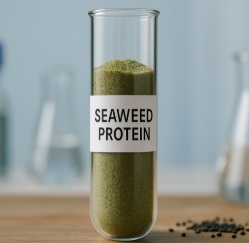
Seaweed Proteins
Rating : 7
| Evaluation | N. Experts | Evaluation | N. Experts |
|---|---|---|---|
| 1 | 6 | ||
| 2 | 7 | ||
| 3 | 8 | ||
| 4 | 9 | ||
| 5 | 10 |
0 pts from Al222
| Sign up to vote this object, vote his reviews and to contribute to Tiiips.Evaluate | Where is this found? |
| "Descrizione" about Seaweed Proteins by Al222 (23408 pt) | 2025-Nov-05 16:53 |
| Read the full Tiiip | (Send your comment) |
Seaweed proteins (macroalgae)
Description
Protein ingredients derived from edible seaweeds (macroalgae) across brown (Phaeophyceae: Laminaria/Kombu, Ascophyllum, Fucus), red (Rhodophyta: Porphyra/Nori, Palmaria palmata/Dulse), and green (Chlorophyta: Ulva/sea lettuce) lineages.
Typical protein (dry basis): red/green seaweeds ~20–40% (species- and season-dependent; Porphyra among the highest), brown seaweeds ~7–20%. Commercial concentrates/isolates standardize to ≥50–80% protein via processing.
Sensory profile: marine–umami, sometimes briny/phenolic; color from emerald to deep brown–red depending on species and process.

Caloric value (per 100 g, powder)
Protein concentrate (50–65%): ~320–380 kcal; protein 50–65 g, carbohydrates 15–30 g (notably soluble fiber/polysaccharides), fat 1–5 g, sodium variable (desalting reduces it).
Protein isolate (≥80%): ~330–410 kcal; protein 80–90 g, carbohydrates 1–10 g, fat 1–4 g.
Key constituents
Proteins/peptides: structural proteins and, in reds, phycobiliproteins (e.g., phycoerythrin) contributing color and antioxidant activity.
Free amino acids: notably glutamate/aspartate → umami impact.
Polysaccharides (co-extracted): alginates/fucoidans (brown), agar/carrageenans (red), ulvans (green) — affect viscosity/gelation.
Minerals/micronutrients: iodine (especially in kelps), potassium, calcium, iron; B-vitamins vary by species and processing.
Production process
Harvesting & pretreatment: sorting, washing, optional blanching/desalting to reduce sand/salts/iodine.
Drying & milling: air/sun/drum/spray drying, then milling to target particle size.
Protein concentration/isolation:
Cell-wall disruption (mechanical, enzymatic, ultrasound/PEF) to improve extractability/digestibility.
Alkaline solubilization → isoelectric precipitation or membrane filtration to yield concentrates/isolates.
Enzymatic hydrolysis/fermentation to reduce beany/marine notes, increase solubility and bioaccessibility.
Finishing: decolorization/deodorization as needed, spray-drying, sieving, standardization.
Sensory and technological properties
Solubility: pH-dependent; hydrolysates show broader solubility and lower turbidity.
Emulsifying/foaming: seaweed proteins and co-extracted polysaccharides synergize to stabilize emulsions/foams.
Gelling/viscosity: interactions with alginates/carrageenans/ulvans provide body and gel strength in sauces and fillings.
Flavor: intrinsic umami supports salt reduction; off-notes mitigated by desalting, activated carbon, or fermentation.
Food applications
Plant-based meats/seafood analogs: binder, emulsifier, and texture aid; supports extrusion with cereals/legumes.
Soups, sauces, dressings: natural thickening/emulsifying with umami lift.
Bakery/snacks: protein enrichment in crackers, chips, savory bars; color and flavor managed by blends.
Beverages & nutrition: hydrolysates in RTD drinks or broths (clarity and taste optimized).
Nutrition and health
Protein quality: good lysine levels; sulfur amino acids may be limiting → complement with cereals/seeds. PDCAAS/DIAAS improve after cell-wall disruption/enzymatic hydrolysis.
Fiber & minerals: co-deliver soluble fibers and minerals; iodine can be high in kelp-derived materials—manage dose.
Bioactives: phycobiliproteins/peptides may contribute antioxidant/ACE-inhibitory activities (matrix-/process-dependent).
Fat profile
Total fat low; lipids mainly membrane phospholipids with some **PUFA** (e.g., long-chain n-3 traces). For most food uses, fat contribution is negligible relative to proteins/polysaccharides. **MUFA** and **SFA** fractions are minor; **TFA**/**MCT** are not relevant.
Quality and specifications (typical topics)
Protein (N×factor): report nitrogen-to-protein factor suitable for seaweeds (often ~5.0–5.13 rather than 6.25) due to non-protein nitrogen.
Moisture/aw, ash (marine salts), sodium/iodine (declared/controlled), metals (As, Cd, Pb, Hg) within limits, with inorganic arsenic specifically low (avoid hijiki sources).
Microbiology: pathogens absent/25 g; low yeasts/molds; verify biogenic amines if fermented.
Functionality: solubility vs pH, emulsifying/foaming indices, gel strength/viscosity, color (L, a, b*)**, particle size.
Sensory: marine/phenolic off-notes minimized; grit/sand absent.
Storage and shelf life
Store cool, dry, dark, airtight; protect from moisture (caking) and odors.
Shelf life: typically 12–24 months for powders in oxygen/moisture-barrier packs; shorter for liquid hydrolysates (refrigerated).
Allergens and safety
Not a major allergen, but cross-contact with crustaceans/fish possible in shared facilities.
Iodine sensitivity/thyroid: kelp-rich proteins may exceed daily iodine if overdosed → formulate and label responsibly.
Inorganic arsenic: ensure compliant sourcing and routine analytics; some jurisdictions advise against hijiki consumption.
Gluten-free by nature; manage cross-contact under **GMP/HACCP**.
INCI functions in cosmetics (where applicable)
INCI: Hydrolyzed Algae Protein, Algae Extract, or species-specific (e.g., Laminaria Digitata Extract, Ascophyllum Nodosum Extract, Ulva Lactuca Extract).
Roles: film-forming, skin/hair conditioning, moisture retention, and antioxidant support in serums, shampoos, masks.
Troubleshooting
Marine/off odors or bitterness: apply desalting, activated carbon, or fermentation; select low-phenolic species/cuts.
Too dark/green color: decolorize (ethanol washes/adsorbents) or blend with light proteins.
Low solubility or graininess: increase hydrolysis, adjust pH/ionic strength, reduce particle size, add chelators to manage divalent ions.
High sodium/iodine: use desalting, species selection, and spec caps; declare iodine per serving where appropriate.
Weak gel/emulsion: leverage synergy with alginates/carrageenans/ulvans or add starches/hydrocolloids.
Sustainability and supply chain
Seaweed aquaculture requires no arable land, freshwater, or fertilizers, supports habitat and nutrient uptake.
Ensure responsible harvesting, biosecurity, and traceability; optimize processing water/energy, treat effluents toward **BOD/COD** targets; use recyclable packaging and maintain **GMP/HACCP**.
Labelling
Names: “seaweed protein concentrate/isolate” with species (e.g., from Porphyra/Ulva/Laminaria).
Declare protein % (N×factor used), sodium/iodine where relevant, country of origin/lot; apply vegan/gluten-free claims only when compliant.
Conclusion
Seaweed proteins offer a low-impact, umami-forward protein platform with useful functionality (solubility, emulsification, gelling synergy) and valuable minerals/fibers. Success hinges on species selection, extractability/digestibility enhancement (cell-wall disruption, enzymatic hydrolysis/fermentation), and careful control of iodine/metals/off-notes to deliver clean flavor, stable texture, and regulatory compliance.
Mini-glossary
PDCAAS/DIAAS: Indices of protein quality based on digestibility/indispensable amino acids; improve with hydrolysis/fermentation.
N-to-protein factor: Multiplier converting nitrogen to protein; for seaweeds often ~5.0–5.13 (lower than 6.25) due to non-protein nitrogen.
Phycobiliproteins: Water-soluble chromoproteins (e.g., phycoerythrin) from red algae contributing color and antioxidant effects.
**PUFA** — polyunsaturated fatty acids: Potentially beneficial when balanced; minor in macroalgae protein powders.
**MUFA** — monounsaturated fatty acids: Typically neutral/beneficial; minor fraction here.
**SFA** — saturated fatty acids: Best kept moderate overall; minor here.
**TFA** — trans fatty acids: Negligible in seaweed ingredients.
**MCT** — medium-chain triglycerides: Not relevant for macroalgae.
**GMP/HACCP** — good manufacturing practice / hazard analysis and critical control points: Preventive food-safety systems with validated CCPs.
**BOD/COD** — biochemical/chemical oxygen demand: Wastewater metrics guiding treatment and environmental impact.
References__________________________________________________________________________
Echave J, Fraga-Corral M, Garcia-Perez P, Popović-Djordjević J, H Avdović E, Radulović M, Xiao J, A Prieto M, Simal-Gandara J. Seaweed Protein Hydrolysates and Bioactive Peptides: Extraction, Purification, and Applications. Mar Drugs. 2021 Aug 31;19(9):500. doi: 10.3390/md19090500.
Abstract. Seaweeds are industrially exploited for obtaining pigments, polysaccharides, or phenolic compounds with application in diverse fields. Nevertheless, their rich composition in fiber, minerals, and proteins, has pointed them as a useful source of these components. Seaweed proteins are nutritionally valuable and include several specific enzymes, glycoproteins, cell wall-attached proteins, phycobiliproteins, lectins, or peptides. Extraction of seaweed proteins requires the application of disruptive methods due to the heterogeneous cell wall composition of each macroalgae group. Hence, non-protein molecules like phenolics or polysaccharides may also be co-extracted, affecting the extraction yield. Therefore, depending on the macroalgae and target protein characteristics, the sample pretreatment, extraction and purification techniques must be carefully chosen. Traditional methods like solid-liquid or enzyme-assisted extraction (SLE or EAE) have proven successful. However, alternative techniques as ultrasound- or microwave-assisted extraction (UAE or MAE) can be more efficient. To obtain protein hydrolysates, these proteins are subjected to hydrolyzation reactions, whether with proteases or physical or chemical treatments that disrupt the proteins native folding. These hydrolysates and derived peptides are accounted for bioactive properties, like antioxidant, anti-inflammatory, antimicrobial, or antihypertensive activities, which can be applied to different sectors. In this work, current methods and challenges for protein extraction and purification from seaweeds are addressed, focusing on their potential industrial applications in the food, cosmetic, and pharmaceutical industries.
Brown ES, Allsopp PJ, Magee PJ, Gill CI, Nitecki S, Strain CR, McSorley EM. Seaweed and human health. Nutr Rev. 2014 Mar;72(3):205-16. doi: 10.1111/nure.12091.
Abstract. Seaweeds may have an important role in modulating chronic disease. Rich in unique bioactive compounds not present in terrestrial food sources, including different proteins (lectins, phycobiliproteins, peptides, and amino acids), polyphenols, and polysaccharides, seaweeds are a novel source of compounds with potential to be exploited in human health applications. Purported benefits include antiviral, anticancer, and anticoagulant properties as well as the ability to modulate gut health and risk factors for obesity and diabetes. Though the majority of studies have been performed in cell and animal models, there is evidence of the beneficial effect of seaweed and seaweed components on markers of human health and disease status. This review is the first to critically evaluate these human studies, aiming to draw attention to gaps in current knowledge, which will aid the planning and implementation of future studies.
Pereira L, Cotas J, Gonçalves AM. Seaweed Proteins: A Step towards Sustainability? Nutrients. 2024 Apr 10;16(8):1123. doi: 10.3390/nu16081123.
Abstract. This review delves into the burgeoning field of seaweed proteins as promising alternative sources of protein. With global demand escalating and concerns over traditional protein sources' sustainability and ethics, seaweed emerges as a viable solution, offering a high protein content and minimal environmental impacts. Exploring the nutritional composition, extraction methods, functional properties, and potential health benefits of seaweed proteins, this review provides a comprehensive understanding. Seaweed contains essential amino acids, vitamins, minerals, and antioxidants. Its protein content ranges from 11% to 32% of dry weight, making it valuable for diverse dietary preferences, including vegetarian and vegan diets. Furthermore, this review underscores the sustainability and environmental advantages of seaweed protein production compared to traditional sources. Seaweed cultivation requires minimal resources, mitigating environmental issues like ocean acidification. As the review delves into specific seaweed types, extraction methodologies, and functional properties, it highlights the versatility of seaweed proteins in various food products, including plant-based meats, dairy alternatives, and nutritional supplements. Additionally, it discusses the potential health benefits associated with seaweed proteins, such as their unique amino acid profile and bioactive compounds. Overall, this review aims to provide insights into seaweed proteins' potential applications and their role in addressing global protein needs sustainably.
Gunathilake T, Akanbi TO, Suleria HAR, Nalder TD, Francis DS, Barrow CJ. Seaweed Phenolics as Natural Antioxidants, Aquafeed Additives, Veterinary Treatments and Cross-Linkers for Microencapsulation. Mar Drugs. 2022 Jul 7;20(7):445. doi: 10.3390/md20070445.
Abstract. Driven by consumer demand and government policies, synthetic additives in aquafeed require substitution with sustainable and natural alternatives. Seaweeds have been shown to be a sustainable marine source of novel bioactive phenolic compounds that can be used in food, animal and aqua feeds, or microencapsulation applications. For example, phlorotannins are a structurally unique polymeric phenolic group exclusively found in brown seaweed that act through multiple antioxidant mechanisms. Seaweed phenolics show high affinities for binding proteins via covalent and non-covalent bonds and can have specific bioactivities due to their structures and associated physicochemical properties. Their ability to act as protein cross-linkers means they can be used to enhance the rheological and mechanical properties of food-grade delivery systems, such as microencapsulation, which is a new area of investigation illustrating the versatility of seaweed phenolics. Here we review how seaweed phenolics can be used in a range of applications, with reference to their bioactivity and structural properties.
Sharifuddin Y, Chin YX, Lim PE, Phang SM. Potential Bioactive Compounds from Seaweed for Diabetes Management. Mar Drugs. 2015 Aug 21;13(8):5447-91. doi: 10.3390/md13085447.
Abstract. Diabetes mellitus is a group of metabolic disorders of the endocrine system characterised by hyperglycaemia. Type II diabetes mellitus (T2DM) constitutes the majority of diabetes cases around the world and are due to unhealthy diet, sedentary lifestyle, as well as rise of obesity in the population, which warrants the search for new preventive and treatment strategies. Improved comprehension of T2DM pathophysiology provided various new agents and approaches against T2DM including via nutritional and lifestyle interventions. Seaweeds are rich in dietary fibres, unsaturated fatty acids, and polyphenolic compounds. Many of these seaweed compositions have been reported to be beneficial to human health including in managing diabetes. In this review, we discussed the diversity of seaweed composition and bioactive compounds which are potentially useful in preventing or managing T2DM by targeting various pharmacologically relevant routes including inhibition of enzymes such as α-glucosidase, α-amylase, lipase, aldose reductase, protein tyrosine phosphatase 1B (PTP1B) and dipeptidyl-peptidase-4 (DPP-4). Other mechanisms of action identified, such as anti-inflammatory, induction of hepatic antioxidant enzymes' activities, stimulation of glucose transport and incretin hormones release, as well as β-cell cytoprotection, were also discussed by taking into consideration numerous in vitro, in vivo, and human studies involving seaweed and seaweed-derived agents.
| Sign up to vote this object, vote his reviews and to contribute to Tiiips.EvaluateClose | (0 comments) |
Read other Tiiips about this object in __Italiano (1)
Component type:   Natural Main substances:   Last update:   2025-11-05 16:50:41 | Chemical Risk:   |

