

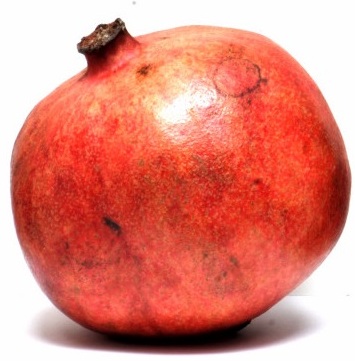
Pomegranate concentrate
Rating : 7
| Evaluation | N. Experts | Evaluation | N. Experts |
|---|---|---|---|
| 1 | 6 | ||
| 2 | 7 | ||
| 3 | 8 | ||
| 4 | 9 | ||
| 5 | 10 |
0 pts from Al222
| Sign up to vote this object, vote his reviews and to contribute to Tiiips.Evaluate | Where is this found? |
| "Descrizione" about Pomegranate concentrate by Al222 (23258 pt) | 2025-Nov-05 15:40 |
| Read the full Tiiip | (Send your comment) |
Pomegranate concentrate
Description
Concentrated pomegranate juice produced by removing water from clarified or lightly pulped Punica granatum juice, typically to ~65–70 °Brix (single-strength juice ≈ 14–16 °Brix).
Sensory profile: intense ruby color, sweet–tart taste with berry–floral notes; bitterness/astringency varies with peel/aril ratio and processing.
Use formats: aseptic liquid, frozen concentrate, or high-Brix syrup for direct use or reconstitution.

Caloric value (per 100 g)
Concentrate 65–70 °Brix: ~250–280 kcal (mostly intrinsic sugars, ~60–70 g/100 g).
Reconstituted juice (single strength): ~55–70 kcal/100 ml; carbohydrates ~13–16 g, protein ~0.1–0.5 g, fat ~0 g.
Sodium naturally low.
Key constituents
Sugars: glucose, fructose, sucrose (trace/variable).
Organic acids: predominantly citric (± malic, tartaric traces) → pH ~2.8–3.4.
Polyphenols (ellagitannins & anthocyanins): punicalagins (α/β), ellagic acid/ellagitannins, anthocyanins (e.g., delphinidin/cyanidin/pelargonidin glycosides) → color and antioxidant capacity.
Minerals/vitamins: potassium notable; vitamin C modest and heat-labile.
Markers for authenticity: ellagitannin profile, anthocyanin ratio, isotope (δ¹³C)/NMR patterns.
Production process
Raw fruit prep: sorting/cleaning, controlled crushing to minimize peel carryover (bitterness).
Juice extraction & clarification: pressing of arils → optional enzymatic maceration/depectinization → clarification (flotation/centrifuge/filtration).
Stabilization: short pasteurization to inactivate enzymes/microflora.
Concentration: vacuum evaporation (low T) to ~65–70 °Brix; alternatives: falling-film or MVR evaporation; optional aroma recovery and addition back.
Finishing & packing: adjust acidity/°Brix to spec → aseptic fill or frozen; controls for HMF and color.
By-products: peel/membrane streams rich in polyphenols/pectin (valorization potential).
Sensory and technological properties
Color stability: anthocyanins are pH/oxygen/temperature-sensitive; higher T/oxygen → fading/browning.
Browning indices: monitor HMF and TOTOX-like markers for quality; keep heat load minimal.
Acid–sweet balance: high titratable acidity provides brightness; blends well with apple/pear/grape bases for cost/taste.
Fermentation risk: yeasts can grow if post-pasteurization contamination occurs → gas/swelling in packs.
Food applications
Beverages: 100% juice, RTD blends, functional shots, sparkling/fermented drinks (cider/kombucha).
Culinary: sauces/reductions/glazes, dressings, marinades, dessert syrups.
Bakery/dairy/plant-based: fillings, swirls, yogurts, ice creams/sorbets, bars and gummies.
Confectionery: pâte de fruit, jellies, coatings (with pectin/gelatin systems).
Nutrition and health
Polyphenols (notably punicalagins/ellagic acid) contribute to antioxidant capacity; actual effects depend on dose, matrix, and bioavailability.
Sugars are intrinsic to fruit; energy density rises with Brix—formulate to target °Brix and serving size.
Acidity may affect dental enamel—advise dilution/meal-time consumption for sensitive individuals.
Fat profile
Fat is negligible in pomegranate concentrate. Any residual lipids are traces only; thus **PUFA** (polyunsaturated fatty acids), **MUFA** (monounsaturated fatty acids), **SFA** (saturated fatty acids), **TFA** (trans fatty acids), and **MCT** (medium-chain triglycerides) are nutritionally irrelevant here.
Quality and specifications (typical topics)
°Brix: 65.0–70.0 (spec-dependent); ratio to acidity standardized for reconstitution.
Acidity/pH: TA (as citric) and pH within target; ash, conductivity for identity.
Color/turbidity: anthocyanin content, CIELAB/absorbance at key wavelengths; NTU (clarity).
Chemical markers: HMF low, 5-HMF increase indicates overheating; patulin not typical; SO₂ absent unless declared.
Microbiology: commercial sterility (aseptic) or yeast/mold low; pathogens absent/25 g.
Adulteration checks: ellagitannin/anthocyanin fingerprints, sugar profiles, δ¹³C/SIRA, NMR to detect apple/pear/grape additions or added sugars.
Contaminants: pesticides/metals within limits; glass/foreign matter absent.
Storage and shelf life
Frozen concentrate: ≤ −18 °C, 12–24 months; avoid thaw–refreeze cycles.
Aseptic ambient: cool, dark, oxygen-barrier packs; typical 6–12 months unopened.
After opening: refrigerate, minimize headspace, use within weeks; protect from light/air/heat to limit color loss/HMF.
Allergens and safety
Not a major allergen; gluten-free by nature.
Acidic product—may irritate mucosa undiluted; sulfite generally absent unless added (declare if present).
Manage cross-contact and post-fill hygiene under **GMP/HACCP**.
INCI functions in cosmetics (when applicable)
Possible INCI: Punica Granatum Fruit Extract, Punica Granatum Juice/ Juice Concentrate, Punica Granatum Peel Extract.
Roles: antioxidant, astringent, skin-conditioning, coloring (natural hue) in toners, gels, rinsables; assess stability (anthocyanins) and sensitization risks.
Troubleshooting
Brown hue/high HMF: excess heat/long residence → lower evaporation temperature, use MVR/falling-film, add de-aeration; ensure cold chain in storage.
Color fade: oxygen/light exposure → improve oxygen scavenging, N₂ headspace, UV-barrier packaging; adjust pH within color-stable window.
Bitterness/astringency: peel carryover/over-extraction → optimize crusher gap, enzyme regime, and peel removal; blend with NFC/other juices.
Fermentation/swelling packs: yeast contamination → tighten CIP, aseptic validation, and fill-temperature; hold refrigerated after opening.
Phase separation/haze: inadequate clarification → adjust enzyme dose, centrifugation, and filtration; for pulpy styles, declare with pulp.
Sustainability and supply chain
Valorize peel/membrane seeds for polyphenol extracts, pectin, or feed; minimize evaporator energy via MVR/heat recovery.
Manage juice wastewater toward **BOD/COD** targets; use recyclable packaging; ensure traceability and **GMP/HACCP** compliance.
Labelling
Ingredient name: “pomegranate juice concentrate.”
Declare fruit content/reconstituted % juice as required; list country of origin, lot, °Brix/acidity if specified by customer; “no added sugar” claims only when compliant for end products; natural flavor vs concentrate must be truthful.
Conclusion
Pomegranate concentrate delivers intense color and a distinct sweet–tart profile with polyphenol value, enabling cost-effective formulation across beverages, culinary sauces, and confections. Gentle processing, robust authenticity controls, and oxygen/light management are key to maintaining color, aroma, and clean-label quality.
Mini-glossary
°Brix: Percentage of soluble solids (mostly sugars) indicating concentration/sweetness.
HMF — 5-hydroxymethylfurfural: Heat/acid browning marker; higher levels suggest overprocessing/aging.
NFC — not-from-concentrate: Juice sold without prior concentration; often blended with from-concentrate bases.
**PUFA** — polyunsaturated fatty acids: Generally beneficial when balanced; here negligible.
**MUFA** — monounsaturated fatty acids: Often neutral/beneficial; trace only in this ingredient.
**SFA** — saturated fatty acids: Best kept moderate overall; trace here.
**TFA** — trans fatty acids: Negligible in fruit concentrates.
**MCT** — medium-chain triglycerides: Not relevant for fruit concentrates.
**GMP/HACCP** — good manufacturing practice / hazard analysis and critical control points: Preventive hygiene systems with validated CCPs.
**BOD/COD** — biochemical/chemical oxygen demand: Wastewater metrics guiding treatment and environmental impact.
Studies
In the phytochemical composition there are polyphenols, flavonoids, anthocyanins, tannins, ellagic acid, ursolic acid, gallic acid.
Of all the fresh fruit, the pomegranate has the highest antioxidant power and I quote the formula: 3895.9 +/- 241.4 mg/L x kJ(-1). All the remaining fruit has a lower degree and in order: orange, lemon, mandarin, persimmon, kiwi, pear and avocado (1).
It has first-rate antioxidant properties for the human body (2), releasing ellagic acid into the grains and internal cortex, which protects the brain, intestines, prostate (3) and others.

As far as the prostate is concerned, it is an alternative cure for contrasting the tumor (4).
Microscopic observation of the wound healing process on collagen, number of polymorphonuclear cell infiltration, angiogenesis and re-epithelialisation showed that topical administration of 10% Powder of standardized pomegranate extract accelerates the healing of wounds from second-degree burns (5).

References_________________________________________________________________________
(1) Basov AA, Bykov IM. Comparative characteristics of antioxidant capacity and energy content of some foods. Vopr Pitan. 2013;82(3):77-80. Russian. PMID: 24006756.
Abstract. The paper presents a comparative evaluation of antioxidant capacity and energy values of different foods groups in order to identify the most efficient combinations for correction of metabolic disorders associated with an imbalance in antioxidant system. In study integral method for determining of antioxidant and energy indicators (patent No 2,455,703) has been used. It has been revealed that the highest antioxidant-energy capacity (AE) of fresh juices has a pomegranate juice (AE = 3895.9 +/- 241.4 mg/L x kJ(-1)), other fresh juices inferior to him on this indicator: grenade>orange>lemon=apple> pomelo > mandarin > persimmon > kiwi > pears > avocado. Among dairy products the highest AE belongs to boiled fermented milk--"ryazhenka" (AE = 40.9 +/- 2.7 mg/L x kJ(-1)), other dairy products can be placed in line with index AE: ryazhenka ==>kefir > yogurt. Most of fresh juices were significantly superior to antioxidant-energy potential of other foods. Despite the fact that dairy products AE were lower than AE of some juices, they were much superior to AE values of fastfood products (biscuits, potato chips, popcorn). This demonstrates need to reduce the quota of fast foods in the diet to prevent the risk of reduction potential of the endogenous antioxidant system.
(2) Aslan A, Can Mİ, Boydak D. Anti-oxidant effects of pomegranate juice on Saccharomyces cerevisiae cell growth. Afr J Tradit Complement Altern Med. 2014 Jun 4;11(4):14-8. doi: 10.4314/ajtcam.v11i4.3. PMID: 25392575; PMCID: PMC4202391.
Abstract. Background: Pomegranate juice has a number of positive effects on both human and animal subjects....Results: According to our results statistically significant differences have been determined among the study groups in terms of fatty acids and vitamin (p<0,05). Fatty acid synthesis, vitamin control and cell density increased in groups to which PJ was given in comparison with the control group (p<0,05). Pomegranate juice increased vitamins, fatty acids and total protein expression in Saccharomyces cerevisiae in comparison with the control. Conclusion: Pomegranate juice has a positive effect on fatty acid, vitamin and protein synthesis by Saccharomyces cerevisiae. Accordingly, we believe that it has significantly decreased oxidative damage thereby making a positive impact on yeast development.
(3) Naiki-Ito A, Chewonarin T, Tang M, Pitchakarn P, Kuno T, Ogawa K, Asamoto M, Shirai T, Takahashi S. Ellagic acid, a component of pomegranate fruit juice, suppresses androgen-dependent prostate carcinogenesis via induction of apoptosis. Prostate. 2015 Feb;75(2):151-60. doi: 10.1002/pros.22900. Epub 2014 Oct 4. PMID: 25284475.
(4) Wang L, Martins-Green M. Pomegranate and its components as alternative treatment for prostate cancer. Int J Mol Sci. 2014 Aug 25;15(9):14949-66. doi: 10.3390/ijms150914949. PMID: 25158234; PMCID: PMC4200766.
Abstract. Prostate cancer is the second leading cause of cancer deaths in men in the United States. There is a major need for less toxic but yet effective therapies to treat prostate cancer. Pomegranate fruit from the tree Punica granatum has been used for centuries for medicinal purposes and is described as "nature's power fruit". Recent research has shown that pomegranate juice (PJ) and/or pomegranate extracts (PE) significantly inhibit the growth of prostate cancer cells in culture. In preclinical murine models, PJ and/or PE inhibit growth and angiogenesis of prostate tumors. More recently, we have shown that three components of PJ, luteolin, ellagic acid and punicic acid together, have similar inhibitory effects on prostate cancer growth, angiogenesis and metastasis. Results from clinical trials are also promising. PJ and/or PE significantly prolonged the prostate specific antigen (PSA) doubling time in patients with prostate cancer. In this review we discuss data on the effects of PJ and PE on prostate cancer. We also discuss the effects of specific components of the pomegranate fruit and how they have been used to study the mechanisms involved in prostate cancer progression and their potential to be used in deterring prostate cancer metastasis.
(5) Lukiswanto BS, Miranti A, Sudjarwo SA, Primarizky H, Yuniarti WM. Evaluation of wound healing potential of pomegranate (Punica granatum) whole fruit extract on skin burn wound in rats (Rattus norvegicus). J Adv Vet Anim Res. 2019 Apr 14;6(2):202-207. doi: 10.5455/javar.2019.f333.
Abstract. Objective: This research was conducted to study the wound healing process of whole fruit pomegranate extract (punica granatum) standardized with 40% ellagic acid ointment for deep second-degree burn wound of skin in the rat (Rattus norvegicus)....Results: Microscopic observation on the wound healing process on the collagen, PMN infiltration, angiogenesis, and re-epithelization showed that topical administration of 10% SPE in burns gives the best result. This is characterized by a high density of collagen with a good arrangement, which is accompanied by a complete and mature epithelium, low number of inflammatory cells, and angiogenesis. This may be caused by the compounds in the pomegranate extract, which have the antioxidant, anti-inflammatory, and anti-bacterial effects. Conclusion: This study reveals that 10% SPE accelerates the healing of deep second-degree burn wound. Thus, pomegranate standardized with 40% ellagic acid is a promising herb for the healing of burn wound of skin.
| Sign up to vote this object, vote his reviews and to contribute to Tiiips.EvaluateClose | (0 comments) |
Read other Tiiips about this object in __Italiano (1)
Component type:   Natural Main substances:   Last update:   2025-11-05 15:34:35 | Chemical Risk:   |

