

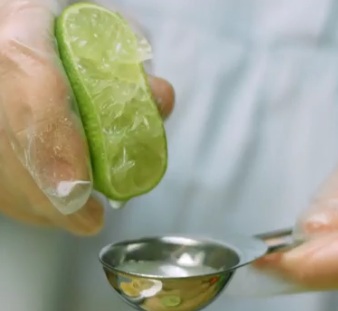
Concentrated lime juice
Description
Acidic ingredient obtained from the juice of limes (Citrus latifolia; Citrus aurantifolia, family Rutaceae) concentrated by vacuum evaporation.
Sensory profile: intense acidity, green–floral and citrusy notes (limonene, citral), slight bitterness if limonin is present; fresher top-notes when aroma recovery and add-back are used.
Typical uses: base for beverages, syrups, mixology, marinades, desserts, dressings, and as a technical acidulant (E330).

Caloric value (per 100 g)
Reconstituted (single strength): ~20–30 kcal; carbohydrates 6–10 g (mainly glucose/fructose), sugars 6–9 g; fiber negligible; fat ~0 g; protein ~0.5 g.
Concentrate (typically 45–50 °Brix): energy scales with soluble solids; check the label (can exceed 150–200 kcal/100 g at 50 °Brix).
Sodium: naturally ≈0; may increase in ready-to-drink or sweet-acid formulations.
Key constituents
Organic acids: predominantly citric acid (TA reported as g/100 g), traces of malic; typical pH 2.0–2.6 when reconstituted.
Vitamins: vitamin C (ascorbic acid) high in fresh juice; partial losses with heat/oxygen.
Polyphenols/flavonoids: eriocitrin, hesperidin, diosmin (variable).
Volatiles: limonene, citral (neral/geranial), linalool; often added as recovered essence.
Minerals: mainly potassium, with magnesium and calcium in traces.
Natural sugars: glucose, fructose, little sucrose.
Production process
Raw material: ripe limes; washing, grading, extraction (reamer/in-line extractor).
Clarification/finishing: screening, centrifugation, optional pectinase enzymes, de-aeration.
Mild pasteurization of juice and aroma recovery (essence/oil).
Vacuum concentration to 45–50 °Brix with control of pH, TA, and color; optional aroma add-back.
Packaging: aseptic (ambient) or frozen (–18 °C) in barrier containers; traceability and hygiene prerequisites under GMP/HACCP.
Reconstitution: indicative ratio 1:(5–7) to single strength (≈7–10 °Brix, origin/spec sets the target).
Sensory and technological properties
Effective acidulant (lowers pH, improves shelf life and freshness perception).
Antioxidant capacity (ascorbic acid) helps limit enzymatic browning of produce.
°Brix/Acidity (B/A) ratio guides sweet–sour balance in beverages.
Color/cloud stability: sensitive to light, oxygen, and reactive metals; prefer low-hardness water for reconstitution.
Culinary uses
Beverages (soft drinks, syrups, sports/energy), cocktails and mocktails.
Marinades for meat/seafood, ceviche (with time/pH control).
Bakery/ice cream, sauces and dressings; preserves and ferments (pH control).
Industrial: toppings, sorbets, RTD bases and concentrates.
Nutrition and health
Low energy density when reconstituted; source of vitamin C and flavonoids with antioxidant potential.
GI impact is minor at typical portions; still account for sugars in sweetened drinks.
Dental erosion/GERD: acidity may irritate sensitive individuals; consume in moderation and avoid long oral exposure.
Citrus allergy: rare but possible.
Sodium: monitor in ready-to-drink formulations.
Fat profile
Virtually fat-free; only traces from essential oils: predominantly PUFA (polyunsaturated fatty acids; potentially beneficial when balanced) and MUFA (monounsaturated; often neutral/beneficial), with minimal SFA (saturated; limit in the overall diet). Overall impact is negligible in the juice itself but matters in finished products.
Quality and specifications (typical topics)
°Brix (concentrate): 45–50; single strength reconstituted ~7–10 °Brix.
TA (as citric acid): 18–24 g/100 g in concentrate; 5–8 g/100 g reconstituted.
B/A ratio, pH, pulp %, color (L*a*b*), oils/essences total, limonin (delayed bitterness).
Microbiology: pathogens absent; watch for Alicyclobacillus in acidic juices; commercial sterility for aseptic packs.
Residues: pesticides/metals within limits; foreign matter absent.
Storage and shelf life
Frozen concentrate (–18 °C): 12–24 months; avoid thermal abuse.
Aseptic, ambient: 6–12 months (intact pack, oxygen barrier).
Reconstituted: ≤4 °C, 3–5 days; keep sealed and protect from light and air.
Avoid contact with aluminum or reactive surfaces (corrosion/metallic notes).
Allergens and safety
Naturally gluten-free; possible citrus hypersensitivity.
Acidity is irritant to skin/eyes: in production, use PPE and proper CIP practices.
Botulism risk: none at typical pH; spoilage remains possible if good practices are not followed.
INCI functions in cosmetics
Entries: Citrus Aurantifolia (Lime) Juice, Citrus Aurantifolia Fruit Extract.
Roles: astringent, fragrance, antioxidant/skin conditioning in leave-on/rinse-off products; verify pH and potential phototoxicity (higher for expressed oils, minimal for juice).
Troubleshooting
Browning/“cooked” odor: excessive heat/oxygen → use gentle evaporation, de-aeration, antioxidants.
Aroma loss: poor aroma recovery/add-back → retune process; use barrier packaging.
Delayed bitterness: limonin from excessive peel/seed contact → optimize extraction and hold times.
Metallic notes: hard water or contact with metals → soften water/upgrade equipment.
Too sour: balance B/A with sugars or juice blends; add acids at end of cooking.
Sustainability and supply chain
By-product valorization: peels for essential oil and pectin; pulp for feed/biogas.
Energy efficiency: multiple-effect evaporators, heat recovery; optimize process water and effluents toward BOD/COD targets.
Recyclable packaging, optimized cold chain; quality under GMP/HACCP.
Conclusion
Concentrated lime juice is a versatile acidulant with distinctive citrus aromas and strong sensory identity. Proper control of the B/A ratio, oxygen management, and barrier packaging preserves freshness and color, while by-product valorization and careful effluent control improve the environmental footprint of the value chain.
Mini-glossary
°Brix — total soluble solids; indicates sugars and other solubles and drives sweetness/energy.
TA — titratable acidity (as citric acid); gauges sensory/technical acidity.
B/A — °Brix/Acidity ratio; index of sweet–sour balance in beverages.
SFA — saturated fatty acids: excess linked to higher LDL; present only in traces here.
MUFA — monounsaturated fatty acids: often neutral/beneficial for lipid profile; trace levels here.
PUFA — polyunsaturated fatty acids: potentially heart-healthy yet more oxidation-prone; trace levels from essential oils.
GMP/HACCP — Good Manufacturing Practice / Hazard Analysis and Critical Control Points: preventive hygiene systems with defined, validated CCPs.
BOD/COD — Biochemical/Chemical Oxygen Demand: indicators of process-effluent impact on wastewater.

