

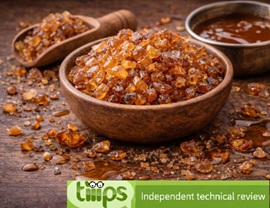
Caramelized Sugar
Synonyms/labeling: caramelized sucrose, caramel (ingredient); not to be confused with caramel colors (E150a–d) used solely as color additives
Definition
Product obtained by controlled heating of sugars—most commonly sucrose—until caramelization reactions (dehydration, fragmentation, and polymerization) occur, generating brown color bodies and a characteristic toffee/burnt-sugar flavor. Unlike the Maillard reaction, caramelization does not require amino groups (proteins).
Caloric value
Dry caramel (0–3% water): ~380–390 kcal per 100 g (similar to sugar).
Caramel syrup (20–35% water): ~320–340 kcal/100 g.
Caramel sauce (with cream/butter): typically ~250–330 kcal/100 g, depending on water and fat.
Raw materials
Sucrose (refined cane/beet); optionally mixed with glucose/fructose or glucose syrup to reduce crystallization and adjust viscosity.
Acids (e.g., lemon juice or citric acid) promote inversion (sucrose → glucose + fructose) and improve crystallization control.
Bases (e.g., baking soda) accelerate caramelization but can increase bitterness if overused.
Key composition & markers
Brown polymers: caramelans, caramelens, caramelins.
Aroma compounds: furans (e.g., HMF), maltol/ethyl maltol, diacetyl, lactones, roasted notes.
No proteins by themselves (Maillard products appear only if proteins/amino acids are present from added ingredients).
Physicochemical properties
Appearance: light amber → dark brown as temperature/time increase.
Solubility: high in water (syrups); dry caramel is a glassy, hygroscopic solid that softens with humidity.
Glass transition (Tg): high when anhydrous (~60–80 °C), drops sharply with water → tackiness risk in humid air.
pH: slightly acidic when acids are used for inversion.
Water activity: low in dry glass; higher in syrups/sauces.
Manufacturing overview
Dry method: heat sucrose in a heavy pan without stirring (or gently swirl) until it melts (~160 °C) and turns amber (~170–175 °C). Arrest or slow further reactions by deglazing with hot water or cream to make syrup/sauce.
Wet method: dissolve sugar in water (optional acid/glucose for anti-crystallization) and boil to 115–170 °C until desired color/flavor is reached; finish with cream/butter/salt as needed.
Color control: stop heating before burnt notes emerge (beyond ~180–185 °C).
Safety: molten sugar is extremely hot and adhesive—use dry tools, add hot liquids carefully, and wear protection.
Sensory profile
Aroma/flavor: toffee, butterscotch, roasted, nutty, vanilla-like (maltol); pleasant bitterness at darker stages.
Color: amber to mahogany; intensity correlates with temperature/time and solids content.
Applications (food)
Confectionery/pastry: brittles, pralines, ganache, custards, crème caramel, caramel sauce (with cream/butter).
Bakery: toppings, fillings, glazes; contributes color and roasted notes.
Beverages/syrups: coffee syrups; brewing (caramel syrups) for color/flavor.
Savory: salted caramel, pan deglazing, sauces for meats/vegetables.
Decoration: sugar threads, cages, shards (sugar glass work).
Nutritional aspects
Energy-dense, mostly free sugars; negligible protein and fiber.
Caramel aromatics can enhance perceived sweetness, enabling modest sugar reductions at equal sensory intensity (must be validated).
Safety and regulatory notes
HMF and furans increase with severe heating; minimize time/temperature to reduce them.
Acrylamide: negligible in pure caramelization (no amino acids). It mainly forms via Maillard with asparagine (e.g., potatoes, cereals).
4-MEI: associated with ammonia-process caramel colors (E150d), not with simple culinary caramelized sugar or E150a (plain).
Allergens: none intrinsically; watch for dairy (cream/butter) or nut additions in finished sauces.
Vegan/Gluten-free: caramelized sugar itself is vegan and GF, barring contamination or added ingredients.
Stability & storage
Hygroscopicity: dry caramel absorbs moisture → becomes sticky and may crystallize; store airtight, cool, and dry.
Syrups/sauces: prone to crystallization; prevent with glucose/invert sugar, mild acidulation, proper filtration, and a brief boil after adding dairy.
Shelf life: dry glass keeps for weeks–months if dry; dairy-containing sauces refrigerate and use within days.
Troubleshooting
Crystallization/graininess: add glucose/invert, avoid agitation and seed crystals on pan walls (wash down with a wet pastry brush); a lid early on helps dissolve splashes.
Bitter/burnt taste: overheated—stop earlier with water/cream deglaze; use a thermometer or color targets.
Sauce separation: emulsify hot cream/butter thoroughly; maintain adequate solids, avoid extreme thermal shocks.
Distinction from caramel colors (E150)
Caramelized sugar (ingredient): produced thermally from sugars for flavor + color in culinary and pastry applications.
Caramel colors E150a–d: industrial additives from controlled caramelization with acid/alkali and sometimes ammonia/sulfite to yield high coloring power and stability; used mainly as colorants in beverages/foods. Different impurity profiles and regulatory limits (e.g., 4-MEI for E150d).
Conclusion
Caramelized sugar is a highly versatile flavor and color builder. By tuning water, acidity, temperature, and time, one can achieve anything from light, buttery caramel to deep, bittersweet notes. Technical success depends on thermal control, crystallization management, and humidity protection; sensory success balances sweetness, roast, and bitterness.