

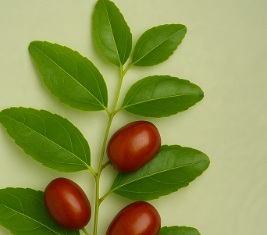
Ziziphus Jujuba
Rating : 7
| Evaluation | N. Experts | Evaluation | N. Experts |
|---|---|---|---|
| 1 | 6 | ||
| 2 | 7 | ||
| 3 | 8 | ||
| 4 | 9 | ||
| 5 | 10 |
Pros:
Anti-inflammatory (1)0 pts from Al222
| Sign up to vote this object, vote his reviews and to contribute to Tiiips.Evaluate | Where is this found? |
| "Descrizione" about Ziziphus Jujuba by Al222 (23403 pt) | 2025-Dec-06 10:45 |
| Read the full Tiiip | (Send your comment) |
Jujube, Ziziphus jujuba (Ziziphus jujuba Mill.)
Botanical description
Ziziphus jujuba, commonly known as jujube or Chinese date, is a small to medium-sized deciduous tree or shrub, generally 4–8 m in height, with an irregular to rounded crown and branches often bearing spines. Leaves are ovate, with a finely serrated margin and three prominent veins arising from the base, glossy and dark green on the upper surface. Flowers are small (around 4–5 mm), yellowish-green, inconspicuous but produced in large numbers in the leaf axils. The fruit is an oval drupe (the jujube), initially green with a crisp, apple-like texture and sweet to sweet-acid taste; at full maturity it turns reddish-brown to dark brown, and upon drying becomes wrinkled, with a texture reminiscent of a small date.
Distribution, ecology and cultivation aspects
Jujube is native to Central and Eastern Asia, but has been cultivated for centuries across wide areas with warm temperate, subtropical and Mediterranean climates. It is a light-demanding species, requiring full sun to achieve good fruit quality. It tolerates a relatively broad range of soils, from light sandy to medium loam, including moderately calcareous substrates, provided they are well drained. The species withstands poor, nutrient-limited soils with pH values from slightly acidic to clearly alkaline, but is sensitive to prolonged waterlogging, which favours root problems and reduces longevity. Once established, jujube shows good drought resistance and reasonable tolerance to winter cold in the dormant phase, whereas late frosts may damage flowers and young fruits.
Yield and fruit quality are influenced by cultivar, seasonal climate (temperatures during flowering and fruit enlargement), water availability, crop load and orchard management (pruning, soil management, supplementary irrigation where used).
Fruit composition and nutritional profile
Fresh jujube fruits are characterised by a high water content and a substantial fraction of carbohydrates, mainly glucose and fructose. Sugar concentration and soluble solids (°Brix) increase with ripening and further with drying. Dietary fibre is moderate in the fresh fruit but becomes significant in the dried product. The fruit can contain high levels of vitamin C, often exceeding those of many common fruits, together with B-group vitamins and a fraction of free amino acids.
With regard to minerals, jujube is particularly rich in potassium, and also provides phosphorus, calcium, magnesium and traces of other elements. The phenolic fraction comprises polyphenols, flavonoids, flavones and proanthocyanidins, associated with marked antioxidant activity. In addition, saponins, triterpenes, triterpenic acids and other secondary metabolites (including various phenolic and bioactive polysaccharide structures) have been described, contributing to the functional profile of the fruit. The exact composition and levels of these constituents depend on genotype, geographical origin, agronomic practices, ripening stage, and drying and storage conditions.
Food uses, processing and functional aspects
From a food perspective, fresh jujubes are eaten at the crisp, partially coloured stage, or fully ripe, and can be dried or semi-dried for direct consumption as a snack or as ingredients in different products. Dried fruits are used in herbal teas, decoctions, bakery products, desserts, mixed dried-fruit preparations and a wide range of traditional dishes, particularly in Asian and Mediterranean cuisines. The pulp can be processed into juices, purees, concentrates, jams and other intermediates, while skins, pulp residues and seeds constitute potential raw materials for extracting polyphenols, polysaccharides and other bioactive substances for functional ingredients.
In many traditional systems, jujube fruits are regarded as “food-medicine” items, i.e. foods with a long history of use in the daily diet and, at the same time, in herbal and traditional medical practices. Standardised extracts from fruits and seeds are being studied and, in some cases, used in dietary supplements and nutraceutical formulations, within the framework of safety and regulatory requirements.
Quality assessment and commercial requirements
The commercial quality of jujube fruit is assessed based on several parameters:
Fruit morphology: size, shape and lot uniformity.
External appearance: skin colour according to the intended ripening stage, gloss, absence of cracking, spots, injuries or decay.
Internal characteristics: flesh firmness, sugar/acid ratio, aroma, and absence of internal defects (browning, abnormal dehydration, insect damage).
Technological attributes: soluble solids content (°Brix), titratable acidity, pulp yield and behaviour during drying (ability to maintain colour, structure and stability).
For dried products, critical factors include the degree of dehydration, residual moisture content, the presence and type of any additives (e.g. antioxidants or anti-caking agents), oxidative stability and surface microbiology. In industrial processing, cultivar selection, harvest timing (target ripening stage, fruit integrity), drying parameters (temperature, duration, air flow) and storage and transport conditions are all crucial to preserving the nutritional, sensory and functional properties of the finished product.
![]() | ![]() |
Nome comune: Giuggiolo
Nome botanico: Ziziphus jujuba Mill.
Regno: Plantae
Clade: Angiosperme → Eudicotiledoni → Rosidi
Ordine: Rosales
Famiglia: Rhamnaceae
Genere: Ziziphus
Specie: Ziziphus jujuba Mill.
| Componente | Valore medio per 100 g circa |
|---|---|
| Energia | ~ 78–80 kcal |
| Carboidrati totali | ~ 20 g |
| — di cui zuccheri | ~ 10–12 g |
| Fibra alimentare | ~ 2–3 g |
| Proteine | ~ 1,0 g |
| Lipidi totali | ~ 0,2–0,4 g |
| — di cui acidi grassi saturi (SFA, prima occorrenza) | tracce |
| Sodio | molto basso |
| Potassio | ~ 250–300 mg |
| Calcio | ~ 20–25 mg |
| Fosforo | ~ 20–25 mg |
| Magnesio | ~ 10 mg |
| Ferro | ~ 0,5 mg |
| Vitamina C | ~ 65–70 mg (molto variabile con la maturazione) |
| Vitamina A (β-carotene) | presente in basse quantità |
| Vitamine del gruppo B | presenti in quantità ridotte |
Nota: i frutti secchi (giuggiole essiccate) presentano valori molto più concentrati, soprattutto per zuccheri e minerali, con energia che può superare 250–280 kcal/100 g.
SFA = Saturated Fatty Acids (acidi grassi saturi). Quando prevalgono rispetto agli insaturi nella dieta, sono considerati meno favorevoli per l’equilibrio cardiovascolare.
MUFA = MonoUnsaturated Fatty Acids (acidi grassi monoinsaturi). Generalmente più favorevoli dei saturi quando li sostituiscono.
PUFA = PolyUnsaturated Fatty Acids (acidi grassi polinsaturi). Comprendono omega-6 e omega-3, essenziali in piccole quantità e coinvolti nella struttura delle membrane cellulari e nella regolazione dei processi infiammatori.
Ziziphus jujuba is a small to medium-sized tree with the following features:
The jujube fruit is rich in bioactive compounds, including:
Cultivating Ziziphus jujuba requires attention to its environmental needs:
The jujube tree offers a variety of uses, ranging from culinary to medicinal:
Culinary Uses:
Medicinal Benefits:
Ornamental Uses:
Medical:
Cosmetic:
Culinary:
Ziziphus jujuba is an environmentally friendly plant due to its low water requirements and ability to thrive in poor soils. However:
References__________________________________________________________________________
Popstoyanova D, Gerasimova A, Gentscheva G, Nikolova S, Gavrilova A, Nikolova K. Ziziphus jujuba: Applications in the Pharmacy and Food Industry. Plants (Basel). 2024 Sep 29;13(19):2724. doi: 10.3390/plants13192724.
Abstract. Ziziphus jujuba has been used since ancient times in traditional Eastern medicine. It is widely cultivated in numerous countries between the tropical and temperate climatic zones due to its high ecological plasticity and resilience to adverse weather. The different classes of chemical compounds contained in the plant are the reason for its medicinal properties. Research shows that every part of Ziziphus jujuba, the leaves, fruits and seeds, demonstrate therapeutic properties. This review focuses on the chemical composition in order to establish the relationship between the plant and its clinical use. Various biological effects are summarized and discussed: anticancer, anti-inflammatory, immunostimulating, antioxidant, hepatoprotective, gastrointestinal, etc. Apart from medicinal uses, the fruits of Ziziphus jujuba are edible and used in fresh and dried form. This literature review reveals possible medical applications of Ziziphus jujuba and its great potential for improving the diet of people in areas where the plant is abundant.
Periasamy S, Wu WH, Chien SP, Liu CT, Liu MY. Dietary Ziziphus jujuba Fruit Attenuates Colitis-Associated Tumorigenesis: A Pivotal Role of the NF-κB/IL-6/JAK1/STAT3 Pathway. Nutr Cancer. 2020;72(1):120-132. doi: 10.1080/01635581.2019.1615515.
Abstract. Inflammatory bowel disease (IBD) including ulcerative colitis (UC) is one of the risk factors for the development of colitis-associated colon cancer (CAC). CAC is a type of colorectal cancer (CRC), the third leading cause of cancer death. Ziziphus jujuba (ZJ) fruit contains bioactive components such as polysaccharides, triterpenoid acid, and flavonoids, and it has shown anti-inflammatory property. The aim of the study was to investigate the protective effect of dietary ZJ on colitis-associated colorectal tumorigenesis in mice. Mice (n = 42, two sets) were injected with azoxymethane (AOM) followed by three cycles of 2% (w/v) dextran sulfate sodium (DSS) in drinking water to induce CAC. Simultaneously, those mice were fed with ZJ diet for 70 days (5% or 10% w/w). Data were analyzed by ANOVA followed by LSD Bonferroni test. Dietary ZJ decreased fecal blood, diarrhea, disease activity index (DAI), spleen weight (P < 0.001), and the number of tumors (P < 0.001). In addition, dietary ZJ increased colon length (P < 0.001) and suppressed the activation of NF-кB/IL-6/JAK1/STAT3 signaling pathway. In conclusion, we suggest that dietary ZJ attenuates inflammation by interfering NF-κB/IL-6/JAK1/STAT3 signaling pathway, thereby inhibits AOM/DSS-induced colon tumorigenesis in mice.
Goswami P, Banerjee R, Mukherjee A. Potential antigenotoxicity assessment of Ziziphus jujuba fruit. Heliyon. 2019 May 18;5(5):e01768. doi: 10.1016/j.heliyon.2019.e01768.
Abstract. Ziziphus jujuba Mill. fruits are nutritionally rich and have a broad spectrum of health benefits. In this work we hypothesized that this natural product rich in polyphenols might protect humans against DNA damage and its consequences. This has led to our investigation to find out if the fruit extract showed an ability to decrease the frequency of DNA damage (antigenotoxicity) induced by two known genotoxins namely an alkylating agent methyl methane sulphonate (MMS) and a reactive oxygen species (ROS) inducer hydrogen peroxide (H2O2). Human lymphocytes were incubated with the Ziziphus fruit ethanol extracts (ZFE) or betulinic acid (BA) followed by an exposure to either 50 μM of MMS or 250 μM of H2O2. Results suggest that ZFE (250, 500, 1000 μg/ml) and BA (10, 20, 40 μg/ml) were able to inhibit the DNA damaging effect caused by MMS and H2O2 indicative of their protection against the genotoxin. This could be attributed to the interactions of the phenolics, flavonoid and BA present in the fruits. Additional in vivo experiments were carried since BA is an important phytochemical detected in ample amounts in the fruit extract. Mice were primed with BA (2.5, 5.0 and 10 mg/kg body weight) for a period of 6 days. The animals were injected with MMS (10 mg/kg body weight) 24 h later and sacrificed. The genotoxic activity of MMS was inhibited in a dose - related manner by BA. BA reduced the frequency of MMS - induced DNA damage in liver, kidney and bone marrow cells of mice thereby exhibiting its antigenotoxic properties. It could also reduce total glutathione level, lipid peroxidation and hydrogen peroxide content in liver cells of mice through the up-regulation of antioxidant enzymes. Therefore taking into account the antioxidant and antigenotoxic properties, the consumption of the Ziziphus fruit should be more popularized worldwide.
Lu Y, Bao T, Mo J, Ni J, Chen W. Research advances in bioactive components and health benefits of jujube (Ziziphus jujuba Mill.) fruit. J Zhejiang Univ Sci B. 2021 Jun 15;22(6):431-449. doi: 10.1631/jzus.B2000594.
Abstract. Jujube (Ziziphus jujuba Mill.), a highly nutritious and functional fruit, is reported to have various health benefits and has been extensively planted worldwide, especially in China. Many studies have shown that bioactive components derived from jujube fruit have significant nutritional and potential biological effects. In this paper, the latest progress in research on major bioactive compounds obtained from jujube is reviewed, and the potential biological functions of jujube fruit resources are discussed. As a dietary supplement, jujube fruit is well recognized as a healthy food which contains a variety of bioactive substances, such as polysaccharides, polyphenols, amino acids, nucleotides, fatty acids, dietary fiber, alkaloids, and other nutrients. These nutrients and non-nutritive phytochemicals obtained from jujube fruit have physiological functions including anticancer, antioxidant, anti-inflammatory, anti-hyperlipidemic, anti-hyperglycemic, immunoregulatory, neuroprotective, sedative, and antiviral functions. Of note is that new constituents, including alkaloids, dietary fiber, and other bioactive substances, as well as the antiviral, hypoglycemic, lipid-lowering, and neuroprotective effects of jujube fruit, are systematically reviewed here for the first time. Meanwhile, problems affecting the exploitation of jujube fruit resources are discussed and further research directions proposed. Therefore, this review provides a useful bibliography for the future development of jujube-based products and the utilization of jujube nutritional components in functional foods.
Gao QH, Wu CS, Wang M. The jujube (Ziziphus jujuba Mill.) fruit: a review of current knowledge of fruit composition and health benefits. J Agric Food Chem. 2013 Apr 10;61(14):3351-63. doi: 10.1021/jf4007032.
Abstract. The nutritional jujube ( Ziziphus jujube Mill.) fruit belonging to the Rhamnaceous family grows mostly in Europe, southern and eastern Asia, and Australia, especially the inland region of northern China. Jujube has a long history of usage as a fruit and remedy. The main biologically active components are vitamin C, phenolics, flavonoids, triterpenic acids, and polysaccharides. Recent phytochemical studies of jujube fruits have shed some light on their biological effects, such as the anticancer, anti-inflammatory, antiobesity, immunostimulating, antioxidant, hepatoprotective, and gastrointestinal protective activities and inhibition of foam cell formation in macrophages. A stronger focus on clinical studies and phytochemical definition of jujube fruits will be essential for future research efforts. This review may be useful for predicting other medicinal uses and potential drug or food interactions and may be beneficial for people living where the jujube fruits are prevalent and health care resources are scarce.
Shergis JL, Ni X, Sarris J, Zhang AL, Guo X, Xue CC, Lu C, Hugel H. Ziziphus spinosa seeds for insomnia: A review of chemistry and psychopharmacology. Phytomedicine. 2017 Oct 15;34:38-43. doi: 10.1016/j.phymed.2017.07.004. Epub 2017 Jul 4. PMID: 28899507.
| Sign up to vote this object, vote his reviews and to contribute to Tiiips.EvaluateClose | (0 comments) |
Read other Tiiips about this object in __Italiano (1)
Hardiness:   Hardiness:   Natural fertilizer:   Hazards/diseases:   Last update:   2025-12-06 10:45:56 | Sun exposure:   Family:   Commercial fertilizer:   Main substances contained:   |

