

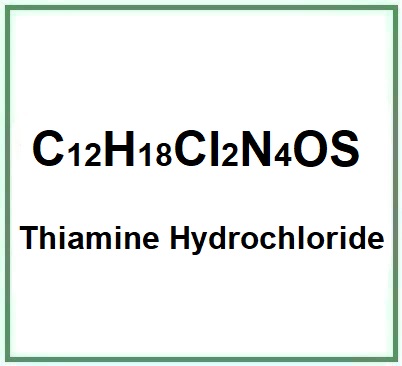
Thiamin Hydrochloride or Thiamine HCL, also known as Vitamin B1 Hydrochloride, is a water-soluble vitamin that plays a crucial role in energy metabolism and nervous system function. It is the hydrochloride salt form of thiamine (Vitamin B1) and is commonly used in dietary supplements, food fortification, and medical treatments due to its stability and solubility.
The name describes the structure of the molecule:
- Thiamine, as we have seen, also known as vitamin B1, is a water-soluble vitamin involved in energy metabolism and nervous system function.
- HCL indicates the presence of the salt of hydrochloride in the molecule. Hydrochloride is the salt form of an organic compound, in this case, thiamine.
Chemical Industrial Synthesis Process
- Synthesis. The production of Thiamine Hydrochloride begins with the chemical synthesis of thiamine through a series of reactions involving precursors such as thiamine chloride. These reactions are carefully controlled to achieve the desired product.
- Conversion. After obtaining thiamine, it is converted into its hydrochloride form by adding hydrochloric acid. This step enhances the vitamin's solubility and stability, making it more suitable for use in oral and injectable formulations.
- Purification. The crude Thiamine Hydrochloride product is purified to remove impurities and by-products of the reaction. This may include crystallization, filtration, and chromatography processes.
- Quality Control. The purified Thiamine Hydrochloride undergoes rigorous quality control checks to verify its purity, potency, and compliance with pharmaceutical standards. These tests can include spectroscopic analyses, chromatographic analyses, and potency tests.
- Formulation. Thiamine Hydrochloride can be formulated into various forms, such as powder, tablets, capsules, or injectable solutions, depending on the end use. This step involves adding excipients to improve stability and absorption.
- Packaging. The final product is packaged in sealed containers to protect it from light and moisture, thus preserving its effectiveness over time.
Industrially it appears in the form of a white powder, is soluble in water and is characterised by a sharp odour.

It is found in bran, cereal products, potatoes, rice and vegetables.
What it is used for and where
Cosmetics INCI Functions
Fragrance. It plays a very important role in the formulation of cosmetic products as it allows perfume to be enhanced, masked or added to the final product, improving its commercial viability. The consumer always expects to find a pleasant scent in a cosmetic product.
Skin conditioning agent - Miscellaneous. This ingredient has the task of modifying the condition of the skin when it is damaged or dry by reducing its flakiness and restoring its elasticity.
Medical
It has the function of burning sugar. Those who use sugar and alcohol excessively suffer from a deficiency of this vitamin (1).
Many studies have focused on the possibility of its metabolic benefits on diabetes mellitus (2).
It is used to treat a disease of the nerve endings called Beri Beri.
Benefits:
- Dietary Supplement: Thiamine Hydrochloride is widely used in vitamin supplements to prevent and treat thiamine deficiency, which can lead to conditions such as beriberi, Wernicke-Korsakoff syndrome, and general malaise.
- Energy Metabolism: It plays a vital role in carbohydrate metabolism, helping to convert nutrients into energy, which is essential for maintaining energy levels and supporting bodily functions.
- Nervous System Health: Thiamine Hydrochloride is important for the health of the nervous system, aiding in the proper functioning of neurons and supporting cognitive activities such as memory and learning.
- Cardiovascular Support: It helps maintain healthy cardiac function by supporting the nervous system that regulates heart muscles and vascular function.
- Enhanced Absorption: The hydrochloride form of thiamine ensures better solubility and absorption by the body compared to thiamine in its pure form, making it more effective in preventing and treating deficiency.
- Food Fortification: Thiamine Hydrochloride is added to a variety of foods, such as bread, cereals, and baby foods, to enhance their nutritional value and prevent thiamine deficiency in the general population.
The most relevant studies on this vitamin have been selected with a summary of their contents:
Vitamin B1 studies
- Molecular Formula: C12H17N4OS+
- Empirical Formula (Hill Notation): C12H17ClN4OS · HCl
- Molecular Weight: 265.355 g/mol
- CAS: 70-16-6 59-43-8 67-03-8
- EC Number: 200-425-3
- UNII: 4ABT0J945J
- PubChem Substance ID 24871525
- MDL number: MFCD00012780
- Beilstein Registry Number: 3851771
Synonyms:
- vitamin B1
- thiamin
- Thiamine hydrochloride
- Vitamin B1 hydrochloride
- Aneurine hydrochloride
- 3-[(4-amino-2-methylpyrimidin-5-yl)methyl]-5-(2-hydroxyethyl)-4-methyl-1,3-thiazol-3-ium
- Thiamine monohydrochloride
- Vitamin B1 hydrochloride (VAN)
- Thiamine, chloride, hydrochloride
- 2-[3-[(4-amino-2-methyl-pyrimidin-5-yl)methyl]-4-methyl-thiazol-3-ium-5-yl]ethanol
- Thiamin hydrochloride
References_____________________________________________________________________
(1) Sutherland GT, Sheedy D, Kril JJ. Neuropathology of alcoholism. Handb Clin Neurol. 2014;125:603-15. doi: 10.1016/B978-0-444-62619-6.00035-5.
(2) Al-Attas O, Al-Daghri N, Alokail M, Abd-Alrahman S, Vinodson B, Sabico S. Metabolic Benefits of Six-month Thiamine Supplementation in Patients With and Without Diabetes Mellitus Type 2.
Clin Med Insights Endocrinol Diabetes. 2014 Jan 23;7:1-6. doi: 10.4137/CMED.S13573. eCollection 2014.
Abstract. Thiamine deficiency has been documented to be prevalent in patients with diabetes mellitus, and correction of thiamine deficiency in this population may provide beneficial effects in several cardiometabolic parameters, including prevention of impending complications secondary to chronic hyperglycemia. In this interventional study, we aim to determine whether thiamine supplementation is associated with cardiometabolic improvements in patients with diabetes mellitus type 2 (DMT2). A total of 86 subjects (60 DMT2 and 26 age- and BMI-matched controls) were included and were given thiamine supplements (100 mg/day) for six months. Anthropometrics and metabolic profiles were measured routinely. Serum thiamine and its derivatives were measured using high performance liquid chromatography. In all groups, there was a significant decrease in total cholesterol after three months (p = 0.03) as well as in HDL cholesterol after six months of thiamine supplementation (p = 0.009). Significant improvements were also observed in the mean serum levels of creatinine (p = 0.001), as well as thiamine and its derivatives in both serum and urinary levels across follow-up visits (p-values 0.002 and <0.001, respectively). In the DMT2 group, improvements were observed in lipid profile (mean serum LDL and total cholesterol with p-values 0.008 and 0.006, respectively), serum thiamine (p < 0.001), TMP (p < 0.001), TDP (p < 0.001), urinary thiamine (p < 0.001) and serum creatinine (p < 0.001). Thiamine supplementation is a promising adjuvant therapy for patients with DMT2. Longer clinical trials are needed to determine its protective effect in DMT2 complications.
Nacitarhan C, Minareci E, Sadan G. The effect of benfotiamine on mu-opioid receptor mediated antinociception in experimental diabetes. Exp Clin Endocrinol Diabetes. 2014 Mar;122(3):173-8. doi: 10.1055/s-0033-1363977.
Alaei Shahmiri F, Soares MJ, Zhao Y, Sherriff J. High-dose thiamine supplementation improves glucose tolerance in hyperglycemic individuals: a randomized, double-blind cross-over trial.
Eur J Nutr. 2013 Oct;52(7):1821-4. doi: 10.1007/s00394-013-0534-6.
Abstract. Purpose: To assess the effect of high-dose oral thiamine supplements on glucose tolerance in patients with impaired glucose metabolism.Methods: Twelve hyperglycemic subjects (10 cases of impaired glucose tolerance and 2 new cases of type 2 diabetes) completed this randomized, double-blind trial, where all participants received both placebo and thiamine capsules (3 × 100 mg/day) for 6 weeks in a cross-over manner. The main endpoint was changes in 2-h plasma glucose. Fasting plasma glucose and insulin, 2-h plasma insulin, the hemostatic model assessment of insulin resistance (HOMA-IR), renal function measurement and thiamin status were also evaluated at the commencement and completion of each treatment period.....Conclusion/interpretation: Supplementation with high-dose thiamine may prevent deterioration in fasting glucose and insulin, and improve glucose tolerance in patients with hyperglycemia. High-dose thiamine supplementation may prevent or slow the progression of hyperglycemia toward diabetes mellitus in individuals with impaired glucose regulation.