

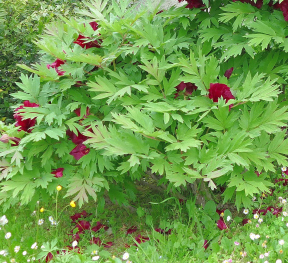
Paeonia Suffruticosa Seed Oil is a product of natural origin obtained from the seeds of the plant Paeonia suffruticosa, belonging to the botanical family Paeoniaceae.
The name describes the structure of the ingredient:
- "Paeonia Suffruticosa" is the scientific name for the plant commonly known as tree peony or moutan peony.
- "Seed Oil" indicates that the product is an oil obtained from the seeds of the plant. The oil contains various beneficial compounds like fatty acids, vitamins, and antioxidants.
Description of raw materials used in production and their functions.
- Paeonia Suffruticosa seeds. The seeds come from the Paeonia Suffruticosa plant, often referred to as tree peony. This plant is valued for its beneficial properties, and the oil extracted from its seeds is known for its emollient and moisturizing qualities.
- Solvents and extracting agents. Used to extract the oil from the Paeonia Suffruticosa seeds.
Step-by-step summary of industrial extraction process.
- Seed harvesting. Paeonia Suffruticosa seeds are harvested from the plant.
- Cleaning and preparation. The seeds are cleaned and prepared for extraction.
- Oil extraction. The oil is extracted from the seeds through processes like cold pressing or using solvents.
- Refining. The extracted oil is purified and refined to remove any impurities.

What it is for and where
Cosmetics
Medical
Phytochemical analysis of Paeonia Suffruticosa revealed some interesting components useful for human health: glucosides that can improve renal activity (1), active compounds with antitumor activity (2)
Traditional Chinese Medicine (TCM). Paeonia Suffruticosa has a long history of use in TCM, where the oil derived from its seeds can be used to treat various disorders (3).
Skin conditioning agent - Emollient. Emollients have the characteristic of enhancing the skin barrier through a source of exogenous lipids that adhere to the skin, improving barrier properties by filling gaps in intercorneocyte clusters to improve hydration while protecting against inflammation. In practice, they have the ability to create a barrier that prevents transepidermal water loss. Emollients are described as degreasing or refreshing additives that improve the lipid content of the upper layers of the skin by preventing degreasing and drying of the skin. The problem with emollients is that many have a strong lipophilic character and are identified as occlusive ingredients; they are oily and fatty materials that remain on the skin surface and reduce transepidermal water loss. In cosmetics, emollients and moisturisers are often considered synonymous with humectants and occlusives.
Skin conditioning agent. It is the mainstay of topical skin treatment as it has the function of restoring, increasing or improving skin tolerance to external factors, including melanocyte tolerance. The most important function of the conditioning agent is to prevent skin dehydration, but the subject is rather complex and involves emollients and humectants that can be added in the formulation.
Commercial Application
Cosmetics and Personal Care. Paeonia Suffruticosa Seed Oil is used in skin care products due to its moisturizing and anti-aging properties. It may help improve skin elasticity and reduce wrinkles.
Aromatherapy. The oil might be utilized in aromatherapy for its purported relaxing and invigorating properties.
References_____________________________________________________________________
(1) Zhang Y, Li Y, Li C, Zhao Y, Xu L, Ma S, Lin F, Xie Y, An J, Wang S. Paeonia × suffruticosa Andrews leaf extract and its main component apigenin 7-O-glucoside ameliorate hyperuricemia by inhibiting xanthine oxidase activity and regulating renal urate transporters. Phytomedicine. 2023 Sep;118:154957. doi: 10.1016/j.phymed.2023.154957.
(2) Chang X, Feng X, Du M, Li S, Wang J, Wang Y, Liu P. Pharmacological effects and mechanisms of paeonol on antitumor and prevention of side effects of cancer therapy. Front Pharmacol. 2023 Jun 20;14:1194861. doi: 10.3389/fphar.2023.1194861.
Abstract. Cancer represents one of the leading causes of mortality worldwide. Conventional clinical treatments include radiation therapy, chemotherapy, immunotherapy, and targeted therapy. However, these treatments have inherent limitations, such as multidrug resistance and the induction of short- and long-term multiple organ damage, ultimately leading to a significant decrease in cancer survivors' quality of life and life expectancy. Paeonol, a nature active compound derived from the root bark of the medicinal plant Paeonia suffruticosa, exhibits various pharmacological activities. Extensive research has demonstrated that paeonol exhibits substantial anticancer effects in various cancer, both in vitro and in vivo. Its underlying mechanisms involve the induction of apoptosis, the inhibition of cell proliferation, invasion and migration, angiogenesis, cell cycle arrest, autophagy, regulating tumor immunity and enhanced radiosensitivity, as well as the modulation of multiple signaling pathways, such as the PI3K/AKT and NF-κB signaling pathways. Additionally, paeonol can prevent adverse effects on the heart, liver, and kidneys induced by anticancer therapy. Despite numerous studies exploring paeonol's therapeutic potential in cancer, no specific reviews have been conducted. Therefore, this review provides a systematic summary and analysis of paeonol's anticancer effects, prevention of side effects, and the underlying mechanisms involved. This review aims to establish a theoretical basis for the adjunctive strategy of paeonol in cancer treatment, ultimately improving the survival rate and enhancing the quality of life for cancer patients. Copyright © 2023 Chang, Feng, Du, Li, Wang, Wang and Liu.
(3) Liu J, Li X, Bai H, Yang X, Mu J, Yan R, Wang S. Traditional uses, phytochemistry, pharmacology, and pharmacokinetics of the root bark of Paeonia x suffruticosa andrews: A comprehensive review. J Ethnopharmacol. 2023 May 23;308:116279. doi: 10.1016/j.jep.2023.116279.