

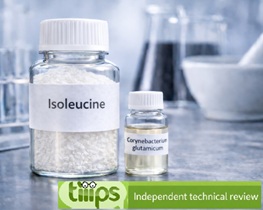
Isoleucine
Rating : 8
| Evaluation | N. Experts | Evaluation | N. Experts |
|---|---|---|---|
| 1 | 6 | ||
| 2 | 7 | ||
| 3 | 8 | ||
| 4 | 9 | ||
| 5 | 10 |
0 pts from admin
| Sign up to vote this object, vote his reviews and to contribute to Tiiips.Evaluate | Where is this found? |
| "Descrizione" about Isoleucine by admin (19538 pt) | 2026-Mar-10 15:55 |
| Read the full Tiiip | (Send your comment) |
Isoleucine: properties, uses, pros, cons, safety
Isoleucine is an essential amino acid belonging to the BCAA group (branched-chain amino acids), together with leucine and valine. The human body is unable to synthesize it in adequate amounts, so it must be obtained through the diet. The biologically and commercially relevant form is L-isoleucine, with the formula C6H13NO2 and a molecular weight of about 131.17 g/mol.
Isoleucine is the α-((S)-sec-butyl)-substituted amino acid of proteins. It is an α-amino acid. Amino acids play a key metabolic function in the human body and are constituents of proteins.

Description
Isoleucine is a proteinogenic amino acid with a branched aliphatic side chain. In the food context it contributes to protein synthesis and is one of the nine essential amino acids in human nutrition. At the industrial level it can be obtained mainly by fermentation, or through synthetic processes, depending on the commercial grade and final use. For food and nutraceutical ingredients, purity, the correct L- form, microbiological quality, and contaminant control are especially important.
Production process
For food and nutraceutical use, L-isoleucine is commonly produced by microbial fermentation, followed by purification, crystallization, drying, and analytical controls. For cosmetic or technical applications it may be supplied as a crystalline powder or as a component of amino acid complexes in aqueous bases. Quality controls generally cover identity, assay, optical purity, moisture, and contaminants.
Key constituents
In the case of Isoleucine, the ingredient is essentially a single molecule rather than a complex mixture. The relevant compound is therefore L-isoleucine itself; any accessory components of the commercial grade are limited to traces of process impurities, residual moisture, or possible excipients in the finished product. From a nutritional standpoint, Isoleucine is often considered together with the other BCAAs, with which it shares part of muscle and energy metabolism.
Identification data and specifications
| Characteristic | Value | Note |
|---|---|---|
| Name | Isoleucine / L-isoleucine | biologically relevant form |
| Chemical name | 2-amino-3-methylpentanoic acid | systematic name |
| Molecular formula | C6H13NO2 | essential amino acid |
| Molecular weight | 131.17 g/mol | theoretical value |
| CAS number | 73-32-5 | refers to L-isoleucine |
| EC number | 200-798-2 | EU identifier |
| Nutritional category | essential BCAA | must be obtained through the diet |
| Calories | about 4 kcal/g | in the nutritional context |
| Commercial form | crystalline powder | the most common |
| Industrial origin | fermentation or synthesis | depending on the commercial grade |
Physico-chemical properties (indicative)
| Characteristic | Indicative value | Note |
|---|---|---|
| Appearance | white crystalline powder | pure grade |
| Odor | absent or very slight | generally neutral raw material |
| Solubility | soluble in water | compatible with aqueous systems |
| Stability | good if properly stored | avoid moisture and contamination |
| pH | depends on concentration in solution | should be checked on the commercial grade |
| Hygroscopicity | generally low or moderate | may vary by batch |
| Formulation compatibility | good in aqueous systems and amino acid blends | should be verified in complex formulas |
Food focus
From a food perspective, Isoleucine is relevant because it participates in protein synthesis and energy metabolism, especially in the context of muscle tissue. As an essential amino acid, it must be provided by the diet. It is found in complete protein foods such as meat, fish, eggs, milk, and dairy products, but also in some protein-rich plant sources such as legumes and soy.
In sports nutrition, Isoleucine often appears in BCAA products or essential amino acid formulas. However, in practice, its isolated use usually has less value than evaluating total protein intake and the overall balance among essential amino acids. For most healthy people, an adequate diet remains the main way to cover requirements.
From a health standpoint, an adequate intake of Isoleucine is useful as part of normal amino acid requirement coverage. By contrast, excessive supplementation without a real rationale may be of limited use. In addition, altered circulating levels of BCAAs have been studied in relation to various metabolic profiles; this does not mean that Isoleucine is “negative” in itself, but rather that supplement use should always be placed in the broader dietary and clinical context.
Cosmetic focus
In the cosmetic sector, Isoleucine is mainly used as an ingredient with antistatic, hair conditioning, and skin conditioning functions. In practice, it is used in formulations where the goal is to enrich the amino acid profile of the product, improve the technical positioning of the formula, and contribute to maintaining good skin and hair condition.
In skin formulations, Isoleucine can be included in amino acid complexes, light serums, hydrating products, and formulas aimed at supporting skin comfort. In hair products it can contribute to the conditioning profile and help reduce electrostatic effect, especially when it works in synergy with other amino acids, humectants, or conditioning agents. From a formulation standpoint it is a relatively simple ingredient, generally compatible with aqueous systems.
Cosmetics
INCI functions: antistatic, hair conditioning, skin conditioning.
Pros
It is an essential amino acid that is genuinely important in human nutrition.
It is part of the BCAAs, a group of strong interest in muscle and sports nutrition.
It is widely available in protein foods and standardized nutritional products.
In cosmetics it is a simple ingredient to position and useful in amino acid complexes.
It shows good compatibility with many aqueous formulations for skin and hair.
Cons
Isolated supplementation is not always justified if the diet is already adequate.
Excessive or poorly contextualized use may be nutritionally inefficient.
In specific metabolic conditions, the use of BCAA supplements requires caution.
In cosmetics, on its own it often has a more complementary than central role.
In complex formulas, overall compatibility with pH, preservatives, and other actives should still be verified.
Safety, regulatory aspects and environment
From a safety perspective, Isoleucine is a widely known ingredient in both the food and cosmetic-technical sectors. In cosmetics it is not considered a classic fragrance allergen, but, as with any ingredient, individual sensitivity in the finished product cannot be excluded. For food use, the main issue concerns dose, product quality, and appropriateness of the use context, more than intrinsic toxicity at normal dietary quantities.
From an industrial point of view, fermentation-based processes often represent a technically efficient and well-controlled solution, although the actual environmental impact always depends on the production process, purification, and the energy management of the manufacturing site.
Conclusion
Isoleucine is an essential amino acid and one of the main BCAAs, with primary value in the food focus because of its role in protein synthesis and in the amino acid balance of the diet. In the cosmetic field it has a more technical and complementary role, as a skin conditioning, hair conditioning, and antistatic ingredient, especially in amino acid complexes and light formulations. Overall, it is a solid, well-known, and relatively easy-to-handle ingredient whose value emerges especially when used in a correct nutritional or formulation context.
References__________________________________________________________________________
Nie C, He T, Zhang W, Zhang G, Ma X. Branched Chain Amino Acids: Beyond Nutrition Metabolism. Int J Mol Sci. 2018 Mar 23;19(4):954. doi: 10.3390/ijms19040954.
Abstract. Branched chain amino acids (BCAAs), including leucine (Leu), isoleucine (Ile), and valine (Val), play critical roles in the regulation of energy homeostasis, nutrition metabolism, gut health, immunity and disease in humans and animals. As the most abundant of essential amino acids (EAAs), BCAAs are not only the substrates for synthesis of nitrogenous compounds, they also serve as signaling molecules regulating metabolism of glucose, lipid, and protein synthesis, intestinal health, and immunity via special signaling network, especially phosphoinositide 3-kinase/protein kinase B/mammalian target of rapamycin (PI3K/AKT/mTOR) signal pathway. Current evidence supports BCAAs and their derivatives as the potential biomarkers of diseases such as insulin resistance (IR), type 2 diabetes mellitus (T2DM), cancer, and cardiovascular diseases (CVDs). These diseases are closely associated with catabolism and balance of BCAAs. Hence, optimizing dietary BCAA levels should have a positive effect on the parameters associated with health and diseases. This review focuses on recent findings of BCAAs in metabolic pathways and regulation, and underlying the relationship of BCAAs to related disease processes.
Ramsay J, Morton J, Norris M, Kanungo S. Organic acid disorders. Ann Transl Med. 2018 Dec;6(24):472. doi: 10.21037/atm.2018.12.39.
Abstract. Organic acids (OAs) are intermediary products of several amino acid catabolism or degradation via multiple biochemical pathways for energy production. Vitamins or co-factors are often quintessential elements in such degradation pathways and OA metabolism. OAs that result from enzyme defects in these pathways can be identified in body fluids utilizing gas chromatography-mass spectrometry techniques (GC/MS). OAs are silent contributor to acid base imbalance and can affect nitrogen balance and recycling. Since OA production occurs in distal steps of a specific amino acid catabolism, offending amino acid accumulation is not characteristic. OA disorders as inborn errors of metabolism (IEM) are included in differential diagnosis of metabolic acidosis, as the common mnemonic MUDPILES taught in medical schools. High anion gap metabolic acidosis with hyperammonemia is a characteristic OA biochemical finding. VOMIT (valine, odd chain fatty acids, methionine, isoleucine, and threonine) is a smart acronym and a common clinical presentation of OA disorders and can present as early life-threatening illness, prior to Newborn Screening results availability. Easy identification and available medical formula make the field of metabolic nutrition vital for management of OA disorders. Treatment strategies also involve cofactor/vitamin utilization to aid specific pathways and disorder management. Optimal metabolic control and regular monitoring is key to long-term management and prevention of morbidity, disability and mortality. Prompt utilization of acute illness protocol (AIP) or emergency protocol and disorder specific education of family members or caregivers, primary care physicians and local emergency health care facilities; cautiously addressing common childhood illnesses in patients with OA disorders, can help avoid poor short- and long-term morbidity, disability and mortality outcomes.
Trautman ME, Green CL, MacArthur MR, Chaiyakul K, Alam YH, Yeh CY, Babygirija R, James I, Gilpin M, Zelenovskiy E, Green M, Marshall RN, Sonsalla MM, Flores V, Simcox JA, Ong IM, Malecki KC, Jang C, Lamming DW. Dietary isoleucine content defines the metabolic and molecular response to a Western diet. bioRxiv 2024 Jun 3:2024.05.30.596340. doi: 10.1101/2024.05.30.596340. Update in: Mol Metab. 2025 Nov;101:102248. doi: 10.1016/j.molmet.2025.102248.
Abstract. The amino acid composition of the diet has recently emerged as a critical regulator of metabolic health. Consumption of the branched-chain amino acid isoleucine is positively correlated with body mass index in humans, and reducing dietary levels of isoleucine rapidly improves the metabolic health of diet-induced obese male C57BL/6J mice. However, it is unknown how sex, strain, and dietary isoleucine intake may interact to impact the response to a Western Diet (WD). Here, we find that although the magnitude of the effect varies by sex and strain, reducing dietary levels of isoleucine protects C57BL/6J and DBA/2J mice of both sexes from the deleterious metabolic effects of a WD, while increasing dietary levels of isoleucine impairs aspects of metabolic health. Despite broadly positive responses across all sexes and strains to reduced isoleucine, the molecular response of each sex and strain is highly distinctive. Using a multi-omics approach, we identify a core sex- and strain- independent molecular response to dietary isoleucine, and identify mega-clusters of differentially expressed hepatic genes, metabolites, and lipids associated with each phenotype. Intriguingly, the metabolic effects of reduced isoleucine in mice are not associated with FGF21 - and we find that in humans plasma FGF21 levels are likewise not associated with dietary levels of isoleucine. Finally, we find that foods contain a range of isoleucine levels, and that consumption of dietary isoleucine is lower in humans with healthy eating habits. Our results demonstrate that the dietary level of isoleucine is critical in the metabolic and molecular response to a WD, and suggest that lowering dietary levels of isoleucine may be an innovative and translatable strategy to protect from the negative metabolic consequences of a WD.
| Sign up to vote this object, vote his reviews and to contribute to Tiiips.EvaluateClose | (0 comments) |
Read other Tiiips about this object in __Italiano (1)
Component type:   Main substances:   Last update:   2024-05-06 16:53:29 | Chemical Risk:   |

