Compendium of the most significant studies with reference to properties, intake, effects.
Mukherjee N, Nandi S, Garg S, Ghosh S, Ghosh S, Samat R, Ghosh S. Targeting Chondroitin Sulfate Proteoglycans: An Emerging Therapeutic Strategy to Treat CNS Injury. ACS Chem Neurosci. 2020 Feb 5;11(3):231-232. doi: 10.1021/acschemneuro.0c00004.
Abstract
Chondroitin sulfate proteoglycans (CSPGs) are the most abundant components of glial scar formed after severe traumatic brain injury as well as spinal cord injury and play a crucial inhibitory role in axonal regeneration by selective contraction of filopodia of the growth cone of sprouting neurites. Healing of central nervous system (CNS) injury requires degradation of the glycosamine glycan backbone of CSPGs in order to reduce the inhibitory effect of the CSPG layer. The key focus of this Viewpoint is to address a few important regenerative approaches useful for overcoming the inhibitory barrier caused by chondroitin sulfate proteoglycans.
Stephenson EL, Yong VW. Pro-inflammatory roles of chondroitin sulfate proteoglycans in disorders of the central nervous system. Matrix Biol. 2018 Oct;71-72:432-442. doi: 10.1016/j.matbio.2018.04.010.
Abstract
The extracellular matrix of the central nervous system is an interconnected network of proteins and sugars. It is crucial for homeostasis, but its remodeling in neurological diseases impacts both injury and repair. Here we introduce an extracellular matrix family member that participates in immune-matrix interactions, the chondroitin sulfate proteoglycans. Chondroitin sulfate proteoglycans integrate signals from the microenvironment to activate immune cells, and they boost inflammatory responses by binding immunological receptors including toll-like receptors, selectins, CD44, and β1 integrin. Chondroitin sulfate proteoglycans also bind signaling molecules for immune cells such as cytokines and chemokines, and they activate matrix-degrading enzymes. Chondroitin sulfate proteoglycans accumulate in the damaged CNS, including during traumatic brain/spinal cord injury and multiple sclerosis, and they help drive pathogenesis. This Review aims to give new insights into the remodeling of chondroitin sulfate proteoglycans during inflammation, and how these matrix glycoproteins are able to drive neuroinflammation.
Stephenson EL, Mishra MK, Moussienko D, Laflamme N, Rivest S, Ling CC, Yong VW. Chondroitin sulfate proteoglycans as novel drivers of leucocyte infiltration in multiple sclerosis. Brain. 2018 Apr 1;141(4):1094-1110. doi: 10.1093/brain/awy033.
Abstract
Multiple sclerosis presents with profound changes in the network of molecules involved in maintaining central nervous system architecture, the extracellular matrix. The extracellular matrix components, particularly the chondroitin sulfate proteoglycans, have functions beyond structural support including their potential interaction with, and regulation of, inflammatory molecules. To investigate the roles of chondroitin sulfate proteoglycans in multiple sclerosis, we used the experimental autoimmune encephalomyelitis model in a time course study. We found that the 4-sulfated glycosaminoglycan side chains of chondroitin sulfate proteoglycans, and the core protein of a particular family member, versican V1, were upregulated in the spinal cord of mice at peak clinical severity, correspondent with areas of inflammation. Versican V1 expression in the spinal cord rose progressively over the course of experimental autoimmune encephalomyelitis. A particular structure in the spinal cord and cerebellum that presented with intense upregulation of chondroitin sulfate proteoglycans is the leucocyte-containing perivascular cuff, an important portal of entry of immune cells into the central nervous system parenchyma. In these inflammatory perivascular cuffs, versican V1 and the glycosaminoglycan side chains of chondroitin sulfate proteoglycans were observed by immunohistochemistry within and in proximity to lymphocytes and macrophages as they migrated across the basement membrane into the central nervous system. Expression of versican V1 transcript was also documented in infiltrating CD45+ leucocytes and F4/80+ macrophages by in situ hybridization. To test the hypothesis that the chondroitin sulfate proteoglycans regulate leucocyte mobility, we used macrophages in tissue culture studies. Chondroitin sulfate proteoglycans significantly upregulated pro-inflammatory cytokines and chemokines in macrophages. Strikingly, and more potently than the toll-like receptor-4 ligand lipopolysaccharide, chondroitin sulfate proteoglycans increased the levels of several members of the matrix metalloproteinase family, which are implicated in the capacity of leucocytes to cross barriers. In support, the migratory capacity of macrophages in vitro in a Boyden chamber transwell assay was enhanced by chondroitin sulfate proteoglycans. Finally, using brain specimens from four subjects with multiple sclerosis with active lesions, we found chondroitin sulfate proteoglycans to be associated with leucocytes in inflammatory perivascular cuffs in all four patients. We conclude that the accumulation of chondroitin sulfate proteoglycans in the perivascular cuff in multiple sclerosis and experimental autoimmune encephalomyelitis boosts the activity and migration of leucocytes across the glia limitans into the central nervous system parenchyma. Thus, chondroitin sulfate proteoglycans represent a new class of molecules to overcome in order to reduce the inflammatory cascades and clinical severity of multiple sclerosis.
Ishibashi K, Iwai H, Koga H. Chemonucleolysis with chondroitin sulfate ABC endolyase as a novel minimally invasive treatment for patients with lumbar intervertebral disc herniation. J Spine Surg. 2019 Jun;5(Suppl 1):S115-S121. doi: 10.21037/jss.2019.04.24.
Abstract
Chemonucleolysis is a minimally invasive treatment for cervical and lumbar intervertebral disc herniation (IDH). While this procedure has existed for more than 50 years, it has yet to become an established practice. The main reason for this is the low specificity of enzymes targeting nucleus pulposus (NP). Although two enzymes (chymopapain and collagenase) have been used in clinical settings, severe adverse events have discouraged widespread use. The recently introduced enzyme Proteus vulgaris chondroitin sulfate ABC endolyase may allow a new era of chemonucleolysis because of its high specificity for NP.
Sugahara K, Mikami T. Chondroitin/dermatan sulfate in the central nervous system. Curr Opin Struct Biol. 2007 Oct;17(5):536-45. doi: 10.1016/j.sbi.2007.08.015.
Abstract
In the central nervous system (CNS) chondroitin sulfate proteoglycans, as one of the major barrier-forming molecules, influence cell migration patterns and axon pathfinding. By contrast, chondroitin sulfate side chains often form hybrid chains with dermatan sulfate and serve as a neural stem cell marker and neurogenic/neuritogenic molecules involved in neural stem cell proliferation. Hybrid chondroitin/dermatan sulfate chains are also involved in formation of the neural network by capturing and presenting heparin-binding growth factors like basic fibroblast growth factor, pleiotrophin, and hepatocyte growth factor to stem cells or neuronal cells. Research tools for structural glycobiology are emerging to perform a high-throughput screening of glycosaminoglycans for the binding to ligands, to decipher sulfation patterns of rare functional oligosaccharide sequences and to build structural models for the shape of such sulfated oligosaccharides.
Volpi N. Quality of different chondroitin sulfate preparations in relation to their therapeutic activity. J Pharm Pharmacol. 2009 Oct;61(10):1271-80. doi: 10.1211/jpp/61.10.0002.
Aono S, Oohira A. Chondroitin sulfate proteoglycans in the brain. Adv Pharmacol. 2006;53:323-36. doi: 10.1016/S1054-3589(05)53015-1
Yang X. Chondroitin sulfate proteoglycans: key modulators of neuronal plasticity, long-term memory, neurodegenerative, and psychiatric disorders. Rev Neurosci. 2020 Jul 28;31(5):555-568. doi: 10.1515/revneuro-2019-0117.
Asai A, Hatayama N, Kamiya K, Yamauchi M, Kinashi H, Yamaguchi M, Katsuno T, Nobata H, Watanabe K, Wakatsuki A, Aten J, Maruyama S, Ishimoto T, Hirai S, Naito M, Ito Y. Roles of glomerular endothelial hyaluronan in the development of proteinuria. Physiol Rep. 2021 Sep;9(17):e15019. doi: 10.14814/phy2.15019.



 Chondroitin sulfate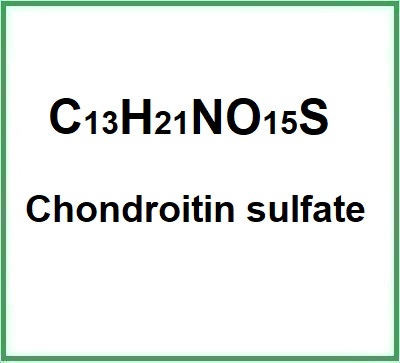


 Glucosamine


