

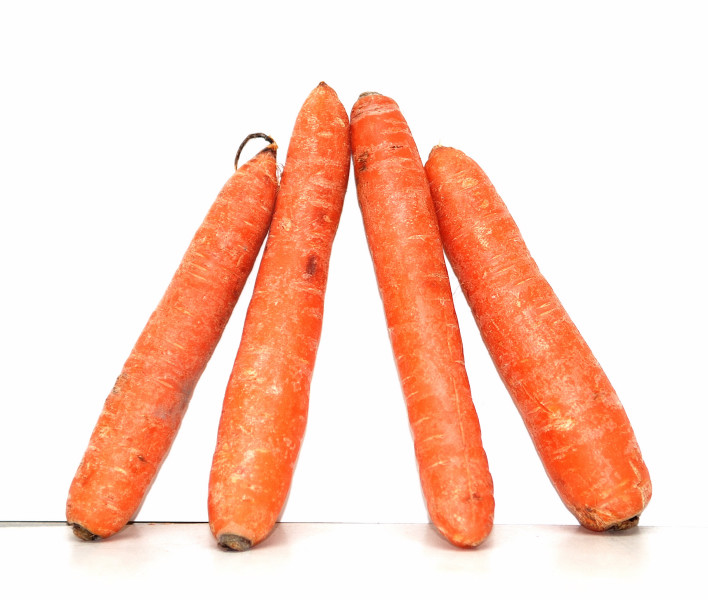
Carrot
Rating : 8
| Evaluation | N. Experts | Evaluation | N. Experts |
|---|---|---|---|
| 1 | 6 | ||
| 2 | 7 | ||
| 3 | 8 | ||
| 4 | 9 | ||
| 5 | 10 |
Pros:
Antioxidant (1)10 pts from FCS777
| Sign up to vote this object, vote his reviews and to contribute to Tiiips.Evaluate | Where is this found? |
| "Carrot studies" about Carrot Review Consensus 8 by FCS777 (5544 pt) | 2019-Jul-14 18:18 |
| Read the full Tiiip | (Send your comment) |
Effect of high-pressure processing on carotenoids profile, colour, microbial and enzymatic stability of cloudy carrot juice.
Stinco CM, Szczepańska J, Marszałek K, Pinto CA, Inácio RS, Mapelli-Brahm P, Barba FJ, Lorenzo JM, Saraiva JA, Meléndez-Martínez AJ.
Food Chem. 2019 Jul 2;299:125112. doi: 10.1016/j.foodchem.2019.125112.
Advances in research on the carrot, an important root vegetable in the Apiaceae family.
Que F, Hou XL, Wang GL, Xu ZS, Tan GF, Li T, Wang YH, Khadr A, Xiong AS.
Hortic Res. 2019 Jun 1;6:69. doi: 10.1038/s41438-019-0150-6
Dietary components and risk of cardiovascular disease and all-cause mortality: A review under the sign of the carrot.
Castelletti S.
Eur J Prev Cardiol. 2019 May 20:2047487319852678. doi: 10.1177/2047487319852678.
Fermented carrot juice attenuates type 2 diabetes by mediating gut microbiota in rats.
Hu R, Zeng F, Wu L, Wan X, Chen Y, Zhang J, Liu B.
Food Funct. 2019 May 22;10(5):2935-2946. doi: 10.1039/c9fo00475k.
Thermal and Photochemical Stability of Anthocyanins from Black Carrot, Grape Juice, and Purple Sweet Potato in Model Beverages in the Presence of Ascorbic Acid.
Gérard V, Ay E, Morlet-Savary F, Graff B, Galopin C, Ogren T, Mutilangi W, Lalevée J.
J Agric Food Chem. 2019 May 15;67(19):5647-5660. doi: 10.1021/acs.jafc.9b01672
Postharvest Wounding Stress in Horticultural Crops as a Tool for Designing Novel Functional Foods and Beverages with Enhanced Nutraceutical Content: Carrot Juice as a Case Study.
Santana-Gálvez J, Santacruz A, Cisneros-Zevallos L, Jacobo-Velázquez DA.
J Food Sci. 2019 May;84(5):1151-1161. doi: 10.1111/1750-3841.14588.
Antioxidant pectin enriched fractions obtained from discarded carrots (Daucus carota L.) by ultrasound-enzyme assisted extraction.
Encalada AMI, Pérez CD, Flores SK, Rossetti L, Fissore EN, Rojas AM.
Food Chem. 2019 Aug 15;289:453-460. doi: 10.1016/j.foodchem.2019.03.078.
Effects of apple, orange and carrot pomace powders on gluten-free batter rheology and cake properties.
Kırbaş Z, Kumcuoglu S, Tavman S.
J Food Sci Technol. 2019 Feb;56(2):914-926. doi: 10.1007/s13197-018-03554-z.
Differential effect of a carotenoid-rich diet on retina function in non-diabetic and diabetic rats.
McClinton KJ, Aliani M, Kuny S, Sauvé Y, Suh M.
Nutr Neurosci. 2019 Jan 11:1-11. doi: 10.1080/1028415X.2018.1563664.
Bioactivity of Wild Carrot (Daucus carota, Apiaceae) Essential Oil Against Mosquito Larvae.
Muturi EJ, Doll K, Ramirez JL, Rooney AP.
J Med Entomol. 2019 Apr 16;56(3):784-789. doi: 10.1093/jme/tjy226.
| Sign up to vote this object, vote his reviews and to contribute to Tiiips.EvaluateClose | (0 comments) |
| "Descrizione" about Carrot Review Consensus 10 by FCS777 (5544 pt) | 2025-Nov-30 09:38 |
| Read the full Tiiip | (Send your comment) |
Carrot (Daucus carota subsp. sativus)
Description
The carrot is the thickened root of Daucus carota subsp. sativus (family Apiaceae). It is a very common vegetable worldwide, with an elongated conical–cylindrical shape, typically orange in colour but with yellow, purple, red or white varieties also available. The edible part is a modified taproot that accumulates water, sugars, fibre and a substantial amount of carotenoids (especially β-carotene), which are responsible for the orange colour and provitamin A activity. Carrots have a crisp, juicy texture and a sweet, slightly herbal flavour. They can be eaten raw or cooked, whole or cut (slices, sticks, julienne, grated), and are used in juices, purées, soups, side dishes and processed foods. Thanks to their long shelf-life and versatility, carrots are one of the most widely available vegetable sources of provitamin A, dietary fibre, potassium and phenolic compounds.

Botanical classification
Common name: carrot
Botanical name: Daucus carota subsp. sativus
Family: Apiaceae
Origin: derived from wild carrot populations native to Europe and Southwest Asia; cultivated for thousands of years as a root vegetable
General features: biennial plant cultivated as an annual for its enlarged taproot. Root shape, size and colour vary by cultivar (orange, purple, yellow, white, red). Leaves finely divided; flowers produced in umbels in the second year if not harvested.
Cultivation and growing conditions
Climate
Cool-season crop that grows best in mild temperatures.
Optimal root development occurs in cool conditions; heat can reduce quality and increase forking or bitterness.
Suitable for spring and autumn cultivation in temperate climates.
Exposure
Prefers full sun, which promotes photosynthesis and uniform root development.
Tolerates partial shade in very hot climates, though yield may decrease slightly.
Soil
Requires deep, loose, well-drained soil free of stones or compacted layers to allow straight root formation.
Ideal texture: sandy loam or light loam.
Soil pH ideally between 6.0 and 7.0.
Heavy or rocky soils cause misshapen or forked roots.
Sowing / planting
Carrots are direct-seeded; transplanting is avoided as it damages the taproot.
Seeds are sown shallowly in fine, well-prepared soil.
After emergence, seedlings must be thinned to ensure proper spacing and root size.
Irrigation
Soil should stay consistently moist but never waterlogged.
Regular, moderate irrigation is essential during germination and root enlargement.
Irregular watering may cause cracking, forking or poor texture.
Temperature
Optimal germination: around 10–20 °C.
Ideal growth: roughly 16–24 °C.
Very high temperatures can reduce colour intensity and sweetness.
Fertilization
Organic matter (compost) is beneficial, improving soil structure and water retention.
Nitrogen should be moderate: too much promotes foliage at the expense of root quality.
Phosphorus and potassium support balanced growth and good storage quality.
Crop care
Frequent light hoeing or mulching to control weeds, especially early in growth.
Avoid soil compaction after rain or irrigation.
Protect from pests such as carrot fly using row covers or proper crop rotation.
Harvest
Harvest typically 60–90 days after sowing, depending on cultivar and conditions.
Roots should be firm, well-coloured and of uniform shape.
Pull gently after loosening the soil if necessary.
Varieties
Long, cylindrical types; shorter stump-rooted types for shallow soils; and round types suitable for very compact soils or container growing.
Indicative nutritional values per 100 g (fresh, raw carrot)
(Average values; may vary with variety, maturity and origin.)
Energy: ~36–41 kcal
Water: ~88–90 g
Protein: ~0.8–1.0 g
Total carbohydrates: ~8–10 g
Sugars (glucose, fructose, sucrose): ~4.5–5 g
Dietary fibre: ~2.5–3 g
Total fat: ~0.2–0.3 g
First occurrence of acronyms: SFA (saturated fatty acids, which should be moderated when total intake is high), MUFA (monounsaturated fatty acids, generally favourable to cardiometabolic profile when they replace saturates), PUFA (polyunsaturated fatty acids, involved in inflammatory regulation and cardiovascular health). Later mentions will use these acronyms without bold.
SFA: traces (~0.04 g)
MUFA: traces (~0.01–0.02 g)
PUFA: ~0.1–0.12 g
Minerals (typical ranges)
Potassium: ~300–330 mg
Phosphorus: ~30–35 mg
Calcium: ~30–35 mg
Magnesium: ~10–12 mg
Vitamins
Provitamin A (β-carotene) with high vitamin A activity (retinol equivalents)
Vitamin K in moderate amount
Vitamin C: ~5–6 mg
Small amounts of B-group vitamins
Key constituents
Carbohydrates: simple sugars (glucose, fructose, sucrose) plus some starch and fibre
Dietary fibre: pectins, hemicelluloses, cellulose
Carotenoids: mainly β-carotene, but also α-carotene, lutein and other pigments (different profiles in purple/yellow carrots)
Phenolic compounds (phenolic acids, flavonoids) and other antioxidants
Vitamins: provitamin A, vitamin C, vitamin K, B-group vitamins
Minerals: potassium, phosphorus, calcium, magnesium, traces of iron and other trace elements
Traces of lipids with predominance of mufa and pufa and minimal sfa
Production process
Cultivation
Biennial plant grown as an annual, suited to temperate and cool climates.
Directly sown in open field; requires light, deep, well-drained soils to avoid deformed roots.
Growth and crop management
Seedlings are thinned after emergence to achieve regular root size and shape.
Regular irrigation helps prevent splitting and excessive fibrousness; weed and pest control is carried out following integrated or organic practices.
Harvesting
Mechanical or manual harvest when roots reach suitable size, colour and sugar content.
Bunching carrots are harvested with tops; processing carrots are often harvested without tops.
Post-harvest
Removal of foliage (for ready-to-eat products), washing, sorting and grading.
Possible mechanical/abrasive peeling, cutting (sticks, slices, julienne) and packaging in protective atmosphere for ready-to-eat products.
Industrial processing
Freezing (slices, cubes, sticks).
Production of juices, nectars, purées and baby foods.
Dehydration and production of carrot flours/powders for bakery products, snacks and instant mixes.
Extraction of concentrated juices and carotenoids for use as natural colourants.
Physical properties
Elongated root with almost circular cross-section; length and diameter vary with variety (baby, medium, large).
Intense orange colour in common varieties; purple, red, yellow or white in coloured varieties.
Crunchy tissue, rich in water, with moderate density.
Slightly acidic pH; moderate-to-high sugar content (°Brix) compared with other vegetables.
Sensory and technological properties
Flavour
Sweet, slightly herbal, with earthy notes that vary according to variety and soil conditions.
Aroma
Fresh, vegetal aroma due to characteristic terpenes and volatile compounds.
Texture
Raw: crisp, juicy, suitable for snacking, grating or slicing into salads.
Cooked: softer and more tender when boiled, steamed, braised or roasted.
Technological functionality
Good performance in purées and soups due to high water and soluble fibre content.
Natural sweetness supports flavour of soups, sauces and juices, sometimes reducing the need for added sugars.
Carotenoids provide bright orange colour to dishes and processed products.
Fibre and pectins increase viscosity and contribute to creamy texture in purées and veloutés.
Food applications
Raw consumption: crudités, snack sticks, salads (grated or julienne), vegetable snacks.
Cooked preparations: soups, creams, puréed vegetable dishes, broths, stews, braised or roasted side dishes, mixed dishes with legumes and grains.
Juices and blends: carrot juice alone or in combination with fruit/vegetable juices (e.g. apple, orange, ginger).
Bakery and desserts: carrot cakes, muffins, loaf cakes, cookies.
Infant foods: purées, baby foods, mixed vegetable preparations.
Industrial products: frozen carrots, ready-to-eat (fresh-cut) carrots, juices and purées in cartons, ready-made soups, sauces and condiments.
Nutrition and health
Energy and sugars
Carrots have moderate energy content; natural sugars combined with fibre tend to have a relatively modest glycaemic impact when eaten in reasonable portions and in balanced meals.
Vitamin A, vision and skin
β-Carotene is converted to vitamin A according to body needs; vitamin A is essential for vision, mucosal integrity, skin health and immune function.
Antioxidants and carotenoids
Carotenoids and other antioxidants help protect against oxidative stress and, within plant-rich diets, may contribute to prevention of chronic degenerative diseases.
Fibre and digestive system
Fibre supports bowel regularity, satiety and modulation of carbohydrate and lipid absorption.
Micronutrients
Potassium supports normal blood pressure and muscle function.
Vitamin K, vitamin C and B-group vitamins support haemostatic, immune and energy metabolism functions.
Fats
Very low fat content, with a small amount of sfa and predominance of mufa and pufa, so carrots have negligible impact on overall dietary fat profile.
Portion note
Typical vegetable portion: ~80–100 g of raw or cooked carrots (about 1–2 medium carrots), to be adjusted to dietary guidelines and individual needs.
Allergens and intolerances
Carrot belongs to the Apiaceae family; in people with oral allergy syndrome and allergy to certain pollens (notably birch and mugwort), cross-reactions may occur (oral itching, tingling of lips or throat).
Rarely, more significant allergic reactions are reported; individuals allergic to celery, parsley or other apiaceous plants should be particularly cautious.
Cooking can reduce the activity of some heat-labile allergens, but allergic individuals must follow the advice of their specialist.
Storage and shelf-life
Fresh, unwashed carrots
Store in a cool, humid environment (e.g. vegetable drawer in refrigerator, ideally in perforated bags).
Typical shelf-life: 1–3 weeks depending on initial freshness and temperature.
Washed, peeled and cut carrots (fresh-cut)
More perishable products.
Keep refrigerated; consume within the indicated date (generally a few days).
Processed products
Frozen: typical shelf-life 12–24 months at –18 °C.
Pasteurised juices and purées: follow best-before/use-by dates; once opened, refrigerate and consume within a few days.
Dehydrated/powdered: store in airtight containers, protected from light and humidity; shelf-life of several months.
Safety and regulatory aspects
Carrots are considered safe in traditional food use.
Production must comply with legal limits for pesticide residues, nitrates, heavy metals and microbiological contaminants.
Processed products (juices, purées, fresh-cut) must comply with specific regulations on hygiene, additives and processing technologies.
Nutrition and health claims (e.g. “source of vitamin A”, “source of fibre”) are subject to regulatory criteria and minimum content per serving.
Labelling
Typical denominations: “carrots”, “fresh carrots”, “baby carrots”, “frozen carrots”, “carrot juice”, “carrot purée”.
Labels must include: ingredient list (for processed products), any process-related allergens, net weight, batch code, best-before/use-by date and storage conditions.
For products carrying claims such as “rich in vitamin A” or “source of vitamin A”, composition must meet the required legal thresholds per portion.
Troubleshooting
Carrots become limp and wilted in the fridge
Causes: dehydration due to low humidity or prolonged storage.
Solutions: store in perforated bags or closed containers with slight humidity; in domestic use, carrots can be briefly rehydrated in cold water.
Carrots taste excessively bitter or earthy
Causes: water stress, heavy soils, late harvest or specific varieties.
Solutions: select young, good-quality carrots; use gentle cooking and pair with sweet/acidic ingredients to balance flavour.
Loss of colour and flavour after long cooking
Causes: thermal degradation of carotenoids and volatiles, leaching into cooking water.
Solutions: prefer shorter cooking times and methods that limit leaching (steaming, roasting, sautéing rather than prolonged boiling).
Purées or grated carrot with coarse, fibrous texture
Causes: insufficient blending or use of old, very fibrous carrots.
Solutions: use younger carrots, pass through a fine sieve or use high-power blenders, adding small amounts of liquid if needed.
Sustainability and supply chain
Carrots are suitable for both large-scale and local production, with relatively short crop cycles and good yield per hectare.
Integrated or organic farming practices help reduce pesticide use and improve environmental performance.
Off-grade or cosmetically imperfect carrots can be directed to processing (juices, purées, frozen products), reducing food waste.
Processing by-products (peels, non-commercial parts) can be used for animal feed, compost or as raw material for fibre and carotenoid extraction, supporting circular-economy models.
Main INCI functions (cosmetics)
(For ingredients such as Daucus Carota Sativa Root Extract, Daucus Carota Sativa Root Juice, Daucus Carota Sativa (Carrot) Seed Oil, Daucus Carota Sativa Root Powder.)
Emollient / skin conditioning (especially seed oil): helps nourish and soften the skin, improving comfort and elasticity.
Antioxidant: carotenoids and other bioactive compounds support protection against oxidative stress and help stabilise some formulations.
Skin conditioning: root extracts and juices can help maintain soft, radiant-looking skin.
Natural colourant: carotenoid-rich derivatives (e.g. oleoresins) can impart a light orange hue to skincare and cosmetic products.
Mild aromatic note: extracts and oils can add a light vegetal note to body- and hair-care products.
Conclusion
Carrots (Daucus carota subsp. sativus) are a cornerstone vegetable in everyday diets due to their good storability, culinary versatility and favourable nutritional profile. They provide moderate energy, a significant amount of provitamin A, fibre, potassium and other micronutrients, with very low fat content. Eaten raw or cooked in a wide variety of dishes—from salads to soups, juices and cakes—carrots contribute colour, flavour and overall dietary quality. In cosmetics, carrot-derived extracts, juices and oils are valued as emollients, antioxidants and natural colourants, in line with the growing demand for plant-based ingredients. Within well-managed, sustainable supply chains, carrots represent a simple yet essential ingredient that brings together health, taste and environmental responsibility.
Studies
Beyond lending truth to the old adage that carrots are good for eyes, the carotenoids, polyphenols, and vitamins present in carrots act as antioxidants, anticarcinogens, and immunoenhancers. Anti-diabetic, cholesterol and cardiovascular disease-lowering, anti-hypertensive, hepatoprotective, renoprotective, and wound healing benefits of carrots have also been reported.
Consumption of carrots is beneficial to our digestive system as an intestinal balancer because some of its compounds possess high antioxidant power (1).
It contains falcarinol, a natural component discovered only in 2005 that acts as an anti-tumor agent (2).
It also contains Beta carotene, a natural component that turns into vitamin A when it is assimilated into the human body.
Its properties are not altered if it is prepared as juice or lightly boiled or fried.
In addition to the common orange carrot, there is also the black, white, purple and yellow carrot.
Mini-glossary
SFA – Saturated fatty acids: fats that, when consumed in excess, are associated with higher LDL (“bad”) cholesterol and increased cardiovascular risk.
MUFA – Monounsaturated fatty acids: fats that can help improve blood lipid profiles when they replace saturated fats in the diet.
PUFA – Polyunsaturated fatty acids: include omega-3 and omega-6 families, important for cell membranes, inflammation modulation and cardiovascular health.
INCI – International Nomenclature of Cosmetic Ingredients: the international system used to name cosmetic ingredients on product labels.
References_______________________________________________________________________
(1) Ma T, Tian C, Luo J, Zhou R, Sun X, Ma J Influence of technical processing units on polyphenols and antioxidant capacity of carrot (Daucus carrot L.) juice. Food Chem. 2013 Dec 1;141(3):1637-44. doi: 10.1016/j.foodchem.2013.04.121.
Iorizzo M, Curaba J, Pottorff M, Ferruzzi MG, Simon P, Cavagnaro PF. Carrot Anthocyanins Genetics and Genomics: Status and Perspectives to Improve Its Application for the Food Colorant Industry. Genes (Basel). 2020 Aug 7;11(8):906. doi: 10.3390/genes11080906.
Abstract. Purple or black carrots (Daucus carota ssp. sativus var. atrorubens Alef) are characterized by their dark purple- to black-colored roots, owing their appearance to high anthocyanin concentrations. In recent years, there has been increasing interest in the use of black carrot anthocyanins as natural food dyes. Black carrot roots contain large quantities of mono-acylated anthocyanins, which impart a measure of heat-, light- and pH-stability, enhancing the color-stability of food products over their shelf-life. The genetic pathway controlling anthocyanin biosynthesis appears well conserved among land plants; however, different variants of anthocyanin-related genes between cultivars results in tissue-specific accumulations of purple pigments. Thus, broad genetic variations of anthocyanin profile, and tissue-specific distributions in carrot tissues and organs, can be observed, and the ratio of acylated to non-acylated anthocyanins varies significantly in the purple carrot germplasm. Additionally, anthocyanins synthesis can also be influenced by a wide range of external factors, such as abiotic stressors and/or chemical elicitors, directly affecting the anthocyanin yield and stability potential in food and beverage applications. In this study, we critically review and discuss the current knowledge on anthocyanin diversity, genetics and the molecular mechanisms controlling anthocyanin accumulation in carrots. We also provide a view of the current knowledge gaps and advancement needs as regards developing and applying innovative molecular tools to improve the yield, product performance and stability of carrot anthocyanin for use as a natural food colorant.
(2) Young JF, Duthie SJ, Milne L, Christensen LP, Duthie GG, Bestwick CS. Biphasic effect of falcarinol on caco-2 cell proliferation, DNA damage, and apoptosis. J Agric Food Chem. 2007 Feb 7;55(3):618-23. doi: 10.1021/jf0616154. PMID: 17263451.
Abstract. The polyacetylene falcarinol, isolated from carrots, has been shown to be protective against chemically induced colon cancer development in rats, but the mechanisms are not fully understood. In this study CaCo-2 cells were exposed to falcarinol (0.5-100 microM) and the effects on proliferation, DNA damage, and apoptosis investigated. Low-dose falcarinol exposure (0.5-10 microM) decreased expression of the apoptosis indicator caspase-3 concomitantly with decreased basal DNA strand breakage. Cell proliferation was increased (1-10 microM), whereas cellular attachment was unaffected by <10 microM falcarinol. At concentrations above 20 microM falcarinol, proliferation of CaCo-2 cells decreased and the number of cells expressing active caspase-3 increased simultaneously with increased cell detachment. Furthermore, DNA single-strand breakage was significantly increased at concentrations above 10 microM falcarinol. Thus, the effects of falcarinol on CaCo-2 cells appear to be biphasic, inducing pro-proliferative and apoptotic characteristics at low and high concentrations of falcarinol, respectively.
Kobaek-Larsen M, Christensen LP, Vach W, Ritskes-Hoitinga J, Brandt K. Inhibitory effects of feeding with carrots or (-)-falcarinol on development of azoxymethane-induced preneoplastic lesions in the rat colon. J Agric Food Chem. 2005 Mar 9;53(5):1823-7. doi: 10.1021/jf048519s. PMID: 15740080.
Abstract. The effects of intake of dietary amounts of carrot or corresponding amounts of (-)-(3R)-falcarinol from carrots on development of azoxymethane (AOM)-induced colon preneoplastic lesions were examined in male BDIX rats. Three groups of eight AOM-treated rats were fed the standard rat feed Altromin supplemented with either 10% (w/w) freeze-dried carrots with a natural content of 35 mug falcarinol/g, 10% maize starch to which was added 35 mug falcarinol/g purified from carrots, or 10% maize starch (control). After 18 weeks, the animals were euthanized and the colon was examined for tumors and aberrant crypt foci (ACF), which were classified into four size classes. Although the number of small ACF was unaffected by the feeding treatments, the numbers of lesions as a function of increasing size class decreased significantly in the rats that received one of the two experimental treatments, as compared with the control treatment. This indicates that the dietary treatments with carrot and falcarinol delayed or retarded the development of large ACF and tumors. The present study provides a new perspective on the known epidemiological associations between high intake of carrots and reduced incidence of cancers.
| Sign up to vote this object, vote his reviews and to contribute to Tiiips.EvaluateClose | (0 comments) |
| "Cancer boost from whole carrots" about Carrot Review Consensus 7 by FCS777 (5544 pt) | 2019-Jul-14 17:54 |
| Read the full Tiiip | (Send your comment) |
Scientists found "boiled before cut" carrots contained 25% more of the anti-cancer compound falcarinol than those chopped up first.
http://news.bbc.co.uk/2/hi/health/8101403.stm
| Sign up to vote this object, vote his reviews and to contribute to Tiiips.EvaluateClose | (0 comments) |
Read other Tiiips about this object in __Italiano (4)
Content:   Last update:   2019-07-14 18:16:09 | Kcal/100g:   41 Family:   Threat factors:  
|

