

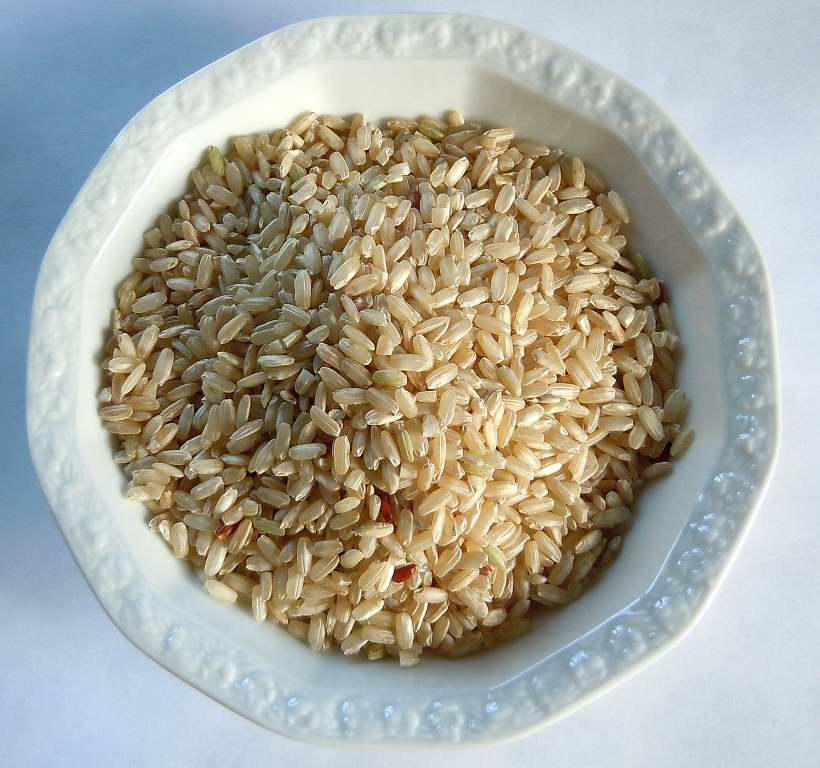
Brown rice
Rating : 8
| Evaluation | N. Experts | Evaluation | N. Experts |
|---|---|---|---|
| 1 | 6 | ||
| 2 | 7 | ||
| 3 | 8 | ||
| 4 | 9 | ||
| 5 | 10 |
Pros:
Antioxidant (1)10 pts from AColumn
| Sign up to vote this object, vote his reviews and to contribute to Tiiips.Evaluate | Where is this found? |
| "Descrizione" about Brown rice Review Consensus 10 by AColumn (9402 pt) | 2025-Dec-03 15:03 |
| Read the full Tiiip | (Send your comment) |
Brown rice (Oryza sativa)
Description
Brown rice consists of Oryza sativa kernels that have undergone minimal processing: only the inedible outer hull (husk) is removed, while the bran and germ are retained. The grain shows a brown to amber-brown colour, an opaque surface and a harder texture compared with fully milled white rice. Depending on the original variety (short, medium or long grain), the geometric profile of the kernel changes, but the common feature is the preservation of outer layers that contain dietary fibre, part of the minerals, and various phenolic compounds associated with the pericarp.
From a technological point of view, wholegrain rice requires longer cooking times and a higher water-to-rice ratio than polished rice, in order to ensure adequate hydration of the bran. The fibrous outer layer gives the cooked grain a firmer texture, with higher mechanical resistance in the peripheral portion, while the inner endosperm, once hydrated, becomes softer. During cooking, starch release to the surface is lower than in fully pearled rice, leading to reduced stickiness between grains and limited surface creaminess.
In practical use, brown rice is employed as a starchy base in dishes where structured grains with residual bran are desired: rice salads, one-dish meals with legumes, vegetables or proteins, and preparations where higher grain stability after cooling or holding is required. The different composition of the outer layers influences the grain’s ability to absorb seasonings, the processing times and the behaviour in mixtures with other starchy or protein ingredients.
![]() | ![]() |
Botanical classification
Common name: brown rice
Clade: Angiosperms
Order: Poales
Family: Poaceae
Genus: Oryza
Species: Oryza sativa L.
Climate
Brown rice is not a single cultivar, but the product obtained from various rice varieties that are not subjected to full refinement (bran and germ retained). Agronomically, the cultivars used for brown rice are generally suited to warm–temperate climates, with hot summers and abundant water availability. The crop requires a growing season free from frost, with high temperatures during germination, tillering, stem elongation and flowering. Low temperatures, especially at germination and anthesis, reduce grain set and productivity.
Exposure
Like other flooded rice types, the varieties used for brown rice need full sun to ensure adequate photosynthetic activity and proper panicle development. Prolonged shading (tree rows, buildings) reduces canopy vigour, heading and the final yield of grains.
Soil
Brown rice is cultivated on flat soils suited to flooding, preferably clay or clay–loam soils with good water-holding capacity and adequate organic matter. Very sandy, highly permeable soils are unfavourable, as they do not allow a stable water layer to be maintained. Optimal pH ranges from slightly acidic to neutral or mildly alkaline.
Irrigation
Rice destined for brown rice production is generally grown like standard paddy rice, under controlled flooding, with a continuous water layer for most of the cycle. Proper regulation of water levels during pre-emergence, tillering, stem elongation and ripening phases is essential to:
control typical paddy weeds;
reduce water stress;
ensure uniform growth.
Sudden reductions in water level or unplanned dry periods negatively affect yield and technological quality of the grain.
Temperature
Optimal temperatures for germination exceed 12–13 °C. For vegetative growth and flowering, ideal values lie between 20 and 30 °C. Cold episodes during anthesis reduce fertilization and grain set; conversely, periods of intense heat associated with strong radiation and dry winds can cause grain scorching and quality defects (breakage, chalkiness).
Fertilization
Rice varieties used for brown rice require balanced nutrition with nitrogen (N), phosphorus (P) and potassium (K):
Nitrogen, applied in split doses (pre-flooding and topdressings), promotes regular tillering without excessively increasing lodging risk;
Phosphorus supports early root system development and initial crop establishment;
Potassium contributes to lodging resistance and grain quality (bran integrity, cooking behaviour).
Excess nitrogen increases susceptibility to fungal diseases (e.g. blast), favours lodging and makes yield stability less reliable.
Crop care
Main agronomic practices align with those of standard paddy rice:
weed management by means of crop rotations, possible false sowing, mechanical methods and/or selective treatments;
accurate land levelling to ensure uniform flooding;
careful management of water levels to limit undesired aquatic species and reduce crop stress;
monitoring of diseases (especially blast) and pests, adopting integrated pest management strategies;
definition of an appropriate sowing density, in relation to soil fertility and input level, to reduce internal competition and lodging risk.
Good air circulation within the canopy helps limit diseases and supports proper panicle ripening.
Harvesting
Harvest takes place when grain ripening is uniform and grain moisture is suitable for combine harvesting. Because brown rice retains bran and germ, it is important to avoid delayed harvesting, which increases risks of lodging, shattering and quality defects. After harvest, grain is dried to a moisture content suitable for storage and subsequent processing (dehusking without full refinement).
Propagation
Varieties intended for brown rice are propagated using certified seed, produced in varietal seed multiplication lots to ensure genetic purity, uniform grain type and stable technological characteristics (cooking stability, intact bran layer). On farm, paddy sowing (broadcast or in rows, on dry soil or under water) is carried out by adjusting the seed rate according to target plant density, soil fertility and the chosen agronomic technique.
Indicative nutritional values per 100 g (raw product)
(Average values, varying with variety and processing conditions.)
Energy: 350–365 kcal
Protein: 7.0–8.5 g
Total fat: 2.0–3.0 g
SFA (Saturated Fatty Acids): low share
MUFA: significant share
PUFA: significant share (mainly linoleic acid)
Available carbohydrates: 70–73 g
Starch: main component
Total fibre: 3–4.5 g
Minerals: phosphorus, magnesium, potassium, manganese, zinc, iron (higher than in white rice)
Vitamins: B-group (B1, B3, B6), vitamin E (tocopherols) in the germ
Key constituents
Complex carbohydrates: starch (amylose + amylopectin, often with relatively high amylose).
Proteins: prolamins, glutelins, albumins, globulins.
Lipids (concentrated in the germ and outer layers): triglycerides, phospholipids, phytosterols, tocopherols.
Dietary fibre: cellulose, hemicelluloses, lignin, pectins.
Minerals: P, Mg, K, Mn, Zn, Fe.
Vitamins: mainly B-group vitamins and vitamin E.
Phytocompounds: phenolic acids and antioxidant compounds present in the bran layers (especially in pigmented wholegrain varieties).
Production process
Cultivation and harvesting
Sowing in paddy fields, water and nutrient management; mechanical harvesting of the grain.
Drying
Reduction of moisture content to levels suitable for storage (typically around 13–14%).
Dehusking
Removal of the husk using rollers or dedicated equipment; pericarp, aleurone and germ remain.
Cleaning and sorting
Removal of broken grains, foreign seeds and inert materials using sieves, aspirators and optical sorters.
Packaging
In barrier or otherwise suitable packs, in a dry environment, with sealed closure.
No polishing step is carried out, in contrast with white rice.
Physical properties
Colour: beige to light brown (darker in pigmented wholegrain varieties).
Surface: rougher than that of polished rice.
Density: comparable to other rices, with higher solids in the outer layers.
Water absorption: medium to high.
Gelatinisation time: longer than white rice because of the bran layers.
Sensory and technological properties
Texture: generally firm and chewy, with good cooking stability.
Stickiness: lower than in some white rices with high amylopectin; grains tend to remain relatively separate if correctly cooked.
Aroma: more pronounced, with cereal, toasted and sometimes slightly nutty notes.
Cooking time: typically 30–40 minutes in conventional boiling (may be reduced using soaking or pressure cooking).
Technological performance: good volume yield; suitable for main dishes, salads and side dishes where the grain should remain intact.
Food uses
Main dishes (brown rice with vegetables, legumes, fish, etc.).
Brown rice salads.
Side dishes with semi-separated grains.
Blends with other cereals or pseudocereals (e.g. brown rice + quinoa, spelt, millet).
“Wellness” and health-oriented menus (e.g. wholegrain, vegetarian and vegan meal plans).
Nutrition and health
Brown rice is a cereal dominated by complex carbohydrates, but compared with white rice it provides:
more fibre, supporting bowel regularity and helping to modulate glycaemic response;
more minerals (e.g. magnesium, phosphorus, manganese) and B-group vitamins;
a slightly higher fat content, mainly unsaturated fatty acids (MUFA and PUFA), with a relatively low SFA share.
The glycaemic index of brown rice is generally lower than that of many white rices, although it remains a starchy food: its effect on blood glucose and insulin depends on portion size, cooking method, cooling/reheating and combination with fibre, proteins and fats.
The content of phytocompounds and antioxidants (especially in pigmented wholegrain varieties) can contribute, within an overall balanced diet, to protection against oxidative stress.
Portion note
For adults, a standard portion is 60–70 g (raw product), slightly lower than white rice because of the higher nutrient density and greater satiating power.
Allergens and intolerances
Naturally gluten free.
Possible cross-contamination with gluten-containing cereals in shared facilities.
Specific rice allergy is rare, but when present it also involves brown rice.
Any presence or possible contamination with regulated allergens (“may contain…”) must be declared on the label.
Storage and shelf-life
Store in a cool, dry place, away from direct light and heat sources.
The higher fat content (germ present) makes brown rice more prone to rancidity than white rice:
avoid prolonged exposure to high temperatures;
reseal the package carefully after opening.
Typical shelf-life: about 12–18 months, depending on storage conditions and packaging type.
Pay attention to abnormal odours (rancid smell) and the presence of storage insects.
Safety and regulatory aspects
Subject to the same legal limits as white rice for:
chemical contaminants (heavy metals, pesticide residues, etc.);
mycotoxins;
foreign bodies.
Food safety and hygiene management systems such as GMP/HACCP must be applied throughout the chain.
Traceability is mandatory from primary production to distribution.
Labelling
Food labels typically include:
sales name (e.g. “brown rice”, optionally with variety: “brown Ribe rice”, etc.);
country of cultivation and/or processing, where required;
lot number and minimum durability date (“best before …”);
nutrition declaration per 100 g (and optionally per portion);
storage conditions;
basic cooking instructions;
any “gluten-free” statement only if the legal conditions are met;
any nutrition/health claims only if permitted and properly substantiated.
Troubleshooting
Possible defects
Grains too hard after cooking:
insufficient cooking time, inappropriate water-to-rice ratio;
particularly “old” or poorly hydrated product.
Over-soft or broken grains:
cooking time extended beyond the recommended range;
excess water.
Rancid flavour:
prolonged storage at high temperature or in unsuitable conditions;
lipid oxidation in the germ.
Preventive measures
Adjust cooking time and water-to-rice ratio according to producer indications and equipment.
Consider soaking (e.g. 30–60 minutes) to facilitate hydration and reduce cooking time.
Store away from heat and light; use preferably by the recommended date.
Sustainability and supply chain
Brown rice can originate from conventional, integrated or organic supply chains, with differences in fertiliser and plant protection product use.
Key environmental aspects include:
irrigation management in paddy fields;
fertiliser and pesticide application;
emissions and management of drainage and wastewater (monitoring indicators such as BOD/COD).
More sustainable practices include:
optimisation of irrigation volumes;
crop rotations to improve soil fertility and reduce weeds and diseases;
reduction and optimisation of chemical inputs through targeted agronomy;
participation in certification schemes (organic, regional quality schemes, voluntary sustainability standards).
Main INCI functions (cosmetics)
Derivatives of brown rice (starch, micronised powders, bran and germ extracts) may be used in cosmetics with functions such as:
Absorbent (in powders, mattifying products, dry shampoos, etc.);
Opacifying agent (reducing shine in make-up and skincare);
Skin conditioning agent, improving skin softness and feel;
Antioxidant (especially bran extracts rich in tocopherols and phenolic compounds);
Viscosity controlling agent in certain aqueous or emulsion systems.
Conclusion
Brown rice is a less refined form of rice with higher nutritional density than white rice: more fibre, more micronutrients and a slightly higher but nutritionally better-quality fat fraction, with low SFA and a relevant share of unsaturated fats. Technologically, it requires longer cooking times and careful water management but offers good structural stability and a distinctive sensory profile. Within a varied and balanced diet, it can help diversify carbohydrate sources, improve fibre and micronutrient intake and enhance overall diet quality.
Mini-glossary
SFA: Saturated Fatty Acids. When consumed in excess they are associated with increased cardiovascular risk; in brown rice their share is relatively low compared with unsaturated fats.
MUFA: MonoUnsaturated Fatty Acids. Fatty acids generally considered favourable for lipid profile when included in a balanced diet.
PUFA: PolyUnsaturated Fatty Acids, including linoleic acid; they can positively influence lipid profile and inflammatory processes when consumed in adequate amounts.
GMP/HACCP: Good Manufacturing Practices / Hazard Analysis and Critical Control Points. Systems for managing quality, hygiene and safety in food supply chains.
BOD/COD: Biochemical Oxygen Demand / Chemical Oxygen Demand. Parameters used to evaluate the organic and oxidisable load of wastewater and to estimate the environmental impact of industrial effluents.
Studies
In general, rice contains more than 100 bioactive substances mainly in its bran layer including phytic acid, isovitexin, gamma-oryzanol, phytosterols, octacosanol, squalene, gamma-aminobutyric acid, tocopherol and derived from tocotrienol (1), antioxidants.
It does not contain beta carotene (provitamin A) and has a very low iron and zinc content (2).
In rice bran there are bioactive phytochemicals that exert protective actions against cancer that involve the metabolism of the host and the intestinal microbiome. A diet based on rice bran has shown positive effects in reducing the risk of colon cancer (3).
Allergies: Be careful, rice contains a certain amount of lactose.
The most common types of rice used are :
Rice viruses and pests: Pseudomonas aeruginosa, Rice yellow mottle virus, Magnaporthe oryzae , Rice Tungro Bacilliform Virus , Lissorhoptrus oryzophilus Kuschel, Oebalus pugnax, Xanthomonas oryzae
References____________________________________________________________________
(1) Bidlack W. Phytochemicals as bioacive agents. Lancaster, Basel, Switzerland: Technomic Publishing Co., Inc; 1999. pp. 25–36.
(2) Singh SP, Gruissem W, Bhullar NK. Single genetic locus improvement of iron, zinc and β-carotene content in rice grains. Sci Rep. 2017 Jul 31;7(1):6883. doi: 10.1038/s41598-017-07198-5.
Abstract. Nearly half of the world's population obtains its daily calories from rice grains, which lack or have insufficient levels of essential micronutrients. The deficiency of micronutrients vital for normal growth is a global health problem, and iron, zinc and vitamin A deficiencies are the most prevalent ones. We developed rice lines expressing Arabidopsis NICOTIANAMINE SYNTHASE 1 (AtNAS1), bean FERRITIN (PvFERRITIN), bacterial CAROTENE DESATURASE (CRTI) and maize PHYTOENE SYNTHASE (ZmPSY) in a single genetic locus in order to increase iron, zinc and β-carotene content in the rice endosperm. NAS catalyzes the synthesis of nicotianamine (NA), which is a precursor of deoxymugeneic acid (DMA) iron and zinc chelators, and also chelate iron and zinc for long distance transport. FERRITIN provides efficient storage of up to 4500 iron ions. PSY catalyzes the conversion of GGDP to phytoene, and CRTI performs the function of desaturases required for the synthesis of β-carotene from phytoene. All transgenic rice lines have significantly increased β-carotene, iron, and zinc content in the polished rice grains. Our results establish a proof-of-concept for multi-nutrient enrichment of rice grains from a single genetic locus, thus offering a sustainable and effective approach to address different micronutrient deficiencies at once.
(3) Zarei I, Oppel RC, Borresen EC, Brown RJ, Ryan EP. Modulation of plasma and urine metabolome in colorectal cancer survivors consuming rice bran. Integr Food Nutr Metab. 2019 May;6(3). doi: 10.15761/IFNM.1000252.
Abstract. Rice bran has bioactive phytochemicals with cancer protective actions that involve metabolism by the host and the gut microbiome. Globally, colorectal cancer (CRC) is the third leading cause of cancer-related death and the increased incidence is largely attributed to poor dietary patterns, including low daily fiber intake. A dietary intervention trial was performed to investigate the impact of rice bran consumption on the plasma and urine metabolome of CRC survivors. Nineteen CRC survivors participated in a randomized-controlled trial that included consumption of heat-stabilized rice bran (30 g/day) or a control diet without rice bran for 4 weeks. A fasting plasma and first void of the morning urine sample were analyzed by non-targeted metabolomics using ultrahigh-performance liquid chromatography-tandem mass spectrometry (UHPLC-MS/MS). After 4 weeks of either rice bran or control diets, 12 plasma and 16 urine metabolites were significantly different between the groups (p≤0.05). Rice bran intake increased relative abundance of plasma mannose (1.373-fold) and beta-citrylglutamate (BCG) (1.593-fold), as well as increased urine N-formylphenylalanine (2.191-fold) and dehydroisoandrosterone sulfate (DHEA-S) (4.488-fold). Diet affected metabolites, such as benzoate, mannose, eicosapentaenoate (20:5n3) (EPA), and N-formylphenylalanine have been previously reported for cancer protection and were identified from the rice bran food metabolome. Nutritional metabolome changes following increased consumption of whole grains such as rice bran warrants continued investigation for colon cancer control and prevention attributes as dietary biomarkers for positive effects are needed to reduce high risk for colorectal cancer recurrence.
Brown DG, Borresen EC, Brown RJ, Ryan EP. Heat-stabilised rice bran consumption by colorectal cancer survivors modulates stool metabolite profiles and metabolic networks: a randomised controlled trial. Br J Nutr. 2017 May;117(9):1244-1256. doi: 10.1017/S0007114517001106.
Abstract. Rice bran (RB) consumption has been shown to reduce colorectal cancer (CRC) growth in mice and modify the human stool microbiome. Changes in host and microbial metabolism induced by RB consumption was hypothesised to modulate the stool metabolite profile in favour of promoting gut health and inhibiting CRC growth. The objective was to integrate gut microbial metabolite profiles and identify metabolic pathway networks for CRC chemoprevention using non-targeted metabolomics. In all, nineteen CRC survivors participated in a parallel randomised controlled dietary intervention trial that included daily consumption of study-provided foods with heat-stabilised RB (30 g/d) or no additional ingredient (control). Stool samples were collected at baseline and 4 weeks and analysed using GC-MS and ultra-performance liquid chromatography-MS. Stool metabolomics revealed 93 significantly different metabolites in individuals consuming RB. A 264-fold increase in β-hydroxyisovaleroylcarnitine and 18-fold increase in β-hydroxyisovalerate exemplified changes in leucine, isoleucine and valine metabolism in the RB group. A total of thirty-nine stool metabolites were significantly different between RB and control groups, including increased hesperidin (28-fold) and narirutin (14-fold). Metabolic pathways impacted in the RB group over time included advanced glycation end products, steroids and bile acids. Fatty acid, leucine/valine and vitamin B6 metabolic pathways were increased in RB compared with control. There were 453 metabolites identified in the RB food metabolome, thirty-nine of which were identified in stool from RB consumers. RB consumption favourably modulated the stool metabolome of CRC survivors and these findings suggest the need for continued dietary CRC chemoprevention efforts.
Beyer P, Al-Babili S, Ye X, Lucca P, Schaub P, Welsch R, Potrykus I. Golden Rice: introducing the beta-carotene biosynthesis pathway into rice endosperm by genetic engineering to defeat vitamin A deficiency. J Nutr. 2002 Mar;132(3):506S-510S. doi: 10.1093/jn/132.3.506S.
Abstract. To obtain a functioning provitamin A (beta-carotene) biosynthetic pathway in rice endosperm, we introduced in a single, combined transformation effort the cDNA coding for phytoene synthase (psy) and lycopene beta-cyclase (beta-lcy) both from Narcissus pseudonarcissus and both under the control of the endosperm-specific glutelin promoter together with a bacterial phytoene desaturase (crtI, from Erwinia uredovora under constitutive 35S promoter control). This combination covers the requirements for beta-carotene synthesis and, as hoped, yellow beta-carotene-bearing rice endosperm was obtained in the T(0)-generation. Additional experiments revealed that the presence of beta-lcy was not necessary, because psy and crtI alone were able to drive beta-carotene synthesis as well as the formation of further downstream xanthophylls. Plausible explanations for this finding are that these downstream enzymes are constitutively expressed in rice endosperm or are induced by the transformation, e.g., by enzymatically formed products. Results using N. pseudonarcissus as a model system led to the development of a hypothesis, our present working model, that trans-lycopene or a trans-lycopene derivative acts as an inductor in a kind of feedback mechanism stimulating endogenous carotenogenic genes. Various institutional arrangements for disseminating Golden Rice to research institutes in developing countries also are discussed.
| Sign up to vote this object, vote his reviews and to contribute to Tiiips.EvaluateClose | (0 comments) |
Read other Tiiips about this object in __Italiano (1)
Content:   Last update:   2025-12-03 14:50:05 | Kcal/100g:   350 Family:   Threat factors:  
|

