

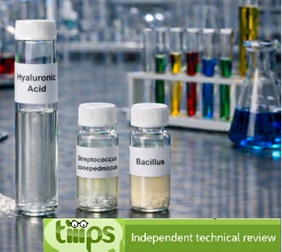
Hyaluronic acid
Rating : 8.5
| Evaluation | N. Experts | Evaluation | N. Experts |
|---|---|---|---|
| 1 | 6 | ||
| 2 | 7 | ||
| 3 | 8 | ||
| 4 | 9 | ||
| 5 | 10 |
Pros:
Anti-aging (1) Anti-inflammatory (1) Antioxidant (1) Antibacterial (1)10 pts from Nat45
| Sign up to vote this object, vote his reviews and to contribute to Tiiips.Evaluate | Where is this found? |
| "Hyaluronic acid studies" about Hyaluronic acid Review Consensus 7 by Nat45 (5773 pt) | 2021-Feb-11 18:18 |
| Read the full Tiiip | (Send your comment) |
Why we should definitely include intra-articular hyaluronic acid as a therapeutic option in the management of knee osteoarthritis: Results of an extensive critical literature review.
OBJECTIVES:There is a discrepancy between evidence in support of the widespread use of intra-articular hyaluronic acid (IAHA) to treat knee osteoarthritis (OA) in clinical practice, and the often discordant recommendations from multiple international guideline committees, which requires further investigation. METHODS:
We conducted a literature review to determine the strength of evidence in support of the efficacy and safety of IAHA, from randomized controlled trials and meta-analyses. RESULTS: Our analysis shows that IAHA provides a moderate symptomatic benefit to knee OA patients and without major safety concerns. In fact, IAHA may offer one of the best benefit/risk ratios among pharmacologic options, as measured by improvements in knee OA health outcomes, overall gain in quality-adjusted life years and substantial delays in time to total knee replacement. CONCLUSIONS: We advocate for the consideration of recommending IAHA injection as a treatment option in the management of knee OA, tailored by disease stage and patient phenotype. Future research efforts should focus on identification of OA patient subgroups that demonstrate a more robust response to IAHA, determination of long-term effects of repeat IAHA injections on patient-reported outcomes and total knee replacement-sparing effect, further elucidation of disease-modifying effects, and the potential for combination therapy with other pharmacologic and non-pharmacologic therapies to optimize the management of knee OA (1).

Hyaluronic acid vs corticosteroids in symptomatic knee osteoarthritis: a mini-review of the literature.
INTRODUCTION: Although intra-articular injections of hyaluronic acid (HA) are common non-operative measures used in clinical practice in the management of symptomatic osteoarthritis, there is a great controversy on their efficacy and safety compared to corticosteroids (CSs). EFFICACY: Conflicting results have been reported in clinical trials and meta-analysis due to methodological differences in study design, along with collection, analysis, and interpretation of data. Even if some studies reported small or no differences of HA compared with CSs (or inferred that HA is not more effective than saline as a placebo), in general CSs have shown to be superior in the short term (especially on pain control), while better results have been reported with HA at subsequent evaluations, but with only a moderate effect after 26 weeks. SAFETY: Mild or moderate adverse events have generally been reported after HA injections, the most common being injection site pain. HA is generally considered safe compared to CSs or saline. Furthermore, HA has shown to be safe also after a previous course of injections.CONCLUSIONS: Conflicting results have been reported on the efficacy and safety of HA. Guidelines are controversial and in most of the cases "uncertain" recommendations are provided due to inconclusive evidence in literature. However, HA does not seem to have significantly higher side effects when compared to saline or CSs injections, and provides better medium-term control of symptoms in patients with mild to moderate knee osteoarthritis (2).
References______________________________
(1) Why we should definitely include intra-articular hyaluronic acid as a therapeutic option in the management of knee osteoarthritis: Results of an extensive critical literature review.
Maheu E, Bannuru RR, Herrero-Beaumont G, Allali F, Bard H, Migliore A.
Semin Arthritis Rheum. 2019 Feb;48(4):563-572. doi: 10.1016/j.semarthrit.2018.06.002. Epub 2018 Jun 19. Review.
(2) Hyaluronic acid vs corticosteroids in symptomatic knee osteoarthritis: a mini-review of the literature.
Bisicchia S, Tudisco C.
Clin Cases Miner Bone Metab. 2017 May-Aug;14(2):182-185. doi: 10.11138/ccmbm/2017.14.1.182. Epub 2017 Oct 25.
| Sign up to vote this object, vote his reviews and to contribute to Tiiips.EvaluateClose | (0 comments) |
| "Descrizione" about Hyaluronic acid Review Consensus 10 by Nat45 (5773 pt) | 2026-Jan-14 10:29 |
| Read the full Tiiip | (Send your comment) |
Hyaluronic acid: properties, uses, pros, cons, safety
Hyaluronic Acid – high–molecular weight polysaccharide (a glycosaminoglycan) used in cosmetics to support hydration, cosmetic film, and sensoriality
Synonyms: hyaluronic acid, hyaluronan, hyaluronate (anionic form), sodium hyaluronate (sodium salt, frequently used in formulas)
INCI / Functions: antistatic, humectant, moisturizing, skin conditioning, viscosity controlling

Hyaluronic Acid is a natural polymer made of repeating disaccharide units, strongly hydrophilic and behaving as an anionic polyelectrolyte in water. In practice, it is a “structural” ingredient in moisturizing cosmetics: in solution it binds water, increases viscosity (depending on molecular weight and concentration), and forms a cosmetic film that improves comfort and a superficial “plumping” feel.
From a formulation standpoint, the most important variable is molecular weight (and its distribution). High–molecular weight grades tend to provide stronger film-forming effect, slip, and cosmetic reduction of perceived TEWL (a surface barrier effect), while lower fractions (or hydrolyzed forms) prioritize lightness, less “stringiness,” and a more immediate hydrated feel without an excessive film. On the market it is also common to find related ingredients—either as alternatives or combinations—such as Sodium Hyaluronate, Hydrolyzed Hyaluronic Acid, and crosslinked hyaluronate polymers: in this sheet, the focus remains on Hyaluronic Acid as the technical reference, highlighting the practical implications of the variants.
In cosmetics, hyaluronic acid should not be interpreted as a “filler” in the medical sense: its contribution is mainly surface-level and linked to film formation, humectancy, and rheology, with perceived efficacy strongly dependent on formula design, packaging, and consistency of use.
Chemical Composition and Structure
Hyaluronic Acid, chemically known as a glycosaminoglycan, consists of repeating disaccharide units of N-acetylglucosamine and glucuronic acid. Its unique ability to bind and retain water molecules contributes to its remarkable moisturizing properties. The molecular formula for Hyaluronic Acid is (C14H21NO11)n, where "n" represents the number of repeating units.
Physical Properties
Hyaluronic Acid typically appears as a white, odorless powder that is highly soluble in water. When dissolved, it forms a clear, viscous solution that can hold up to 1,000 times its weight in water, making it an excellent hydrating agent. Its viscosity and water-retaining capacity make it a popular ingredient in various cosmetic formulations.
Industrial Production Process
Cosmetics.
It is a cornerstone ingredient for serums, creams, gels, and masks focused on hydration and comfort. In aqueous serums it is used to build a “bouncy” texture and support a hydrating film that improves the feel of softer skin and reduced tightness. In O/W creams it acts as a co-structurant of the aqueous phase and supports sensorial payoff, especially when a strong hydration feel is desired without increasing the oil phase.
In “barrier support” routines, it is often combined with humectants (glycerin, propanediol, betaine), polymeric film formers, and barrier lipids; its role is to contribute to a balance between available water and film. Choosing Hyaluronic Acid versus salts/derivatives is typically guided by: sensorial target (more film vs more lightness), compatibility with electrolytes and actives, and viscosity target.
In make-up skincare (primers and lightweight bases) it can be used to support the aqueous phase and deliver a comfortable film that reduces perceived dryness. In haircare it may appear in leave-ons and masks as support for superficial fiber hydration, with variable impact and generally secondary to the main conditioning system.
INCI Functions: Antistatic, Humectant, Moisturising, Skin conditioning
Medicine
Intra-articular viscosupplementation (especially knee, but also hip/shoulder in selected contexts) for osteoarthritis.
Goal: improve lubrication and shock absorption of synovial fluid, with potential pain reduction and functional improvement.
Products: different formulations (different molecular weight; single or multiple injections; sometimes cross-linked).
Dermal fillers for correction of wrinkles/volume loss and reshaping.
Almost always cross-linked to increase durability and stability.
Applications: nasolabial folds, lips, cheeks, chin, jawline, etc.
Important clinical note: in case of complications from hyaluronic acid–based fillers, a functional “antidote” exists, hyaluronidase, used to degrade the gel.
Eye drops/artificial tears for dry eye and irritation: lubricating and muco-mimetic action.
Intraocular viscoelastics in surgery (e.g., cataract): protection of ocular structures and maintenance of spaces during the procedure.
Dressings, gels, and devices to promote a controlled moist environment and support the phases of wound healing (ulcers, abrasions, post-operative wounds in selected protocols).
Often used in combination with other materials (alginates, collagens, silver, etc.) depending on the objective (hydration, exudate control, barrier function).
Anti-adhesion barriers based on hyaluronic acid (or derivatives) to reduce post-operative adhesion formation in specific abdominal/pelvic procedures.
Function: create a temporary separation between tissue surfaces during the early healing phase.
Products for mucositis, irritation, and support of healing on mucosae (oral/nasal) in selected contexts.
In dentistry/periodontology: as an adjunct in some procedures to support soft-tissue healing (varies widely by indication and protocol).
In some situations, instillations or devices based on hyaluronic acid (sometimes combined with other glycosaminoglycans) are used as adjuncts for disorders of the bladder mucosa (use varies by country/local guidance).
| Identifier | Value |
|---|---|
| INCI name | Hyaluronic Acid |
| Formula (repeating unit) | (C14H21NO11)n |
| Molecular weight | variable (polymer; depends on grade/molecular weight) |
| CAS number | 9004-61-9 |
| EC/EINECS number | 232-678-0 |
| Typical commercial appearance | white/off-white powder or granules; sometimes concentrated solutions |
| Water solubility | high (forms viscous solutions/gels; depends on MW and hydration process) |
| Property | Value | Note |
|---|---|---|
| Chemical nature | anionic polysaccharide | pronounced polymeric and rheological behavior |
| Viscosity in water | low to very high | function of MW, concentration, electrolytes, and pH |
| Electrolyte sensitivity | relevant | salts can reduce viscosity and network strength |
| Stability | good under mild conditions | degradation/depolymerization is promoted by stress (extreme pH, oxidants, high temperature) |
| Function | What it does in formula | Technical note |
|---|---|---|
| Humectant / moisturizing | retains water and supports surface hydration | works synergistically with other humectants and with the product film |
| Cosmetic film former | forms a comfortable surface film | improves slip and perceived “plump” feel |
| Viscosity controlling | increases aqueous-phase rheology | strongly dependent on MW and salinity |
| Skin conditioning | improves sensoriality and comfort | more evident in leave-on products |
| Antistatic | reduces perceived static electricity | function sometimes listed in cosmetic databases |
Hyaluronic acid is compatible with most aqueous bases and O/W emulsions, but handling requires discipline around rheology, ionic interactions, and microbiology:
Polymer hydration and process. The way it is dispersed and hydrated directly affects clumping, final viscosity, and “stringiness.” In practice, shear level, addition order, and hydration time are decisive for lot-to-lot repeatability.
Electrolytes and ionic actives. As an anionic polymer, it can lose viscosity under high ionic strength. It can also interact with cationic polymers and cationic conditioners, generating haze or complexes (beneficial or problematic depending on the objective). In salt-rich systems or some oral-care/haircare bases with cationics, it is often preferable to work with more robust grades or derivatives (salts, crosspolymers) that better tolerate the environment.
pH and long-term stability. It generally performs well across moderate cosmetic pH ranges; overly acidic or overly alkaline conditions, or oxidants, can promote depolymerization and performance loss (viscosity drop, sensorial deterioration). Oxygen and trace metals can also indirectly contribute to oxidative phenomena in complex formulas.
Preservation and bioburden. As a hydrophilic biopolymer, it can increase the formula’s preservative demand if the raw material’s microbiological quality is not adequate. It is essential to qualify bioburden and implement a validated preservative system (challenge testing) on the finished product.
Packaging. For very viscous or “stringy” serums, packaging (pump, dropper, airless) influences user experience and perceived stability. In film-heavy formulas, “pilling” risk also depends on dispensing mode and layering with other products.
| Application | Typical range | Technical note |
|---|---|---|
| Face serums (leave-on) | 0.05–0.5% | typical to build a hydrating film without excessive stringiness; MW-dependent |
| O/W creams/gels (leave-on) | 0.05–0.3% | rheology and comfort support; watch electrolytes |
| Leave-on masks / sleeping masks | 0.1–0.6% | balance with humectants and film formers to avoid pilling |
| Rinse-off (cleansers/rinse masks) | 0.01–0.2% | benefit limited by contact time; evaluate cost/effect |
| Sprays (mists) | case-specific | control sprayability/stability; avoid overly viscous solutions |
| QC parameter | What to check |
|---|---|
| Identity | INCI alignment and CAS/EC match |
| Molecular weight / distribution | drives viscosity, film, and sensoriality |
| Viscosity (standard solution) | practical indicator of lot performance |
| Moisture | affects powder flow and storage stability |
| Bioburden | microbiological control, especially for cosmetic powder grades |
| Impurities | residues/contaminants per supplier specification and use destination |
| Documentation | updated SDS/CoA; traceability and cosmetic compliance |
In cosmetics, hyaluronic acid is generally considered suitable for use as a moisturizing/conditioning ingredient at typical market concentrations, with assessment based on the finished product (application area, frequency of use, target population). Practical issues are more often related to: individual sensitivity (rare non-specific irritation), formulation instability leading to degradation (which can change sensoriality), and microbiological management of the formula.
For spray/aerosol products, the key point is designing to minimize inhalation exposure to respirable particles (sprayer choice, droplet size, viscosity), keeping use within what is considered safe for the category.
From an environmental standpoint, as a biopolymer, impact is generally more related to supply chain and industrial effluent management than to persistence typical of synthetic polymers; nevertheless, correct management of wastewaters, plant cleaning, and process controls remains good practice.
In manufacturing, applying GMP (Good manufacturing practice; first occurrence) reduces variability and contamination; benefit: improved repeatability and quality control. In supply chains using preventive controls, HACCP (Hazard analysis and critical control points; first occurrence) is a methodological reference; benefit: preventive risk management at critical process points.
| Problem | Possible cause | Recommended intervention |
|---|---|---|
| Clumps / “fish eyes” | incomplete hydration or low wetting | pre-disperse in a humectant, use appropriate shear, extend hydration time |
| Excessive stringiness | high MW or high dose | reduce concentration, use mixed MW grades or derivatives, balance with less “stringy” polymers |
| Viscosity drop over time | electrolytes, off-target pH, degradation | retune salts/pH, check oxidants and metals, run stress tests and process controls |
| Haze/precipitates with cationics | anionic–cationic complexation | review cationic conditioners, change addition order, consider more compatible derivatives |
| Pilling in layering | polymer film + combination with other film formers | reduce total film, retune sensoriality, test with target routine layering |
| Microbiological instability | insufficient preservation or high bioburden | qualify raw material, optimize preservative, challenge test on finished product |
Studies
Hyaluronic acid (HA) is a polysaccharide belonging to the class of glycosaminoglycans, involved in tissue repair processes and in their regeneration. It is a fundamental component of the extracellular matrix, which contributes to an optimal performance of the repair processes by providing the appropriate degree of hydration, which facilitates cell migration (1).
Hyaluronic acid is a natural component present in abundance in load-bearing joints of the human body (2), has the property of retaining skin moisture (3), has anti-inflammatory, antioxidant, and antibacterial effects for the treatment of periodontal diseases ( 4). However, the lubricating effect of hyaluronic acid is generally of short duration and the duration of its biological effects is not predictable (5).
| Appearance | White powder |
| Boiling Point | 1274.4±65.0°C at 760 mmHg |
| Flash Point | 724.5±34.3°C |
| Density | 1.8±0.1 g/cm3 |
| PSA | 399.71000 |
| LogP | -6.62 |
| Refraction Index | 1.666 |
| Vapor Pressure | 0.0±0.6 mmHg at 25°C |
| Storage | −20°C |

References_________________________________________________________________________________
(1) Laliscia C, Delishaj D, Fabrini MG, Gonnelli A, Morganti R, Perrone F, Tana R, Paiar F, Gadducci A. Acute and late vaginal toxicity after adjuvant high-dose-rate vaginal brachytherapy in patients with intermediate risk endometrial cancer: is local therapy with hyaluronic acid of clinical benefit? J Contemp Brachytherapy. 2016 Dec;8(6):512-517. doi: 10.5114/jcb.2016.64511.
Abstract. Purpose: The aim of the present study was to evaluate the effectiveness of hyaluronic acid (HA) in the prevention of acute and late vaginal toxicities after high-dose-rate (HDR) vaginal brachytherapy (BT).....Conclusions: These results appear to suggest that the local therapy with HA is of clinical benefit for intermediate risk endometrial cancer patients who receive adjuvant HDR-vaginal BT after surgery. A randomized trial comparing HA treatment vs. no local treatment in this clinical setting is warranted to further evaluate the efficacy of HA in preventing vaginal BT-related vaginal toxicity.
(2) Correia CR, Moreira-Teixeira LS, Moroni L, Reis RL, van Blitterswijk CA, Karperien M, Mano JF. Chitosan scaffolds containing hyaluronic acid for cartilage tissue engineering. Tissue Eng Part C Methods. 2011 Jul;17(7):717-30. doi: 10.1089/ten.tec.2010.0467.
Abstract. Scaffolds derived from natural polysaccharides are very promising in tissue engineering applications and regenerative medicine, as they resemble glycosaminoglycans in the extracellular matrix (ECM). In this study, we have prepared freeze-dried composite scaffolds of chitosan (CHT) and hyaluronic acid (HA) in different weight ratios containing either no HA (control) or 1%, 5%, or 10% of HA. We hypothesized that HA could enhance structural and biological properties of CHT scaffolds. To test this hypothesis, physicochemical and biological properties of CHT/HA scaffolds were evaluated. Scanning electron microscopy micrographs, mechanical properties, swelling tests, enzymatic degradation, and Fourier transform infrared (FTIR) chemical maps were performed. To test the ability of the CHT/HA scaffolds to support chondrocyte adhesion and proliferation, live-dead and MTT assays were performed. Results showed that CHT/HA composite scaffolds are noncytotoxic and promote cell adhesion. ECM formation was further evaluated with safranin-O and alcian blue staining methods, and glycosaminoglycan and DNA quantifications were performed. The incorporation of HA enhanced cartilage ECM production. CHT/5HA had a better pore network configuration and exhibited enhanced ECM cartilage formation. On the basis of our results, we believe that CHT/HA composite matrixes have potential use in cartilage repair.
(3) Kablik J, Monheit GD, Yu L, Chang G, Gershkovich J. Comparative physical properties of hyaluronic acid dermal fillers. Dermatol Surg. 2009 Feb;35 Suppl 1:302-12. doi: 10.1111/j.1524-4725.2008.01046.x.
Abstract. Background: Hyaluronic acid (HA) fillers are becoming the material of choice for use in cosmetic soft tissue and dermal correction. HA fillers appear to be similar, but their physical characteristics can be quite different. These differences have the potential to affect the ability of the physician to provide the patient with a natural and enduring result.....Conclusion: Combining the objective factors that influence filler performance with clinical experience will provide the patient with the optimal product for achieving the best cosmetic result. A careful review of these gel characteristics is essential in determining filler selection, performance, and patient expectations.
(4) Jentsch H, Pomowski R, Kundt G, Göcke R. Treatment of gingivitis with hyaluronan. J Clin Periodontol. 2003 Feb;30(2):159-64. doi: 10.1034/j.1600-051x.2003.300203.x.
Abstract. Objectives: Hyaluronic acid (hyaluronan) is a glycosaminoglycan with anti-inflammatory and antiedematous properties. It was evaluated in a gel formulation for its effect in the treatment of plaque-induced gingivitis.....Conclusions: These data suggest that a hyaluronan containing gel has a beneficial effect in the treatment of plaque-induced gingivitis.
(5) Huang YC, Huang KY, Yang BY, Ko CH, Huang HM. Fabrication of Novel Hydrogel with Berberine-Enriched Carboxymethylcellulose and Hyaluronic Acid as an Anti-Inflammatory Barrier Membrane. Biomed Res Int. 2016;2016:3640182. doi: 10.1155/2016/3640182.
Abstract. An antiadhesion barrier membrane is an important biomaterial for protecting tissue from postsurgical complications. However, there is room to improve these membranes. Recently, carboxymethylcellulose (CMC) incorporated with hyaluronic acid (HA) as an antiadhesion barrier membrane and drug delivery system has been reported to provide excellent tissue regeneration and biocompatibility. The aim of this study was to fabricate a novel hydrogel membrane composed of berberine-enriched CMC prepared from bark of the P. amurense tree and HA (PE-CMC/HA). In vitro anti-inflammatory properties were evaluated to determine possible clinical applications. The PE-CMC/HA membranes were fabricated by mixing PE-CMC and HA as a base with the addition of polyvinyl alcohol to form a film. Tensile strength and ultramorphology of the membrane were evaluated using a universal testing machine and scanning electron microscope, respectively. Berberine content of the membrane was confirmed using a UV-Vis spectrophotometer at a wavelength of 260 nm. Anti-inflammatory property of the membrane was measured using a Griess reaction assay. Our results showed that fabricated PE-CMC/HA releases berberine at a concentration of 660 μg/ml while optimal plasticity was obtained at a 30 : 70 PE-CMC/HA ratio. The berberine-enriched PE-CMC/HA had an inhibited 60% of inflammation stimulated by LPS. These results suggest that the PE-CMC/HA membrane fabricated in this study is a useful anti-inflammatory berberine release system.
| Sign up to vote this object, vote his reviews and to contribute to Tiiips.EvaluateClose | (0 comments) |
Read other Tiiips about this object in __Italiano (2)
Component type:   Chemical Main substances:   Last update:   2022-06-06 19:32:32 | Chemical Risk:   |

