

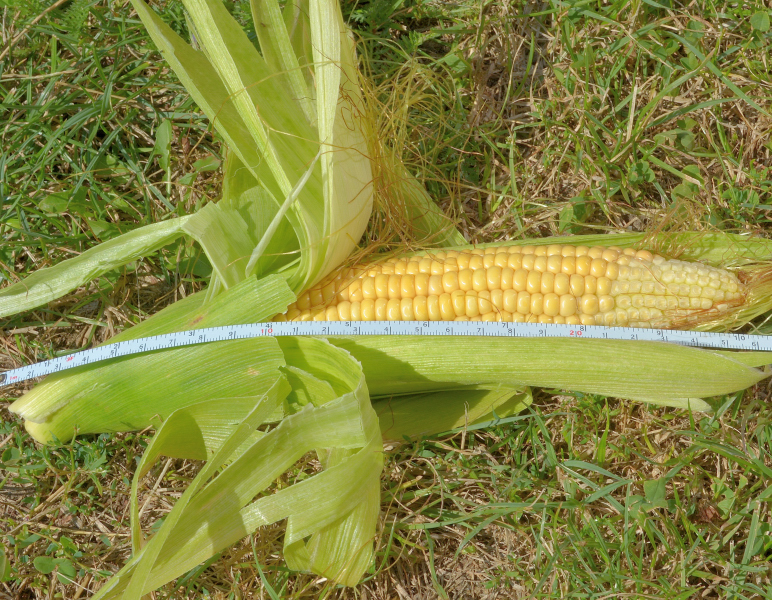
Corn Syrup
Rating : 4
| Evaluation | N. Experts | Evaluation | N. Experts |
|---|---|---|---|
| 1 | 6 | ||
| 2 | 7 | ||
| 3 | 8 | ||
| 4 | 9 | ||
| 5 | 10 |
Cons:
High fructose content (1)10 pts from Nat45
| Sign up to vote this object, vote his reviews and to contribute to Tiiips.Evaluate | Where is this found? |
| "Corn Syrup studies" about Corn Syrup Review Consensus 8 by Nat45 (5785 pt) | 2020-Nov-15 11:22 |
| Read the full Tiiip | (Send your comment) |
There is a lot of scientific literature on corn syrup, its fructose content and its consequences.
The most significant studies:
Beisner J, Gonzalez-Granda A, Basrai M, Damms-Machado A, Bischoff SC. Fructose-Induced Intestinal Microbiota Shift Following Two Types of Short-Term High-Fructose Dietary Phases. Nutrients. 2020 Nov 10;12(11):E3444. doi: 10.3390/nu12113444.
Effect of Restriction of Foods with High Fructose Corn Syrup Content on Metabolic Indices and Fatty Liver in Obese Children. Ibarra-Reynoso LDR, López-Lemus HL, Garay-Sevilla ME, Malacara JM. Obes Facts. 2017;10(4):332-340. doi: 10.1159/000476069.
Sucrose, High-Fructose Corn Syrup, and Fructose, Their Metabolism and Potential Health Effects: What Do We Really Know?
James M. Rippe, Theodore J. Angelopoulos
Adv Nutr. 2013 Mar; 4(2): 236–245. Published online 2013 Mar 6. doi: 10.3945/an.112.002824
High-fructose corn syrup-55 consumption alters hepatic lipid metabolism and promotes triglyceride accumulation. Mock K, Lateef S, Benedito VA, Tou JC J Nutr Biochem. 2017 Jan;39:32-39. doi: 10.1016/j.jnutbio.2016.09.010. Epub 2016 Sep 30. doi: 10.1371/journal.pone.0190206
High fructose corn syrup induces metabolic dysregulation and altered dopamine signaling in the absence of obesity
Allison M. Meyers, Devry Mourra, Jeff A. Beeler
PLoS One. 2017; 12(12): e0190206. Published online 2017 Dec 29.
A dose-response study of consuming high-fructose corn syrup–sweetened beverages on lipid/lipoprotein risk factors for cardiovascular disease in young adults
Kimber L Stanhope, Valentina Medici, Andrew A Bremer, Vivien Lee, Hazel D Lam, Marinelle V Nunez, Guoxia X Chen, Nancy L Keim, Peter J Havel
Am J Clin Nutr. 2015 Jun; 101(6): 1144–1154. Published online 2015 Apr 22. doi: 10.3945/ajcn.114.100461
Fructose, high-fructose corn syrup, sucrose, and nonalcoholic fatty liver disease or indexes of liver health: a systematic review and meta-analysis
Mei Chung, Jiantao Ma, Kamal Patel, Samantha Berger, Joseph Lau, Alice H Lichtenstein
Am J Clin Nutr. 2014 Sep; 100(3): 833–849. Published online 2014 Aug 6. doi: 10.3945/ajcn.114.086314
No differential effect of beverages sweetened with fructose, high-fructose corn syrup, or glucose on systemic or adipose tissue inflammation in normal-weight to obese adults: a randomized controlled trial
Jessica N Kuzma, Gail Cromer, Derek K Hagman, Kara L Breymeyer, Christian L Roth, Karen E Foster-Schubert, Sarah E Holte, David S Weigle, Mario Kratz
Am J Clin Nutr. 2016 Aug; 104(2): 306–314. Published online 2016 Jun 29. doi: 10.3945/ajcn.115.129650
Acute metabolic responses to high fructose corn syrup ingestion in adolescents with overweight/obesity and diabetes
Mary E. Patterson, Jennifer K. Yee, Paulin Wahjudi, Catherine S. Mao, Wai-Nang P. Lee
J Nutr Intermed Metab. 2018 Dec; 14: 1–7. Published online 2018 Aug 31. doi: 10.1016/j.jnim.2018.08.004
High-Fructose Corn-Syrup-Sweetened Beverage Intake Increases 5-Hour Breast Milk Fructose Concentrations in Lactating Women
Paige K. Berger, David A. Fields, Ellen W. Demerath, Hideji Fujiwara, Michael I. Goran
Nutrients. 2018 Jun; 10(6): 669. Published online 2018 May 24. doi: 10.3390/nu10060669
Effects of high fructose corn syrup and sucrose on the pharmacokinetics of fructose and acute metabolic and hemodynamic responses in healthy subjects
MyPhuong T. Le, Reginald F. Frye, Christopher J. Rivard, Jing Cheng, Kim K. McFann, Mark S. Segal, Richard J. Johnson, Julie A. Johnson
Metabolism. Author manuscript; available in PMC 2013 May 1.
Published in final edited form as: Metabolism. 2012 May; 61(5): 641–651. Published online 2011 Dec 5. doi: 10.1016/j.metabol.2011.09.013
High-Fructose Corn Syrup: Is this what’s for dinner?
Kiyah J. Duffey, Barry M. Popkin
Am J Clin Nutr. Author manuscript; available in PMC 2009 Sep 18.
Published in final edited form as: Am J Clin Nutr. 2008 Dec; 88(6): 1722S–1732S. doi: 10.3945/ajcn.2008.25825C
The Effect of Normally Consumed Amounts of Sucrose or High Fructose Corn Syrup on Lipid Profiles, Body Composition and Related Parameters in Overweight/Obese Subjects
Joshua Lowndes, Stephanie Sinnett, Sabrina Pardo, Von T. Nguyen, Kathleen J. Melanson, Zhiping Yu, Britte E. Lowther, James M. Rippe
Nutrients. 2014 Mar; 6(3): 1128–1144. Published online 2014 Mar 17. doi: 10.3390/nu6031128
Clostridial conversion of corn syrup to Acetone-Butanol-Ethanol (ABE) via batch and fed-batch fermentation
Saverio Niglio, Antonio Marzocchella, Lars Rehmann
Heliyon. 2019 Mar; 5(3): e01401. Published online 2019 Mar 22. doi: 10.1016/j.heliyon.2019.e01401
High-fructose corn syrup use linked to diabetes SH News (2012) 1: 1653. https://doi.org/10.1007/s40014-012-1653-3
Administration USFaD. CFR - Code of Federal Regulations Title 21, Sec. 184.1866 High fructose corn syrup 2018 Available from: https://www.accessdata.fda.gov/scripts/cdrh/cfdocs/cfcfr/CFRSearch.cfm?fr=184.1866.
| Sign up to vote this object, vote his reviews and to contribute to Tiiips.EvaluateClose | (0 comments) |
| "Descrizione" about Corn Syrup Review Consensus 10 by Nat45 (5785 pt) | 2025-Oct-29 09:16 |
| Read the full Tiiip | (Send your comment) |
The term "corn syrup" is usually found in the ingredients of baked goods and beverages, in the food field, and is a rather unusual term as it does not specify whether the content is fructose, glucose or both.
Corn syrup contains, in any case, a high percentage of fructose, a component rather discussed from a healthy point of view because it has numerous contraindications including, for example, intolerance which can also be hereditary (1).
Above all, the increasing spread of fructose consumption in beverages, has brought the attention of researchers to the risks that the intake of this ingredient has for health. Especially in young people, the association between the consumption of sugary drinks containing a high fructose content is associated with a risk of obesity (2), fatty liver disease (3).
There is a link between joint and gut inflammation of unknown etiology in arthritis. Existing research indicates that regular consumption of high-fructose corn syrup sweetened (HFCS) soft drinks, but not diet soft drinks, may be associated with increased risk of seropositive rheumatoid arthritis (RA) in women, independent of other dietary and lifestyle factors. One unexplored hypothesis for this association is that fructose malabsorption, due to regular consumption of excess free fructose (EFF) and HFCS, contributes to fructose reactivity in the gastrointestinal tract and intestinal in situ formation of enFruAGEs, which once absorbed, travel beyond the intestinal boundaries to other tissues and promote inflammation. In separate studies, the accumulation of advanced glycation end-products has been associated with joint inflammation in RA. Objective of this study was to assess the association between EFF beverages intake and non-age, non-wear and tear-associated arthritis in US young adults. Excess free fructose beverage intake is significantly associated with arthritis in US adults aged 20-30 years, possibly due to the intestinal in situ formation of enFruAGEs (4).
References________________________________
(1) Gaughan S, Ayres L, Baker PR II. Hereditary Fructose Intolerance. 2015 Dec 17 [updated 2021 Feb 18]. In: Adam MP, Feldman J, Mirzaa GM, Pagon RA, Wallace SE, Amemiya A, editors. GeneReviews® [Internet]. Seattle (WA): University of Washington, Seattle; 1993–2025. PMID: 26677512.
(2) Lin WT, Chan TF, Huang HL, Lee CY, Tsai S, Wu PW, Yang YC, Wang TN, Lee CH. Fructose-Rich Beverage Intake and Central Adiposity, Uric Acid, and Pediatric Insulin Resistance. J Pediatr. 2016 Apr;171:90-96.e1. doi: 10.1016/j.jpeds.2015.12.061.
(3) Softic S, Cohen DE, Kahn CR. Role of Dietary Fructose and Hepatic De Novo Lipogenesis in Fatty Liver Disease. Dig Dis Sci. 2016 May;61(5):1282-93. doi: 10.1007/s10620-016-4054-0.
Abstract. Nonalcoholic fatty liver disease (NAFLD) is a liver manifestation of metabolic syndrome. Overconsumption of high-fat diet (HFD) and increased intake of sugar-sweetened beverages are major risk factors for development of NAFLD. Today the most commonly consumed sugar is high fructose corn syrup. Hepatic lipids may be derived from dietary intake, esterification of plasma free fatty acids (FFA) or hepatic de novo lipogenesis (DNL). A central abnormality in NAFLD is enhanced DNL. Hepatic DNL is increased in individuals with NAFLD, while the contribution of dietary fat and plasma FFA to hepatic lipids is not significantly altered. The importance of DNL in NAFLD is further established in mouse studies with knockout of genes involved in this process. Dietary fructose increases levels of enzymes involved in DNL even more strongly than HFD. Several properties of fructose metabolism make it particularly lipogenic. Fructose is absorbed via portal vein and delivered to the liver in much higher concentrations as compared to other tissues. Fructose increases protein levels of all DNL enzymes during its conversion into triglycerides. Additionally, fructose supports lipogenesis in the setting of insulin resistance as fructose does not require insulin for its metabolism, and it directly stimulates SREBP1c, a major transcriptional regulator of DNL. Fructose also leads to ATP depletion and suppression of mitochondrial fatty acid oxidation, resulting in increased production of reactive oxygen species. Furthermore, fructose promotes ER stress and uric acid formation, additional insulin independent pathways leading to DNL. In summary, fructose metabolism supports DNL more strongly than HFD and hepatic DNL is a central abnormality in NAFLD. Disrupting fructose metabolism in the liver may provide a new therapeutic option for the treatment of NAFLD.
(4) DeChristopher LR, Uribarri J, Tucker KL. Intake of high-fructose corn syrup sweetened soft drinks, fruit drinks and apple juice is associated with prevalent arthritis in US adults, aged 20-30 years. Nutr Diabetes. 2016 Mar 7;6:e199. doi: 10.1038/nutd.2016.7.
Abstract Objective: There is a link between joint and gut inflammation of unknown etiology in arthritis. Existing research indicates that regular consumption of high-fructose corn syrup sweetened (HFCS) soft drinks, but not diet soft drinks, may be associated with increased risk of seropositive rheumatoid arthritis (RA) in women, independent of other dietary and lifestyle factors. One unexplored hypothesis for this association is that fructose malabsorption, due to regular consumption of excess free fructose (EFF) and HFCS, contributes to fructose reactivity in the gastrointestinal tract and intestinal in situ formation of enFruAGEs, which once absorbed, travel beyond the intestinal boundaries to other tissues and promote inflammation. In separate studies, the accumulation of advanced glycation end-products has been associated with joint inflammation in RA. Objective of this study was to assess the association between EFF beverages intake and non-age, non-wear and tear-associated arthritis in US young adults. Methods: In this cross sectional study of 1209 adults aged 20-30y, (Nutrition and Health Examination Surveys 2003-2006) exposure variables were high EFF beverages, including HFCS sweetened soft drinks, and any combination of HFCS sweetened soft drinks, fruit drinks (FD) and apple juice, referred to as tEFF. Analyses of diet soda and diet FD were included for comparison. The outcome was self-reported arthritis. Rao Scott Ҳ(2) was used for prevalence differences and logistic regression for associations, adjusted for confounders. Results: Young adults consuming any combination of high EFF beverages (tEFF) ⩾5 times/week (but not diet soda) were three times as likely to have arthritis as non/low consumers (odds ratios=3.01; p⩽0.021; 95% confidence intervals=1.20-7.59), independent of all covariates, including physical activity, other dietary factors, blood glucose and smoking. Conclusion: EFF beverage intake is significantly associated with arthritis in US adults aged 20-30 years, possibly due to the intestinal in situ formation of enFruAGEs.
| Sign up to vote this object, vote his reviews and to contribute to Tiiips.EvaluateClose | (0 comments) |
Read other Tiiips about this object in __Italiano (3)
Component type:   Natural Main substances:   Last update:   2020-11-15 11:09:48 | Chemical Risk:   |

