

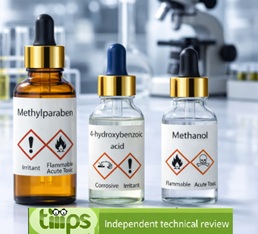
Methylparaben
Rating : 3.3
| Evaluation | N. Experts | Evaluation | N. Experts |
|---|---|---|---|
| 1 | 6 | ||
| 2 | 7 | ||
| 3 | 8 | ||
| 4 | 9 | ||
| 5 | 10 |
Cons:
Possible risk. Click ingredient (1)10 pts from Street82
| Sign up to vote this object, vote his reviews and to contribute to Tiiips.Evaluate | Where is this found? |
| "Methylparaben studies" about Methylparaben Review Consensus 10 by Ark90 (12536 pt) | 2022-Sep-29 10:10 |
| Read the full Tiiip | (Send your comment) |
Compendium of the most significant studies with reference to properties, intake, effects.
Ball AL, Solan ME, Franco ME, Lavado R. Comparative cytotoxicity induced by parabens and their halogenated byproducts in human and fish cell lines. Drug Chem Toxicol. 2022 Jul 19:1-9. doi: 10.1080/01480545.2022.2100900.
Abstract. Parabens are a group of para-hydroxybenzoic acid (p-HBA) esters widely used in pharmaceutical industries. Their safety is well documented in mammalian models, but little is known about their toxicity in non-mammal species. In addition, chlorinated and brominated parabens resulting from wastewater treatment have been identified in effluents. In the present study, we explored the cytotoxic effects (EC50) of five parabens: methylparaben (MP), ethylparaben (EP), propylparaben (PP), butylparaben (BuP), and benzylparaben (BeP); the primary metabolite, 4-hydroxybenzoic acid (4-HBA), and three of the wastewater chlorinated/brominated byproducts on fish and human cell lines. In general, higher cytotoxicity was observed with increased paraben chain length. The tested compounds induced toxicity in the order of 4-HBA < MP < EP < PP < BuP < BeP. The halogenated byproducts led to higher toxicity with the addition of second chlorine. The longer chain-parabens (BuP and BeP) caused a concentration-dependent decrease in cell viability in fish cell lines. Intriguingly, the main paraben metabolite, 4-HBA, proved to be more toxic to fish hepatocytes than human hepatocytes by 100-fold. Our study demonstrated that the cytotoxicity of some of these compounds appears to be tissue-dependent. These observations provide valuable information for early cellular responses in human and non-mammalian models upon exposure to paraben congeners.
Oliveira MM, Martins F, Silva MG, Correia E, Videira R, Peixoto F. Use of Parabens (Methyl and Butyl) during the Gestation Period: Mitochondrial Bioenergetics of the Testes and Antioxidant Capacity Alterations in Testes and Other Vital Organs of the F1 Generation. Antioxidants (Basel). 2020 Dec 18;9(12):1302. doi: 10.3390/antiox9121302.
Abstract. Since the mid-1920s, parabens have been widely used as antimicrobial preservatives in processed foods and beverages, pharmaceuticals, and cosmetic products. Paraben use continues to generate considerable controversy, both in the general population and in the scientific community itself. The primary purpose of our study was to determine whether parabens (methyl and butyl at concentrations of 100 and 200 mg/kg body weight by subcutaneous injection) during pregnancy of adult female Wistar rats can have an impact on the F1 generation. As far as we know, we are the first to demonstrate that using parabens during pregnancy has negative repercussions on the mitochondrial bioenergetics and antioxidant activity of testicular germ cells in the F1 generation. Our study showed that there was a 48.7 and 59.8% decrease in the respiratory control index with 100 and 200 mg/kg of butylparaben, respectively. Cytochrome c oxidase activity was significantly inhibited (45 and 51%) in both groups. In addition, 200 mg/kg butylparaben promoted a marked decrease in citrate synthase activity, indicating that mitochondrial content decreased in the germ cells, especially spermatocytes and spermatids. Mitochondrial ROS production increased in groups exposed to parabens in a concentration-dependent manner, especially the butyl one (102 and 130%). The groups exposed to butylparaben showed an increase in superoxide dismutase (SOD) and catalase (CAT) activities, while glutathione reductase (GR) and glutathione S-transferase (GST) decreased. With methylparaben, only differences in SOD and GR were observed; for the latter, this only occurred with the highest concentration. The glutathione (GSH)/glutathione disulfide (GSSG) ratio did not undergo any significant change. However, there was a considerable increase in hydroperoxide content in animals exposed to butylparaben, with 100 and 200 mg/kg resulting in 98.6 and 188% increase, respectively. Furthermore, several other organs also showed alterations in antioxidant capacity due to paraben use. In summary, our study demonstrates that paraben use during pregnancy will cause severe changes in the mitochondrial bioenergetics and antioxidant capacity of testicular germ cells and the antioxidant capacity of several other F1 generation organs.
Nowak K, Jabłońska E, Garley M, Radziwon P, Ratajczak-Wrona W. Methylparaben-induced regulation of estrogenic signaling in human neutrophils. Mol Cell Endocrinol. 2021 Dec 1;538:111470. doi: 10.1016/j.mce.2021.111470.
Abstract. Parabens, including the most common methylparaben (MeP), are popular preservatives, which possess estrogenic activity. The aims of this study were to assess the impact of MeP on estrogen receptors (ERs) and/or NF-κB-dependent generation of IL-8 and production of nitric oxide (NO), and also to verify the hypothesis about the crosstalk of ERs with NF-κB in xenoestrogen-exposed neutrophils....Copyright © 2021 The Authors.
Jensen TK, Andersson AM, Main KM, Johannsen TH, Andersen MS, Kyhl HB, Juul A, Frederiksen H. Prenatal paraben exposure and anogenital distance and reproductive hormones during mini-puberty: A study from the Odense Child Cohort. Sci Total Environ. 2021 May 15;769:145119. doi: 10.1016/j.scitotenv.2021.145119.
Abstract. ...The endocrine disrupting abilities of parabens may affect humans at vulnerable time periods during development, which may have long term impact on reproductive function. This is the first study to find these associations in girls and our findings need confirmation. Copyright © 2021 The Authors.
Matwiejczuk N, Galicka A, Zaręba I, Brzóska MM. The Protective Effect of Rosmarinic Acid Against Unfavorable Influence of Methylparaben and Propylparaben on Collagen in Human Skin Fibroblasts. Nutrients. 2020 May 1;12(5):1282. doi: 10.3390/nu12051282.
Abstract. Parabens, which are widely used in food, medicines and cosmetics, have a harmful effect on human health. People are most exposed to parabens transdermally by using cosmetic products containing these preservatives. The purpose of this study was to estimate the influence of parabens (methylparaben-MP and propylparaben-PP) on the metabolism of collagen in the human skin fibroblasts and above all, to assess whether rosmarinic acid (RA-50, 100, or 150 M) can protect these cells from the adverse effects of parabens (0.001% MP and 0.0003% PP, 0.003% MP and 0.001% PP, and 0.01% MP and 0.003% PP). The possible mechanisms of RA action were estimated as well. Parabens decreased the expression of collagen type I and III at mRNA and protein levels, while RA (depending on the concentration) provided partial or total protection against these changes. The effective protection against the adverse effects of parabens on cell viability and proliferation was also provided by RA. The beneficial impact of RA on collagen and the fibroblasts resulted from an independent action of this compound and its interaction with parabens. This study allows us to conclude that this polyphenolic compound may protect from unfavorable health outcomes caused by lifetime human exposure to parabens contained in cosmetic products.
Cetinić KA, Grgić I, Previšić A, Rožman M. The curious case of methylparaben: Anthropogenic contaminant or natural origin? Chemosphere. 2022 May;294:133781. doi: 10.1016/j.chemosphere.2022.133781.
Abstract. ...This study improves our understanding of the role and impact this compound has on biota and challenges the current paradigm that methylparaben is exclusively a harmful anthropogenic contaminant. Our findings highlight the need for further research on this topic to fully understand the origin and role of parabens in the environment which will allow for a comprehensive understanding of the extent of environmental contamination and result in a representative assessment of the environmental risk that may pose. Copyright © 2022 Elsevier Ltd.
Tyagi P, James-Todd T, Mínguez-Alarcón L, Ford JB, Keller M, Petrozza J, Calafat AM, Hauser R, Williams PL, Bellavia A; EARTH study team. Identifying windows of susceptibility to endocrine disrupting chemicals in relation to gestational weight gain among pregnant women attending a fertility clinic. Environ Res. 2021 Mar;194:110638. doi: 10.1016/j.envres.2020.110638.
Abstract. Background: Exposure to endocrine disrupting chemicals (EDC), such as phthalates and phenols, during pregnancy may be associated with excessive gestational weight gain (GWG), an important predictor of future health of the mother and the offspring. There is however a paucity of literature examining this association, and no study has accounted for the complex nature of EDCs exposure as a time-varying mixture of chemicals. Objective: We examined the association between trimester-specific EDCs mixture and GWG in pregnant women attending a fertility clinic, to identify windows of susceptibility to such exposures, and assess the individual contribution of each chemical over pregnancy....Copyright © 2020 Elsevier Inc.
Barajas-Salinas A, Ducolomb Y, Betancourt M, Núñez-Macías E, López A, Barraza J, Quezadas-Fuentes J, Bahena-Ocampo I, Bonilla E, Retana-Márquez S, Casas E, Casillas F. Effects of methylparaben on in vitro maturation of porcine oocytes. J Appl Toxicol. 2021 Feb;41(2):330-337. doi: 10.1002/jat.4045.
Abstract. Parabens (PBs) are compounds widely used in industry for food and personal care products as antimicrobials and preservatives. Their indiscriminate use has resulted in their detection in different ecosystems so that humans and other organisms are highly exposed. Methylparaben (MePB), compared with other PBs, is mostly detected in food, personal care and baby care products. PBs could be linked to the generation of hormonal disorders and fertility impairment since their recent classification as endocrine disruptors....© 2020 John Wiley & Sons, Ltd.
Hu C, Sun B, Tang L, Liu M, Huang Z, Zhou X, Chen L. Hepatotoxicity caused by methylparaben in adult zebrafish. Aquat Toxicol. 2022 Sep;250:106255. doi: 10.1016/j.aquatox.2022.106255.
Abstract. Parabens are a class of aquatic pollutants of emerging concern, among which methylparaben (MeP) causes severe pollution worldwide. However, aquatic toxicology of MeP remains largely unknown, which hinders ecological risk evaluation. In the present study, adult zebrafish were exposed to environmentally realistic concentrations (0, 1, 3, and 10 μg/L) of MeP for 28 days, with objectives to reveal the hepatotoxicity based on transcriptional, biochemical, metabolomics, and histopathological evidences. The results showed that MeP subchronic exposure induced the occurrence of hepatocellular vacuolization in zebrafish....
| Sign up to vote this object, vote his reviews and to contribute to Tiiips.EvaluateClose | (0 comments) |
| "Descrizione" about Methylparaben Review Consensus 10 by Street82 (2948 pt) | 2026-Jan-28 16:04 |
| Read the full Tiiip | (Send your comment) |
Methylparaben: properties, uses, pros, cons, safety, alternatives
Methylparaben (methyl p-hydroxybenzoate) is a preservative from the paraben family, used to control microbial growth and extend shelf life. It is the methyl ester of p-hydroxybenzoic acid and is especially effective against yeasts and molds, while activity against some bacteria can be more limited. In practice it is used as a food additive (E218) and also in pharmaceutical and cosmetic products to improve long-term microbiological stability. Performance depends on the formulation ph and the overall preservation system, often showing synergy when combined with other preservatives. Because water solubility is not high, it may require specific solubilization or incorporation strategies during manufacturing. Its use is subject to regulatory limits by product category and concentration, and formulators also consider the potential for sensitization in susceptible individuals.

The name defines the structure of the molecule
Description of raw materials used in production
Step-by-step summary of industrial chemical synthesis process.
What it is used for and where
Food
Ingredient on the European food additives list as E218, preservative.
Preservative. Any product containing organic, inorganic compounds, water, needs to be preserved from microbial contamination. Preservatives act against the development of harmful microorganisms and against oxidation of the product.
Studies
Methylparaben (MP) is used to extend the shelf life of industrial chemicals (Cashman and Warshaw, 2005). However, when the skin is exposed to MP, this compound permeates the epidermis and dermis and shows in particular greater permeation than other parabens due to the difference in their lipophilicity ( El Hussein et al., 2007 ). It exhibits several adverse dermatological reactions, such as allergic reaction, the cytotoxic synergistic effect of UV radiation and the development of breast cancer ( Nardelli et al., 2009 , Dagher et al., 2012 ). MP concentrations above 4 mg ml -1 in industrial products are known to be harmful ( Darbre and Harvey, 2008; CIR Expert Group, 2008 ). Although MP persists in the dermis ( El Hussein et al., 2007 ), little is known about its side effects or molecular mechanism in the dermis.
Overall, the results show that MP induces cellular senescence in vitro and in vivo, via the GR-c-Jun-ROS pathway, and MP-induced cellular senescence alters ECM components. Although the treatment doses of MP used in this study seem high compared to the limit of industrial use (CIR Expert Group, 2008), the data provide evidence for the hypothesis that MP overdose may induce alterations in ECM components by concentrating senescent fibroblasts in the dermis (1).
Methylparaben is, like all parabens, a debated component about whose safety many doubts have been raised, in particular because of the damage it would cause to the aquatic environment where it is discharged after use (2).
Exposure to methylparaben has been associated with adverse health outcomes and exposure to ultraviolet rays may amplify its toxicity (3).
To reduce the toxicity of parabens in the aquatic environment, a system called the Fenton process is applied (4).
Clinical studies have suggested that Methylparaben increases breast cancer proliferation and may play a direct role in chemoresistance by modulating stem cell activity (5).
Parabens, but in particular Methylparaben, promotes adipogenesis but suppresses the serum marker of bone formation in vivo and indicates possible negative health consequences (6) and may therefore contribute to obesity (7) furthermore, exposure to parabens is associated with DNA damage, male infertility and endocrine disruption in adults (8).
To counteract and mitigate the negative effects of methylparaben on human health, this study suggests that a polyphenolic compound, rosmarinic acid, may protect against unfavourable health outcomes caused by lifelong human exposure to parabens in cosmetic products (9).
The most relevant studies and their abstracts have been selected to explore this in more depth:
Typical commercial product characteristics Methylparaben
| Appearance | White crystalline powder |
| Boiling Point | 265.5±13.0°C at 760 mmHg |
| Melting Point | 125-128°C |
| Flash Point | 116.4±12.6°C 280°C |
| Density | 1.2±0.1 g/cm3 |
| Vapor Pressure | 0.0±0.6 mmHg at 25°C |
| Refraction Index | 1.547 |
| PSA | 46.53000 |
| LogP | 1.87 |
| Loss on drying | 0.5% max |
| Acidity | 0.1mg/g max |
| Sulphate Ash | 0.1% max |
| Heavy Metal | 10ppm max |
| Chemical Safety | ![]() |
Alternatives
| Option | Product type | Key advantages |
|---|---|---|
| E202 (potassium sorbate) | Antimicrobial preservative (sorbate) | Strong mainly vs yeasts and molds; long history of use; performs best at acidic pH and often in synergy with other preservatives. |
| E211 (sodium benzoate) | Antimicrobial preservative (benzoate) | Widely used in acidic foods and beverages; best performance at low pH; commonly combined for broader-spectrum protection. |
| E282 (calcium propionate) | Anti-mold preservative (propionate) | Especially effective for mold control in bakery; suitable for less-acidic matrices than benzoates/sorbates; practical choice when mold is the primary target. |

Synonyms :
References__________________________________________________________________________
(1) Cha HJ, Bae S, Kim K, Kwon SB, An IS, Ahn KJ, Ryu J, Kim HS, Ye SK, Kim BH, An S. Overdosage of methylparaben induces cellular senescence in vitro and in vivo. J Invest Dermatol. 2015 Feb;135(2):609-612. doi: 10.1038/jid.2014.405.
(2) Terasaki M, Abe R, Makino M, Tatarazako N. Chronic toxicity of parabens and their chlorinated by-products in Ceriodaphnia dubia. Environ Toxicol. 2015 May-Jun;30(6):664-73. doi: 10.1002/tox.21944.
Popa DS, Bolfa P, Kiss B, Vlase L, Păltinean R, Pop A, Cătoi C, Crişan G, Loghin F. Influence of Genista tinctoria L. or methylparaben on subchronic toxicity of bisphenol A in rats. Biomed Environ Sci. 2014 Feb;27(2):85-96. doi: 10.3967/bes2014.021.
(3) Lee J, Park N, Kho Y, Lee K, Ji K. Phototoxicity and chronic toxicity of methyl paraben and 1,2-hexanediol in Daphnia magna. Ecotoxicology. 2017 Jan;26(1):81-89. doi: 10.1007/s10646-016-1743-6.
Abstract. Parabens are used as antimicrobial preservatives in consumer products. Exposure to methylparaben (MP) has been associated with adverse health outcomes, therefore, an alternative compound, 1,2-hexanediol (1,2-H), has been applied for cosmetics. In the present study, the phototoxicity of MP and 1,2-H, as well as the toxic effect caused by chronic exposure, were investigated using Daphnia magna. The 48 h acute toxicity tests with D. magna were conducted under indoor or ultraviolet (UV) light irradiation conditions, i.e., exposure to 4 h/d sunlight. Changes in the transcription of genes related to oxidative stress were determined in D. magna juveniles, to investigate the underlying mechanism of phototoxicity. The 21 d chronic toxicity tests of MP and 1,2-H were performed under indoor light irradiation. Exposure to MP under environmental level of UV light was more detrimental to D. magna. Transcripts of catalase and glutathione-S-transferase genes in D. magna was significantly increased by co-exposure to MP and UV light. After 21 d of chronic exposure to MP and 1,2-H, the reproduction no-observed effect concentrations for D. magna were 1 and >10 mg/L, respectively. The present study showed that exposure to UV could magnify the toxicity of MP on daphnids. Although acute and chronic toxicities of 1,2-H were generally lower than those of MP, its effects on other aquatic organisms should not be ignored. Further studies are needed to identify other mechanisms of MP phototoxicity.
(4) Martins RC, Gmurek M, Rossi AF, Corceiro V, Costa R, Quinta-Ferreira ME, Ledakowicz S, Quinta-Ferreira RM. Application of Fenton oxidation to reduce the toxicity of mixed parabens. Water Sci Technol. 2016 Oct;74(8):1867-1875. doi: 10.2166/wst.2016.374.
Abstract. The aims of the present work were to assess the application of a chemical process to degrade a mixture of parabens and determine the influence of a natural river water matrix on toxicity. Model effluents containing either a single compound, namely methylparaben, ethylparaben, propylparaben, butylparaben, benzylparaben or p-hydroxybenzoic acid, or to mimic realistic conditions a mixture of the six compounds was used. Fenton process was applied to reduce the organic charge and toxic properties of the model effluents. The efficiency of the decontamination has been investigated using a chemical as well as a toxicological approach. The potential reduction of the effluents' toxicity after Fenton treatment was evaluated by assessing (i) Vibrio fischeri luminescence inhibition, (ii) lethal effects amongst freshwater Asian clams (Corbicula fluminea), and (iii) the impact on mammalian neuronal activity using brain slices. From the environmental point of view such a broad toxicity analysis has been performed for the first time. The results indicate that Fenton reaction is an effective method for the reduction of chemical oxygen demand of a mixture of parabens and their toxicity to V. fischeri and C. fluminea. However, no important differences were found between raw and treated samples in regard to mammalian neuronal activity.
(5) Lillo MA, Nichols C, Perry C, Runke S, Krutilina R, Seagroves TN, Miranda-Carboni GA, Krum SA. Methylparaben stimulates tumor initiating cells in ER+ breast cancer models. J Appl Toxicol. 2017 Apr;37(4):417-425. doi: 10.1002/jat.3374.
(6) Hu P, Kennedy RC, Chen X, Zhang J, Shen CL, Chen J, Zhao L. Differential effects on adiposity and serum marker of bone formation by post-weaning exposure to methylparaben and butylparaben. Environ Sci Pollut Res Int. 2016 Nov;23(21):21957-21968. doi: 10.1007/s11356-016-7452-0.
Abstract. Paraben esters and their salts are widely used as preservatives in cosmetics, personal care products, pharmaceuticals, and foods. We and others have reported that parabens promote adipogenesis in vitro. Here, we investigated the effects of post-weaning exposure to parabens (methylparaben and butylparaben) on body weight, white adipose tissue mass, and obesity associated metabolic biomarkers in female obesity-prone C57BL/6J mice fed with a chow diet or a high fat diet. Methylparaben exposure by daily oral gavage (100 mg/kg/day) increased adiposity and serum leptin levels compared to the controls when fed the chow diet, but not the high fat diet. In contrast, butylparaben exposure did not induce such effects. Exposure to either paraben induced changes in gene expression related to adipocyte differentiation and lipogenesis in the white adipose tissue (WAT) and the liver, regardless of diet. Moreover, exposure to both parabens under the chow diet significantly decreased serum procollagen type 1 N-terminal propeptide (P1NP) but had no effects on C-terminal telopeptide of type I collagen (CTX-I) levels, suggesting that post-weaning exposure to paraben may negatively affect bone formation, but not bone resorption. Taken together, our results demonstrate that post-weaning exposure to paraben, methylparaben in particular, promotes adipogenesis but suppresses serum marker of bone formation in vivo. Our results add to the growing body of literature indicating potential negative health outcomes associated with paraben exposure. Further study of early life exposure to paraben on the development of fat and bone is warranted.
(7) Hu P, Chen X, Whitener RJ, Boder ET, Jones JO, Porollo A, Chen J, Zhao L. Effects of parabens on adipocyte differentiation. Toxicol Sci. 2013 Jan;131(1):56-70. doi: 10.1093/toxsci/kfs262.
Abstract. Parabens are a group of alkyl esters of p-hydroxybenzoic acid that include methylparaben, ethylparaben, propylparaben, butylparaben, and benzylparaben. Paraben esters and their salts are widely used as preservatives in cosmetics, toiletries, food, and pharmaceuticals. Humans are exposed to parabens through the use of such products from dermal contact, ingestion, and inhalation. However, research on the effects of parabens on health is limited, and the effects of parabens on adipogenesis have not been systematically studied. Here, we report that (1) parabens promote adipogenesis (or adipocyte differentiation) in murine 3T3-L1 cells, as revealed by adipocyte morphology, lipid accumulation, and mRNA expression of adipocyte-specific markers; (2) the adipogenic potency of parabens is increased with increasing length of the linear alkyl chain in the following potency ranking order: methyl- < ethyl- < propyl- < butylparaben. The extension of the linear alkyl chain with an aromatic ring in benzylparaben further augments the adipogenic ability, whereas 4-hydroxybenzoic acid, the common metabolite of all parabens, and the structurally related benzoic acid (without the OH group) are inactive in promoting 3T3-L1 adipocyte differentiation; (3) parabens activate glucocorticoid receptor and/or peroxisome proliferator-activated receptor γ in 3T3-L1 preadipocytes; however, no direct binding to, or modulation of, the ligand binding domain of the glucocorticoid receptor by parabens was detected by glucocorticoid receptor competitor assays; and lastly, (4) parabens, butyl- and benzylparaben in particular, also promote adipose conversion of human adipose-derived multipotent stromal cells. Our results suggest that parabens may contribute to obesity epidemic, and the role of parabens in adipogenesis in vivo needs to be examined further.
(8) Baker BH, Wu H, Laue HE, Boivin A, Gillet V, Langlois MF, Bellenger JP, Baccarelli AA, Takser L. Methylparaben in meconium and risk of maternal thyroid dysfunction, adverse birth outcomes, and Attention-Deficit Hyperactivity Disorder (ADHD). Environ Int. 2020 Jun;139:105716. doi: 10.1016/j.envint.2020.105716.
(9) Matwiejczuk N, Galicka A, Zaręba I, Brzóska MM. The Protective Effect of Rosmarinic Acid Against Unfavorable Influence of Methylparaben and Propylparaben on Collagen in Human Skin Fibroblasts. Nutrients. 2020 May 1;12(5):1282. doi: 10.3390/nu12051282.
Abstract. Parabens, which are widely used in food, medicines and cosmetics, have a harmful effect on human health. People are most exposed to parabens transdermally by using cosmetic products containing these preservatives. The purpose of this study was to estimate the influence of parabens (methylparaben-MP and propylparaben-PP) on the metabolism of collagen in the human skin fibroblasts and above all, to assess whether rosmarinic acid (RA-50, 100, or 150 M) can protect these cells from the adverse effects of parabens (0.001% MP and 0.0003% PP, 0.003% MP and 0.001% PP, and 0.01% MP and 0.003% PP). The possible mechanisms of RA action were estimated as well. Parabens decreased the expression of collagen type I and III at mRNA and protein levels, while RA (depending on the concentration) provided partial or total protection against these changes. The effective protection against the adverse effects of parabens on cell viability and proliferation was also provided by RA. The beneficial impact of RA on collagen and the fibroblasts resulted from an independent action of this compound and its interaction with parabens. This study allows us to conclude that this polyphenolic compound may protect from unfavorable health outcomes caused by lifetime human exposure to parabens contained in cosmetic products.
| Sign up to vote this object, vote his reviews and to contribute to Tiiips.EvaluateClose | (0 comments) |
Read other Tiiips about this object in __Italiano (2)
Component type:   Chemical Main substances:  
Last update:   2026-01-28 15:59:25 | Chemical Risk:   |

