

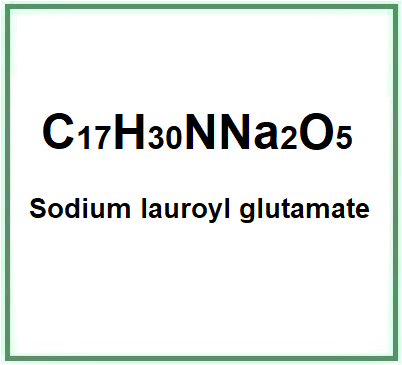
Sodium lauroyl glutamate
Rating : 8
| Evaluation | N. Experts | Evaluation | N. Experts |
|---|---|---|---|
| 1 | 6 | ||
| 2 | 7 | ||
| 3 | 8 | ||
| 4 | 9 | ||
| 5 | 10 |
17 pts from Ark90
| Sign up to vote this object, vote his reviews and to contribute to Tiiips.Evaluate | Where is this found? |
| "Sodium lauroyl glutamate studies" about Sodium lauroyl glutamate Review Consensus 16 by Ark90 (12536 pt) | 2026-Jan-15 12:20 |
| Read the full Tiiip | (Send your comment) |
The most important studies on Sodium lauroyl glutamate: properties, safety, phytochemistry.
Burnett CL, Heldreth B, Bergfeld WF, Belsito DV, Hill RA, Klaassen CD, Liebler DC, Marks JG Jr, Shank RC, Slaga TJ, Snyder PW, Andersen FA. Safety Assessment of Amino Acid Alkyl Amides as Used in Cosmetics. Int J Toxicol. 2017 May/Jun;36(1_suppl):17S-56S. doi: 10.1177/1091581816686048.
Abstract. The Cosmetic Ingredient Review Expert Panel (Panel) reviewed the product use, formulation, and safety data of 115 amino acid alkyl amides, which function as skin and hair conditioning agents and as surfactants-cleansing agents in personal care products. Safety test data on dermal irritation and sensitization for the ingredients with the highest use concentrations, lauroyl lysine and sodium lauroyl glutamate, were reviewed and determined to adequately support the safe use of the ingredients in this report. The Panel concluded that amino acid alkyl amides are safe in the present practices of use and concentration in cosmetics, when formulated to be nonirritating.
Chen Z, Liu J, Han Y. Rapid and sensitive determination of proteins by enhanced resonance light scattering spectroscopy of sodium lauroyl glutamate.
Talanta. 2007 Feb 28;71(3):1246-51. doi: 10.1016/j.talanta.2006.06.025.
Abstract. A rapid and sensitive method for the determination of proteins is proposed based on the measurements of the enhanced resonance light scattering (RLS) spectroscopy of sodium lauroyl glutamate (SLG). Under the optimum conditions, the interaction between SLG and proteins occurred rapidly, resulting in greatly enhanced RLS intensity with the maximum peak located at 394nm. It was found that the enhanced RLS intensities were in proportion to the concentrations of proteins in the range of 0.01-3.1mugml(-1) depending on the kind of proteins. The detection limits were below 6ngml(-1). Compared with some other methods for the determination of proteins, this method shows high sensitivity, low detection limit and simplicity. This is an inexpensive, simple and fast one-step procedure which requires only measuring the RLS intensities. Human serum samples were determined with satisfactory results.
Lee CH, Kawasaki Y, Maibach HI. Effect of surfactant mixtures on irritant contact dermatitis potential in man: sodium lauroyl glutamate and sodium lauryl sulphate.
Contact Dermatitis. 1994 Apr;30(4):205-9.
Abstract. Our purpose was to ascertain the irritant contact dermatitis potential of sodium lauroyl glutamate (SLG) and to assess its possible anti-irritating potential in a surfactant mixture on human skin, using visual scores and measurement of transepidermal water loss (TEWL). 15 healthy adult volunteers free of skin disease and with no history of atopic dermatitis were treated with sodium lauryl sulphate (SLS) solution (1%, 0.75%, 0.50%, 0.25%), 1% SLG solution, and 1% surfactant mixture solutions, M1 (75/25), M2 (50/50), M3 (25/50) (SLG/SLS). We applied 100 microliters of solution using a polypropylene chamber for 24 h. Application sites for each solution were randomized to minimize anatomical bias. We measured baseline TEWL before test solution application. After removal of the patches, each site was visually graded and TEWL recorded with an evaporimeter daily for 4 days. The visual scores and TEWL values of 1% SLG solutions were lower than those of the other test solutions, except the vehicle control (deionized water). 1% surfactant mixture solutions showed lower visual scores and TEWL values than 1% SLS solution. Increase of SLG concentration decreased the visual scores and TEWL values. Comparing the visual scores and TEWL values of M1 and 0.25% SLS solution, M2 and 0.50% SLS solution, and M3 and 0.75% SLS solution, M1, M2, and M3 showed lower values, although not statistically different. These findings suggest that SLG is a mild surfactant and its utilization can decrease irritation potential in SLS and possibly other mixtures. This model may offer a facile system for screening the surfactant and other mixtures for decreased irritancy potential.
Ariki R, Hirano A, Arakawa T, Shiraki K. Drug solubilization effect of lauroyl-L-glutamate.
J Biochem. 2012 Jan;151(1):27-33. doi: 10.1093/jb/mvr117.
Abstract. This article proposes a new technique for the solubilization of poorly soluble drugs using lauroyl-L-glutamate, which is one of the amino acid detergents, with additional small additives. Lauroyl-L-glutamate was highly effective in solubilizing long-chain alkyl gallates, e.g. dodecyl gallate. Furthermore, lauroyl-L-glutamate and small additives, particularly arginine, acted to increase the solubility of alkyl gallates. The synergistic effect was not observed by sodium dodecyl sulphate with arginine. The solubilizing system can be applied to other drugs because of the low toxicity of both lauroyl-L-glutamate and arginine.
Zaĭtsev AN, Rogozhin SV, Shatrov GN, Davidovich IuA, Rakhmanina NL Toxicological characteristics of disodium salt of N-lauroyl-L-glutamic acid--a surface-active agent used in the food processing industry. Vopr Pitan. 1984 Jul-Aug;(4):58-60.
Abstract. To synthesize the disodium salt of N-lauroyl-L-glutamic acid (LG-Na2), use was made of the chloranhydride method with some modifications. The yield of the product was 85%. LG-Na2 possesses good surface-active properties and an emulsifying effect. The critical concentration of micelloformation of LG-Na2 is 6 10(-3) mol/l. LG-Na2 is a non-toxic compound. It is not cumulated in the animals' body. The LD50 for albino rats per os exceeds 10 000 mg/kg, that for mice 6500 mg/kg. It was shown in subacute experiments in rats that LG-Na2 did not produce any substantial influence on the animals' status or on some biochemical and morphological indicators of blood and organs. The authors suggest a tentative level of a safe oral action of LG-Na2 on man (10 mg per kg bw/day). LG-Na2 is likely to be widely used in food industry.
| Sign up to vote this object, vote his reviews and to contribute to Tiiips.EvaluateClose | (0 comments) |
| "Descrizione" about Sodium lauroyl glutamate Review Consensus 17 by Ark90 (12536 pt) | 2026-Jan-15 12:16 |
| Read the full Tiiip | (Send your comment) |
Sodium lauroyl glutamate: properties, uses, pros, cons, safety
Sodium lauroyl glutamate is a mild anionic surfactant derived from natural sources such as coconut oil and glutamic acid, an amino acid. It is commonly used in skincare, haircare, and personal hygiene products for its excellent cleansing, foaming, and emulsifying properties. Sodium lauroyl glutamate is known for being gentle on the skin, making it suitable for sensitive skin and baby care products. It is biodegradable and considered eco-friendly due to its natural origin and gentle profile.
Chemical Composition and Structure
Sodium lauroyl glutamate is the sodium salt of lauroyl glutamic acid, which is formed by combining lauric acid (a fatty acid) with glutamic acid. The structure consists of a hydrophobic lauric acid chain and a hydrophilic glutamate group, making it an effective surfactant that can reduce surface tension and help oil and water mix in formulations.
Physical Properties
Sodium lauroyl glutamate typically appears as a white or off-white powder or granules. It is highly soluble in water and creates a rich, creamy foam when used in cleansers or shampoos. Due to its mild nature, it is non-irritating to the skin and eyes, making it ideal for products formulated for sensitive or delicate skin. It is also stable across a wide pH range, making it versatile for various cosmetic formulations.

Production Process
The production of sodium lauroyl glutamate involves the following steps:
Raw Material Extraction: Lauric acid is extracted from coconut oil or palm kernel oil, and glutamic acid is obtained from natural fermentation processes.
Reaction: Lauric acid is combined with glutamic acid, followed by neutralization with sodium hydroxide to form sodium lauroyl glutamate.
Purification: The final product is purified and dried, resulting in a high-quality surfactant ready for use in cosmetic formulations.
Formulation: Sodium lauroyl glutamate is incorporated into personal care products for its gentle cleansing and foaming properties.
Applications
Cleansers: Sodium lauroyl glutamate is widely used in facial cleansers, body washes, and hand soaps due to its ability to cleanse the skin without stripping natural oils. It is especially suitable for sensitive and dry skin types.
Shampoos and Hair Care: In shampoos, it provides gentle cleansing while maintaining scalp health, leaving the hair soft and manageable. It is commonly found in sulfate-free shampoos.
Baby Care Products: Because of its mildness, sodium lauroyl glutamate is often included in baby shampoos, bath products, and wipes, ensuring safe and gentle cleansing for delicate skin.
Makeup Removers: In makeup removers and micellar waters, sodium lauroyl glutamate helps to dissolve and remove makeup and impurities without causing irritation.
INCI Functions:
Antistatic agent. Static electricity build-up has a direct influence on products and causes electrostatic adsorption. The antistatic ingredient reduces static build-up and surface resistivity on the surface of the skin and hair.
Hair conditioning agent. A large number of ingredients with specific purposes can co-exist in a hair shampoo: cleansers, conditioners, thickeners, mattifying agents, sequestering agents, fragrances, preservatives, special additives. However, the indispensable ingredients are the cleansers and conditioners as they are necessary and sufficient for hair cleansing and manageability. The others act as commercial and non-essential auxiliaries such as: appearance, fragrance, colouring, etc. Hair conditioning agents have the task of increasing shine, manageability and volume, and reducing static electricity, especially after treatments such as colouring, ironing, waving, drying and brushing. They are, in practice, dispersing agents that may contain cationic surfactants, thickeners, emollients, polymers. The typology of hair conditioners includes: intensive conditioners, instant conditioners, thickening conditioners, drying conditioners.
Surfactant - Cleansing agent. Cosmetic products used to cleanse the skin utilise the surface-active action that produces a lowering of the surface tension of the stratum corneum, facilitating the removal of dirt and impurities.
Environmental and Safety Considerations
Sodium lauroyl glutamate is considered safe for use in personal care products. It is non-irritating, non-sensitizing, and suitable for all skin types, including sensitive skin. Additionally, it is biodegradable, making it an environmentally friendly option compared to harsher synthetic surfactants. The natural origin of its raw materials also contributes to its eco-friendly profile. It is often included in formulations that emphasize sustainability and gentle care.
It is an antistatic surfactant of vegetable origin used as an adjuvant to other surfactants to increase its tolerability on delicate skin
Sodium lauroyl glutamate has proved to be a relatively low-aggressive surfactant on the skin (1).
| Appearance | White powder |
| Boiling Point | 543.6ºC at 760 mmHg |
| Flash Point | 282.6ºC |
| PSA | 106.53000 |
| LogP | 2.39770 |
| Chemical Safety | ![]() |
![]() | ![]() |
![]() | ![]() |
Synonyms:
References________________________________________________________________________
(1) Corazza M, Lauriola MM, Bianchi A, Zappaterra M, Virgili A. Irritant and sensitizing potential of eight surfactants commonly used in skin cleansers: an evaluation of 105 patients. Dermatitis. 2010 Sep-Oct;21(5):262-8.
Abstract. Background: Irritation from surfactants contained in detergents is a frequent adverse reaction to cosmetics. Sensitization to surfactants is also possible. In the literature, comparative studies about irritant and sensitizing potential of different surfactants are heterogeneous and inconclusive about the best molecules to use. Objectives: We compared the irritant and sensitizing potential of some surfactants that are usual components in marketed synthetic detergents (syndets) to obtain practical information regarding commonly used detergents.....Conclusion: From this study, we deduce that cosmetic companies' efforts to search for and market new products with very mild surfactants have been generally successful.
| Sign up to vote this object, vote his reviews and to contribute to Tiiips.EvaluateClose | (0 comments) |
Read other Tiiips about this object in __Italiano (3)
Component type:   Chemical Main substances:   Last update:   2019-05-30 08:02:13 | Chemical Risk:   |

