



Coarse salt
Description
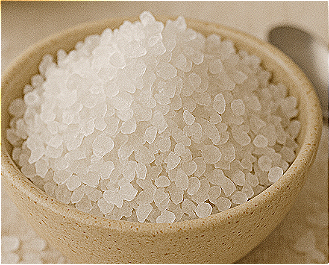
Coarse salt consists predominantly of crystallised sodium chloride in medium-to-large granules, obtained by evaporation of seawater or brine (sea salt) or by mining and subsequent crushing (rock salt). It appears as irregular, angular crystals, white or slightly opalescent, odourless, with an intense salty taste. It is mainly used in cooking (boiling water for pasta, vegetables and legumes, brines, salt crusts) and for various technological and domestic applications.
Indicative nutritional values per 100 g
Energy: 0 kcal
Water: 0–2 g (residual moisture)
Carbohydrates: 0 g
Protein: 0 g
Total fat: 0 g
SFA (saturated fatty acids): 0 g
MUFA (monounsaturated fatty acids): 0 g
PUFA (polyunsaturated fatty acids): 0 g
Fibre: 0 g
Sodium: ≈ 38–40 g (as Na⁺)
Chloride: ≈ 60 g (as Cl⁻)
Possible traces of other minerals (magnesium, calcium, potassium) depending on origin and refining degree
Key constituents
Sodium chloride (NaCl): main constituent (> 97–99%)
Traces of magnesium chloride, calcium chloride, sulphates and potassium salts (more evident in less-refined sea salt)
Possible authorised anti-caking agents in table salt for household use
In iodised salt: added potassium iodide or iodate in regulated amounts
Production process
Coarse sea salt
Seawater intake into coastal saltpans
Solar evaporation in a series of ponds until NaCl crystallises
Mechanical harvesting of salt crystals
Possible washing, draining and drying
Crushing and sieving to obtain the coarse granulometry
Possible addition of iodine and anti-caking agents
Packaging in bags, boxes or other food-grade containers
Coarse rock salt (halite)
Mining (mechanical extraction or solution mining and recrystallisation)
Crushing, purification and size grading
Possible iodisation
Packaging for food or technical uses (food-grade salt is clearly distinguished from technical salt)
Physical properties
Appearance: irregular angular crystals
Colour: white, sometimes slightly greyish or off-white in less-refined salts
Solubility: highly soluble in water
High melting point (relevant mainly for technical uses)
Hygroscopic: tends to absorb moisture and form lumps
Bulk density depends on crystal size and packing
Sensory and technological properties
Taste: intensely salty, free from foreign odours and flavours in good-quality products
Provides saltiness and enhances overall flavour perception (emphasises aromas and sweetness, moderates bitterness)
In cooking, coarse crystals allow gradual dissolution in water or brine
Ideal for salt-crust cooking, brines, pickling and curing
Less-refined sea salt may give slightly more complex flavour due to minor minerals
Food applications
Salting boiling water for pasta, rice, vegetables and legumes
Preparation of brines and saline solutions for preserves and pickles
Salt-crust baking of fish and meat
Curing and marinating (in combination with other ingredients and technologies)
Industrial uses (often after further grinding) in baking, meat products, cheese and vegetable canning
Nutrition & health
Coarse salt is essentially a source of sodium; excessive intake is associated with an increased risk of high blood pressure and cardiovascular disease.
Health guidelines recommend limiting total salt intake from all sources and choosing less-salty products whenever possible.
Iodised salt contributes to iodine intake, important for thyroid function, especially in regions with low dietary iodine.
It does not provide energy, protein, fat or fibre; the contribution of other minerals is nutritionally marginal compared with sodium.
Portion note
For adults, a commonly recommended upper limit for total salt (coarse + fine, added + “hidden” in foods) is less than 5 g per day. For good health, it is advisable to stay below this level, progressively reducing the amount of salt used in cooking and at the table.
Allergens and intolerances
Coarse salt does not contain any of the major allergens listed in EU legislation.
No specific intolerances to sodium chloride are known in healthy individuals; however, people with certain medical conditions (hypertension, kidney disease, heart failure, specific endocrine disorders) must follow medical advice on sodium restriction.
Storage and shelf-life
Store in a dry place, away from humidity, strong odours and contaminants.
Keep the container tightly closed to prevent caking and odour absorption.
Coarse salt is a very long shelf-life product; in practice it is stable for years. Any “best-before” date usually refers to regulatory and packaging aspects (and iodine stability in iodised salt) rather than to actual spoilage.
Safety and regulatory aspects
Table salt is subject to EU and national regulations regarding purity, iodisation, contaminants and additives.
Limits apply for heavy metals and insoluble impurities.
Production must follow GMP and HACCP principles, with checks on NaCl content, iodine level (if present) and possible contaminants.
Salt intended for food use must be clearly distinguishable and kept separate from salt for technical or industrial uses.
Labelling
Sales name: “coarse salt”, “coarse sea salt” or “coarse edible salt”, depending on origin.
Clear indication if iodised (and which iodine compound is used).
Ingredient list (salt, authorised anti-caking agents, iodide/iodate where present).
Net weight.
Name or business name and address of the responsible food business operator.
Lot code and best-before date, where applicable.
Any specific use instructions or limitations (e.g. where not suitable for certain technical applications).
Troubleshooting
Lumping/caking → exposure to high humidity; improve closure of the container and storage conditions.
Foreign odours → salt has absorbed environmental odours; store away from strongly scented substances (detergents, spices, etc.).
Abnormal colour (yellowish or greyish spots) → possible impurities or contamination; check supplier and product quality.
Slow dissolution → crystals excessively large or caked; grinding or crushing before use can improve solubility.
Sustainability and supply chain
Solar sea-salt production has relatively low energy demand, but requires large saltpan surfaces and careful management of local ecosystems.
Rock-salt mining can be more energy-intensive and involves extractive operations; environmental impact depends on mining and processing technologies.
Well-managed saltpans can provide valuable habitats for birds and biodiversity.
Packaging (paper bags, cardboard boxes, plastic sacks) is largely recyclable; choosing more sustainable materials improves the product’s environmental profile.
Transparent supply chains help distinguish high-quality food-grade salt from non-food technical products.
Main INCI functions (cosmetics)
In cosmetics, salt (e.g. Sodium Chloride, Maris Sal) is commonly used as:
Viscosity modifier in shampoos and cleansers (to adjust thickness of surfactant systems)
Astringent and toning agent in baths and spa products
Mechanical exfoliant in body scrubs and foot baths (especially coarse or medium grain)
Stabilising agent for some emulsions and surfactant systems
Component of bath salts and spa products, contributing to osmotic effects on the skin
Conclusion
Coarse salt is a fundamental ingredient in both domestic cooking and the food industry, thanks to its ability to provide saltiness, support preservation and enable numerous technological processes (brining, curing, salt-crust baking). From a nutritional perspective, it acts almost exclusively as a sodium source, so overall intake should be moderated within a balanced diet. Coarse salt also plays a role in cosmetics as an exfoliant and functional ingredient. Careful management of production methods, quality control and packaging helps ensure product safety, quality and a controlled environmental impact.
Mini-glossary
SFA – Saturated fatty acids; excessive intake is associated with increased cardiovascular risk (not present in salt).
MUFA – Monounsaturated fatty acids; generally beneficial for lipid profile (not present in salt).
PUFA – Polyunsaturated fatty acids; involved in cellular and anti-inflammatory processes (not present in salt).
GMP – Good Manufacturing Practices; industrial production rules ensuring hygiene and proper processing.
HACCP – Hazard Analysis and Critical Control Points; system for managing food-safety hazards.
MRL – Maximum Residue Level; maximum allowed level for certain contaminants or residues where applicable.
BOD/COD – Biochemical/Chemical Oxygen Demand; indicators of organic load in wastewater, used to assess environmental impact of industrial effluents.
Studies
It is recommended to reduce salt consumption as it may cause damage to the cardiovascular system and increase the values of harmful LDL-cholesterol and cause hypertension, obesity and other serious diseases, but there is also diet salt on the market, with a lower percentage of sodium.
'Salt killer'. This was the title of a well-known and authoritative American newspaper some time ago, explaining in detail the reasons why the overuse of common table salt could cause serious damage to health. In fact, salt is found naturally in almost all foods, so we absorb it daily, but heavy consumption can damage the human body.
Hypertension: The relationship between salt and hypertension is unequivocal (1), and especially for the elderly, consumption must be reduced (2). For young people, the problems may be minor, but still exist (3).
Obesity : High salt consumption is associated with overweight and obesity (4).
Drinks and chips : The amount of salt in drinks, crisps etc. should be controlled, as the combination of salt and sugar (as not only sugar is included, but fructose, dextrose and others) can increase the risk associated with high salt consumption (5).
Osteoporosis: In this study, despite press campaigns to advise against salt consumption, the results proved rather disappointing (6). The title of the article sums it up well: Important element, but invisible threat.
So, to summarise, salt is an indispensable element, but one must be very careful not to abuse it.
Salt is used as a food preservative
Cosmetics
In cosmetics, sodium chloride has the function of increasing the moisturising efficacy of ageing skin, is a thickener in shampoos and conditioners, but is also a co-factor in the eye irritation experienced with most shampoos and can cause dryness and itching of the scalp (7). Skin sodium is a pathophysiological feature of psoriasis (8), a chronic inflammatory skin disease, so high concentrations of sodium chloride should not be present in cosmetic products.
Medical
Sodium chloride is used in numerous medical and pharmaceutical applications: preservative, hypertonic salt solution in conjunction with dextran, production of interleukin-4, antibacterial with biocidal effect against Staphylococcus aureus (9).
Human epidermal stem cells can be stored in anhydrous sodium chloride at room temperature for months as well as some resident immune cells and skin fibroblasts (10).
In the following link you will find the best studies on salt and its health profile.
Sale ed obesità (italian)
Controllare il consumo del sale (italian)
Typical commercial product characteristics Sodium Chloride
| Appearance | White powder |
| Boiling Point | 1461 ºC |
| Melting Point | 801°C(lit.) |
| Flash Point | 1413°C |
| Density | 2.165 1.199 g/mL at 20 °C |
| Refraction Index | n20/D 1.378 |
| Water Solubility | 360 g/L (20 ºC) |
| Storage | +15C to +30C |
| Potassium Iodate | 35±15(20-50) mg/kg |
| Potassium ferrocyanide | ≤10.0 |
| Pb | ≤1.0 |
| As | ≤0.5 |
| F | ≤5.0 |
| Fe | ≤0.0002 |
| Ferrous cyanide | ≤0.0001 |
| Ba | ≤15 |
| Nitrogen | ≤0.001 |
| Sulfate | ≤0.002 |
| Nitrite | 0 |
| Safety | 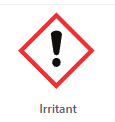 |
 | |
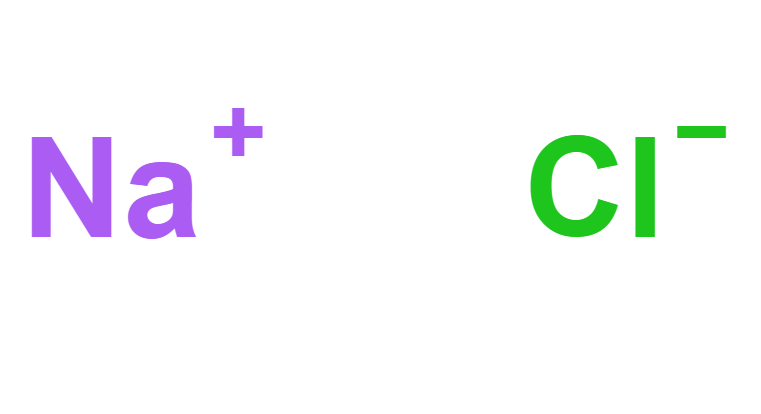 |  |
- Molecular Formula NaCl ClNa
- Molecular Weight 58.44
- Exact Mass 57.958622
- CAS 7647-14-5
- UNII 451W47IQ8X
- EC Number 231-598-3
- DSSTox Substance ID DTXSID3021271 DTXSID6040379 DTXSID501033754
- IUPAC sodium;chloride
- InChI=1S/ClH.Na/h1H;/q;+1/p-1
- InChl Key FAPWRFPIFSIZLT-UHFFFAOYSA-M
- SMILES [Na+].[Cl-]
- MDL number MFCD00003477
- PubChem Substance ID 329824637
- ChEBI 26710
- RXCUI 9863
- NSC 77364
- RTECS VZ4725000
- NCI C29974 C821
- Beilstein 3534976
- NACRES NA.21
Synonyms
- Sodium chloride
- Salt

