

Hello, Guest!


  Objects Tiiips Categories
Modified Potato Starch
"Descrizione"
by Al222 (24881 pt)
2025-Nov-03 09:13

Modified potato starch

Description

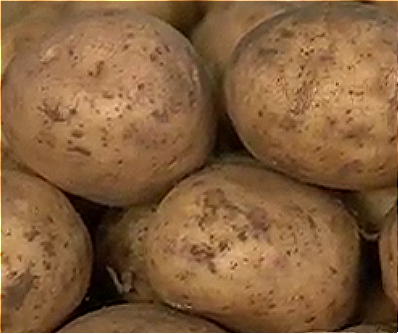
  • Refined starch obtained from Solanum tuberosum tubers and then physically, enzymatically, or chemically modified to tailor performance.

  • Typical modifications: pregelatinization (instant, cold-swelling), cross-linking (heat/acid/shear stability), esterification/etherification (e.g., acetylated, hydroxypropyl, phosphate), oxidation, and octenyl succination (OSA) for surface activity.

  • Sensory profile: neutral taste, white color, glossy to opaque pastes depending on type; clean flavor with low residuals when properly processed.
Caloric value (per 100 g of product)

  • Dry powder: ~330–360 kcal; almost entirely carbohydrate.

  • As used in foods: at typical inclusion levels (2–6% in sauces, fillings, beverages), the energy contribution per serving is modest. Certain resistant starches (e.g., some RS4) have reduced digestibility and may be counted as dietary fiber according to local regulations.

Key constituents

  • Amylose (~20%) and amylopectin (~80%) polymers; potato starch also contains natural phosphate monoesters that promote swelling and clarity.

  • Trace proteins, lipids, and minerals (generally very low after refining).

  • In modified types, a small degree of substitution (DS) with groups such as acetyl, hydroxypropyl, phosphate, or octenyl succinate governs performance.

Production process

  • Extraction: washing, rasping of tubers, separation of fiber and juice, starch milk refining, dewatering and drying to a fine powder.

  • Modification routes:

    • Physical: heat treatment, pregelatinization and drying to make instant starch.

    • Enzymatic: limited depolymerization or debranching for specific textures.

    • Chemical (food-grade): mild cross-linking (e.g., phosphate), esterification/etherification (acetylated, hydroxypropyl), oxidation, or OSA treatment for emulsifying properties.

  • Post-processing: washing/neutralization (to remove residual reagents), drying, milling, and quality control; labeling as modified potato starch with the appropriate designation permitted by local law.

Sensory and technological properties

  • Thickening and gelling: rapid viscosity build; pregelatinized types thicken in cold water.

  • Heat/acid/shear stability: cross-linked grades resist breakdown in retorted, acidic, or pumped foods.

  • Freeze–thaw stability: acetylated and hydroxypropyl types limit retrogradation and syneresis, improving frozen desserts, sauces, and fillings.

  • Clarity and sheen: potato starch is naturally clear and glossy; certain modifications increase opacity for creamy appearance.

  • Emulsification: OSA starch provides emulsifying and encapsulation performance in beverages, flavors, and powdered oils.

  • Instant functionality: pregelatinized grades offer instant thickening for dry mixes and no-cook products.

Culinary and industrial uses

  • Soups, sauces, gravies, canned and retorted foods (stable viscosity under heat/acid).

  • Bakery fillings, fruit preparations, dairy analogs, and frozen meals (reduced syneresis).

  • Beverages and flavor systems (OSA for stable oil-in-water emulsions and spray-dry encapsulation).

  • Gluten-free baking as a bulking/texture improver; coatings for crispness.

  • Meat and plant-based products as a binder and water-holding aid.

Nutrition and health

  • Predominantly starch carbohydrate; fat and protein are minimal.

  • Glycemic impact depends on processing: fully cooked native starch is rapidly digestible, whereas cooled/retrograded (RS3) or certain chemically modified (RS4) forms can behave as fiber, potentially supporting satiety and glycemic moderation.

  • Allergen profile: naturally gluten-free; typically well tolerated.

  • Regulatory status: food-grade modified starches are generally GRAS/approved when used under good manufacturing practice.

Quality and specifications (typical topics)

  • Moisture (≈10–14%), whiteness, particle size, and pH (slurry).

  • Viscosity profiles (e.g., RVA/Brabender), gel strength, freeze–thaw and acid/heat/shear performance per grade.

  • Degree of substitution/cross-linking, ash, and residuals within food-law limits.

  • Microbiology: compliant for low-moisture powders; absence of pathogens; low water activity.

  • Contaminants: pesticides/metals within legal limits; free of foreign matter.

Storage and shelf life

  • Store cool, dry, and dark in sealed packaging; avoid humidity to prevent caking.

  • Typical shelf life 18–36 months depending on grade/pack; rotate stock (FIFO).

  • Protect pregelatinized powders from moisture pickup; reseal promptly after opening.

Allergens, safety, and handling

  • Gluten-free; not a major allergen.

  • Powder handling: mitigate dust (masking/ventilation) and dust-explosion risk; follow GMP/Hygiene practices.

  • For consumer products, declare modified potato starch and any specific type as required by jurisdiction.

INCI functions in cosmetics

  • Common entries: Solanum Tuberosum (Potato) Starch, Hydroxypropyl Starch Phosphate, Sodium Starch Octenylsuccinate, Aluminum Starch Octenylsuccinate.

  • Roles: absorbent, anti-caking, bulking, viscosity-increasing, mattifying/skin-feel enhancer; also emulsifying aid for OSA derivatives. Use at low to moderate levels with safety assessment and claim substantiation.

Troubleshooting

  • Lumping in mixes: disperse into sugar/oil, or add to vigorous agitation; for instant grades, control shear.

  • Thin-out during cooking/retort: switch to cross-linked grade; optimize pH and solids.

  • Syneresis/weeping on freeze–thaw: use acetylated/hydroxypropyl starch; increase solids or add hydrocolloids.

  • Dull appearance: select a clear, low-retrogradation grade; adjust cook profile.

  • Poor emulsion stability: choose OSA starch with suitable DE/DS; optimize oil phase and homogenization.

Sustainability and supply chain

  • Potato processing allows by-product valorization (fiber and protein streams); manage process effluents to BOD/COD targets.

  • Favor efficient water/energy use, recyclable packaging, and robust traceability under GMP/HACCP.

  • Physical or enzymatic modifications can reduce chemical footprint where performance permits.

Conclusion

Modified potato starch is a versatile, label-friendly texture system offering precise control of thickening, stability, freeze–thaw performance, and emulsification. Selecting the appropriate modification—from cross-linking to acetylation, hydroxypropylation, OSA, or pregelatinization—allows manufacturers and chefs to hit the desired texture, clarity, and process tolerance while maintaining a clean flavor and reliable shelf life.

Mini-glossary

  • DSDegree of substitution: average number of substituent groups per glucose unit; governs functionality and labeling.

  • OSAOctenyl succinic anhydride (starch): hydrophobically modified starch with emulsifying/encapsulation properties.

  • RS3Retrograded resistant starch: forms on cooling; behaves like fiber, aiding satiety and glycemic moderation.

  • RS4Chemically modified resistant starch: cross-linked or substituted; reduced digestibility, often counted as fiber.

  • RVARapid Visco Analyzer: instrument measuring pasting/viscosity profiles.

  • GMP/HACCPGood Manufacturing Practice / Hazard Analysis and Critical Control Points: preventive hygiene systems with validated CCPs.

  • BOD/CODBiochemical/Chemical Oxygen Demand: indicators of wastewater organic load and environmental impact.

  • FIFOFirst In, First Out: stock-rotation practice to maintain quality.

References__________________________________________________________________________

Zhang Z, Tian J, Fang H, Zhang H, Kong X, Wu D, Zheng J, Liu D, Ye X, Chen S. Physicochemical and Digestion Properties of Potato Starch Were Modified by Complexing with Grape Seed Proanthocyanidins. Molecules. 2020 Mar 3;25(5):1123. doi: 10.3390/molecules25051123. 

Abstract. Dietary intake of potato starch could induce a dramatic increase in blood glucose and is positively associated with chronic metabolic diseases (type II diabetes, cardiovascular disease, etc.). Grape seed proanthocyanidins (GSP) are known to decrease starch digestion by inhibiting digestive enzymes or changing the physicochemical properties of starch. In the present study, GSP were complexed with potato starch to prepare polyphenol-starch complexes. The physiochemical properties and digestibility of complexes were investigated by in vitro digestion model, X-ray diffraction, differential scanning calorimetry, rapid visco analyzer, Fourier transform infrared spectroscopy as well as texture profile analysis. Results indicated that the peak viscosity, breakdown, trough, and setback of the complexes disappeared, replaced by a special continuous increase in paste viscosity. The complexes showed a lower final viscosity and higher thermal stability with the increasing binding amount of GSP. GSP decreased the hardness of the complexes' gel significantly. FT-IR indicated that GSP might interact with potato starch through noncovalent forces. Additionally, the complexes also showed a higher content of slowly digestible starch and resistant starch than that of the native starch. Thus, we inferred that the addition of GSP could modify the digestibility of potato starch and be an optional way to modify the starch with lower digestion.

Zhang Y, Chen L, Yu K, Dai Y, Wang L, Ding X, Hou H, Wang W, Zhang H, Li X, Dong H. Mechanochemical effect of ultrasound on sweet potato starch and its influence mechanism on the quality of octenyl succinic anhydride modified starch. Food Sci Technol Int. 2020 Apr;26(3):254-264. doi: 10.1177/1082013219883054. 

Abstract. The purpose of this study is to reveal the mechanism of preparing high quality modified starch by ultrasonic technology. In this paper, ultrasonic modified starch and octenyl succinic anhydride modified starch with low degree of substitution were prepared under ultrasonic conditions, using sweet potato starch as raw material. The effects of ultrasound on the structure and properties of native sweet potato starch were studied to see whether ultrasound could produce mechanochemical effect on starch. Then the mechanism of ultrasonic effect on quality of octenyl succinic anhydride modified starch was studied by mechanochemical effect. The results showed that after ultrasonic treatment for 1 min, the crystallinity decreased from 37.6 to 33.8% and reaction efficiency increased from 49.43 to 54.39%, while after ultrasonic treatments for 8 and 32-60 min had different changes. These changes showed that ultrasonic treatment produced significant mechanochemical effect on native sweet potato starch. Ultrasound significantly improved the quality of octenyl succinic anhydride modified starch, and its influence mechanism was revealed using the theory of mechanochemistry. This study provides a feasible method for the research of high quality modified starch and lays a theoretical foundation for expanding the application of ultrasound in various fields.

Ebihara K, Shiraishi R, Okuma K. Hydroxypropyl-modified potato starch increases fecal bile acid excretion in rats. J Nutr. 1998 May;128(5):848-54. doi: 10.1093/jn/128.5.848. 

Abstract. The effects of hydroxypropyl potato starches (HPS) of three different degrees of substitution (DS) on concentration of plasma cholesterol, apparent digestibility of protein, fecal excretion of bile acids, fecal output and cecal pool of organic acids such as acetic, propionic, butyric, lactic and succinic acid were studied in rats in Experiment 1. In Experiment 2, the effects of hydroxypropyl distarch phosphate (HDP) of three different degrees of cross-linking (DC) on the same indexes were studied. Gelatinized potato starch that was not modified chemically (PS) was used as a control. Rats were fed a fiber-free, purified diet containing either HPS, HDP or PS (100 g/kg) for 21 d. In each experiment, fecal output was greater and fecal excretion of bile acids was higher in rats fed the HPS diets with higher DS and the HDP diets compared with control rats fed the PS diet. Apparent protein digestibility in rats fed the HPS diets with higher DS and the HDP diets with higher DC was lower than that in control rats fed the PS diet. The pool size of cecal organic acids was not affected by diet. In Experiment 1, apparent protein digestibility, fecal output and fecal bile acids excretion were significantly correlated with DS (r = -0.994, P = 0.0059; r = 0.976, P = 0.0236; and r = 0.899, P = 0.0077, respectively). The plasma cholesterol concentration was significantly lower in rats fed the HPS diets than in control rats fed the PS diet. The HPS diets resulted in higher proportions of propionic acid, lactic acid and succinic acid and a lower proportion of n-butyric acid than the PS diet. In Experiment 2, apparent protein digestibility was significantly correlated with DSP (r = 0.996, P = 0.0028), which was inversely related to DC. The HDP diets did not affect the plasma cholesterol concentration. The HDP diets resulted in higher proportions of acetic acid, lactic acid and succinic acid and a lower proportion of n-butyric acid than the PS diet. These results suggest that the physiological effects of chemically modified starches are affected by the type of modification.

Xu X, Huang XF, Visser RG, Trindade LM. Engineering Potato Starch with a Higher Phosphate Content. PLoS One. 2017 Jan 5;12(1):e0169610. doi: 10.1371/journal.pone.0169610.

Abstract. Phosphate esters are responsible for valuable and unique functionalities of starch for industrial applications. Also in the cell phosphate esters play a role in starch metabolism, which so far has not been well characterized in storage starch. Laforin, a human enzyme composed of a carbohydrate-binding module and a dual-specificity phosphatase domain, is involved in the dephosphorylation of glycogen. To modify phosphate content and better understand starch (de)phosphorylation in storage starch, laforin was engineered and introduced into potato (cultivar Kardal). Interestingly, expression of an (engineered) laforin in potato resulted in significantly higher phosphate content of starch, and this result was confirmed in amylose-free potato genetic background (amf). Modified starches exhibited altered granule morphology and size compared to the control. About 20-30% of the transgenic lines of each series showed red-staining granules upon incubation with iodine, and contained higher phosphate content than the blue-stained starch granules. Moreover, low amylose content and altered gelatinization properties were observed in these red-stained starches. Principle component and correlation analysis disclosed a complex correlation between starch composition and starch physico-chemical properties. Ultimately, the expression level of endogenous genes involved in starch metabolism was analysed, revealing a compensatory response to the decrease of phosphate content in potato starch. This study provides a new perspective for engineering starch phosphate content in planta by making use of the compensatory mechanism in the plant itself.


Evaluate