



Octatrienoic Acid – INCI antioxidant, identification data, cosmetic use levels, and formulation guidance
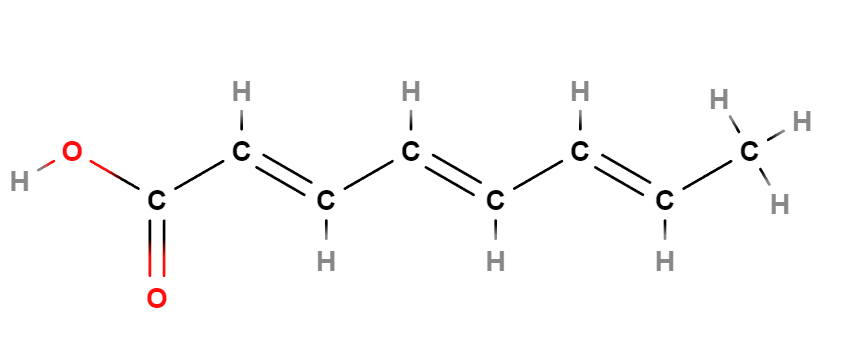
Octa-2,4,6-trienoic acid – C₈H₁₀O₂
Synonyms: 2,4,6-octatrienoic acid, octa-2,4,6-trienoic acid
INCI / functions: antioxidant
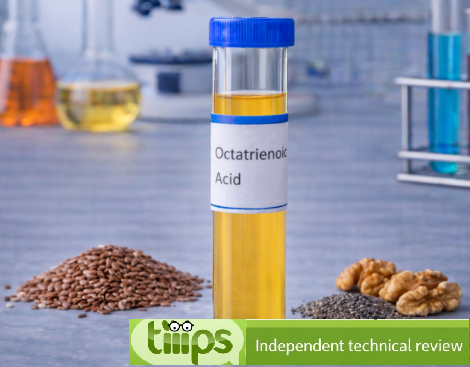
Definition
Octatrienoic acid (INCI: Octatrienoic Acid) is an organic unsaturated carboxylic acid (a short-chain trienoic acid) used in cosmetics primarily for its antioxidant role, i.e., to help limit oxidation-driven deterioration of ingredients and support overall formula stability. From a compositional standpoint, the ingredient is mainly the single molecule octa-2,4,6-trienoic acid; depending on grade, it may contain controlled trace impurities related to synthesis and handling (within supplier specifications).
A frequent point of confusion is the similarity of names with α-linolenic acid (often called “octadecatrienoic acid”): that is a C18 fatty acid and is not the same chemical as INCI Octatrienoic Acid.
Food: not a typical food ingredient; primarily a chemical/cosmetic material.
Cosmetics: antioxidant in leave-on and rinse-off formulations, usually at low levels.
Medicine: mainly of research/technical interest; not a standard medical-use substance.
Pharmaceutical: potential technical/research relevance; any application depends on grade and dossier.
Industrial use: chemical intermediate/research chemical; potential use where oxidative stability support is needed (sector-dependent).
The name describes the structure of the molecule:
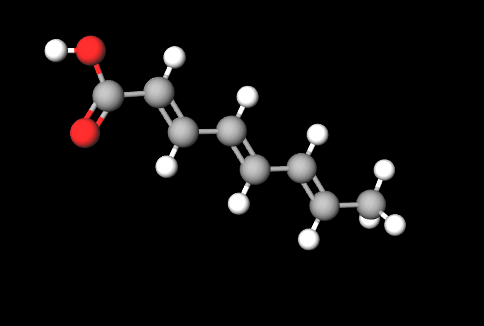
- Octatrienoic. This indicates the presence of an eight-carbon chain with three conjugated double bonds, thus forming a triene-type structure.
- Acid. This indicates that the molecule contains a carboxylic group (-COOH), giving the molecule acidic properties.
Chemical Industrial Synthesis Process
The production of Octatrienoic Acid, also known as α-linolenic acid (ALA), an essential polyunsaturated fatty acid in the omega-3 series, involves a process that mainly includes extraction from natural sources, as this compound is abundant in nature in vegetable oils such as flaxseed oil, chia oil, hemp oil, and in certain types of nuts and seeds. Here is a detailed overview of the process.
- Selection. The first stage in the production of Octatrienoic Acid involves selecting plant sources rich in this fatty acid, such as flaxseeds, chia seeds, or nuts.
- Extraction. Oil is extracted from the seeds or nuts using cold pressing or solvent extraction. Cold pressing is preferred to preserve the nutritional properties of the oil, while solvent extraction can increase the yield of extracted oil.
- Refining. The crude oil extracted is then refined to remove impurities, undesired odors, and flavors. This may include processes such as decanting, neutralization, bleaching, and deodorization.
- Isolation. If necessary, octatrienoic acid can be isolated from the refined oil through fractionation, vacuum distillation, or chromatography processes to achieve a higher concentration of this specific fatty acid.
- Quality Control. Octatrienoic acid, whether as a component of the oil or in isolated form, undergoes quality control checks to verify purity, fatty acid concentration, and the absence of contaminants. These tests can include gas chromatography (GC) and spectroscopy.
Calories (energy value)
| Metric | Value |
|---|---|
| Energy value (100 g) | ~900 kcal (order-of-magnitude estimate for organic acids; not a use-relevant parameter) |
| Technical note | Used at very low levels in cosmetics, so the energy impact in finished products is negligible |
Identification data and specifications
| Parameter | Value |
|---|---|
| INCI | Octatrienoic Acid |
| Chemical name | octa-2,4,6-trienoic acid |
| Molecular formula | C₈H₁₀O₂ |
| Molar mass | 138.17 g/mol |
| CAS number | 5205-32-3 |
| EC number | Not listed/assigned in major EC inventory references for this identifier (verify on the supplier SDS/CoA) |
| FDA UNII (reference identifier) | 702XZO95X4 |
| Naming clarification | How to avoid mistakes |
|---|---|
| Octatrienoic acid (this ingredient) | C₈H₁₀O₂, CAS 5205-32-3 |
| α-linolenic acid (octadeca-9,12,15-trienoic acid) | C₁₈H₃₀O₂, different substance and different INCI naming |
Key constituents
| Constituent class | Main component(s) | Notes |
|---|---|---|
| Unsaturated carboxylic acid | octa-2,4,6-trienoic acid | primary driver of the ingredient’s antioxidant positioning |
| Controlled traces | synthesis/handling-related impurities | relevant for QC; typically low within specification |
Physicochemical properties (practical focus)
| Property | Indicative value |
|---|---|
| Physical state | typically liquid or low-melting material (grade-dependent) |
| Water solubility | generally low; depends on solvent system and formulation approach |
| Solubility | better in suitable organic solvents and fragrance/solvent phases |
| Oxidation sensitivity | unsaturated structure can be oxidation-sensitive; handle with good storage practices |
Functional role in formulation
| Function | What it does in the formula | Operational notes |
|---|---|---|
| Antioxidant | helps limit oxidation-driven degradation of susceptible ingredients | performance depends on dose, co-antioxidants, packaging, and oxygen exposure |
Antioxidant agent. Ingredient that counteracts oxidative stress and prevents cell damage. Free radicals, pathological inflammatory processes, reactive nitrogen species and reactive oxygen species are responsible for the ageing process and many diseases caused by oxidation.
Formulation compatibility
| System | Compatibility | Control notes |
|---|---|---|
| O/W emulsions | to be assessed | incorporate via oil phase or suitable solubilization; check stability and odor over time |
| Surfactant systems (rinse-off) | often compatible | verify clarity and potential odor drift in the presence of surfactants |
| Clear gels | sensitive | solubilization and polymer interactions can affect clarity/viscosity |
| Preservatives | to be verified | run finished-product compatibility and challenge testing |
Use guidelines (indicative)
| Use case | Typical range | Technical note |
|---|---|---|
| Leave-on skincare | 0.01–0.10% | start low; optimize alongside tocopherol or other antioxidant systems if used |
| Rinse-off products | 0.01–0.10% | verify stability in surfactant matrices |
| Antioxidant “boost” in lipid-rich systems | 0.02–0.15% | confirm no negative impact on odor/color and monitor peroxide drift |
Typical applications
Emulsions and serums where oxidative stability of sensitive components is a concern.
Rinse-off products that include oxidation-prone fragrance notes or lipid fractions.
Antioxidant systems designed to support long-term odor/color stability (packaging-dependent).
Quality, grades and specifications
| QC topic | What to control |
|---|---|
| Identity | CAS match, IR/GC/HPLC identity confirmation (supplier method) |
| Purity | assay and impurity profile (especially oxidation-related by-products) |
| Stability markers | peroxide/oxidation indicators where applicable |
| Documentation | CoA + SDS aligned to the exact grade/lot |
Safety, regulatory and environment
| Topic | Operational guidance |
|---|---|
| Safety profile | follow the SDS of the supplied grade; manage skin/eye contact risk according to classification |
| Handling | minimize exposure to air/light; use appropriate PPE and ventilation in bulk handling |
| Storage | tightly closed containers, cool conditions, protect from light; limit headspace oxygen where feasible |
| Environment | avoid uncontrolled release; dispose residues per local chemical waste rules |
Formulation troubleshooting
| Issue | Likely cause | Corrective actions |
|---|---|---|
| Haze/insolubility | inadequate solubilization | change solvent/solubilizer strategy, pre-dissolve in oil phase, adjust process/order of addition |
| Odor drift over time | oxidation or interactions with fragrance/lipids | optimize antioxidant system (synergy), improve packaging barrier, reduce oxygen headspace |
| No measurable stability gain | dose too low or wrong target | raise dose stepwise, pair with complementary antioxidants, validate with accelerated stability testing |
| Gel viscosity shifts | polymer interaction/solvent effects | reduce dose, change polymer, adjust incorporation phase |
Conclusion
Octatrienoic acid (INCI) is positioned as an antioxidant used at low levels to help control oxidation-driven deterioration and support formula stability. The key success factors are correct identification (avoid confusion with C18 trienoic fatty acids), appropriate solubilization, and stability validation under realistic packaging and oxygen-exposure conditions.
The function of this compound may vary depending on the context in which it is used. Fatty acids, such as octatrienoic acid, are essential for many biological processes and are precursors of bioactive molecules. In cosmetics and skin care products, they can be used for their emollient, moisturizing, and conditioning properties.
Medical
Octatrienoic acid has a protective effect against actinic keratosis (1) and against UVA- and UVB-induced damage on human keratinocytes (2).
Applications
Nutrition. This fatty acid can play an important role in the diet, contributing to heart health and brain function due to its ability to positively influence cholesterol levels and inflammation.
Food Sources. It can be found in various food sources, including vegetable oils, nuts, and seeds, where it contributes to the diversity of essential fatty acids in the diet.
Cosmetic Applications. In the cosmetic industry, octatrienoic acid may be used in skincare formulations for its moisturizing, antioxidant, and regenerative properties.
Skin Benefits. Due to its polyunsaturated structure, it can help strengthen the skin barrier, improve skin elasticity, and reduce signs of aging.
Research and Development. Ongoing research continues to explore the potential of this fatty acid in areas such as chronic disease prevention, optimal nutrition, and therapeutic applications in skincare.
 |  |
Molecular Formula C8H10O2
Molecular Weight 138.16 g/mol
CAS 5205-32-3
UNII 702XZO95X4
EC Number 622-483-2
DTXSID20242869
Nikkaji J1.100.542J J2.629.767B
Synonyms:
α-Linolenic Acid

