



Propionic acid: properties, uses, pros, cons, safety
Propionic acid, also known as propanoic acid is a three-carbon carboxylic acid and belongs to the family of short-chain fatty acids (SCFA, short-chain fatty acids). It occurs naturally as a microbial metabolite and can be produced industrially both by fermentation and by chemical synthesis. In the human body, propionate is a relevant metabolite within the diet–microbiota–metabolism axis because it is largely generated by bacterial fermentation of fibers and substrates in the colon and can influence metabolic and immune signaling in a context- and dose-dependent manner.
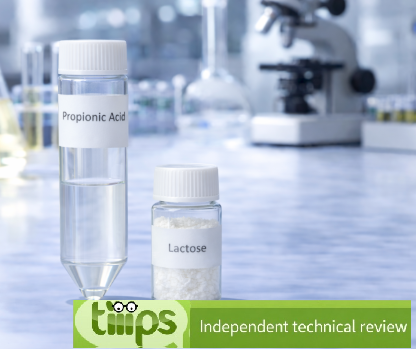
Definition
It is not a mixture: it is a single molecule (propionic acid) used primarily as an antimicrobial/anti-mold preservative. In food regulation it is identified as the additive E280; in other sectors the same substance may be used with different technical functions (ph control, sanitation, synthesis intermediate).
Main uses
Medicine.
The antimicrobial activity of propionic acid and its salts has been known for a long time and supports its use rationale as an inhibitory agent against specific microorganisms, especially molds and some bacteria, depending on concentration and ph.
Food.
It is authorized in the EU as the food additive E280 with a main function as a preservative (notably anti-mold action) and, in some contexts, as a technological component linked to acidity and aroma profile. Practical use is typical in matrices where fungal growth prevention is critical (e.g., certain bakery categories and mold-prone products), always within the applicable conditions of use.
Animal feed
It is widely used in feed as an antimicrobial agent and as a support for controlling mold contamination during storage and distribution. In supply-chain practice, its value is mainly “technological” (stability and microbiological safety of feed) rather than nutritional.
Cosmetics
It is a restricted ingredient V/2 as Relevant item in the Annexes of the European Cosmetics Regulation 1223/2009. Maximum concentration in the ready-for-use preparation 2%. (as acid).
Identified INGREDIENTS or substances e.g. Propionic acid and its salts
Cosmetic use is therefore driven by regulatory constraints, formulation compatibility, and target ph.
Cosmetics – INCI functions
Antimicrobial agent. This ingredient is able to suppress or inhibit the growth and replication of a broad spectrum of microorganisms such as bacteria, fungi and viruses, making the stratum corneum temporarily bactericidal and fungicidal.
Fragrance. It plays a decisive and important role in the formulation of cosmetic products as it provides the possibility to improve, mask or add fragrance to the finished product, increasing its marketability. The consumer always expects to find a pleasant or distinctive fragrance in a cosmetic product.
Preservative. Any product containing organic compounds, inorganic compounds, water, needs to be preserved from microbial contamination. Preservatives act against the development of harmful microorganisms and against product oxidation.
Ph regulator. This ingredient tends to bring the ph of a cosmetic formulation back to the optimal value. Correct ph is an essential determinant for lipid synthesis in the stratum corneum. Average physiological ph values for the face range between 5.67 and 5.76. The hair fiber has a ph of 3.67.
Other uses
- Intermediate and auxiliary in industrial processes (e.g., certain resins/polymers, technical perfumery, synthesis chemistry, and applications requiring ph control or antimicrobial function in process solutions).
- Used in the production of cellulose plastics, perfumes and herbicides.
Nutritional use note and bioactive compounds
From a “nutritional” perspective, propionic acid is not used to deliver bioactive compounds, but as a technological additive. In human physiology, however, endogenous propionate is a microbiota-derived metabolite and participates in metabolic signaling (e.g., energy and hormonal regulation) in a complex way. It is useful to clearly distinguish: microbiota-produced propionate (physiological context) vs propionic acid added as an additive (technological context).
Calories (energy value)
It is not used to provide energy. In food, at typical additive use levels, the caloric impact on the finished product is negligible.
Identification data and specifications
| Characteristic | Value |
|---|---|
| Name / E-number | Propionic acid / E280 |
| Technical synonyms | propanoic acid; propionic acid |
| Molecular formula | C3H6O2 |
| CAS number | 79-09-4 |
| Main use functions | antimicrobial/anti-mold preservative; ph control (application-dependent) |
| Production | microbial fermentation or chemical synthesis |
| Cosmetic regulatory note | max 2% (as acid) in ready-to-use preparation |
Physico-chemical properties (indicative)
| Characteristic | Indicative value | Note |
|---|---|---|
| Physical state | liquid | typically liquid at ambient conditions |
| Appearance | clear, colorless | may show slight coloration depending on grade |
| Odor | pungent, characteristic | typical of volatile organic acids |
| Water solubility | good | acid–base behavior depends on ph |
| Volatility | moderate | can contribute to “acidic” odor notes |
| Effect on ph | acidifying | useful as a ph regulator in some systems |
Functional role and mechanism of action (practical)
Preservative efficacy is strongly ph-dependent: the undissociated fraction crosses microbial membranes more readily and can inhibit growth and replication, with particularly relevant impact against molds in various matrices. In practice, performance depends on ph, water activity, initial microbial load, temperature, and packaging.
Production process
Fermentation.
Production via microorganisms (industrial processes based on selected strains) from suitable substrates, followed by separation and purification to obtain a grade compliant with specifications.
Chemical synthesis.
Production via petrochemical routes using established organic-acid industry processes, followed by purification and standardization.
Quality control.
Typically includes purity, impurity profile, organoleptic parameters, and compliance with the target sector specifications (food/feed/technical).
Safety, regulation, and environment
Food safety.
In the United States, propionic acid falls within the GRAS perimeter for specific food uses under defined conditions. In the EU it is authorized as the additive E280; practical management is based on compliance with conditions of use and relevant purity specifications.
Note on glucose metabolism.
Controlled studies have reported that acute ingestion of propionic acid can trigger activation of the insulin counter-regulatory hormonal network under experimental conditions. Interpretation requires caution: these findings do not automatically translate into clinical risk at typical use conditions, but indicate that beyond the technological role there is biological activity that warrants scientific attention in the context of exposure and individual susceptibility.
Cosmetics.
It is restricted as a preservative and formulations must respect concentration limits and applicable conditions of use, with particular attention to final ph, tolerability, and compatibility within the overall preservative system.
Allergen.
It is not typically classified as an allergen. In the finished product, irritation is more likely driven by concentration, ph, and the formulation matrix.
Contraindications (brief).
In cosmetics: caution on highly reactive skin or in products at particularly low ph. In food: for individuals with specific metabolic needs, assessment should be contextualized within overall exposure and clinical framework.
Formulation troubleshooting
Overly noticeable “acid” odor.
Action: optimize dose, balance with fragrance/masking system, verify volatility in packaging and headspace.
Insufficient preservative efficacy.
Action: verify ph, microbial load, water activity, and synergies with other preservatives; validate with challenge testing.
Irritation/stinging sensation.
Action: review final ph, reduce concentration, evaluate buffering and compatibility with other potentially irritating ingredients.
Conclusion
Propionic acid is a technological additive with a primary antimicrobial/anti-mold function, produced by fermentation or chemical synthesis. In food and feed it is used to improve microbiological stability; in cosmetics it can be used within specific limits and with careful management of ph and tolerability. Biologically, propionate is also a microbiota-derived physiological metabolite, and some experimental studies suggest acute effects on insulin counter-regulatory hormonal axes, to be interpreted cautiously in real-use contexts.
Studies
The antimicrobial activity of propionic acid and its salts has long been known (1)
It is generally considered safe by the US Food and Drug Administration, however oral intake of propionic acid has an effect on glucose metabolism in humans leading to inappropriate activation of the insulin counterregulatory hormone network (2). In addition, propionic acid lowers fatty acid content in the liver and plasma, reduces food intake, exerts immunosuppressive actions and probably improves tissue insulin sensitivity (3).
Mini-glossary
SCFA. Short-chain fatty acids. Benefit: key microbiota metabolites with roles in energy metabolism and signaling.
GRAS. Generally Recognized As Safe. Benefit: US regulatory status for substances considered safe under defined conditions of use.
Propionate. The anionic form of propionic acid (salt or acid–base equilibrium species). Benefit: relevant both for preservative function and for intestinal physiology.
Counter-regulatory hormonal network. A set of hormones that counteract insulin action under specific conditions. Benefit: helps interpret studies on glucose metabolism.
The most relevant studies on this ingredient have been selected with a summary of their contents:
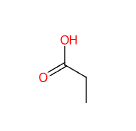 | 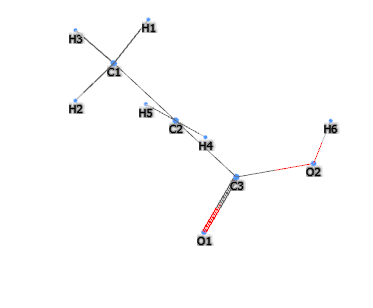 |
- Molecular Formula C3H6O2 CH3CH2COOH
- Molecular Weight 74.08
- CAS 79-09-4
- UNII JHU490RVYR
- EC Number 201-176-3
- DSSTox ID DTXSID8025961 DTXSID001015846
- IUPAC propanoic acid
- InChl=1S/C3H6O2/c1-2-3(4)5/h2H2,1H3,(H,4,5)
- InChl Key XBDQKXXYIPTUBI-UHFFFAOYSA-N
- SMILES CCC(=O)O
- Nikkaji J1.963A
- MDL number MFCD00002756
- PubChem Substance ID 329820094
- ChEBI 30768
- eCl@ss 39021305
- Beilstein 506071
- NACRES NA.21
- RTECS UE5950000
- JECFA 84
- FEMA 2924
- NCI C61911
- ICSC 0806
- RXCUI 34658
- UN 1848
- Metabolomics Workbench 25
Synonyms:
- Metacetonic acid
- Ethanecarboxylic acid
- ethylformic acid
- methylacetic acid
- Carboxyethane
- Pseudoacetic acid

