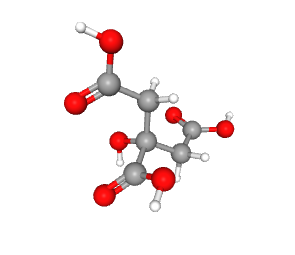
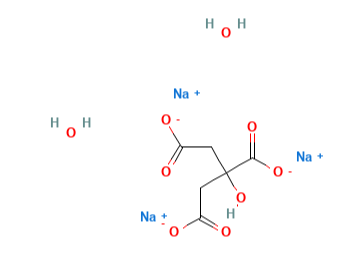
E331 o Sodio citrato tribasico o citrato trisodico è un composto chimico, diidrato del citrato trisodico, solubile in acqua e contiene citrato di sodio. Si presenta in forma di piccoli cristalli o polvere bianca, fine.
A cosa serve
Alimentazione
Viene utilizzato nelle bevande come correttore di acidità e antiossidante in varie applicazioni: mediche, farmaceutiche, cosmetiche.
Etichettato con il numero E331 nella lista degli additivi alimentari europei come regolatore di acidità per riportare il pH a valori normali, ha anche dimostrato di migliorare l'impasto nei prodotti da forno in quanto l'aggiunta di citrato di sodio all'impasto ha prodotto un miglioramento dell'aggregazione del glutine e un aumento della resa del glutine rispetto al controllo aumentando il pH e avvicinandosi al punto isoelettrico di glutenina e gliadina. Inoltre, il citrato di sodio ha portato ad una maggiore distribuzione granulometrica del macropolimero della glutenina (1).
Medicina
Il citrato svolge un ruolo notevole nel metabolismo cellulare ed è un importante intermedio nel ciclo dell'acido tricarbossilico. In medicina viene utilizzato come anticoagulante nel sangue conservato, e per l'alcalinizzazione delle urine nella prevenzione dei calcoli renali.
In medicina il citrato di sodio tribasico in infusione ha determinato l'acidificazione e l'anticoagulazione del sangue simili all'acido lattico e al citrato di sodio, rispettivamente, senza influenzare l'analisi dei gas nel sangue (2).
I calcoli renali colpiscono le persone in tutto il mondo e hanno un alto tasso di recidiva anche con il trattamento. I sali di citrato prevengono la formazione di nuovi calcoli e riducono l'ulteriore crescita di calcoli nei pazienti con calcoli residui che contengono prevalentemente ossalato (3).
i risultati di questo studio hanno dimostrato che il trattamento con citrato di sodio a concentrazioni più elevate o per periodi più lunghi esercita un effetto citotossico sulle cellule AGS attraverso l'induzione della via dell'apoptosi intrinseca e l'alterazione dei livelli di alcune citochine (4).
Nei dentifrici l'aggiunta di citrato di sodio ha migliorato la sensibilità dentinale (5).
Cosmetica
In cosmetica l'inserimento in formula del citrato di sodio permette di mantenere il pH a livelli accettabili ed a regolare il livello di acidità complessivo.
Agente tampone. E' un ingrediente che può portare una soluzione alcalina o acida a un determinato livello di pH e impedirne la modifica, in pratica uno stabilizzatore di pH che può resistere efficacemente all’instabilità ed all'eventuale cambiamento del pH.
Agente chelante. Ha la funzione di evitare reazioni instabili e migliorare la biodisponibilità di componenti chimici all'interno di un prodotto, elimina i cationi di calcio e magnesio che possono causare una velatura nei liquidi limpidi.
Fragranza. Ha un ruolo decisivo e importante nella formulazione di prodotti cosmetici in quanto fornisce la possibilità di migliorare, mascherare o aggiungere profumo al prodotto finale aumentandone la commerciabilità. Il consumatore si aspetta sempre di trovare un profumo gradevole o particolare in un prodotto cosmetico.
Citrato di sodio studi
Caratteristiche tipiche ottimali del prodotto commerciale citrato di sodio
| Appearance | Small crystals or a fine, white powder. |
| Melting Point | 300°C |
| Purity | 99% |
| Density | 1.008 g/mL at 20 °C |
| Storage temperature | 2-8°C |
| Shelf life | 24 months |
Dove acquistare citrato di sodio
| Trisodium citrate, anhydrous, 99%, Thermo Scientific™: Carboxylic acids and derivatives Organic acids and derivatives | Fisher Scientific |
| SODIUM CITRATE ,994-36-5 _Chemical Cloud Database (chemcd.com) |
| APAC Pharmaceutical LLC,1243313-45-2,4415-87-6,95648-78-5,110351-94-5,130209-82-4,19046-64-1,112-24-3,109-55-7,etc. Supplier |
| Bosche Scientific LLC |
- Formula molecolare : C6H5Na3O7.2H2O Na3(C6H5O7)
- Formula lineare : HOC(COONa)(CH2COONa)2 · 2H2O
- Peso molecolare : 294.10
- CAS : 6132-04-3 68-04-2
- EC Number : 200-675-3
- UNII B22547B95K
- DSSTox Substance ID: DTXSID1049437
- MDL number MFCD00150031
- PubChem Substance ID
- InChl 1S/C6H8O7.3Na.2H2O/c7-3(8)1-6(13,5(11)12)2-4(9)10;;;;;/h13H,1-2H2,(H,7,8)(H,9,10)(H,11,12);;;;2*1H2/q;3*+1;;/p-3
- InChI Key NLJMYIDDQXHKNR-UHFFFAOYSA-K
- SMILES C(C(=O)[O-])C(CC(=O)[O-])(C(=O)[O-])O.O.O.[Na+].[Na+].[Na+]
- IUPAC trisodium;2-hydroxypropane-1,2,3-tricarboxylate
- ChEBI 32142
- Beilstein 6104939
Sinonimi :
- Trisodium citrate
- trisodium;2-hydroxypropane-1,2,3-tricarboxylate
- Trisodium citrate, anhydrous
- Citrosodine
- Sodium citrate anhydrous
- Trisodium 2-hydroxy-1,2,3-propanetricarboxylate
- 1,2,3-Propanetricarboxylic acid, 2-hydroxy-, trisodium salt
Bibliografia_____________________________________________________________________
(1) Amiri A, Farshi-Marandi P, Shahedi M. Impact of sodium citrate on structural properties of gluten. J Food Sci Technol. 2019 Feb;56(2):1090-1093. doi: 10.1007/s13197-019-03571-6.
Abstract. The effect of sodium citrate on gluten-starch separation and physicochemical properties of gluten was studied. The results showed that the addition of sodium citrate to the dough caused to an improvement in the aggregation of gluten and increased gluten yield in comparison to the control by augmentation pH and approaching to the isoelectric point of glutenin and gliadin. Also, sodium citrate led a shift to larger particle size distribution of glutenin macropolymer (GMP). These observations demonstrated that under the influence of sodium citrate more thiol groups were oxidized and formed disulfide bonds, which increased the storage modulus and resistance to extension. Furthermore, in this sample the GMP gel was more elastic and stiffer.
(2) Scaravilli V, Di Girolamo L, Scotti E, Busana M, Biancolilli O, Leonardi P, Carlin A, Lonati C, Panigada M, Pesenti A, Zanella A. Effects of sodium citrate, citric acid and lactic acid on human blood coagulation. Perfusion. 2018 Oct;33(7):577-583. doi: 10.1177/0267659118777441.
Abstract. Introduction: Citric acid infusion in extracorporeal blood may allow concurrent regional anticoagulation and enhancement of extracorporeal CO2 removal. Effects of citric acid on human blood thromboelastography and aggregometry have never been tested before. Methods: In this in vitro study, citric acid, sodium citrate and lactic acid were added to venous blood from seven healthy donors, obtaining concentrations of 9 mEq/L, 12 mEq/L and 15 mEq/L. We measured gas analyses, ionized calcium (iCa++) concentration, activated clotting time (ACT), thromboelastography and multiplate aggregometry. Repeated measure analysis of variance was used to compare the acidifying and anticoagulant properties of the three compounds. Results: Sodium citrate did not affect the blood gas analysis. Increasing doses of citric and lactic acid progressively reduced pH and HCO3- and increased pCO2 (p<0.001). Sodium citrate and citric acid similarly reduced iCa++, from 0.39 (0.36-0.39) and 0.35 (0.33-0.36) mmol/L, respectively, at 9 mEq/L to 0.20 (0.20-0.21) and 0.21 (0.20-0.23) mmol/L at 15 mEq/L (p<0.001). Lactic acid did not affect iCa++ (p=0.07). Sodium citrate and citric acid similarly incremented the ACT, from 234 (208-296) and 202 (178-238) sec, respectively, at 9 mEq/L, to >600 sec at 15 mEq/L (p<0.001). Lactic acid did not affect the ACT values (p=0.486). Sodium citrate and citric acid similarly incremented R-time and reduced α-angle and maximum amplitude (MA) (p<0.001), leading to flat-line thromboelastograms at 15 mEq/L. Platelet aggregometry was not altered by any of the three compounds. Conclusions: Citric acid infusions determine acidification and anticoagulation of blood similar to lactic acid and sodium citrate, respectively.
(3) Phillips R, Hanchanale VS, Myatt A, Somani B, Nabi G, Biyani CS. Citrate salts for preventing and treating calcium containing kidney stones in adults. Cochrane Database Syst Rev. 2015 Oct 6;(10):CD010057. doi: 10.1002/14651858.CD010057.pub2.
Abstract. Background: Kidney stones affect people worldwide and have a high rate of recurrence even with treatment. Recurrences are particularly prevalent in people with low urinary citrate levels. These people have a higher incidence of calcium phosphate and calcium oxalate stones. Oral citrate therapy increases the urinary citrate levels, which in turn binds with calcium and inhibits the crystallisation thus reduces stone formation. Despite the widespread use of oral citrate therapy for prevention and treatment of calcium oxalate stones, the evidence to support its clinical efficacy remains uncertain. Objectives: The objective of this review was to determine the efficacy and adverse events associated with citrate salts for the treatment and prevention of calcium containing kidney stones. Search methods: We searched the Cochrane Kidney and Transplant Specialised Register to 29 July 2015 through contact with the Trials' Search Co-ordinator using search terms relevant to this review. Selection criteria: We included randomised controlled trials (RCTs) that assessed the efficacy and adverse events associated with citrate salts for the treatment and prevention of calcium containing kidney stones in adults treated for a minimum of six months. Data collection and analysis: Two authors assessed studies for inclusion in this review. Data were extracted according to predetermined criteria. Summary estimates of effect were obtained using a random-effects model, and results were expressed as risk ratios (RR) and their 95% confidence intervals (CI) for dichotomous outcomes, and mean difference (MD) and 95% CI for continuous outcomes. Main results: We included seven studies that included a total of 477 participants, most of whom had oxalate stones. Of these, three studies (247 participants) compared potassium citrate with placebo or no intervention; three (166 participants) compared potassium-sodium citrate with no intervention; and one (64 participants) compared potassium-magnesium citrate with placebo. Overall, quality of the reporting of the included studies was considered moderate to poor, and there was a high risk of attrition bias in two studies.Compared with placebo or no intervention, citrate therapy significantly reduced the stone size (4 studies, 160 participants: RR 2.35, 95% CI 1.36 to 4.05). New stone formation was significantly lower with citrate therapy compared to control (7 studies, 324 participants: RR 0.26, 95% CI 0.10 to 0.68). The beneficial effect on stone size stability was also evident (4 studies, 160 participants: RR 1.97, 95% CI 1.19 to 3.26). Adverse events were reported in four studies, with the main side effects being upper gastrointestinal disturbance and one patient reported a rash. There were more gastrointestinal adverse events in the citrate group; however this was not significant (4 studies, 271 participants: RR 2.55, 95% CI 0.71 to 9.16). There were significantly more dropouts due to adverse events with citrate therapy compared to control (4 studies, 271 participants: RR 4.45, 95% CI 1.28 to 15.50). The need for retreatment was significantly less with citrate therapy compared to control (2 studies, 157 participants: RR 0.22, 95% CI 0.06 to 0.89). Authors' conclusions: Citrate salts prevent new stone formation and reduce further stone growth in patients with residual stones that predominantly contain oxalate. The quality of reported literature remains moderate to poor; hence a well-designed statistically powered multi-centre RCT is needed in order to answer relevant questions concerning the efficacy of citrate salts.
(4) Xia Y, Zhang X, Bo A, Sun J, Li M. Sodium citrate inhibits the proliferation of human gastric adenocarcinoma epithelia cells. Oncol Lett. 2018 May;15(5):6622-6628. doi: 10.3892/ol.2018.8111.
Abstract. The objective of the present study was to investigate the cytotoxic effects of sodium citrate on human gastric adenocarcinoma epithelia AGS cells. Numerous cytotoxicity-associated sodium citrate-induced effects were assessed, including cell viability and proliferation, cytokine expression and caspase activity. In vitro studies demonstrated that incubation with sodium citrate (>3.125 mM) inhibited AGS cell viability and proliferation in a dose-dependent manner. Incubation with sodium citrate for 24 h revealed that the levels of interleukin-1β (IL-1β), IL-8 and tumor necrosis factor increased with an increasing of dose of sodium citrate, whereas the IL-6 levels exhibited only a slight alteration. In addition, increases in caspase-3 and -9 activities were associated with increased duration of treatment and dosage of sodium citrate. Collectively, the results of the present study demonstrated that treatment with sodium citrate at higher concentrations or for longer durations exerts a cytotoxic effect on AGS cells via the induction of the intrinsic apoptosis pathway and the alteration in the levels of certain cytokines.
(5) Clark DC, Al-Joburi W, Chan EC. The efficacy of a new dentifrice in treating dentin sensitivity: effects of sodium citrate and sodium fluoride as active ingredients. J Periodontal Res. 1987 Mar;22(2):89-93. doi: 10.1111/j.1600-0765.1987.tb01545.x.