

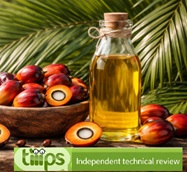
Palm kernel oil
Rating : 5
| Evaluation | N. Experts | Evaluation | N. Experts |
|---|---|---|---|
| 1 | 6 | ||
| 2 | 7 | ||
| 3 | 8 | ||
| 4 | 9 | ||
| 5 | 10 |
Cons:
Possible risk. Click on ingredient (1)0 pts from Al222
| Sign up to vote this object, vote his reviews and to contribute to Tiiips.Evaluate | Where is this found? |
| "Descrizione" about Palm kernel oil by Al222 (24830 pt) | 2026-Feb-21 12:04 |
| Read the full Tiiip | (Send your comment) |
Palm kernel oil: properties, uses, pros, cons, safety
Definition
Palm kernel oil is a vegetable fat obtained from the seed (kernel) of the oil palm fruit Elaeis guineensis (family Arecaceae). It is distinct from palm oil, which is extracted from the pulp of the fruit. From a technological standpoint, it behaves as a “lauric-type” fat: it tends to show a relatively well-defined melting profile and a higher share of saturated fatty acids than many non-tropical oils, providing good structure, crispness, and stability in multiple matrices.

Production process
Production starts with separating the kernels from the fruit and crushing them to recover the oil-bearing material. Oil extraction can be performed by pressing (mechanical) and/or solvent extraction, followed by filtration. For food and cosmetic uses, refining is common (the RBD cycle: refining, bleaching, deodorisation) to reduce odour, colour, acidity, and undesired components, improving standardisation. Industrially, key controls include acidity, peroxide value, and oxidative stability, together with consistency of the melting profile.
Key constituents
The matrix is mainly triglycerides. The most representative fatty acids are lauric acid and myristic acid, with contributions from palmitic, oleic, and linoleic acids in variable proportions (typical of “lauric” fats). The unsaponifiable fraction is generally limited compared with other vegetable fats that are richer in minor components, but it may include traces of tocopherols and sterols, depending on the refining degree.
Identification data and specifications
| Parameter | Value | Note |
|---|---|---|
| Ingredient name | Palm kernel oil | Often labelled as “palm kernel oil” |
| Botanical name | Elaeis guineensis | Family: Arecaceae |
| Plant part | Seed (kernel) | Different from palm oil (fruit pulp) |
| Nature | Vegetable fat (triglycerides) | “Lauric-type” behaviour |
| Key parameters | Fatty acid profile, peroxide value, acidity, melting point/range, odour/colour, contaminants | Depends on RBD grade |
| Allergen | Not typical | Rare individual sensitivities; verify supply-chain cross-contact if relevant |
| Caloric value | Typically ~900 kcal/100 g | Indicative for fats |
Physico-chemical properties (indicative)
| Property | Indicative value | Note |
|---|---|---|
| Physical state | Solid/semi-solid at 20–25 °C | Depends on fractionation and profile |
| Colour | White → pale yellow | Lighter if refined |
| Odour | Neutral (RBD) → mildly characteristic | More pronounced if less refined |
| Water solubility | Insoluble | Lipophilic |
| Melting point/range | Indicatively ~24–30 °C | Batch/fraction dependent |
| Oxidative stability | Good if protected | Critical factors: heat, light, oxygen |
| Typical criticalities | Crystallisation/graininess, melting variation | Linked to thermal history and triglyceride mix |
Main uses
Food
Used as a structuring fat in pastry, coatings, fillings, creams and baked goods where a fat phase with good “set” and controllable melting is needed. It is also used in coating-type applications and in formulations requiring crispness and room-temperature stability. In blends with other fats, it can help tune hardness, snap, and resistance to bloom in specific contexts, depending on the recipe.
Cosmetics
Used as an oil-phase component to increase consistency and slip in soaps, body butters, creams and sticks, especially when a drier sensory profile and stable structure are desired.
INCI functions. Emollient; skin conditioning; viscosity increasing.
Industrial use
Used in saponification and technical applications where fats with a repeatable melting profile and good processability are needed, including blends for solid bases and related products.
Health aspect
From a nutritional standpoint, palm kernel oil is a fat with a high share of SFA (saturated fatty acids), with a predominance of fatty acids typical of lauric fats; the share of MUFA (monounsaturated fatty acids) and PUFA (polyunsaturated fatty acids) is generally lower than in oils such as olive oil or many common seed oils. In a balanced diet, impact depends mainly on overall frequency and amount of saturated fat intake, and on the finished product profile (sugars, salt, portion size).
Pros
Technologically, it can deliver texture and stability with relatively straightforward formulations, and in some cases may reduce reliance on partially hydrogenated fats; practically, it can support products with good shelf stability and consistent sensory quality.
Cons
The high share of SFA makes “free” use less appropriate from a health-oriented perspective: inclusion should be considered within the overall diet and the finished food matrix, especially if the product is already high in sugars and calories.
Serving note
The relevant “portion” is the finished product containing it (biscuits, spreads, snacks, etc.). For a realistic assessment, consider portion size, frequency and total daily saturated fat intake.
Safety (allergens, contraindications)
It is not a typical allergen. No specific contraindications are generally stated for the general population, but for diets requiring strict saturated-fat control, intake should be managed within the overall dietary pattern. From a quality perspective, key points are control of oxidation (rancid odour), process-related contaminants, and raw-material traceability.
Storage and shelf-life
Store in tightly closed containers away from light and heat. Stability improves with oxygen-barrier packaging. Repeated thermal cycling can alter crystallisation and create texture defects; industrially it is useful to control the “thermal history” (melting/cooling) to ensure consistent performance.
Labelling
On food labels it may appear as “palm kernel oil” (or equivalent wording). In cosmetics, INCI naming is linked to Elaeis guineensis and the kernel fraction; the exact form depends on supplier specification and processing (oil/butter/fractions).
Functional role and rationale for use
Its primary role is structuring: it contributes to hardness, snap and fat-phase stability, with a melting profile useful for solid or semi-solid products. In soaps and related bases it supports consistency and process performance.
Formulation compatibility
In foods, compatibility depends on the matrix: in creams and fillings it increases body and stability; in baked goods it can support friability and crispness. In blends, compatibility is driven by crystallisation behaviour and temperature management during processing. In cosmetics, it is compatible with many oils/esters and waxes, but dosage should be tuned to avoid an overly waxy feel or excessive occlusivity in already lipid-rich formulas.
Safety, regulatory and quality
Applying GMP/HACCP along the supply chain supports control of contaminants, traceability and oxidation parameters. Robust specifications for acidity, peroxide value and melting profile reduce variability and sensory/technological defects, especially in fat blends.
Conclusion
Palm kernel oil (Elaeis guineensis) is a “lauric” vegetable fat used primarily for technological functions: structure, crispness, stability and processing repeatability in food, and consistency/emollience in cosmetics. The key concern is the high share of saturated fats (SFA) from a nutrition perspective, while technically the main drivers are oxidation control, crystallisation management and batch-to-batch specification consistency.
Studies
Different speech if this oil is ingested.: palm kernel oil has a high content of saturated fatty acids of about 80% which include : Lauric acid (48.7%), Myristic acid (15.6%), Palmitic acid (7.5%), Stearic acid (1.8%) and other saturated fats. The intake of saturated fats, especially if continued, may increase the values of LDL cholesterol.
However, it is an oil that is now used less and less by the food industry, precisely because of its contraindications.
References__________________________________________________________________________
Chen BK, Seligman B, Farquhar Multi-Country analysis of palm oil consumption and cardiovascular disease mortality for countries at different stages of economic development: 1980-1997. Global Health. 2011 Dec 16;7(1):45. doi: 10.1186/1744-8603-7-45.
Abstract Background: Cardiovascular diseases represent an increasing share of the global disease burden. There is concern that increased consumption of palm oil could exacerbate mortality from ischemic heart disease (IHD) and stroke, particularly in developing countries where it represents a major nutritional source of saturated fat....Conclusions: Increased palm oil consumption is related to higher IHD mortality rates in developing countries. Palm oil consumption represents a saturated fat source relevant for policies aimed at reducing cardiovascular disease burdens.
Xian TK, Omar NA, Ying LW, Hamzah A, Raj S, Jaarin K, Othman F, Hussan F. Reheated palm oil consumption and risk of atherosclerosis: evidence at ultrastructural level. Evid Based Complement Alternat Med. 2012;2012:828170. doi: 10.1155/2012/828170.
Abstract. Background. Palm oil is commonly consumed in Asia. Repeatedly heating the oil is very common during food processing. Aim. This study is aimed to report on the risk of atherosclerosis due to the reheated oil consumption. Material and Methods. Twenty four male Sprague Dawley rats were divided into control, fresh-oil, 5 times heated-oil and 10 times heated-oil feeding groups. Heated palm oil was prepared by frying sweet potato at 180°C for 10 minutes. The ground standard rat chows were fortified with the heated oils and fed it to the rats for six months. Results. Tunica intima thickness in aorta was significantly increased in 10 times heated-oil feeding group (P < 0.05), revealing a huge atherosclerotic plaque with central necrosis projecting into the vessel lumen. Repeatedly heated oil feeding groups also revealed atherosclerotic changes including mononuclear cells infiltration, thickened subendothelial layer, disrupted internal elastic lamina and smooth muscle cells fragmentation in tunica media of the aorta. Conclusion. The usage of repeated heated oil is the predisposing factor of atherosclerosis leading to cardiovascular diseases. It is advisable to avoid the consumption of repeatedly heated palm oil.
Cottrell RC. Introduction: nutritional aspects of palm oil. Am J Clin Nutr. 1991 Apr;53(4 Suppl):989S-1009S. Review.
Abstract. The production, composition, and food uses of palm oil are outlined in this introduction to a detailed appraisal of the nutritional and health implications of the use of palm oil in the food supply. The putative role of dietary fats and oils in general, and of palm oil in particular, in the etiology of coronary heart disease and cancer is critically assessed. It is concluded that the evidence available is difficult to interpret unambiguously. Some evidence to suggest that the minor components of palm oil might have useful biological effects is also discussed.
Edem DO. Palm oil: biochemical, physiological, nutritional, hematological, and toxicological aspects: a review. Plant Foods Hum Nutr. 2002 Fall;57(3-4):319-41. Review.
Abstract. The link between dietary fats and cardiovascular diseases has necessitated a growing research interest in palm oil, the second largest consumed vegetable oil in the world. Palm oil, obtained from a tropical plant, Elaeis guineensis contains 50% saturated fatty acids, yet it does not promote atherosclerosis and arterial thrombosis. The saturated fatty acid to unsaturated fatty acid ratio of palm oil is close to unity and it contains a high amount of the antioxidants, beta-carotene, and vitamin E. Although palm oil-based diets induce a higher blood cholesterol level than do corn, soybean, safflower seed, and sunflower oils, the consumption of palm oil causes the endogenous cholesterol level to drop. This phenomenon seems to arise from the presence of the tocotrienols and the peculiar isomeric position of its fatty acids. The benefits of palm oil to health include reduction in risk of arterial thrombosis and atherosclerosis, inhibition of endogenous cholesterol biosynthesis, platelet aggregation, and reduction in blood pressure. Palm oil has been used in the fresh state and/or at various levels of oxidation. Oxidation is a result of processing the oil for various culinary purposes. However, a considerable amount of the commonly used palm oil is in the oxidized state, which poses potential dangers to the biochemical and physiological functions of the body. Unlike fresh palm oil, oxidized palm oil induces an adverse lipid profile, reproductive toxicity and toxicity of the kidney, lung, liver, and heart. This may be as a result of the generation of toxicants brought on by oxidation. In contrast to oxidized palm oil, red or refined palm oil at moderate levels in the diet of experimental animals promotes efficient utilization of nutrients, favorable body weight gains, induction of hepatic drug metabolizing enzymes, adequate hemoglobinization of red cells and improvement of immune function. Howerer, high palm oil levels in the diet induce toxicity to the liver as shown by loss of cellular radial architecture and cell size reductions which are corroborated by alanine transaminase to asparate transaminase ratios which are higher than unity. The consumtion of moderate amounts of palm oil and reduction in the level of oxidation may reduce the health risk believed to be associated with the consumption of palm oil. Red palm oil, by virtue of its beta-carotene content, may protect against vitamin A deficiency and certain forms of cancer.
Fattore E, Bosetti C, Brighenti F, Agostoni C, Fattore G. Palm oil and blood lipid-related markers of cardiovascular disease: a systematic review and meta-analysis of dietary intervention trials. Am J Clin Nutr. 2014 Jun;99(6):1331-50. doi: 10.3945/ajcn.113.081190.
Sun Y, Neelakantan N, Wu Y, Lote-Oke R, Pan A, van Dam RM. Palm Oil Consumption Increases LDL Cholesterol Compared with Vegetable Oils Low in Saturated Fat in a Meta-Analysis of Clinical Trials. J Nutr. 2015 Jul;145(7):1549-58. doi: 10.3945/jn.115.210575. Epub 2015 May 20.
Go RE, Hwang KA, Kim YS, Kim SH, Nam KH, Choi KC. Effects of palm and sunflower oils on serum cholesterol and fatty liver in rats.
J Med Food. 2015 Mar;18(3):363-9. doi: 10.1089/jmf.2014.3163.
Abstract. Palm oil is a common cooking ingredient used in the commercial food industry as the second largest consumed vegetable oil in the world. Because of its lower cost and highly saturated nature, it usually maintains a solid form at room temperature and is used as a cheap substitute for butter. However, there has been a growing health concern about palm oil because of the link between dietary fats and coronary heart disease. Palm oil contains ∼49% saturated fat, a relatively high concentration compared with other vegetable oils. Consequently, high intakes of saturated fat from palm oil induce a larger increase in plasma concentrations of total cholesterol and low-density lipoproteins. In the present study, we examined the hyperlipidemia of palm oil and the risk of cardiovascular disease (CVD) using a rat model in comparison with sunflower oil with a relatively low level of saturated fat. On in vivo examination using Sprague-Dawley (SD) rats for 22 days, there were no significant differences in serum lipid levels, suggesting that palm oil may not cause hyperlipidemia and elevate CVD risk. However, liver samples obtained from SD rats fed with palm oil showed a lot of large lipid inclusions stained with the Oil Red O working solution, but not much lipid accumulation was observed in rats treated with sunflower oil. In addition, lipid accumulation in the mixed oil group fed the combination of palm and sunflower (1:1) oil was shown to be at an intermediary level between the palm oil group and sunflower oil group. Taken together, these results indicate that palm oil, a highly saturated form of vegetable oil, may induce dysfunction of the liver lipid metabolism before affecting serum lipid levels. On the other hand, sunflower oil, a highly unsaturated vegetable oil, was shown to be well metabolized in liver.
Biological and Nutritional Properties of Palm Oil and Palmitic Acid: Effects on Health http://www.mdpi.com/1420-3049/20/9/17339
Aniołowska M, Kita A. The effect of frying on glycidyl esters content in palm oil. Food Chem. 2016 Jul 15;203:95-103. doi: 10.1016/j.foodchem.2016.02.028. Epub 2016 Feb 3.
Mini-glossary
SFA: saturated fatty acids; excessive intake may be less favourable for lipid profile than unsaturated fats in the context of an overall diet.
MUFA: monounsaturated fatty acids; often considered more favourable when replacing part of saturated fats in a balanced diet.
PUFA: polyunsaturated fatty acids; include omega-6 and omega-3 families, with potential benefits when balanced in the diet.
RBD: refining, bleaching and deodorisation; an industrial cycle used to standardise oils and fats.
Peroxide value: indicator of primary lipid oxidation, used to monitor freshness and stability.
GMP/HACCP: good manufacturing practices (GMP) and the hazard analysis and critical control points (HACCP) system for safety and contamination prevention.
| Sign up to vote this object, vote his reviews and to contribute to Tiiips.EvaluateClose | (0 comments) |
Read other Tiiips about this object in __Italiano (1)
Content:   Last update:   2026-02-21 11:53:06 | Kcal/100g:   900 Family:   Threat factors:   |

