

Rye Natural Starter
Rating : 7
| Evaluation | N. Experts | Evaluation | N. Experts |
|---|---|---|---|
| 1 | 6 | ||
| 2 | 7 | ||
| 3 | 8 | ||
| 4 | 9 | ||
| 5 | 10 |
Cons:
Contains gluten (1)0 pts from Al222
| Sign up to vote this object, vote his reviews and to contribute to Tiiips.Evaluate | Where is this found? |
| "Descrizione" about Rye Natural Starter by Al222 (23420 pt) | 2025-Dec-09 16:45 |
| Read the full Tiiip | (Send your comment) |
Rye natural starter – fermented culture from Secale cereale
A rye natural starter is a fermented culture composed of spontaneous microorganisms (wild yeasts and lactic acid bacteria) that develop within rye flour (Secale cereale). It represents one of the oldest leavening systems used in traditional baking across Central and Northern Europe. Compared with wheat-based sourdough, rye starter exhibits stronger lactic activity, a more pronounced acidity, and a better ability to support fermentation in high-fibre doughs.
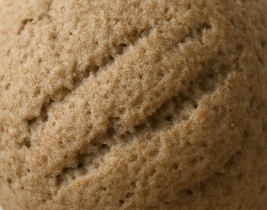
Morphologically and sensorially, a rye natural starter appears as a soft, fermented dough, typically brownish due to the pigments naturally present in whole rye flour. Its aroma is distinctly acidic, with rustic, fermented, and mildly fruity notes, reflecting fermentation dominated by heterofermentative lactobacilli.
![]() | ![]() |
Compositionally, a rye natural starter contains:
– lactic acid bacteria (particularly rye-adapted lactobacilli), which drive acidification;
– wild yeasts, responsible for gas production and secondary aroma formation;
– organic acids (lactic and acetic), which shape flavour and enhance shelf life;
– residual enzymes produced by microbial activity;
– rye flour components, including pentosans, soluble fibres, and phenolic compounds.
Nutritionally, rye natural starter contributes to improved digestibility thanks to partial breakdown of starches and fibres. The acidity enhances mineral bioavailability by reducing the chelating effect of antinutritional factors naturally present in rye. Its high lactic activity also improves preservation, limiting mould growth in baked goods.
From a technological and gastronomic perspective, rye natural starter is valued for its ability to:
– develop complex aromas typical of dark rye breads;
– increase moisture retention, producing a softer and longer-lasting crumb;
– support stable fermentation in dense or fibre-rich doughs;
– provide the characteristic structure of traditional breads such as rye bread, pumpernickel, and rustic Northern European loaves;
– contribute balanced acidity, which complements the natural sweetness of rye.
Rye natural starter remains an essential ingredient in artisanal and professional baking, ideal for products requiring intense flavour, robust structure, and extended shelf life.
(The classification refers to the plant-derived component: rye flour.)
| Category | Data |
|---|---|
| Common name | rye natural starter; rye sourdough starter |
| Botanical name | Secale cereale L. |
| Kingdom | Plantae |
| Clade | Angiosperms → monocots |
| Order | Poales |
| Family | Poaceae |
| Genus | Secale |
| Species | Secale cereale L. |
| Microbiological component | lactic acid bacteria and yeasts (e.g., Lactobacillus spp., Saccharomyces spp.) — not subject to botanical classification |
Average values refer to sourdough cultured from rye flour and water, then dried. Nutrient levels vary depending on flour type (refined vs. whole), fermentation activity, and drying degree.
| Component | Approximate value per 100 g |
|---|---|
| Energy | ~ 330–360 kcal |
| Water | ~ 5–7 g |
| Total carbohydrates | ~ 70–74 g |
| — of which sugars (from fermentation) | ~ 4–7 g |
| Dietary fiber | ~ 7–10 g (higher with whole rye flour) |
| Protein | ~ 12–14 g |
| Total lipids | ~ 1.5–2.5 g |
| — saturated fatty acids (SFA) | ~ 0.2–0.3 g |
| — monounsaturated fatty acids (MUFA) | ~ 0.2 g |
| — polyunsaturated fatty acids (PUFA) | ~ 0.6–0.8 g |
| Sodium | ~ 20–40 mg |
| Main minerals | magnesium, phosphorus, iron, potassium (in higher amounts when using whole rye) |
| Relevant vitamins | B-vitamins produced during fermentation (variable amounts) |
Rye natural starter has a nutrient-rich profile thanks to rye flour and fermentation-derived compounds.
Typically higher in fiber than wheat-based sourdough, especially when made with whole rye.
Very low fat content, with minimal SFA, MUFA, and PUFA.
Fermentation increases mineral bioavailability and produces characteristic acidic, complex aromas common in traditional rye breads.
Used to:
produce classic rye breads, dark breads, and rustic baked goods,
enhance aroma, shelf life, and natural acidity.
Production process
The process begins by mixing rye flour with water and allowing spontaneous fermentation to take place. Thanks to rye’s naturally high enzymatic activity and abundance of fermentable sugars, the microbial ecosystem develops quickly, forming a stable culture rich in Lactobacillus species and wild yeasts. Through repeated refreshments (feeding cycles), the culture becomes a mature, robust starter suitable for breadmaking or other fermentation-based applications.
Physical properties
Rye natural starter typically appears as a soft, slightly sticky dough, with a light brown colour derived from rye’s bran content. Its structure is moderately viscoelastic, though less elastic than wheat-based starters due to rye’s lower gluten content. It retains moisture well and tends to have a dense, moist texture.
Sensory and technological properties
Rye natural starter generates a fermentation characterized by pronounced acidity, lactic and mildly tangy aromas, and a complex, rustic flavour profile. The naturally high amylase activity of rye accelerates starch breakdown, increasing the production of fermentable sugars and promoting an active, stable fermentation.
Technologically, the starter enhances crumb moisture, improves keeping quality, strengthens microbial stability, and contributes to a distinct flavour identity. Rye’s fermentation results in a denser crumb structure and a more aromatic profile than wheat-based sourdoughs.
Food applications
Rye natural starter is widely used in:
Rye breads and traditional northern and eastern European loaves.
Wholegrain breads where additional acidity improves dough tolerance.
Long-fermented baked goods, enhancing shelf-life and aroma.
Mixed starter systems, when a deeper acidic profile is desired.
Nutrition and health
Rye natural starter influences the nutritional profile of the final product by reducing certain antinutrients, improving the bioavailability of minerals, and contributing to greater digestibility. The natural acidity can help moderate the glycaemic response of rye-based breads, increasing their satiety potential.
The starter itself is not consumed as a standalone food but functions as a fermentation culture, and its effects are evaluated in the context of the finished bread.
Serving note
Nutritional evaluations refer to the portion of finished bread, not to the starter alone, which is incorporated in controlled amounts depending on the formula and desired acidity.
Allergens and intolerances
Rye natural starter contains gluten, as it is derived from rye. It is unsuitable for individuals with celiac disease, rye or wheat allergy, or non-celiac gluten sensitivity. Its presence must be declared clearly on the label when used as an ingredient.
Storage and shelf-life
Active rye starter should be stored under refrigeration and refreshed regularly to maintain microbial vitality. It may also be dried or dehydrated for industrial applications, resulting in extended shelf-life. Optimal storage requires stable temperature, controlled humidity, and protection from cross-contamination.
Safety and regulatory
Rye natural starter is considered safe when produced according to good hygienic practices. It is governed by general regulations concerning fermented ingredients, microbiological safety, and allergen labelling. No special authorizations are required beyond compliance with standard food safety rules.
Labelling
On ingredient lists it may appear as “rye natural starter”, “rye sourdough”, or “rye mother dough”, with rye (gluten) highlighted according to allergen-labelling requirements. When the starter contributes significantly to the product’s character—such as rye sourdough bread—this may also be reflected in the product name.
Troubleshooting
Common issues and solutions include:
Excessive acidity: overly long intervals between feedings or an unbalanced hydration ratio.
Weak fermentation: insufficient temperature, underfed culture, or a starter that has not yet stabilized.
Dense final crumb: low dough hydration, insufficient fermentation, or flour with low gas-retention properties.
Underdeveloped aroma: inadequate fermentation time or incomplete microbial equilibrium within the starter.
Sustainability and supply chain
Rye natural starter is a low-impact ingredient, as it requires only rye flour and water and relies on natural fermentation. It supports clean-label formulations by reducing the need for additives and aligns with traditional, sustainable baking methods.
Main INCI functions (cosmetics)
In cosmetics, derivatives of rye sourdough or rye malted extracts may perform:
Skin conditioning
Humectant
Antioxidant
Masking
Film forming
Conclusion
The rye natural starter is a highly functional and traditional fermenting culture that enhances aroma, texture, moisture retention, and shelf-life in rye-based and mixed-grain baked goods. Its natural acidity and microbial complexity make it a valuable tool for producing breads with distinct flavour, improved digestibility, and extended freshness. As a gluten-containing ingredient, it requires careful management in allergen-sensitive environments but remains indispensable in high-quality rye bread production.
Mini-glossary
Amylase activity: Enzymatic ability to break starch into fermentable sugars; naturally high in rye.
Fermentable sugars: Sugars produced during fermentation that fuel yeast and bacterial activity.
Sourdough ecosystem: The balanced community of yeasts and lactic acid bacteria within the starter.
Acidification: The reduction of pH due to lactic and acetic acid production during fermentation.
Hydration ratio: Proportion of water to flour used when refreshing a starter.
Mother dough: The primary culture from which portions are taken to leaven bread.
| Sign up to vote this object, vote his reviews and to contribute to Tiiips.EvaluateClose | (0 comments) |
Read other Tiiips about this object in __Italiano (1)
Content:   Last update:   2025-12-09 16:47:42 | Kcal/100g:   360 Family:   Threat factors:   |

