

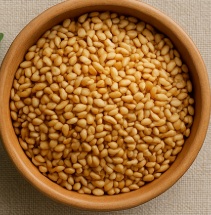
Toasted sesame seeds
Rating : 7
| Evaluation | N. Experts | Evaluation | N. Experts |
|---|---|---|---|
| 1 | 6 | ||
| 2 | 7 | ||
| 3 | 8 | ||
| 4 | 9 | ||
| 5 | 10 |
Pros:
Anti-cholesterolemic (1) Antioxidant (1)Cons:
Allergen (1)0 pts from Al222
| Sign up to vote this object, vote his reviews and to contribute to Tiiips.Evaluate | Where is this found? |
| "Descrizione" about Toasted sesame seeds by Al222 (23420 pt) | 2025-Dec-08 19:30 |
| Read the full Tiiip | (Send your comment) |
Toasted sesame seeds, Sesamum indicum (Pedaliaceae)
Toasted sesame seeds, obtained from the fruits of Sesamum indicum, represent one of the most aromatic and widely used forms of this ancient oilseed crop. Belonging to the family Pedaliaceae, sesame has been cultivated for millennia in Asia and Africa and is renowned for its high yield of antioxidant-rich oil and for the distinctive flavour that intensifies during toasting through the development of complex roasted notes.
![]() | ![]() |
Morphologically, sesame seeds are small, oval, flattened achenes with a thin seed coat ranging in colour from beige to dark brown depending on cultivar and degree of toasting. The toasting process enhances nutty aromas through Maillard reactions and the release of volatile compounds from internal lipids.
The plant Sesamum indicum thrives in warm, semi-arid climates, showing notable drought tolerance thanks to its deep root system. Its capsules split open upon full maturity, releasing the seeds, which requires careful harvesting methods to minimise losses.
From a phytochemical standpoint, toasted sesame seeds contain high levels of unsaturated fatty acids, particularly oleic acid and linoleic acid, along with smaller amounts of palmitic acid. They are rich in lignans such as sesamin and sesamolin, bioactive compounds associated with potential antioxidant and lipid-modulating effects. Tocopherols and tocotrienols further contribute to their antioxidant profile. Toasting causes slight modifications to surface lipids while markedly intensifying the aromatic profile.
Nutritionally, toasted sesame seeds are a dense and energy-rich food, providing significant amounts of healthy lipids, plant proteins, dietary fibre, and micronutrients such as calcium, magnesium, phosphorus, zinc, and B vitamins. Fibre supports intestinal regularity, while lignans and unsaturated fats are studied for their relevance to cardiovascular health and oxidative stress modulation. Due to their high caloric density, moderate consumption is recommended.
Culinarily, toasted sesame seeds are widely used in:
– breads, crackers, and baked goods;
– Asian dishes such as sushi, ramen, stir-fries, and seasoned salads;
– the preparation of spreads like tahini;
– flavourings, coatings, and spice blends (e.g., gomasio).
| Category | Data |
|---|---|
| Common name | sesame seeds; toasted sesame seeds |
| Botanical name | Sesamum indicatum L. |
| Kingdom | Plantae |
| Clade | Angiosperms → eudicots |
| Order | Lamiales |
| Family | Pedaliaceae |
| Genus | Sesamum |
| Species | Sesamum indicatum L. |
Average values refer to toasted hulled or unhulled seeds; values may vary according to toasting level and varietal factors.
| Component | Approximate value per 100 g |
|---|---|
| Energy | ~ 565–575 kcal |
| Water | ~ 3–4 g |
| Total carbohydrates | ~ 26–27 g |
| — of which sugars | ~ 0.3–0.5 g |
| Dietary fiber | ~ 11–12 g |
| Protein | ~ 17–18 g |
| Total lipids | ~ 48–50 g |
| — saturated fatty acids (SFA) | ~ 6.5–7 g |
| — monounsaturated fatty acids (MUFA) | ~ 18–19 g |
| — polyunsaturated fatty acids (PUFA) | ~ 21–22 g |
| Sodium | ~ 10–15 mg |
| Main minerals | calcium (≈ 950–980 mg in unhulled seeds), iron (≈ 8–10 mg), magnesium (≈ 350 mg), phosphorus (≈ 600 mg), potassium |
| Relevant vitamins | B-vitamins (B1, B2, niacin, folates), vitamin E, lignans (sesamin, sesamolin) |
Toasted sesame seeds are highly energy-dense due to their substantial lipid content.
They provide a balanced lipid profile with significant amounts of MUFA and PUFA, and moderate SFA.
Exceptionally rich in minerals, especially calcium (in unhulled seeds), along with magnesium, phosphorus, and iron.
Source of lignans (sesamin, sesamolin), characteristic antioxidant compounds.
Typical uses: 5–10 g sprinkled over salads, bread, baked goods, Asian dishes, and for preparing tahini.
Toasted sesame seeds are obtained from mature fruits of Sesamum indicum. After harvest, the seeds are removed from the capsules, cleaned to eliminate plant debris, dust and foreign matter, and then either hulled (white seeds) or left with the seed coat (whole, often darker seeds), depending on the final use.
For dry roasting, clean, dry seeds are heated in continuous ovens, rotating drums or fluid-bed roasters. Temperatures are kept high enough to develop the characteristic nutty, roasted aroma without burning the seeds. At the end of the cycle the seeds are rapidly cooled and packed in moisture- and oxygen-barrier packaging to limit oxidation and loss of aroma.
Roasting intensifies flavour and makes the seeds ready to use as-is, without further cooking.
Toasted sesame seeds are widely used in food preparation and finishing:
As a topping and condiment for salads, vegetables, poke bowls, noodles, rice dishes, sushi, breadings and breads.
In bakery products such as bread, rolls, grissini, crackers and savoury biscuits.
In Middle Eastern and Asian-inspired dishes, often together with tahini or soy-based sauces, and in seed mixes for snacks and cereal bars.
From the same raw material, sesame seed oil (Sesamum Indicum Seed Oil) is obtained and used as a culinary oil (especially in Asian cuisines) and as an emollient oil in cosmetics.
Roasted sesame seeds remain a high energy-density food, very rich in fat and with relevant protein and mineral content. Typical average values for 100 g of roasted/toasted whole sesame seeds are approximately:
Energy: ~560–580 kcal/100 g
Fat: ~48–55 g (mostly unsaturated)
Protein: ~17–25 g
Carbohydrates: ~15–25 g
Dietary fibre: ~10–12 g
The lipid fraction is dominated by unsaturated fatty acids (mainly linoleic and oleic acid). Toasted sesame seeds also provide vitamin E, some B-group vitamins and minerals such as calcium, magnesium, iron, zinc, copper and phosphorus. Lignans (e.g. sesamin, sesamolin) contribute additional antioxidant potential, as shown in experimental studies.
In the context of a balanced diet, small amounts of toasted sesame seeds can:
Contribute to unsaturated fat and plant protein intake.
Improve mineral intake, especially calcium, magnesium and zinc.
Increase satiety when used as a topping on vegetable, cereal and legume dishes.
At the same time, their high caloric density means portion size must be controlled, particularly in hypocaloric diets or for weight management.
Portion note
As a culinary topping, a practical domestic portion is about 5–10 g per serving (roughly 1–2 teaspoons). In snack mixes or bars, sesame content should be evaluated within the total portion size and energy load.
Sesame is a major food allergen in the EU, UK, US and many other jurisdictions, with mandatory labelling. Allergic reactions can be severe, including anaphylaxis, and require strict avoidance of sesame and all sesame-derived ingredients.
Key points:
Toasted sesame seeds can trigger reactions even in very small amounts in sensitised individuals.
Roasting does not remove allergenicity.
Cross-contact is a significant risk in bakeries and facilities producing breads, snacks and seed mixes, which is why “may contain sesame” statements are common.
People with known sesame allergy must carefully check ingredient lists and “may contain” statements and follow their physician’s advice (often including carrying emergency medication).
Because toasted sesame seeds are rich in unsaturated oils, they are prone to oxidative rancidity, especially after roasting.
For domestic use:
Store in a cool, dry place, away from light and heat, in well-closed containers (ideally airtight jars or sachets with good barrier properties).
In the pantry, toasted seeds generally keep good flavour for about 3–6 months; in the refrigerator they can often maintain quality for up to around 6–12 months, depending on roasting degree and packaging.
Rancid seeds develop an off, “paint-like” smell and bitter taste; these should be discarded.
At industrial level, sealed packs stored under good conditions may bear a 12–24 month shelf-life, as defined by the producer, provided oxidative stability is maintained throughout distribution.
Toasted sesame seeds are a traditional oilseed ingredient and must comply with standard safety requirements for oilseeds and nuts:
Limits for contaminants (mycotoxins, heavy metals, pesticide residues).
Adequate control of microbiological quality and pests.
Application of GMP and HACCP in roasting, handling and packing.
The most critical regulatory aspect is the allergen status of sesame: where used as an ingredient, sesame must be clearly declared according to national and regional labelling rules. Any nutrition or health claims (e.g. “source of calcium”, “high in unsaturated fat”) must comply with the relevant nutrition- and health-claims regulations and be justified by the actual nutrient content.
On food labels, toasted sesame seeds typically appear as:
“toasted sesame seeds”,
or simply “sesame seeds”, with additional descriptors such as “toasted”, “hulled”, “organic” as applicable.
Labels must include:
A nutrition declaration, including energy in kJ and kcal.
Clear emphasis of sesame as an allergen (e.g. bold typeface), in line with local legislation.
Any other allergens present in composite products.
Storage instructions (e.g. “store in a cool, dry place; keep container tightly closed”).
In cosmetic products, the corresponding oil appears under the INCI name Sesamum Indicum Seed Oil, used as a plant oil in skin and hair-care products.
For Sesamum Indicum Seed Oil obtained from sesame seeds, the main cosmetic functions are:
Emollient / skin conditioning: helps soften and smooth the skin and reduce transepidermal water loss.
Hair conditioning: contributes to hair softness, manageability and shine when used in hair and scalp products.
Antioxidant / protective support: provides vitamin E and lignans that can help support the skin against oxidative stress.
Masking / fragrance (secondary): mild oily, nutty note and capacity to help mask base odours in some formulations.
Toasted sesame seeds combine a distinctive roasted flavour and crunch with a concentrated supply of fats, proteins, fibre and minerals. In small amounts, they are an excellent way to enrich the nutritional and sensory profile of many dishes. However, their high calorie content and, above all, their role as a major allergen require careful management both by consumers and by food producers.
With appropriate portion control, storage and clear labelling, toasted sesame seeds can be safely and effectively used to enhance the taste, texture and nutritional density of a wide range of foods.
In this study sesame oil shows anti-inflammatory and antioxidant effects with promising results in lowering high levels of cholesterol and inflammation, reducing the risk of atherosclerosis and delaying the onset of cardiovascular disease (1).
Allergies to this type of seed have increased in the last 10 years, especially in Canada, Israel and Japan.
Sesame studies
References_____________________________________________________________________
(1) Hsu E, Parthasarathy S. Cureus. Anti-inflammatory and Antioxidant Effects of Sesame Oil on Atherosclerosis: A Descriptive Literature Review. 2017 Jul 6;9(7):e1438. doi: 10.7759/cureus.1438. Review.
Abstract. Sesame oil (SO) is a supplement that has been known to have anti-inflammatory and antioxidant properties, which makes it effective for reducing atherosclerosis and the risk of cardiovascular disease. Due to the side effects of statins, the current recommended treatment for atherosclerosis and cardiovascular diseases, the idea of using dietary and nutritional supplementation has been explored. The benefits of a dietary health regime have piqued curiosity because many different cultures have reaped health benefits through the ingredients in their cooking with negligible side effects. The purpose of this literary review is to provide a broad overview of the potential benefits and risks of SO on the development of atherosclerosis and its direction toward human clinical use. Current in vivo and in vitro research has shed light on the effects of SO and its research has shown that SO can decrease low-density lipoprotein (LDL) levels while maintaining high-density lipoprotein (HDL) levels. Current limitations in recent studies include no standardized doses of SO given to subjects and unknown specific mechanisms of the different components of SO. Future studies should explore possible synergistic and adverse effects of SO when combined with current recommended pharmaceutical therapies and other adjunct treatments.
Wei P, Zhao F, Wang Z, Wang Q, Chai X, Hou G, Meng Q. Sesame (Sesamum indicum L.): A Comprehensive Review of Nutritional Value, Phytochemical Composition, Health Benefits, Development of Food, and Industrial Applications. Nutrients. 2022 Sep 30;14(19):4079. doi: 10.3390/nu14194079.
Abstract. Sesame (Sesamum indicum L.), of the Pedaliaceae family, is one of the first oil crops used in humans. It is widely grown and has a mellow flavor and high nutritional value, making it very popular in the diet. Sesame seeds are rich in protein and lipids and have many health benefits. A number of in vitro and in vivo studies and clinical trials have found sesame seeds to be rich in lignan-like active ingredients. They have antioxidant, cholesterol reduction, blood lipid regulation, liver and kidney protection, cardiovascular system protection, anti-inflammatory, anti-tumor, and other effects, which have great benefits to human health. In addition, the aqueous extract of sesame has been shown to be safe for animals. As an important medicinal and edible homologous food, sesame is used in various aspects of daily life such as food, feed, and cosmetics. The health food applications of sesame are increasing. This paper reviews the progress of research on the nutritional value, chemical composition, pharmacological effects, and processing uses of sesame to support the further development of more functionalities of sesame.
Villa C, Costa J, Mafra I. Sesame as a source of food allergens: clinical relevance, molecular characterization, cross-reactivity, stability toward processing and detection strategies. Crit Rev Food Sci Nutr. 2024;64(14):4746-4762. doi: 10.1080/10408398.2022.2145263.
Abstract. Sesame is an allergenic food with an increasing allergy prevalence among the European/USA population. Sesame allergy is generally life-persisting, being the cause of severe/systemic adverse immune responses in sesame-allergic individuals. Herein, clinical data about sesame allergy, including prevalence, diagnosis, relevance, and treatments are described, with focus on the molecular characterization of sesame allergens, their cross-reactivity and co-sensitization phenomena. The influence of food processing and digestibility on the stability/immunoreactivity of sesame allergens is critically discussed and the analytical approaches available for their detection in foodstuffs. Cross-reactivity between sesame and tree nuts or peanuts is frequent because of the high similarities among proteins of the same family. However, cross-reactivity phenomena are not always correlated with true clinical allergy in sensitized patients. Data suggest that sesame allergens are resistant to heat treatments and digestibility, with little effect on their immunoreactivity. Nevertheless, data are scarce, evidencing the need for more research to understand the effect of food processing on sesame allergenicity modulation. The demands for identifying trace amounts of sesame in foods have prompted the development of analytical methods, which have targeted both protein and DNA markers, providing reliable, specific, and sensitive tools, crucial for the effective management of sesame as an allergenic food.
| Sign up to vote this object, vote his reviews and to contribute to Tiiips.EvaluateClose | (0 comments) |
Read other Tiiips about this object in __Italiano (1)
Content:   Last update:   2025-12-08 18:33:46 | Kcal/100g:   575 Family:   Threat factors:   |

