

Tomato puree DescriptionTomato puree is a concentrated, heat-treated product obtained from sound, ripe tomatoes that have been washed, crushed, heated, and filtered to remove seeds and skin.It ha ...
Tomato puree
Description
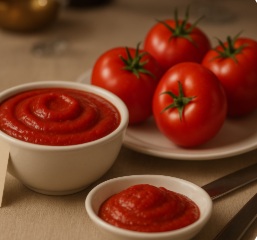
Tomato puree is a concentrated, heat-treated product obtained from sound, ripe tomatoes that have been washed, crushed, heated, and filtered to remove seeds and skin.
It has a smooth, semi-thick consistency, bright red colour, and an intense tomato flavour.
Used widely as a base ingredient in sauces, soups, ready meals, condiments, and industrial formulations.
The concentration level typically ranges from 8–24 °Brix, depending on application.

Indicative nutritional values per 100 g
(Typical tomato puree, ~8–12 °Brix; values vary by brand and concentration)
Energy: 30–55 kcal
Protein: 1.2–2.0 g
Carbohydrates: 6–12 g
Lipids: 0.1–0.4 g
Fiber: 1–2 g
Sodium: 5–25 mg (higher if salt added)
Minerals: potassium, magnesium, folate
Vitamins: vitamin C, vitamin A (as carotenoids), vitamin K
Key constituents
Lycopene (major carotenoid; antioxidant).
Other carotenoids: β-carotene, phytoene, phytofluene.
Organic acids: citric acid, malic acid.
Sugars: fructose, glucose.
Aromatic compounds contributing to characteristic tomato flavour.
Water (typically 85–92%, depending on concentration).
Production process
Selection and washing of ripe tomatoes.
Crushing to break down pulp.
Hot-break or cold-break heating:
Pulp refinement: removal of seeds and skin by sieving.
Evaporation to desired concentration (single or double concentrate).
Thermal treatment / pasteurisation for microbial stability.
Aseptic filling, canning, or bottling.
Quality control under GMP/HACCP (pH, Brix, colour, microbial load, viscosity).
Physical properties
Colour: bright red, dependent on lycopene content and processing temperature.
Texture: smooth, thick, uniform, no visible particles.
pH: typically 4.0–4.3.
Viscosity: varies with concentration and hot-break vs cold-break method.
Soluble solids (°Brix): usually 8–24.
Sensory and technological properties
Flavour: intense tomato taste, mildly sweet with natural acidity.
Aroma: characteristic cooked-tomato notes (more intense in hot-break).
Colour stability: good when processed and stored properly.
Provides body, texture, and thickness to sauces and soups.
Functions as a flavour enhancer and natural source of colour.
Works as a binder and viscosity agent in prepared foods.
Food applications
Pasta sauces, pizza sauces, and ready-to-use tomato bases.
Soups, stews, and broths.
Condiments: ketchup, BBQ sauces.
Ready meals, frozen meals, and canned foods.
Marinades, dips, and spreads.
Ingredient in industrial bakery and snack seasonings.
Nutrition & health
Rich in lycopene, known for antioxidant activity and potential cardiovascular benefits.
Contains vitamins A, C, and K, and potassium.
Very low in fat and naturally low in calories.
Suitable for low-fat, low-cholesterol, and plant-forward dietary patterns.
Tomato acids may cause issues for individuals with severe acid reflux.
Portion note
As an ingredient in sauces: 30–80 g per serving.
In soups or stews: 20–60 g.
In pizza or ready sauces: 40–100 g depending on formulation.
Allergens and intolerances
Tomato puree is allergen-free by nature.
Rare individuals may exhibit sensitivity to nightshade plants (Solanaceae).
Gluten-free unless contaminated via processing environment.
Check labels for added salt, citric acid, or flavourings in industrial products.
Storage and shelf-life
Unopened canned/aseptic: 12–24 months at room temperature.
Opened: refrigerate and use within 3–5 days.
Industrial products may include pH stabilisers to extend shelf-life.
Sensitive to:
oxidation (darkening, flavour loss)
microbial spoilage after opening
metal contamination if can lining is damaged
Safety & regulatory
Must comply with food regulations concerning:
Production under GMP/HACCP with controls on pH, Brix, sterilisation, packaging integrity.
Canning operations must meet validated thermal processing requirements.
Labeling
Declared as “tomato puree”, “tomato purée”, or “tomato concentrate (X°Brix)”.
If salt is added, labelled as “tomato puree with salt”.
Required information:
ingredient list
concentration level (optional but common)
allergen-free status (where relevant)
storage instructions
origin (optional, depending on regulations)
Troubleshooting
Too dark / brownish colour: oxidation or overheating → adjust thermal profile, improve deaeration.
Watery texture: insufficient concentration or syneresis → optimise evaporation or pectin retention.
Weak flavour: use higher Brix puree or cold-break processing.
Metallic taste: poor can lining integrity → inspect packaging.
Microbial spoilage after opening: ensure refrigeration and airtight storage.
Sustainability & supply chain
Tomatoes generally have a moderate environmental footprint, but sustainability depends on:
water management and irrigation efficiency
energy consumption in evaporation and thermal treatment
packaging materials (cans vs aseptic cartons)
transportation and cold-chain optimisation
Processing plants must manage wastewater responsibly using BOD/COD monitoring.
Tomato by-products (skins, seeds) can be valorised for lycopene extraction or animal feed.
Main INCI functions (cosmetics)
(when used as “Solanum Lycopersicum (Tomato) Extract” or tomato-derived constituents)
Antioxidant (due to lycopene and carotenoids).
Skin-conditioning
Protective/soothing (mild activity related to antioxidants).
Occasionally used in natural/fruit-based cosmetic formulations.
Conclusion
Tomato puree is a versatile, concentrated tomato ingredient essential in both domestic cooking and industrial food manufacturing. It delivers strong flavour, colour, and functionality, and serves as the backbone of countless sauces and ready meals. When produced under proper quality and safety protocols, tomato puree offers consistent performance, excellent nutritional value, and long shelf-life.
Mini-glossary
SFA – Saturated fatty acids: present only in trace amounts in tomatoes.
MUFA – Monounsaturated fatty acids: minimal content.
PUFA – Polyunsaturated fatty acids: trace levels.
TFA – Trans fatty acids: absent.
GMP/HACCP – Systems ensuring safety, quality and hygiene in food processing.
Brix – Measure of soluble solids (mainly sugars) indicating concentration.
BOD/COD – Indicators of wastewater environmental impact.