

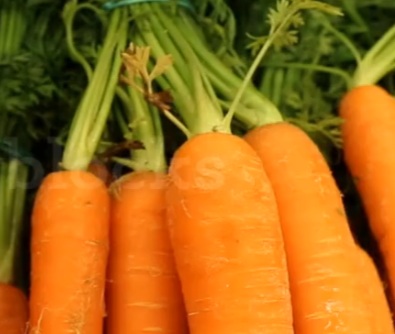
Dried carrots
Rating : 7
| Evaluation | N. Experts | Evaluation | N. Experts |
|---|---|---|---|
| 1 | 6 | ||
| 2 | 7 | ||
| 3 | 8 | ||
| 4 | 9 | ||
| 5 | 10 |
0 pts from Al222
| Sign up to vote this object, vote his reviews and to contribute to Tiiips.Evaluate | Where is this found? |
| "Descrizione" about Dried carrots by Al222 (23403 pt) | 2025-Nov-14 22:27 |
| Read the full Tiiip | (Send your comment) |
Dried carrots
(dehydrated carrot pieces, flakes, granules or powder from Daucus carota roots)
Description
Product obtained from fresh carrots that are washed, trimmed, cut and dehydrated to low moisture, yielding pieces, flakes, granules or powder.
Colour typically orange to orange-red, with characteristic carrot aroma and sweet, slightly earthy taste.
Available as air-dried flakes/dices, granules, powder, and sometimes freeze-dried pieces (more porous, rapid rehydration).
Used in dry soup mixes, ready meals, sauces, seasoning blends, bakery, snacks and as a natural colour and flavour component.
Indicative nutritional values (per 100 g dried product)
(Representative values; actual specs depend on variety and drying process.)
Energy: 330–345 kcal
Water: ≈ 3–5 g
Protein: 6–8 g
Total fat: ≈ 1–2 g
Trace SFA/MUFA/PUFA (saturated/mono-/polyunsaturated fatty acids; amounts are very low and not nutritionally critical, but in general diets should keep SFA moderate)
Total carbohydrates: ≈ 78–80 g
Sugars: ≈ 35–50 g
Dietary fibre: ≈ 20–25 g
Sodium: ≈ 200–280 mg
Potassium: ≈ 2,400–2,600 mg
Calcium: ≈ 200–220 mg
Iron: ≈ 3–4 mg
Vitamins: very high provitamin A (β-carotene), good levels of vitamin K, several B-vitamins, and some vitamin C (partially lost during drying).
Reconstituted to fresh-like moisture (by adding water), the kcal per 100 g rehydrated are in the range of 30–40 kcal, close to raw carrots.
Key constituents
Carbohydrates: naturally occurring sugars (sucrose, glucose, fructose) and starch/dextrins from carrot tissue.
Dietary fibre: cellulose, hemicellulose, lignin and pectins, contributing to high fibre density per 100 g dried.
Carotenoids: mainly β-carotene (provitamin A) plus α-carotene and lutein; responsible for orange colour and vitamin A activity.
Polyphenols: phenolic acids and other minor phytonutrients with antioxidant potential.
Minerals: particularly potassium, plus calcium, magnesium, iron, phosphorus, manganese and others.
Lipids: trace fatty acids and carotenoid-rich lipid fractions; total fat remains very low.
Production process
Raw material: sound, mature carrots, trimmed and graded.
Pre-processing: washing, peeling (or not, depending on spec), trimming, sorting, cutting (slices, dices, strips, shreds).
Blanching: usually brief hot water or steam blanching to inactivate enzymes (peroxidase, polyphenol oxidase), stabilise colour and texture, and reduce microbial load.
Optional treatments:
Sulfiting (where permitted) to enhance colour and limit oxidation;
ascorbic acid or other antioxidants, if specified.
Drying: hot-air tray or belt dryers, sometimes drum or fluidised-bed dryers; freeze-drying for premium applications. Target: low moisture and low aw for shelf stability.
Post-processing: cooling, cutting/milling to desired size (flakes, granules, powder), sieving, metal detection, mixing/blending.
Packing: filling into moisture- and light-barrier packaging (multi-layer bags, paper + PE, foil, etc.), often with outer cartons or big-bags for industrial supply.
Physical properties
Appearance:
flakes/dices: irregular orange pieces, sometimes with slight colour variation;
powder: orange to orange-brown, fine to slightly granular.
Moisture: typically ≤ 5–8%; aw sufficiently low for ambient stability.
Bulk density: wide range (~0.2–0.6 g/mL) depending on cut, porosity and agglomeration.
Rehydration: good water uptake; reconstitution ratio often around 3–6:1 (water : dried carrots by weight).
pH (rehydrated): about 5.0–6.5, close to cooked carrots.
Sensory and technological properties
Flavour: concentrated sweet carrot taste with mild earthiness; more intense than fresh on a weight basis.
Colour: stable orange; some darkening can occur with excessive heat, long storage, high humidity or Maillard reactions.
Texture: once rehydrated, texture ranges from soft to firm depending on cut size and time/temperature of hydration and cooking.
Functional behaviour:
contributes body and viscosity in soups and sauces;
provides natural colour and sweetness in dry mixes and bakery;
particle size affects mouthfeel (fine powder vs coarse flakes).
Food applications
Soups and ready meals: dry soup mixes, instant noodles, dehydrated or canned stews and vegetable mixes.
Bakery & snacks: carrot bread, crackers, bars, fillings, baked snacks; carrot powder in doughs and batters for colour and flavour.
Sauces and seasonings: flavour bases, bouillons, seasoning blends, dry rubs, meal kits.
Baby foods and clinical foods: as part of vegetable mixes, where rehydration and controlled texture are important.
Snacks: rehydrated then baked/roasted “chewy” pieces; or as part of vegetable mixes.
Nutrition & health
Energy-dense but nutrient-dense: drying concentrates calories and nutrients; per 100 g dried, energy is higher than fresh, but so are fibre, minerals and carotenoids.
Excellent source of fibre per 100 g (supporting bowel function and satiety) and potassium (helpful for blood pressure balance when diet is otherwise appropriate).
Very high provitamin A (β-carotene), supporting vision, immune function and skin health; in normal culinary use, overall vitamin A intake depends on portion size and the rest of the diet.
Low in fat, with only small amounts of saturated and unsaturated fatty acids; contributes negligibly to overall fat and cholesterol intake.
Glycaemic impact: high carbohydrate density per 100 g dried; however portions are usually much smaller (few grams in mixes).
Compared to fresh carrots, a small amount of dried carrot can deliver similar or higher micronutrients, especially where storage and transport of fresh carrots are difficult.
Serving note: in recipes, dried carrots are typically used at 5–15 g per portion (dry weight) in soups and mixes; rehydrated yield ≈ 30–90 g of carrot equivalent, comparable to a small serving of cooked carrots.
Allergens and intolerances
Carrots are not among the major allergen groups in many regulations, but carrot allergy (often associated with birch pollen cross-reactivity) does exist.
Dried carrots may retain allergenic proteins; individuals with known carrot allergy should avoid them.
Where sulfites are used as processing aids/preservatives, they must be declared above the regulatory threshold; sensitive individuals (asthma, sulfite sensitivity) must be considered.
Gluten, milk, soy, nuts, etc., are not intrinsic to dried carrots but may be present through cross-contact in some facilities or blends; must be controlled via allergen management.
Quality and specifications (typical themes)
Chemical/physical:
moisture ≤ 5–8%;
total ash and insoluble ash within limits;
colour parameters (e.g. Lab*) within agreed range;
size distribution (flakes, granules, powder) according to spec;
absence of foreign matter.
Microbiology (for low-moisture foods):
low total plate count;
yeasts and moulds within set limits;
absence of pathogens (e.g. Salmonella in 25 g) and low levels of spore-formers as defined by customer/product category.
Contaminants:
pesticide residues below legal limits;
heavy metals (Pb, Cd, Hg, As) controlled;
mycotoxins usually not critical in carrots but monitored when appropriate.
Storage and shelf-life
Store in cool, dry conditions, away from direct light and strong odours.
Recommended temperature: generally ≤ 25 °C, relative humidity < 60%.
Keep in sealed moisture-barrier packaging; once opened, reclose carefully or transfer to closed containers.
Typical shelf-life: 12–24 months from production, depending on process, packaging and storage; colour and flavour may gradually decline over time, especially with humidity or high temperature.
Safety and regulatory
Produced under GMP/HACCP with traceability of raw carrots, processing steps and packaging.
May be used as an ingredient in a wide range of food categories; any additives used (e.g. sulfites, antioxidants) must be permitted and included on labels as required.
For organic products, carrots and processing aids must comply with organic regulations, and drying must follow approved methods.
Labeling
Ingredient declaration examples:
“dried carrots”, “dehydrated carrots”, “carrot flakes”, “carrot powder”, depending on form.
If sulfites or other additives are present, they must be listed according to local regulations.
Claims such as “source of fibre”, “high in vitamin A” or “no added sugar” are possible when conditions for nutrient claims are met and when no sugars are added beyond those naturally present.
Troubleshooting
Caking/clumping in the bag
Cause: moisture uptake, high humidity, insufficient barrier or incomplete cooling before packing.
Action: improve packaging/barrier, ensure proper drying and cooling, use desiccant where appropriate.
Excessive darkening or off-flavour
Cause: too high drying temperature, long storage, exposure to oxygen and light, high residual moisture.
Action: optimise drying profile, reduce temperature/holding time, improve oxygen/light protection, ensure lower moisture.
Poor rehydration (hard pieces)
Cause: overly intense drying, too short rehydration time, too low water temperature.
Action: adjust drying conditions, recommend longer or warmer hydration, or use smaller particle size.
Inconsistent colour in finished products
Cause: blend of different carrot grades/batches, uneven distribution in mix.
Action: standardise raw materials, improve mixing and process controls.
Sustainability and supply chain
Dried carrots reduce weight and volume vs fresh, lowering transport and storage impacts and food waste risk.
Can help valorise surplus carrots and off-grades (within safety/quality limits) by converting them into stable ingredients.
Key environmental points: efficient use of energy for drying, recovery of heat where possible, and proper treatment of washing and blanching water with BOD/COD control.
Packaging choices (recyclable/mono-material where feasible) and FIFO stock rotation help minimise waste and obsolete product.
Main INCI functions (cosmetics)
Related cosmetic ingredients include:
Daucus Carota Sativa (Carrot) Root Powder/Extract;
Daucus Carota Sativa (Carrot) Root Juice Powder.
Functions: skin conditioning, antioxidant/phytoactive source, colourant in natural-positioned products.
Cosmetic-grade material requires tighter controls on contaminants and solvent residues than standard food-grade.
Conclusion
Dried carrots are a concentrated, shelf-stable carrot ingredient that delivers intense colour, flavour and a high density of fibre, minerals and provitamin A in a compact form. Technologically, they are versatile in dry mixes, soups, bakery and snacks, allowing manufacturers to incorporate “real vegetable” identity while improving logistics and shelf-life. With correct control of drying, moisture, packaging and hygiene, dried carrots offer a robust, clean-label tool to enhance both the nutritional and sensory profile of many food products.
Mini-glossary
SFA/MUFA/PUFA – Saturated/monounsaturated/polyunsaturated fatty acids; categories of dietary fats. In dried carrots they are present only in traces, but in general it is advisable to limit SFA in the diet.
aw (water activity) – Measure of free water available for microbial growth; low aw improves shelf-life in dried foods.
GMP/HACCP – Good Manufacturing Practices / Hazard Analysis and Critical Control Points; core systems for hygienic and safe food production.
BOD/COD – Biochemical/Chemical Oxygen Demand; indicators of organic load in wastewater, important for environmental management of processing plants.
FIFO – First In, First Out; stock rotation principle to ensure older product is used or sold before newer product, minimising expiry and waste.

Consumption of carrots is beneficial to our digestive system as an intestinal balancer because some of its compounds possess high antioxidant power (1).
It contains falcarinol, a natural component discovered only in 2005 that acts as an anti-tumor agent (2).
It also contains Beta carotene, a natural component that turns into vitamin A when it is assimilated into the human body.
Its properties are not altered if it is prepared as juice or lightly boiled or fried.
In addition to the common orange carrot, there is also the black, white, purple and yellow carrot.
References_______________________________________________________________________
(1) Ma T, Tian C, Luo J, Zhou R, Sun X, Ma J Influence of technical processing units on polyphenols and antioxidant capacity of carrot (Daucus carrot L.) juice. Food Chem. 2013 Dec 1;141(3):1637-44. doi: 10.1016/j.foodchem.2013.04.121.
(2) Tan KW, Killeen DP, Li Y, Paxton JW, Birch NP, Scheepens A. Dietary polyacetylenes of the falcarinol type are inhibitors of breast cancer resistance protein (BCRP/ABCG2). Eur J Pharmacol. 2014 Jan 15;723:346-52. doi: 10.1016/j.ejphar.2013.11.005.
| Sign up to vote this object, vote his reviews and to contribute to Tiiips.EvaluateClose | (0 comments) |
Read other Tiiips about this object in __Italiano (1)
Content:   Last update:   2025-11-14 22:25:01 | Kcal/100g:   345 Family:   Threat factors:   |

