

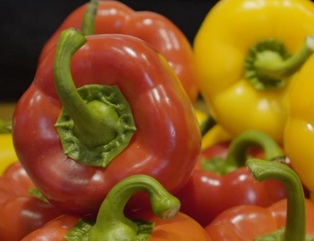
Peperoni
Media gradimento : 7
| Valutazione | N. Esperti | Valutazione | N. Esperti |
|---|---|---|---|
| 1 | 6 | ||
| 2 | 7 | ||
| 3 | 8 | ||
| 4 | 9 | ||
| 5 | 10 |
0 pt da Al222
| Iscriviti per poter valutare questo oggetto, le sue recensioni e per contribuire a Tiiips.Valuta | Dove si trova? |
| "Descrizione" su Peperoni di Al222 (23249 pt) | 27-ott-2025 12:34 |
| Leggi il Tiiip completo | (Invia il tuo commento) |
Description
Capsicum annuum (family Solanaceae) is an annual or perennial herbaceous plant native to Central America, now cultivated worldwide both for its edible fruits (sweet and hot peppers) and for ornamental purposes. It is the most widely grown species of the Capsicum genus and includes numerous varieties and cultivars differing in shape, color, and pungency.
The fruits are fleshy berries rich in vitamin C, carotenoids, and capsaicinoids (in hot varieties). Sweet peppers, which lack capsaicin, are used in cooking for their mild flavor and versatility, while hot peppers are employed in gastronomy, herbal medicine, and pharmacology.

Botanical classification
Kingdom: Plantae
Clade: Angiosperms
Order: Solanales
Family: Solanaceae
Genus: Capsicum
Species: C. annuum
Plant characteristics
Habit: Annual herb (in temperate climates) or perennial (in tropical zones), 40–100 cm tall, with an erect, branched stem.
Leaves: Alternate, ovate to lanceolate, smooth, and bright green.
Flowers: Solitary or in small clusters, white or greenish, hermaphroditic, insect-pollinated.
Fruits: Pendulous or erect berries of variable shape and color (red, yellow, orange, green, or purple); smooth or wrinkled surface; sweet or pungent flavor.
Seeds: Flat, pale yellow, numerous, contained in the central placenta of the fruit.
Roots: Taproot system, branched and sensitive to excess moisture.
Chemical composition (main constituents of the fruit)
Vitamin C: very high content (up to 150–200 mg/100 g in ripe red peppers).
Carotenoids: capsanthin, capsorubin, β-carotene, and lutein — natural antioxidants and precursors of vitamin A.
Capsaicinoids: capsaicin and dihydrocapsaicin (in hot varieties), responsible for pungency and local stimulating effects.
Flavonoids: quercetin, luteolin, apigenin — with antioxidant and vasoprotective activity.
B vitamins and vitamin E: contribute to metabolic and cellular protection.
Minerals: potassium, magnesium, iron, phosphorus, and zinc.
Dietary fiber and water (over 85%), promoting digestion and hydration.
Cultivation and growing conditions
Climate: Warm-temperate; sensitive to frost and cold.
Exposure: Full sun is essential for fruit development and color intensity.
Soil: Fertile, well-drained, rich in organic matter; pH 6–7.
Irrigation: Regular, avoiding waterlogging; drought reduces fruit size and quality.
Sowing and transplanting: From February to May; transplant once temperatures exceed 15 °C.
Harvesting: 60–90 days after transplanting, depending on the variety and ripeness stage.
Crop rotation: Avoid planting after other Solanaceae (tomato, potato, eggplant) to prevent soil diseases.
Uses and benefits (traditional and supported by preliminary scientific evidence)
Antioxidant and protective: due to its high content of vitamin C, carotenoids, and flavonoids.
Digestive and metabolic stimulant: enhances gastric secretion and fat metabolism.
Anti-inflammatory and analgesic: topical capsaicin reduces muscle and joint pain.
Vasodilator and circulatory tonic: supports peripheral microcirculation.
Depurative and mildly diuretic: promotes fluid elimination and detoxification.
Scientific studies have confirmed the benefits of capsaicin in reducing neuropathic pain and improving lipid metabolism, though concentrated preparations must be used carefully.
Applications
Food: Consumed fresh or cooked; used in sauces, preserves, oils, and spices (paprika, chili powder).
Herbal medicine: Extracts and oleoresins containing capsaicin in stimulating or warming formulations.
Cosmetics: Used in warming or toning ointments and creams.
Phytotherapy: Adjuvant in the treatment of muscular pain and joint stiffness.
Ornamental: Compact, colorful varieties cultivated as decorative plants.
Harvesting and processing
Harvesting: Manual or mechanical when fruits reach full color and maturity.
Drying: Natural or controlled drying for spice and powder production.
Grinding: For paprika or chili powder preparation.
Extraction: Natural or CO₂ solvent extraction for oleoresins and standardized extracts.
Storage: In cool, dry, and dark conditions to preserve pigments and aroma.
Environmental considerations
Capsicum annuum is a nutrient-rich crop but susceptible to pests and fungal diseases. Integrated or organic farming practices, crop rotation, and limited pesticide use are recommended.
Greenhouse and potted cultivation allow extended harvest periods and contribute to sustainable vegetable production.
Safety, contraindications, interactions
Generally safe in normal dietary amounts.
Capsaicin: Excessive intake may cause burning, gastritis, or skin irritation.
Contraindicated: In gastric ulcers, hemorrhoids, or gastrointestinal inflammation.
Topical use: Avoid application on broken or sensitive skin.
Allergies: Rare, but possible in individuals sensitive to Solanaceae.
Pregnancy and lactation: Moderate dietary consumption considered safe.
Common preparations (general, non-therapeutic use)
Fresh or cooked: Used in salads, sauces, roasted dishes, and stuffed recipes.
Chili powder: As a spice or condiment for sauces and preserved foods.
Digestive infusion (traditional): A small amount of chili in hot water to stimulate digestion.
Capsaicin ointments: Topical preparations for muscle or rheumatic pain relief.
Fresh pepper contains phenols, flavonoids, capsaicinoids, ascorbic acid, all components that exert an antioxidant activity. In the treated pepper there are fewer phytochemical components and the antioxidant activity is lower (1). Cooking the pepper subtracts at least 60% of vitamin C.
Capsaicin is the alkaloid that gives the pepper its spicy taste, it is a component with antioxidant properties.
An extract from the leaves of pepper significantly inhibited inflammatory cytokine production, inhibited cell proliferation without producing cytotoxicity, and suppressed the expression of inflammatory proteins (2).
Among the polyphenols present, caffeic acid, quercetin and kaempferol have the highest amounts and have shown antimicrobial activity (3).
From green bell pepper, an extract of pectic polysaccharides showed antineoplastic activity in breast cancer, in vitro and in vivo (4).
References_____________________________________
(1) Alvarez-Parrilla E, de la Rosa LA, Amarowicz R, Shahidi F. Antioxidant activity of fresh and processed Jalapeño and Serrano peppers. J Agric Food Chem. 2011 Jan 12;59(1):163-73. doi: 10.1021/jf103434u.
Abstract. In this research, total phenols, flavonoids, capsaicinoids, ascorbic acid, and antioxidant activity (ORAC, hydroxyl radical, DPPH, and TEAC assays) of fresh and processed (pickled and chipotle canned) Jalapeño and Serrano peppers were determined. All fresh and processed peppers contained capsaicin, dihydrocapsaicin, and nordihydrocapsaicin, even though the latter could be quantified only in fresh peppers. Processed peppers contained lower amounts of phytochemicals and had lower antioxidant activity, compared to fresh peppers. Good correlations between total phenols and ascorbic acid with antioxidant activity were observed. Elimination of chlorophylls by silicic acid chromatography reduced the DPPH scavenging activity of the extracts, compared to crude extracts, confirming the antioxidant activity of chlorophylls present in Jalapeño and Serrano peppers.
(2) Hazekawa M, Hideshima Y, Ono K, Nishinakagawa T, Kawakubo-Yasukochi T, Takatani-Nakase T, Nakashima M. Anti-inflammatory effects of water extract from bell pepper (Capsicum annuum L. var. grossum) leaves in vitro. Exp Ther Med. 2017 Nov;14(5):4349-4355. doi: 10.3892/etm.2017.5106.
Abstract. Fruits and vegetables have been recognized as natural sources of various bioactive compounds. Peppers, one such natural source, are consumed worldwide as spice crops. They additionally have an important role in traditional medicine, as a result of their antioxidant bioactivity via radical scavenging. However, there are no reports regarding the bioactivity of the bell pepper (Capsicum annuum L. var. grossum), a commonly used edible vegetable. The present study aimed to evaluate the anti-inflammatory effect of water extract from bell pepper leaves on mouse spleen cells, and explore the potential mechanism underlying this effect. The extract was prepared through homogenization of bell pepper leaves in deionized water. The sterilized supernatant was added to a mouse spleen cell culture stimulated by concanavalin A. Following 72 h of culture, the levels of inflammatory cytokines in the culture supernatant were measured using a sandwich enzyme-linked immunosorbent assay system, and levels of inflammatory proteins were assessed using western blotting. The bell pepper leaf extract significantly inhibited inflammatory cytokine production, inhibited cell proliferation without producing cytotoxicity, and suppressed the expression of inflammatory proteins. These results suggest that components of the bell pepper leaf extract possess anti-inflammatory activity. The study of the anti-inflammatory mechanism of bell pepper leaf extract has provided useful information on its potential for therapeutic application.
(3) Mokhtar M, Ginestra G, Youcefi F, Filocamo A, Bisignano C, Riazi A. Antimicrobial Activity of Selected Polyphenols and Capsaicinoids Identified in Pepper (Capsicum annuum L.) and Their Possible Mode of Interaction Curr Microbiol. 2017 Nov;74(11):1253-1260. doi: 10.1007/s00284-017-1310-2.
Abstract. Antimicrobial activity of pepper polyphenols and capsaicinoids (Coumarin, caffeic acid, narangin, kaempferol, rutin, quercetin, capsaicin, and dihydrocapsaicin) against 13 pathogen bacteria and three beneficial strains was studied using the disk diffusion and microdilution methods. In general, phenolic compounds had the most important activity with the highest inhibition zones obtained with caffeic acid (3.5-20.5 mm), quercetin (4.75-3.5 mm), and kaempferol (7-14 mm). In the determination of the minimal inhibitory concentrations, the effects of both quercetin and kaempferol were more important than caffeic acid. The clinical strains Staphylococcus aureus (319, 14, 8, 32, and 550) were more sensitive to quercetin (0.00195-0.0078 mg L-1) whereas kaempferol was more active against the strains S. aureus (ATCC 6538, 26), S. typhimurium ATCC 13311, and Pseudomonas aeruginosa ATCC 27853 (0.0156-0.125 mg L-1). The interaction between these three polyphenols was studied against S. aureus ATCC 6538 and P. aeruginosa ATCC 27853. Different modes of interaction were observed (synergism, additive, and indifferent), but no antagonism was obtained. The best combination was quercetin and caffeic acid for S. aureus with fractional inhibitory concentration index (FICI) of 0.37, and kaempferol with quercetin for P. aeruginosa (FICI = 0.31).
(4) Adami ER, Corso CR, Turin-Oliveira NM, Galindo CM, Milani L, Stipp MC, do Nascimento GE, Chequin A, da Silva LM, de Andrade SF, Dittrich RL, Queiroz-Telles JE, Klassen G, Ramos EAS, Cordeiro LMC, Acco A. Antineoplastic effect of pectic polysaccharides from green sweet pepper (Capsicum annuum) on mammary tumor cells in vivo and in vitro. Carbohydr Polym. 2018 Dec 1;201:280-292. doi: 10.1016/j.carbpol.2018.08.071.
Jang HH, Lee J, Lee SH, Lee YM. Effects of Capsicum annuum supplementation on the components of metabolic syndrome: a systematic review and meta-analysis. Sci Rep. 2020 Dec 1;10(1):20912. doi: 10.1038/s41598-020-77983-2.
Abstract. Metabolic syndrome (MetS) has increasingly gained importance as the main risk factor for cardiovascular diseases and type II diabetes mellitus. Various natural compounds derived from plants are associated with beneficial effects on the incidence and progression of MetS. This study aimed to evaluate the effects of Capsicum annuum on factors related to MetS by assessing randomized controlled trials (written in English). We searched the online databases of PubMed, Embase, Google scholar, and Cochrane Library up to April 2020. 'Patient/Population, Intervention, Comparison and Outcomes' format was used to determine whether intervention with C. annuum supplementation compared with placebo supplementation had any effect on the components of MetS among participants. We considered standardized mean differences (SMD) with 95% confidence intervals (CI) as effect size measures using random-effects model. Analysis of the included 11 studies (n = 609) showed that C. annuum supplementation had significant effect on low density lipoprotein-cholesterol [SMD = - 0.39; 95% CI - 0.72, - 0.07; P = 0.02; prediction interval, - 1.28 to 0.50] and marginally significant effect on body weight [SMD = - 0.19; 95% CI - 0.40, 0.03; P = 0.09]. However, larger and well-designed clinical trials are needed to investigate the effects of C. annuum on MetS.
Heidmann I, Boutilier K. Pepper, sweet (Capsicum annuum). Methods Mol Biol. 2015;1223:321-34. doi: 10.1007/978-1-4939-1695-5_26.
Abstract. Capsicum (pepper) species are economically important crops that are recalcitrant to genetic transformation by Agrobacterium (Agrobacterium tumefaciens). A number of protocols for pepper transformation have been described but are not routinely applicable. The main bottleneck in pepper transformation is the low frequency of cells that are both susceptible for Agrobacterium infection and have the ability to regenerate. Here, we describe a protocol for the efficient regeneration of transgenic sweet pepper (C. annuum) through inducible activation of the BABY BOOM (BBM) AP2/ERF transcription factor. Using this approach, we can routinely achieve a transformation efficiency of at least 0.6 %. The main improvements in this protocol are the reproducibility in transforming different genotypes and the ability to produce fertile shoots. An added advantage of this protocol is that BBM activity can be induced subsequently in stable transgenic lines, providing a novel regeneration system for clonal propagation through somatic embryogenesis.
| Iscriviti per poter valutare questo oggetto, le sue recensioni e per contribuire a Tiiips.ValutaChiudi | (0 commenti) |
| "Descrizione" su Peperoni di Al222 (23249 pt) | 27-ott-2025 12:32 |
| Leggi il Tiiip completo | (Invia il tuo commento) |
Descrizione
Capsicum annuum (famiglia Solanaceae) è una pianta erbacea annuale o perenne di origine centroamericana, ampiamente coltivata in tutto il mondo sia per il consumo alimentare dei frutti (peperoni dolci o piccanti) sia come specie ornamentale. È la specie del genere Capsicum più diffusa e include numerose varietà e cultivar con forme, colori e sapori diversi.
I frutti sono bacche carnose ricche di vitamina C, carotenoidi e capsaicinoidi (nei tipi piccanti). Le varietà dolci, prive di capsaicina, sono utilizzate in cucina per la loro dolcezza e versatilità; quelle piccanti, invece, trovano impiego gastronomico, medicinale e fitoterapico.

Classificazione botanica
Regno: Plantae
Clade: Angiosperms
Ordine: Solanales
Famiglia: Solanaceae
Genere: Capsicum
Specie: C. annuum
Caratteristiche della pianta
Portamento: erbacea annuale (in climi temperati) o perenne (in climi tropicali), alta 40–100 cm, con fusto eretto e ramificato.
Foglie: alterne, ovate o lanceolate, di colore verde intenso e consistenza liscia.
Fiori: solitari o in piccoli gruppi, bianchi o verdastri, ermafroditi, impollinati da insetti.
Frutti: bacche pendule o erette, di forma e colore variabili (rossi, gialli, arancioni, verdi, viola); superficie liscia o rugosa; sapore dolce o piccante.
Semi: piatti, giallognoli, numerosi, contenuti nella placenta del frutto.
Radici: fittonanti e ramificate, sensibili ai ristagni idrici.
Composizione chimica (principali costituenti del frutto)
Vitamina C: molto abbondante (fino a 150–200 mg/100 g nei peperoni rossi maturi).
Carotenoidi: capsantina, capsorubina, β-carotene e luteina (antiossidanti e precursori della vitamina A).
Capsaicinoidi: capsaicina e diidrocapsaicina (nei tipi piccanti) con effetto rubefacente e stimolante.
Flavonoidi: quercetina, luteolina, apigenina — con attività antiossidante.
Vitamine del gruppo B e vitamina E — con effetto protettivo cellulare.
Minerali: potassio, magnesio, ferro, fosforo, zinco.
Fibre alimentari e acqua (oltre l’85%), che favoriscono la digestione e l’idratazione.
Coltivazione e condizioni di crescita
Clima: caldo-temperato; sensibile al freddo e alle gelate.
Esposizione: pieno sole per una buona maturazione dei frutti.
Suolo: fertile, ben drenato, ricco di sostanza organica; pH 6–7.
Irrigazione: regolare, senza ristagni; la siccità riduce la pezzatura dei frutti.
Semina e trapianto: da febbraio a maggio, con trapianto quando le temperature superano i 15 °C.
Raccolta: 60–90 giorni dopo il trapianto, in funzione della varietà e del grado di maturazione.
Rotazione: evitare coltivazioni successive a Solanaceae (pomodoro, patata, melanzana) per prevenire malattie radicali.
Usi e benefici (tradizionali e supportati da evidenze scientifiche preliminari)
Antiossidante e protettivo: grazie al contenuto di vitamina C, carotenoidi e flavonoidi.
Digestivo e stimolante metabolico: favorisce la secrezione gastrica e la digestione dei grassi.
Antinfiammatorio e analgesico locale: la capsaicina topica riduce il dolore muscolare e articolare.
Vasodilatatore e tonico circolatorio: utile per stimolare la microcircolazione periferica.
Depurativo e leggermente diuretico: supporta l’eliminazione dei liquidi in eccesso.
Numerosi studi hanno confermato l’efficacia della capsaicina nel ridurre il dolore neuropatico e nel migliorare il metabolismo lipidico, ma le preparazioni concentrate devono essere utilizzate con cautela.
Applicazioni
Alimentare: consumo fresco o cotto; ingredienti per salse, conserve, sottoli, spezie (paprika, peperoncino).
Erboristeria: estratti o oleoresine di capsaicina in preparazioni stimolanti o rubefacenti.
Cosmetica: impiego di capsaicina in unguenti riscaldanti o tonificanti.
Fitoterapia: coadiuvante nel trattamento di dolori muscolari e rigidità articolare.
Ornamentale: varietà nane e policrome coltivate in vaso per scopo decorativo.
Raccolta e lavorazione
Raccolta: manuale o meccanica, quando i frutti hanno raggiunto il colore desiderato.
Essiccazione: naturale o artificiale, per la produzione di spezie e polveri.
Macinazione: per ottenere paprika o peperoncino in polvere.
Estrazione: con solventi naturali o CO₂ per ottenere oleoresine o estratti standardizzati.
Conservazione: in ambienti freschi, asciutti e lontani dalla luce.
Considerazioni ambientali
Il peperone è una coltura ad alto valore nutrizionale ma sensibile a parassiti e malattie fungine. È preferibile adottare pratiche di agricoltura integrata o biologica, con rotazioni colturali e uso limitato di fitofarmaci.
Può essere coltivato anche in serra o in vaso, contribuendo alla diversificazione agricola e alla produzione sostenibile di ortaggi ricchi di nutrienti.
Sicurezza, controindicazioni, interazioni
Generalmente sicuro se consumato nelle normali quantità alimentari.
Capsaicina: in eccesso può provocare bruciore, gastrite o irritazione cutanea.
Controindicazioni: ulcera gastrica, emorroidi, infiammazioni gastrointestinali.
Uso topico: evitare su cute lesa o mucose.
Allergie: rare, ma possibili in soggetti sensibili alle Solanaceae.
Gravidanza e allattamento: uso alimentare moderato considerato sicuro.
Preparazioni comuni (uso generale, non terapeutico)
Fresco o cotto: ingrediente versatile in insalate, sughi, grigliate o ripieni.
Polvere di peperoncino: spezia piccante per condimenti o conserve.
Infuso digestivo (tradizionale): piccola quantità di peperoncino in acqua calda per stimolare la digestione.
Unguenti a base di capsaicina: applicazione topica per dolori muscolari o reumatici.
Studi
Il peperone fresco contiene fenoli, flavonoidi, capsaicinoidi, acido ascorbico, tutti componenti che esercitano un'attività antiossidante. Nel peperone trattato vi sono meno componenti fitochimici e l'attività antiossidante è minore (1). La cottura del peperone sottrae almeno il 60% di vitamina C.
La capsaicina è l'alcaloide che conferisce al peperone il gusto piccante, è un componente con proprietà antiossidanti.
Un estratto ricavato dalle foglie del peperone ha inibito in modo significativo la produzione di citochine infiammatorie, inibito la proliferazione cellulare senza produrre citotossicità e soppresso l'espressione di proteine infiammatorie (2).
Tra i polifenoli presenti, acido caffeico, quercetina e kaempferol hanno le quantità maggiori ed hanno mostrato attività antimicrobica (3).
Dal peperone verde un estratto di polisaccaridi pectici ha mostrato un'attività antineoplastica nel tumore al seno, in vitro ed in vivo (1).
Sono stati selezionati gli studi più rilevanti con una sintesi dei contenuti:
Mini-glossario
IBMP — 3-isobutil-2-metossipirazina (nota “verde” del peperone)
ASTA — unità di colore per paprika/estratti
E160c — estratto di paprika (colorante alimentare)
aw/RH — attività dell’acqua / umidità relativa
MAP — modified atmosphere packaging
OTR/DO — tasso di trasmissione dell’ossigeno / ossigeno disciolto
MRL — limiti massimi di residui (fitosanitari)
LTP — lipid transfer protein (allergene Cap a 1)
SFA/MUFA/PUFA (n-6/n-3) — profilo acidi grassi
FIFO — first in, first out
BOD/COD — domanda biochimica/chimica di ossigeno (effluenti)
Studi
Il peperone fresco contiene fenoli, flavonoidi, capsaicinoidi, acido ascorbico, tutti componenti che esercitano un'attività antiossidante. Nel peperone trattato vi sono meno componenti fitochimici e l'attività antiossidante è minore (1). La cottura del peperone sottrae almeno il 60% di vitamina C.
La capsaicina è l'alcaloide che conferisce al peperone il gusto piccante, è un componente con proprietà antiossidanti.
Un estratto ricavato dalle foglie del peperone ha inibito in modo significativo la produzione di citochine infiammatorie, inibito la proliferazione cellulare senza produrre citotossicità e soppresso l'espressione di proteine infiammatorie (2).
Tra i polifenoli presenti, acido caffeico, quercetina e kaempferol hanno le quantità maggiori ed hanno mostrato attività antimicrobica (3).
Dal peperone verde un estratto di polisaccaridi pectici ha mostrato un'attività antineoplastica nel tumore al seno, in vitro ed in vivo (1).
Sono stati selezionati gli studi più rilevanti con una sintesi dei contenuti:
Bibliografia__________________________________________________________________
(1) Alvarez-Parrilla E, de la Rosa LA, Amarowicz R, Shahidi F. Antioxidant activity of fresh and processed Jalapeño and Serrano peppers. J Agric Food Chem. 2011 Jan 12;59(1):163-73. doi: 10.1021/jf103434u.
Abstract. In this research, total phenols, flavonoids, capsaicinoids, ascorbic acid, and antioxidant activity (ORAC, hydroxyl radical, DPPH, and TEAC assays) of fresh and processed (pickled and chipotle canned) Jalapeño and Serrano peppers were determined. All fresh and processed peppers contained capsaicin, dihydrocapsaicin, and nordihydrocapsaicin, even though the latter could be quantified only in fresh peppers. Processed peppers contained lower amounts of phytochemicals and had lower antioxidant activity, compared to fresh peppers. Good correlations between total phenols and ascorbic acid with antioxidant activity were observed. Elimination of chlorophylls by silicic acid chromatography reduced the DPPH scavenging activity of the extracts, compared to crude extracts, confirming the antioxidant activity of chlorophylls present in Jalapeño and Serrano peppers.
(2) Hazekawa M, Hideshima Y, Ono K, Nishinakagawa T, Kawakubo-Yasukochi T, Takatani-Nakase T, Nakashima M. Anti-inflammatory effects of water extract from bell pepper (Capsicum annuum L. var. grossum) leaves in vitro. Exp Ther Med. 2017 Nov;14(5):4349-4355. doi: 10.3892/etm.2017.5106.
Abstract. Fruits and vegetables have been recognized as natural sources of various bioactive compounds. Peppers, one such natural source, are consumed worldwide as spice crops. They additionally have an important role in traditional medicine, as a result of their antioxidant bioactivity via radical scavenging. However, there are no reports regarding the bioactivity of the bell pepper (Capsicum annuum L. var. grossum), a commonly used edible vegetable. The present study aimed to evaluate the anti-inflammatory effect of water extract from bell pepper leaves on mouse spleen cells, and explore the potential mechanism underlying this effect. The extract was prepared through homogenization of bell pepper leaves in deionized water. The sterilized supernatant was added to a mouse spleen cell culture stimulated by concanavalin A. Following 72 h of culture, the levels of inflammatory cytokines in the culture supernatant were measured using a sandwich enzyme-linked immunosorbent assay system, and levels of inflammatory proteins were assessed using western blotting. The bell pepper leaf extract significantly inhibited inflammatory cytokine production, inhibited cell proliferation without producing cytotoxicity, and suppressed the expression of inflammatory proteins. These results suggest that components of the bell pepper leaf extract possess anti-inflammatory activity. The study of the anti-inflammatory mechanism of bell pepper leaf extract has provided useful information on its potential for therapeutic application.
(3) Mokhtar M, Ginestra G, Youcefi F, Filocamo A, Bisignano C, Riazi A. Antimicrobial Activity of Selected Polyphenols and Capsaicinoids Identified in Pepper (Capsicum annuum L.) and Their Possible Mode of Interaction Curr Microbiol. 2017 Nov;74(11):1253-1260. doi: 10.1007/s00284-017-1310-2.
Abstract. Antimicrobial activity of pepper polyphenols and capsaicinoids (Coumarin, caffeic acid, narangin, kaempferol, rutin, quercetin, capsaicin, and dihydrocapsaicin) against 13 pathogen bacteria and three beneficial strains was studied using the disk diffusion and microdilution methods. In general, phenolic compounds had the most important activity with the highest inhibition zones obtained with caffeic acid (3.5-20.5 mm), quercetin (4.75-3.5 mm), and kaempferol (7-14 mm). In the determination of the minimal inhibitory concentrations, the effects of both quercetin and kaempferol were more important than caffeic acid. The clinical strains Staphylococcus aureus (319, 14, 8, 32, and 550) were more sensitive to quercetin (0.00195-0.0078 mg L-1) whereas kaempferol was more active against the strains S. aureus (ATCC 6538, 26), S. typhimurium ATCC 13311, and Pseudomonas aeruginosa ATCC 27853 (0.0156-0.125 mg L-1). The interaction between these three polyphenols was studied against S. aureus ATCC 6538 and P. aeruginosa ATCC 27853. Different modes of interaction were observed (synergism, additive, and indifferent), but no antagonism was obtained. The best combination was quercetin and caffeic acid for S. aureus with fractional inhibitory concentration index (FICI) of 0.37, and kaempferol with quercetin for P. aeruginosa (FICI = 0.31).
(4) Adami ER, Corso CR, Turin-Oliveira NM, Galindo CM, Milani L, Stipp MC, do Nascimento GE, Chequin A, da Silva LM, de Andrade SF, Dittrich RL, Queiroz-Telles JE, Klassen G, Ramos EAS, Cordeiro LMC, Acco A. Antineoplastic effect of pectic polysaccharides from green sweet pepper (Capsicum annuum) on mammary tumor cells in vivo and in vitro. Carbohydr Polym. 2018 Dec 1;201:280-292. doi: 10.1016/j.carbpol.2018.08.071.
Jang HH, Lee J, Lee SH, Lee YM. Effects of Capsicum annuum supplementation on the components of metabolic syndrome: a systematic review and meta-analysis. Sci Rep. 2020 Dec 1;10(1):20912. doi: 10.1038/s41598-020-77983-2.
Abstract. Metabolic syndrome (MetS) has increasingly gained importance as the main risk factor for cardiovascular diseases and type II diabetes mellitus. Various natural compounds derived from plants are associated with beneficial effects on the incidence and progression of MetS. This study aimed to evaluate the effects of Capsicum annuum on factors related to MetS by assessing randomized controlled trials (written in English). We searched the online databases of PubMed, Embase, Google scholar, and Cochrane Library up to April 2020. 'Patient/Population, Intervention, Comparison and Outcomes' format was used to determine whether intervention with C. annuum supplementation compared with placebo supplementation had any effect on the components of MetS among participants. We considered standardized mean differences (SMD) with 95% confidence intervals (CI) as effect size measures using random-effects model. Analysis of the included 11 studies (n = 609) showed that C. annuum supplementation had significant effect on low density lipoprotein-cholesterol [SMD = - 0.39; 95% CI - 0.72, - 0.07; P = 0.02; prediction interval, - 1.28 to 0.50] and marginally significant effect on body weight [SMD = - 0.19; 95% CI - 0.40, 0.03; P = 0.09]. However, larger and well-designed clinical trials are needed to investigate the effects of C. annuum on MetS.
Heidmann I, Boutilier K. Pepper, sweet (Capsicum annuum). Methods Mol Biol. 2015;1223:321-34. doi: 10.1007/978-1-4939-1695-5_26.
Abstract. Capsicum (pepper) species are economically important crops that are recalcitrant to genetic transformation by Agrobacterium (Agrobacterium tumefaciens). A number of protocols for pepper transformation have been described but are not routinely applicable. The main bottleneck in pepper transformation is the low frequency of cells that are both susceptible for Agrobacterium infection and have the ability to regenerate. Here, we describe a protocol for the efficient regeneration of transgenic sweet pepper (C. annuum) through inducible activation of the BABY BOOM (BBM) AP2/ERF transcription factor. Using this approach, we can routinely achieve a transformation efficiency of at least 0.6 %. The main improvements in this protocol are the reproducibility in transforming different genotypes and the ability to produce fertile shoots. An added advantage of this protocol is that BBM activity can be induced subsequently in stable transgenic lines, providing a novel regeneration system for clonal propagation through somatic embryogenesis.
| Iscriviti per poter valutare questo oggetto, le sue recensioni e per contribuire a Tiiips.ValutaChiudi | (0 commenti) |
Principali sostanze contenute:   Ultimo aggiornamento:   2025-10-27 12:27:22 | Kcal/100g:   22 Famiglia:   Fattori di minaccia:   |

