


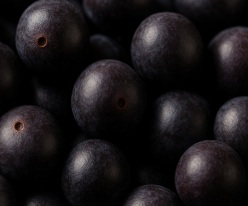

Acai
Açaí (Euterpe oleracea Mart., syn. Euterpe badiocarpa Barb. Rodr.; Arecaceae)
Açaí is the dark-purple berry of Amazonian palms, commonly referenced to Euterpe oleracea; Euterpe badiocarpa is treated as a historical synonym. The pulp is used in foods and beverages, standardized extracts, and cosmetic ingredients where it serves flavor, color (in specific fractions), and functional roles such as antioxidant and emollient.

Common name: Açaí (acai)
Parent plant: Euterpe oleracea Mart.
Kingdom: Plantae
Clade: Angiosperms
Clade: Monocots
Order: Arecales
Family: Arecaceae
Genus: Euterpe
Species: Euterpe oleracea Mart.
Cultivation and growth conditions
Climate:
Açaí is a tropical palm native to the humid regions of the Amazon. It requires high temperatures year-round and does not tolerate frost. It thrives in hot, humid environments with abundant rainfall and consistently high atmospheric humidity.
Sun exposure:
It prefers full sun, but also grows well in partial shade, particularly during the early stages. High light availability promotes vigorous growth and higher fruit yields.
Soil:
Açaí develops well in soils that are rich in organic matter, deep, and well drained, though it can tolerate periodically flooded soils such as those found in river valleys and igapó forests. The ideal pH ranges from 5.0 to 6.5. Poor or compacted soils slow growth and reduce productivity.
Irrigation:
In cultivation, the soil must be kept consistently moist, but never waterlogged. Regular irrigation is important to support continuous development of leaves, inflorescences, and fruit clusters.
Temperature:
Optimal growth: 24–30 °C
Sensitive to temperatures below 10 °C
A hot–humid environment is essential for a continuous production cycle
Fertilization:
Açaí palms respond well to nutrient-rich fertilization:
Nitrogen: supports vegetative growth and leaf development.
Potassium: essential for fruit development and quality.
Phosphorus: helps root establishment in the early stages.
Organic matter is very important, especially in intensive cultivation systems.
Crop care:
Weed removal around young plants.
Light pruning limited to removing dry leaves and old fruit stalks.
Monitoring for tropical pests such as beetles and caterpillars.
Control of fungal diseases that thrive in excess humidity, particularly root rots.
Harvest:
The fruits mature in clusters and are harvested when they turn a deep, glossy purple. Harvesting is usually done by climbing the palm or using long tools to reach the fruit bunches. Açaí berries perish quickly and must be processed immediately to obtain pulp or purée.
Propagation:
Açaí is propagated by seed. Seeds must be fresh and sown in a constantly moist, warm substrate. Germination may take from several weeks to two months. Young palms are transplanted once they develop a strong, stable stem.
Caloric Value (Per 100 g Of Product)
Unsweetened pulp (frozen/purée): ~60–85 kcal/100 g (typical retail values ~70–75 kcal/100 g).
Freeze-dried pulp powder: ~400–550 kcal/100 g (concentrated solids).
Hydroalcoholic extract: ~50–150 kcal/100 g (depends on solids and EtOH residue).
Glyceric/glycolic extract: ~150–300 kcal/100 g.
Standardized dry extract (powder): ~200–350 kcal/100 g.
Pulp/seed oil: ~880–900 kcal/100 g (lipid value).
At typical use levels, energy contribution depends on form and recipe; commercial “açaí bowls” can be calorie-dense when paired with sugary toppings.
Key Constituents
Polyphenols: anthocyanins (predominantly cyanidin-3-glucoside and cyanidin-3-rutinoside), proanthocyanidins; minor phenolics (vanillic, syringic, ferulic acids).
Carotenoids and tocopherols: carotenoids and vitamin E (γ-tocopherol) present in lipid fractions.
Lipid fraction: fatty-acid profile typically oleic (MUFA) ~55–65%, palmitic (SFA) ~20–25%, linoleic (PUFA) ~10–15% (indicative ranges).
Fiber: notable dietary fiber in the pulp.
Minerals: calcium, magnesium, manganese, iron (levels vary).
Analytical markers: TPC (Folin–Ciocalteu); anthocyanins by HPLC (C3G, C3R); for oil, FA profile (GC-FID), peroxide value, free acidity.
Production Process
Raw materials: selection of ripe racemes; removal of foreign matter; rapid cooling.
De-pulping: maceration in water and mechanical separation of pulp from seed; pH adjustment to stabilize color.
Stabilization: pasteurization of purée; for powders, freeze-drying or spray-dry with suitable carriers.
Extraction: for polyphenolic extracts, water/EtOH at controlled temperature, optionally with adsorption resins; for oil, cold-press/centrifugation of pulp followed by filtration.
Standardization: assay to TPC/anthocyanins (hydrophilic extracts) or oil specs (acidity/peroxides/iodine index).
Quality controls: HPLC anthocyanin profile, residual solvents, metals/pesticides, microbiology; packaging in line with GMP/HACCP.
Sensory And Technological Properties
Aroma/color: dark berry notes with vinous/cocoa hints; deep purple hue under acidic conditions.
Functionality: in-vitro antioxidant activity of polyphenolic fractions; oil contributes body and gloss in emulsions.
Compatibility: risk of haze from polyphenol–protein or Ca/Mg complexes; sensitivity of color to light/oxygen (fading).
Food Applications
Beverages, smoothies and RTD, frozen desserts, dairy applications, baked goods and fillings, confectionery, toppings/sauces; freeze-dried powder for açaí bowls. Indicative dosages: pulp 5–20% in blends/semi-finished bases; freeze-dried powder 1–5% in beverages/desserts; anthocyanin fractions as color sources (E163) to meet target shade.
Nutrition And Health
Açaí fractions supply polyphenols with in-vitro antioxidant activity; in foods, no health claims should be assigned without authorization. The oil’s prevalence of MUFA (oleic) supports a technically favorable lipid profile, while overall nutritional assessment depends on the dietary context.
Quality And Specifications (Typical Topics)
Assay to TPC and HPLC anthocyanin profile; absorbance ~520 nm (color).
Physicochemical parameters: pH, °Brix (pulp), moisture/aw (powders).
Oil: free acidity, peroxide value, FA profile, oxidation indices.
Contaminants: pesticides/metals within limits; compliant microbiology; residual solvents where applicable.
Traceability/hygiene: conformity to GMP/HACCP across the chain.
Storage And Shelf Life
Protect from light and oxygen (DO kept low); low-permeability barrier packs, inert or protective atmosphere.
Pulp/purées: maintain cold chain; avoid repeated freeze–thaw cycles.
Powders: control RH/aw to prevent caking and color/aroma loss.
Oil: consider suitable technical antioxidants; store cool and tightly closed. Apply FIFO rotation.
Allergens And Safety
Açaí is not a major allergen; microbiological risk is mitigated by hygienic harvest and pasteurization. Verify labeling requirements (e.g., any EtOH in extracts).
INCI Functions In Cosmetics
Typical entries: Euterpe Oleracea Fruit Extract; Euterpe Oleracea Pulp Powder; Euterpe Oleracea Fruit Oil.
Roles: antioxidant, skin conditioning, emollient; the oil supplies MUFA and PUFA that support the lipid phase and sensorial feel.
Troubleshooting
Color loss: high pH/oxygen/light → acidify within product limits, protect from light/DO, use suitable antioxidants.
Haze/precipitates: polyphenol–protein/metal complexes → clarification, mild chelants, fine filtration.
Oil oxidation: rising peroxide values → improve oxygen barrier, lower storage temperature, add antioxidants.
Lot-to-lot variability: origin, ripeness, process → standardize to TPC/anthocyanins or to oil specs with tight tolerances.
Sustainability And Supply Chain
Harvesting in floodplain ecosystems with attention to biodiversity and local practices; valorization of by-products (pits/seeds) for energy or biochar; effluent management to BOD/COD targets; recyclable packaging and temperature-controlled logistics.
Conclusion
Açaí combines anthocyanin pigments, dark-fruit notes, and a lipid fraction that contains MUFA. Application performance hinges on raw-material quality, control of pH/oxygen/temperature, and rigorous analytical standardization; with these safeguards, products remain stable, reproducible, and sensorially effective.
Mini-Glossary
EtOH — Ethanol: hydroalcoholic co-solvent; relevant for labeling if residual.
TPC — Total phenolic content: Folin–Ciocalteu method; global, non-specific phenolic indicator.
HPLC — High-performance liquid chromatography: quantitative analysis of anthocyanins and markers.
MUFA — Mono-unsaturated fatty acids (e.g., oleic): may support favorable lipid profile and oxidative stability.
PUFA — Poly-unsaturated fatty acids (e.g., linoleic): functional in membranes but more oxidation-prone.
SFA — Saturated fatty acids (e.g., palmitic): high oxidative stability; dietary balance is advisable.
E163 — Anthocyanins: class of plant-derived food colorants (EU).
DO — Dissolved oxygen: reducing it limits oxidation and color fading.
RH — Relative humidity: control for powder stability.
aw — Water activity: fraction of “free” water related to stability and microbiology.
GMP/HACCP — Good manufacturing practice / Hazard analysis and critical control points: preventive quality systems with defined CCP.
BOD/COD — Biochemical/chemical oxygen demand: wastewater organic-load indicators.
FIFO — First in, first out: stock rotation prioritizing older lots.
CCP — Critical control point: step where a control prevents/eliminates/reduces a hazard.
GC-FID — Gas chromatography with flame-ionization detection: used for fatty-acid profiling.
References__________________________________________________________________________
Interdonato L, Marino Y, Franco GA, Arangia A, D'Amico R, Siracusa R, Cordaro M, Impellizzeri D, Fusco R, Cuzzocrea S, Paola RD. Açai Berry Administration Promotes Wound Healing through Wnt/β-Catenin Pathway. Int J Mol Sci. 2023 Jan 3;24(1):834. doi: 10.3390/ijms24010834. PMID: 36614291;
Abstract. Recently, wound healing has received increased attention from both a scientific and clinical point of view. It is characterized by an organized series of processes: angiogenesis, cell migration and proliferation, extracellular matrix production, and remodeling. Many of these processes are controlled by the Wnt pathway, which activates them. The aim of the study was to evaluate the molecular mechanism of açai berry administration in a mouse model of wound healing. CD1 male mice were used in this research. Two full-thickness excisional wounds (5 mm) were performed with a sterile biopsy punch on the dorsum to create two circular, full-thickness skin wounds on either side of the median line on the dorsum. Açai berry was administered by oral administration (500 mg/kg dissolved in saline) for 6 days after induction of the wound. Our study demonstrated that açai berry can modulate the Wnt pathway, reducing the expression of Wnt3a, the cysteine-rich domain of frizzled (FZ)8, and the accumulation of cytosolic and nuclear β-catenin. Moreover, açai berry reduced the levels of TNF-α and IL-18, which are target genes strictly downstream of the Wnt/β-catenin pathway. It also showed important anti-inflammatory activities by reducing the activation of the NF-κB pathway. Furthermore, Wnt can modulate the activity of growth factors, such as TGF-β, and VEGF, which are the basis of the wound-healing process. In conclusion, we can confirm that açai berry can modulate the activity of the Wnt/β-catenin pathway, as it is involved in the inflammatory process and in the activity of the growth factor implicated in wound healing.
Impellizzeri D, D'Amico R, Fusco R, Genovese T, Peritore AF, Gugliandolo E, Crupi R, Interdonato L, Di Paola D, Di Paola R, Cuzzocrea S, Siracusa R, Cordaro M. Açai Berry Mitigates Vascular Dementia-Induced Neuropathological Alterations Modulating Nrf-2/Beclin1 Pathways. Cells. 2022 Aug 22;11(16):2616. doi: 10.3390/cells11162616.
Abstract. The second-most common cause of dementia is vascular dementia (VaD). The majority of VaD patients experience cognitive impairment, which is brought on by oxidative stress and changes in autophagic function, which ultimately result in neuronal impairment and death. In this study, we examine a novel method for reversing VaD-induced changes brought on by açai berry supplementation in a VaD mouse model. The purpose of this study was to examine the impact of açai berries on the molecular mechanisms underlying VaD in a mouse model of the disease that was created by repeated ischemia-reperfusion (IR) of the whole bilateral carotid artery. Here, we found that açai berry was able to reduce VaD-induced behavioral alteration, as well as hippocampal death, in CA1 and CA3 regions. These effects are probably due to the modulation of nuclear factor erythroid 2-related factor 2 (Nrf-2) and Beclin-1, suggesting a possible crosstalk between these molecular pathways. In conclusion, the protective effects of açai berry could be a good supplementation in the future for the management of vascular dementia.
Laurindo LF, Barbalho SM, Araújo AC, Guiguer EL, Mondal A, Bachtel G, Bishayee A. Açaí (Euterpe oleracea Mart.) in Health and Disease: A Critical Review. Nutrients. 2023 Feb 16;15(4):989. doi: 10.3390/nu15040989.
Abstract. The açaí palm (Euterpe oleracea Mart.), a species belonging to the Arecaceae family, has been cultivated for thousands of years in tropical Central and South America as a multipurpose dietary plant. The recent introduction of açaí fruit and its nutritional and healing qualities to regions outside its origin has rapidly expanded global demand for açaí berry. The health-promoting and disease-preventing properties of this plant are attributed to numerous bioactive phenolic compounds present in the leaf, pulp, fruit, skin, and seeds. The purpose of this review is to present an up-to-date, comprehensive, and critical evaluation of the health benefits of açaí and its phytochemicals with a special focus on cellular and molecular mechanisms of action. In vitro and in vivo studies showed that açaí possesses antioxidant and anti-inflammatory properties and exerts cardioprotective, gastroprotective, hepatoprotective, neuroprotective, renoprotective, antilipidemic, antidiabetic, and antineoplastic activities. Moreover, clinical trials have suggested that açaí can protect against metabolic stress induced by oxidation, inflammation, vascular abnormalities, and physical exertion. Due to its medicinal properties and the absence of undesirable effects, açaí shows a promising future in health promotion and disease prevention, in addition to a vast economic potential in the food and cosmetic industries.
Shim HR, Lee JS, Nam HS, Lee HG. Nanoencapsulation of synergistic combinations of acai berry concentrate to improve antioxidant stability. Food Sci Biotechnol. 2016 Dec 31;25(6):1597-1603. doi: 10.1007/s10068-016-0246-9.
Abstract. The objectives of this study were to increase the antioxidant activity of acai berry concentrate (Acai) by combining it with various antioxidants to exploit synergistic effects and improve antioxidant stability by nanoencapsulation. Ascorbic acid and trolox were identified as synergistic antioxidants for Acai. The optimal mixing ratio of ascorbic acid (74.64 μg/mL) and trolox (47.88 μg/mL) for synergistic activity in both oxygen radical absorbance capacity (ORAC) and DPPH assays was 1.56:1. A mixture of Acai, ascorbic acid, and trolox at the optimum ratio was nanoencapsulated using chitosan and gum arabic. Nanoparticles exhibited homogenous dispersion with a 230 to 260 nm particle size. During storage, nanoparticles exhibited better antioxidant stability than non-nanoencapsulated antioxidants. These results suggest that mixing Acai with ascorbic acid and trolox or nanoencapsulating this mixture with chitosan and gum arabic are both effective techniques for improving antioxidant activities.
Sadowska-Krępa E, Kłapcińska B, Podgórski T, Szade B, Tyl K, Hadzik A. Effects of supplementation with acai (Euterpe oleracea Mart.) berry-based juice blend on the blood antioxidant defence capacity and lipid profile in junior hurdlers. A pilot study. Biol Sport. 2015 Jun;32(2):161-8. doi: 10.5604/20831862.1144419.
Abstract. The purpose of this pilot study was to examine whether regular consumption of an acai berry-based juice blend would affect sprint performance and improve blood antioxidant status and lipid profile in junior athletes. Seven junior hurdlers (17.5±1.2 years) taking part in a pre-season conditioning camp were supplemented once a day, for six weeks, with 100 ml of the juice blend. At the start and the end of the camp the athletes performed a 300-m sprint running test on an outdoor track. Blood samples were taken before and immediately after the test and after 1 h of recovery. Blood antioxidant status was evaluated based on activities of antioxidant enzymes (superoxide dismutase [SOD], catalase [CAT], glutathione peroxidase [GSH-Px], glutathione reductase [GR]), concentrations of non-enzymatic antioxidants (reduced glutathione [GSH], uric acid), total plasma polyphenols, ferric reducing ability of plasma (FRAP), thiobarbituric acid reactive substances (TBARS) and activities of creatine kinase (CK) and lactate dehydrogenase (LDH) as muscle damage markers. In order to evaluate potential health benefits of the acai berry, the post-treatment changes in lipid profile parameters (triglycerides, cholesterol and its fractions) were analysed. Six weeks' consumption of acai berry-based juice blend had no effect on sprint performance, but it led to a marked increase in the total antioxidant capacity of plasma, attenuation of the exercise-induced muscle damage, and a substantial improvement of serum lipid profile. These findings strongly support the view of the health benefits of supplementation with the acai berry-based juice blend, mainly attributed to its high total polyphenol content and the related high in vivo antioxidant and hypocholesterolaemic activities of this supplement.
ALNasser MN, AlSaadi AM, Whitby A, Kim DH, Mellor IR, Carter WG. Acai Berry (Euterpe sp.) Extracts Are Neuroprotective against L-Glutamate-Induced Toxicity by Limiting Mitochondrial Dysfunction and Cellular Redox Stress. Life (Basel). 2023 Apr 15;13(4):1019. doi: 10.3390/life13041019.
Abstract. Aberrant accumulation of the neurotransmitter L-glutamate (L-Glu) has been implicated as a mechanism of neurodegeneration, and the release of L-Glu after stroke onset leads to a toxicity cascade that results in neuronal death. The acai berry (Euterpe oleracea) is a potential dietary nutraceutical. The aim of this research was to investigate the neuroprotective effects of acai berry aqueous and ethanolic extracts to reduce the neurotoxicity to neuronal cells triggered by L-Glu application. L-Glu and acai berry effects on cell viability were quantified using 3-(4,5-Dimethylthiazol-2-yl)-2,5-diphenyltetrazolium bromide (MTT) and lactate dehydrogenase (LDH) assays, and effects on cellular bioenergetics were assessed via quantitation of the levels of cellular ATP, mitochondrial membrane potential (MMP), and production of reactive oxygen species (ROS) in neuroblastoma cells. Cell viability was also evaluated in human cortical neuronal progenitor cell culture after L-Glu or/and acai berry application. In isolated cells, activated currents using patch-clamping were employed to determine whether L-Glu neurotoxicity was mediated by ionotropic L-Glu-receptors (iGluRs). L-Glu caused a significant reduction in cell viability, ATP, and MMP levels and increased ROS production. The co-application of both acai berry extracts with L-Glu provided neuroprotection against L-Glu with sustained cell viability, decreased LDH production, restored ATP and MMP levels, and reduced ROS levels. Whole-cell patch-clamp recordings showed that L-Glu toxicity is not mediated by the activation of iGluRs in neuroblastoma cells. Fractionation and analysis of acai berry extracts with liquid chromatography-mass spectrometry identified several phytochemical antioxidants that may have provided neuroprotective effects. In summary, the acai berry contains nutraceuticals with antioxidant activity that may be a beneficial dietary component to limit pathological deficits triggered by excessive L-Glu accumulations.
de Moura RS, Resende ÂC. Cardiovascular and Metabolic Effects of Açaí, an Amazon Plant. J Cardiovasc Pharmacol. 2016 Jul;68(1):19-26. doi: 10.1097/FJC.0000000000000347.
Abstract. Despite being used for a long time as food and beverage by Brazilian people who live on the Amazon bay, only in the beginning of this century, açaí berries have been the object of scientific research. Açaí berries are rich in polyphenols that probably explains its versatile pharmacological actions and huge consumption, not only in Brazil but also in Europe and United States. In this review, not all but some pharmacological aspects of açaí berries are analyzed. Chemical and pharmacological differences between extracts obtained from the skin and seed of açaí are considered. Polyphenols from the seed of açaí increase endothelial nitric oxide production leading to endothelium-dependent relaxation, reduce reactive oxygen species and regulate key targets associated with lipid metabolism in different conditions such as hypertension, renal failure, and metabolic syndrome. We review the novel mechanisms of actions of açaí on different targets which could trigger the health benefits of açaí such as antioxidant, vasodilator, antihypertensive, cardioprotector, renal protector, antidyslipidemic, antiobesity, and antidiabetic effects in cardiovascular and metabolic disturbances.
Read other Tiiips about this object in Italian (1)
Object facts
Key information and links


