

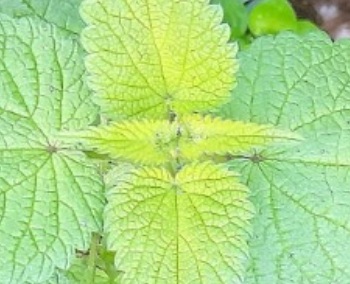
Nettle leaves
Rating : 7
| Evaluation | N. Experts | Evaluation | N. Experts |
|---|---|---|---|
| 1 | 6 | ||
| 2 | 7 | ||
| 3 | 8 | ||
| 4 | 9 | ||
| 5 | 10 |
Pros:
Anti-urolithiasis (1)0 pts from Al222
| Sign up to vote this object, vote his reviews and to contribute to Tiiips.Evaluate | Where is this found? |
| "Descrizione" about Nettle leaves by Al222 (23249 pt) | 2025-Oct-23 11:19 |
| Read the full Tiiip | (Send your comment) |
Nettle leaves
Nettle (Urtica dioica) is a perennial herbaceous plant with urticating hairs, belonging to the Urticaceae family, the common Nettle. It is used in traditional medical medicine to control cardiovascular disorders and is one of the most studied medicinal herbs in scientific literature worldwide.

A leaf extract is obtained from this plant and it appears in the form of a brown powder.

Urtica dioica, commonly known as stinging nettle, is a perennial herbaceous plant belonging to the Urticaceae family. It is widely distributed across Europe, Asia, North America, and other temperate regions. Known for its stinging hairs that release irritant substances upon contact, nettle is highly valued for its nutritional and medicinal properties. Despite its urticating nature, it has long been used in traditional medicine, agriculture, and as a nutritious food source.
Nettle is rich in bioactive compounds that contribute to its numerous health benefits:
Nettle is a hardy plant that grows easily:
Culinary Uses:
Medicinal Properties:
Agricultural and Environmental Uses:
Cosmetic Uses:
Medical:
Food Industry:
Agriculture and Gardening:
Textile Industry:
Environmental Benefits:
Safety:
Studies
Medical
The leaf extract has been reported to prevent some of the effects of prostatic hyperplasia (1) and as an anti-inflammatory for rheumatoid arthritis. It has an anti-diabetic effect and is used for cardiovascular therapy for its bioactive compounds such as polyphenols, tri-terpenes, sterols, flavonoids and lectin that reduce blood glucose levels (2) with their anti-inflammatory, antioxidant, anti-hypertensive properties and can prevent many chronic and degenerative diseases. The efficacy of this edible plant with its stinging hairs has proved useful for its anti-haemorrhagic, analgesic, diuretic, nutritive, anti-asthmatic, astringent and depurative effects.
Phytochemical composition
| Linoleic acid | 20,2% |
| Alfa-linolenic acid | 12,4% |
| Fatty acid C17: 1 | 0,13% |
| Proteins | 3,7% |
| Dietary fibres | 6,4% |
| Calcium | 169 mg/100 g |
| Fe | 277 mg/100 g |
| Carbohydrates | 37,4% |
The fresh leaves are used to treat allergies (3) and contain chlorogenic acid, malic acid, flavonoids such as rutin, quercetin, kaempferol while the root contains lignans, phytosterols, polysaccharides, coumarins.

Cosmetics
Cosmeceutical product for anti-dandruff and anti-hair loss lotions.
Hair conditioning agent. A large number of ingredients with specific purposes can co-exist in a hair shampoo: cleansers, conditioners, thickeners, mattifying agents, sequestering agents, fragrances, preservatives, special additives. However, the indispensable ingredients are the cleansers and conditioners as they are necessary and sufficient for hair cleansing and manageability. The others act as commercial and non-essential auxiliaries such as: appearance, fragrance, colouring, etc. Hair conditioning agents have the task of increasing shine, manageability and volume, and reducing static electricity, especially after treatments such as colouring, ironing, waving, drying and brushing. They are, in practice, dispersing agents that may contain cationic surfactants, thickeners, emollients, polymers. The typology of hair conditioners includes: intensive conditioners, instant conditioners, thickening conditioners, drying conditioners.
Food
The leaves of Urtica dioica are edible and are consumed in foods such as pesto, omelettes, soups, purees, pies, biscuits, jellies, jams, while the whole dried herb is included in teas, infusions and other preparations.
Other uses
Veterinary medical, textile industry
Typical commercial product characteristics Urtica Dioica Leaf Powder
| Appearance | Fine Brown powder |
| Ash | 8.0% |
| As | 1 ppm |
| Cd | 1 ppm |
| Pb | 3 ppm |
| Hg | 0.1 ppm |
| Heavy Metals | 10 ppm |
| Total Plate | 10000fcu/g |
| Storage | Cool Dry Place |
| Shelf Life | 2 Years |
The most relevant studies on the subject have been selected with a summary of their contents:
References_____________________________________________________________________
(1) Dhouibi R, Affes H, Ben Salem M, Hammami S, Sahnoun Z, Zeghal KM, Ksouda K. Screening of pharmacological uses of Urtica dioica and others benefits. Prog Biophys Mol Biol. 2020 Jan;150:67-77. doi: 10.1016/j.pbiomolbio.2019.05.008.
Wagner H, Willer F, Samtleben R, Boos G. Search for the antiprostatic principle of stinging nettle (Urtica dioica) roots. Phytomedicine. 1994 Dec;1(3):213-24. doi: 10.1016/S0944-7113(11)80068-1.
(2) El Haouari M, Rosado JA. Phytochemical, Anti-diabetic and Cardiovascular Properties of Urtica dioica L. (Urticaceae): A Review. Mini Rev Med Chem. 2019;19(1):63-71. doi: 10.2174/1389557518666180924121528.
Dar SA, Ganai FA, Yousuf AR, Balkhi MU, Bhat TM, Sharma P. Pharmacological and toxicological evaluation of Urtica dioica. Pharm Biol. 2013 Feb;51(2):170-80. doi: 10.3109/13880209.2012.715172.
Abstract. Context: Medicinal plants are a largely unexplored source of drug repository. Urtica dioica L. (Urticaceae) is used in traditional medicine to treat diverse conditions. Objective: The present study describes the antidiabetic, antiinflammatory, antibacterial activity, and toxicological studies of Urtica dioica. Materials and methods: U. dioica leaves were subjected to solvent extraction with hexane, chloroform, ethyl acetate, methanol, and aqueous, respectively, and screened for antidiabetic (300 mg/kg bw by glucose tolerance test; GTT), antiinflammatory (200 mg/kg bw by rat paw edema assay) and antibacterial activities [by disc-diffusion and minimum inhibitory concentration (MIC) assays]. Toxicological studies were carried on Artemia salina and Wistar rats; phytochemical analyses were carried out, using chromatographic and spectroscopic techniques. Results: The aqueous extract of U. dioica (AEUD) significantly (p < 0.001; 67.92%) reduced the blood glucose level during GTT in Wistar rats with an effective dose of 300 mg/kg bw in dose-dependent studies. High-performance liquid chromatography with photodiode-array detection (HPLC-DAD) analysis showed the presence of hydroxycinnamic acid derivatives and flavonoids in AEUD. Hexane Fraction-2 (HF2) exhibited both antiinflammatory activity (48.83% after 3 h), comparable to that of indomethacin (53.48%), and potent antibacterial activity with MIC values ranging from 31.25-250 µg/mL against all the tested strains. Gas chromatography-mass spectrometry (GC-MS) analysis showed fatty acid esters and terpenes as the major constituents of HF2. Toxicity tests showed higher safety margin of all the solvent extracts with LC(50) > 1000 μg/mL each on A. salina. Discussion and conclusion: Our results showed that the U. dioica leaves are an interesting source of bioactive compounds, justifying their use in folk medicine, to treat various diseases.
(3) Upton, R. (2013). Stinging nettles leaf (Urtica dioica L.): Extraordinary vegetable medicine. Journal of herbal medicine, 3(1), 9-38.
Abstract. The efficacy and safety of herbal medicines are dependent upon the standards by which they are made and our knowledge base when prescribing them. Stinging nettles is a staple among Western herbalists and is widely used as a vegetable green, juice, tea, and freeze dried products, predominantly as a blood nourishing tonic and for seasonal rhinitis. The following botanical profile is excerpted from the American Herbal Pharmacopoeia® and Therapeutic Compendium.
Orčić D, Francišković M, Bekvalac K, Svirčev E, Beara I, Lesjak M, Mimica-Dukić N. Quantitative determination of plant phenolics in Urtica dioica extracts by high-performance liquid chromatography coupled with tandem mass spectrometric detection. Food Chem. 2014 Jan 15;143:48-53. doi: 10.1016/j.foodchem.2013.07.097.
Pinelli P, Ieri F, Vignolini P, Bacci L, Baronti S, Romani A. Extraction and HPLC analysis of phenolic compounds in leaves, stalks, and textile fibers of Urtica dioica L. J Agric Food Chem. 2008 Oct 8;56(19):9127-32. doi: 10.1021/jf801552d.
Abstract. In the present study the phenolic composition of leaves, stalks, and textile fiber extracts from Urtica dioica L. is described. Taking into account the increasing demand for textile products made from natural fibers and the necessity to create sustainable "local" processing chains, an Italian project was funded to evaluate the cultivation of nettle fibers in the region of Tuscany. The leaves of two nettle samples, cultivated and wild (C and W), contain large amounts of chlorogenic and 2- O-caffeoylmalic acid, which represent 71.5 and 76.5% of total phenolics, respectively. Flavonoids are the main class in the stalks: 54.4% of total phenolics in C and 31.2% in W samples. Anthocyanins are second in quantitative importance and are present only in nettle stalks: 28.6% of total phenolics in C and 24.4% in W extracts. Characterization of phenolic compounds in nettle extracts is an important result with regard to the biological properties (antioxidant and antiradical) of these metabolites for their possible applications in various industrial activities, such as food/feed, cosmetics, phytomedicine, and textiles.
Devkota HP, Paudel KR, Khanal S, Baral A, Panth N, Adhikari-Devkota A, Jha NK, Das N, Singh SK, Chellappan DK, Dua K, Hansbro PM. Stinging Nettle (Urtica dioica L.): Nutritional Composition, Bioactive Compounds, and Food Functional Properties. Molecules. 2022 Aug 16;27(16):5219. doi: 10.3390/molecules27165219.
Abstract. Stinging nettle (Urtica dioica L., Urticaceae) is commonly found in Asia, Africa, and Europe and has a long history of being used as food and traditional medicine. Recently, this plant is gaining attention as a highly nutritious food, where fresh leaves are dried and used as powder or in other forms. Leaves are rich in many bioactive compounds. This review aims to cover the traditional uses in food and medicine, as well as its nutritional composition, including its bioactive chemical constituents and reported food functional activities. Various bioactive chemical constituents have been isolated from stinging nettle to date, such as flavonoids, phenolic acids, amino acid, carotenoids, and fatty acids. Stinging nettle extracts and its compounds, such as rutin, kaempferol, and vitamin A, are also used for their nutritional properties and as anti-inflammatory and antioxidant agents. Future studies should focus on the proper formulation and stability testing of the functional foods containing stinging nettle and their detailed activities in clinical studies.
Đurović S, Micić D, Šorgić S, Popov S, Gašić U, Tosti T, Kostić M, Smyatskaya YA, Blagojević S, Zeković Z. Recovery of Polyphenolic Compounds and Vitamins from the Stinging Nettle Leaves: Thermal and Behavior and Biological Activity of Obtained Extracts. Molecules. 2023 Feb 28;28(5):2278. doi: 10.3390/molecules28052278.
Abstract. Stinging nettle (SN) is an extraordinary plant from the Urticaceae botanical family. It is well-known and widely used in food and folk medicine to treat different disorders and diseases. This article aimed to study the chemical composition of SN leaves extracts, i.e., polyphenolic compounds and vitamins B and C, because many studies ascribed high biological potency to these compounds and their significance in the human diet. Besides the chemical profile, the thermal properties of the extracts were studied. The results confirmed presence of many polyphenolic compounds and vitamins B and C. It also showed that the chemical profile closely correlated with the applied extraction technique. The thermal analysis showed that analyzed samples were thermally stable up to about 160 °C. Thermal degradation of samples UAE, MAE, and MAC took place in four steps, and sample SE in three steps. Altogether, results confirmed the presence of health-beneficial compounds in stinging nettle leaves and indicated the possible application of its extract in pharmaceutical and food industries as both a medicinal and food additive.
| Sign up to vote this object, vote his reviews and to contribute to Tiiips.EvaluateClose | (0 comments) |
Read other Tiiips about this object in __Italiano (1)
Component type:   Natural Main substances:   Last update:   2025-10-23 11:09:39 | Chemical Risk:   |
