

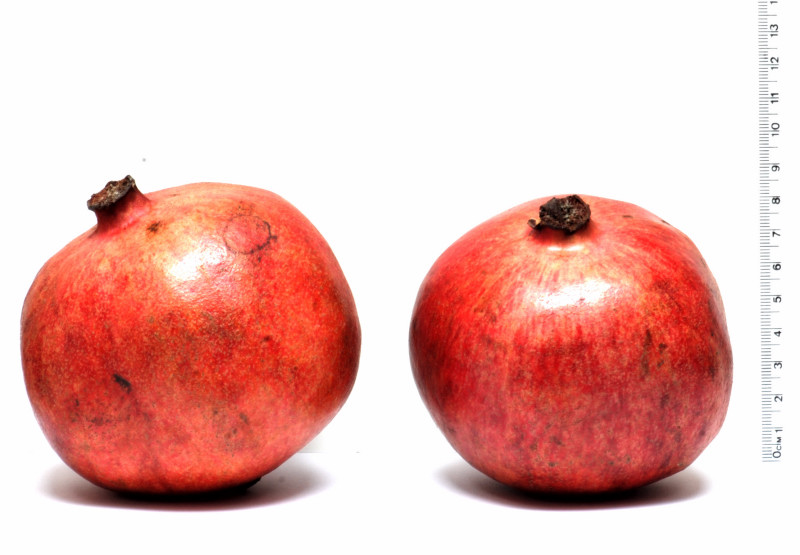
Pomegranate
Rating : 7
| Evaluation | N. Experts | Evaluation | N. Experts |
|---|---|---|---|
| 1 | 6 | ||
| 2 | 7 | ||
| 3 | 8 | ||
| 4 | 9 | ||
| 5 | 10 |
0 pts from Al222
| Sign up to vote this object, vote his reviews and to contribute to Tiiips.Evaluate | Where is this found? |
| "Descrizione" about Pomegranate by Al222 (23249 pt) | 2024-Sep-01 20:47 |
| Read the full Tiiip | (Send your comment) |
Punica granatum, commonly known as pomegranate, is a deciduous shrub or small tree known for its distinctive, vibrant red fruits and ornamental flowers. Native to the Mediterranean region and parts of Asia, the pomegranate has been cultivated for centuries for its sweet and tangy fruit, which is rich in nutrients and has various culinary, medicinal, and cultural uses.
Botanical Classification:
Plant Characteristics:
Growth Form: Punica granatum is a deciduous shrub or small tree that typically reaches a height of 5-10 meters (16-33 feet). It has a bushy appearance with multiple branches.
Leaves: The leaves are simple, lanceolate to oblong, and shiny green. They are usually about 3-7 cm long and turn yellow in the fall.
Flowers: The plant produces striking, trumpet-shaped flowers that can be orange, red, or pink. The flowers appear in late spring to early summer and are followed by the fruit.
Fruit: The fruit is a large, round berry with a tough, leathery rind that ranges from yellow to red. Inside, it contains numerous arils (seed-filled sacs) that are juicy and edible. The fruit typically measures 7-12 cm in diameter.
Chemical Composition and Structure:
How to Cultivate It:
Uses and Benefits:
Applications:
Environmental and Safety Considerations:
Studies
In the phytochemical composition there are polyphenols, flavonoids, anthocyanins, tannins, ellagic acid, ursolic acid, gallic acid.
Of all the fresh fruit, the pomegranate has the highest antioxidant power and I quote the formula: 3895.9 +/- 241.4 mg/L x kJ(-1). All the remaining fruit has a lower degree and in order: orange, lemon, mandarin, persimmon, kiwi, pear and avocado (1).
It has first-rate antioxidant properties for the human body (2), releasing ellagic acid into the grains and internal cortex, which protects the brain, intestines, prostate (3) and others.

As far as the prostate is concerned, it is an alternative cure for contrasting the tumor (4).
Microscopic observation of the wound healing process on collagen, number of polymorphonuclear cell infiltration, angiogenesis and re-epithelialisation showed that topical administration of 10% Powder of standardized pomegranate extract accelerates the healing of wounds from second-degree burns (5).

References_________________________________________________________________________
(1) Basov AA, Bykov IM. Comparative characteristics of antioxidant capacity and energy content of some foods. Vopr Pitan. 2013;82(3):77-80. Russian. PMID: 24006756.
Abstract. The paper presents a comparative evaluation of antioxidant capacity and energy values of different foods groups in order to identify the most efficient combinations for correction of metabolic disorders associated with an imbalance in antioxidant system. In study integral method for determining of antioxidant and energy indicators (patent No 2,455,703) has been used. It has been revealed that the highest antioxidant-energy capacity (AE) of fresh juices has a pomegranate juice (AE = 3895.9 +/- 241.4 mg/L x kJ(-1)), other fresh juices inferior to him on this indicator: grenade>orange>lemon=apple> pomelo > mandarin > persimmon > kiwi > pears > avocado. Among dairy products the highest AE belongs to boiled fermented milk--"ryazhenka" (AE = 40.9 +/- 2.7 mg/L x kJ(-1)), other dairy products can be placed in line with index AE: ryazhenka ==>kefir > yogurt. Most of fresh juices were significantly superior to antioxidant-energy potential of other foods. Despite the fact that dairy products AE were lower than AE of some juices, they were much superior to AE values of fastfood products (biscuits, potato chips, popcorn). This demonstrates need to reduce the quota of fast foods in the diet to prevent the risk of reduction potential of the endogenous antioxidant system.
(2) Aslan A, Can Mİ, Boydak D. Anti-oxidant effects of pomegranate juice on Saccharomyces cerevisiae cell growth. Afr J Tradit Complement Altern Med. 2014 Jun 4;11(4):14-8. doi: 10.4314/ajtcam.v11i4.3. PMID: 25392575; PMCID: PMC4202391.
Abstract. Background: Pomegranate juice has a number of positive effects on both human and animal subjects....Results: According to our results statistically significant differences have been determined among the study groups in terms of fatty acids and vitamin (p<0,05). Fatty acid synthesis, vitamin control and cell density increased in groups to which PJ was given in comparison with the control group (p<0,05). Pomegranate juice increased vitamins, fatty acids and total protein expression in Saccharomyces cerevisiae in comparison with the control. Conclusion: Pomegranate juice has a positive effect on fatty acid, vitamin and protein synthesis by Saccharomyces cerevisiae. Accordingly, we believe that it has significantly decreased oxidative damage thereby making a positive impact on yeast development.
(3) Naiki-Ito A, Chewonarin T, Tang M, Pitchakarn P, Kuno T, Ogawa K, Asamoto M, Shirai T, Takahashi S. Ellagic acid, a component of pomegranate fruit juice, suppresses androgen-dependent prostate carcinogenesis via induction of apoptosis. Prostate. 2015 Feb;75(2):151-60. doi: 10.1002/pros.22900. Epub 2014 Oct 4. PMID: 25284475.
(4) Wang L, Martins-Green M. Pomegranate and its components as alternative treatment for prostate cancer. Int J Mol Sci. 2014 Aug 25;15(9):14949-66. doi: 10.3390/ijms150914949. PMID: 25158234; PMCID: PMC4200766.
Abstract. Prostate cancer is the second leading cause of cancer deaths in men in the United States. There is a major need for less toxic but yet effective therapies to treat prostate cancer. Pomegranate fruit from the tree Punica granatum has been used for centuries for medicinal purposes and is described as "nature's power fruit". Recent research has shown that pomegranate juice (PJ) and/or pomegranate extracts (PE) significantly inhibit the growth of prostate cancer cells in culture. In preclinical murine models, PJ and/or PE inhibit growth and angiogenesis of prostate tumors. More recently, we have shown that three components of PJ, luteolin, ellagic acid and punicic acid together, have similar inhibitory effects on prostate cancer growth, angiogenesis and metastasis. Results from clinical trials are also promising. PJ and/or PE significantly prolonged the prostate specific antigen (PSA) doubling time in patients with prostate cancer. In this review we discuss data on the effects of PJ and PE on prostate cancer. We also discuss the effects of specific components of the pomegranate fruit and how they have been used to study the mechanisms involved in prostate cancer progression and their potential to be used in deterring prostate cancer metastasis.
(5) Lukiswanto BS, Miranti A, Sudjarwo SA, Primarizky H, Yuniarti WM. Evaluation of wound healing potential of pomegranate (Punica granatum) whole fruit extract on skin burn wound in rats (Rattus norvegicus). J Adv Vet Anim Res. 2019 Apr 14;6(2):202-207. doi: 10.5455/javar.2019.f333.
Abstract. Objective: This research was conducted to study the wound healing process of whole fruit pomegranate extract (punica granatum) standardized with 40% ellagic acid ointment for deep second-degree burn wound of skin in the rat (Rattus norvegicus)....Results: Microscopic observation on the wound healing process on the collagen, PMN infiltration, angiogenesis, and re-epithelization showed that topical administration of 10% SPE in burns gives the best result. This is characterized by a high density of collagen with a good arrangement, which is accompanied by a complete and mature epithelium, low number of inflammatory cells, and angiogenesis. This may be caused by the compounds in the pomegranate extract, which have the antioxidant, anti-inflammatory, and anti-bacterial effects. Conclusion: This study reveals that 10% SPE accelerates the healing of deep second-degree burn wound. Thus, pomegranate standardized with 40% ellagic acid is a promising herb for the healing of burn wound of skin.
| Sign up to vote this object, vote his reviews and to contribute to Tiiips.EvaluateClose | (0 comments) |
| "Descrizione" about Pomegranate by Al222 (23249 pt) | 2025-Dec-05 12:12 |
| Read the full Tiiip | (Send your comment) |
Pomegranate tree (Punica granatum L.)
Deciduous small to medium–sized tree or shrub, typically cultivated in warm temperate and Mediterranean climates, though capable of adapting to inland regions with moderately cold winters. Its habit can be either bushy or as a low–growing tree, with numerous branches that may be spiny. Leaves are opposite or nearly opposite, small, glossy, and deep green. Flowers are predominantly red-orange, though white or variegated forms occur, and display a bell-shaped morphology. The fruits, commonly identified as melagrane, are specialized berries (balaustae) of rounded form, characterized by a thick, leathery rind enclosing numerous juicy arils, each containing a seed.
From a cultivation standpoint, Pomegranate tree is considered relatively rustic, demonstrating good drought tolerance once established. It shows preference for well-drained soils, ranging from medium-textured to slightly sandy, including moderately calcareous substrates. Prolonged waterlogging should be avoided, as it can promote root rot and shorten the plant’s productive lifespan. Flowering generally occurs from late spring into summer; fruit set is influenced by temperature, water availability, and pollination quality. The ripening of melagrane typically takes place in autumn. Yield per plant and fruit quality parameters are affected by the cultivar, canopy management (pruning strategy), irrigation regime, and climatic characteristics of the growing season.
The composition of Pomegranate is notable for a high proportion of water and fermentable sugars (glucose and fructose). Organic acids are present—chiefly citric and malic—alongside dietary fibre found partly in the internal membranes and rind. The mineral profile is led by potassium, with smaller amounts of calcium and magnesium. Phenolic compounds, including tannins and anthocyanins, contribute to both the antioxidant profile and the coloration of juices. Oil obtained from melagrana seeds contains a lipid fraction dominated by unsaturated fatty acids, most notably punicic acid, as well as variable levels of tocopherols. The concentrations of these constituents are influenced by cultivar, maturity stage, pedoclimatic factors, and post-harvest conservation practices.
At the technological and food-industry level, Pomegranate is cultivated for the production of fresh melagrane, juices, concentrates, extracts, and semi-processed materials destined for beverages, syrups, confectionery products, and culinary preparations. Arils are consumed directly or used as ingredients in savoury and sweet dishes, while the juice serves as a base for blends, beverages, and high-fruit formulations. The rind and other fruit tissues, rich in tannins and polyphenols, are also employed on a more limited scale for technical or herbal extracts.
Commercial quality assessment is based on fruit size and rind integrity, external colour, soluble solids content (°Brix), acidity, sugar-to-acid ratio, aril yield, and the absence of internal defects such as splitting, rot, or aril dehydration. These parameters are essential to ensuring suitability for fresh consumption as well as for processing applications.
![]() | ![]() |
Botanical classification according to APG IV
Kingdom: Plantae
Clade: Angiosperms → Eudicots → Superrosids → Rosids → Eurosids II
Order: Myrtales
Family: Lythraceae
Genus: Punica
Species: Punica granatum L.
Indicative nutritional values per 100 g (pomegranate arils, raw, edible portion)
| Component | Approx. value per 100 g |
|---|---|
| Energy | ~ 83–90 kcal |
| Water | ~ 77–79 g |
| Total carbohydrates | ~ 18–19 g |
| — of which sugars | ~ 13–16 g |
| Dietary fibre | ~ 4–5 g |
| Proteins | ~ 1.5–2.0 g |
| Total fats | ~ 1.0–1.5 g |
| — of which saturated fatty acids (SFA) | ~ 0.1–0.15 g |
| — monounsaturated (MUFA) | ~ 0.1–0.2 g |
| — polyunsaturated (PUFA) | ~ 0.6–0.9 g (prevalently punicic acid and other omega-5/omega-6) |
| Sodium | low (a few mg) |
| Potassium | ~ 200–260 mg |
| Other minerals and micronutrients | small amounts of calcium, magnesium, phosphorus, iron; vitamin C, some B-group vitamins, natural antioxidants (polyphenols, tannins) |
Values may vary with cultivar, ripeness and growing conditions.
Short interpretation
Pomegranate is a fruit with a moderate energy content, mostly from carbohydrates and natural sugars, but it also provides dietary fibre, a small amount of proteins and fats, and useful micronutrients (especially potassium and polyphenolic antioxidants).
Compared with dry starches or refined sugars, it is less carbohydrate-dense and offers a more complex and nutritionally interesting profile (water, fibre, minerals and bioactive compounds).
Mini-glossary
SFA = Saturated fatty acids. High intakes, especially when replacing unsaturated fats, are associated with an increased cardiovascular risk.
MUFA = Monounsaturated fatty acids. Generally considered neutral or beneficial for cardiovascular health when replacing saturated fats.
PUFA = Polyunsaturated fatty acids. Include various omega families; essential in small amounts and important for membrane structure and inflammatory balance.
Plant Characteristics:
Growth Form: Punica granatum is a deciduous shrub or small tree that typically reaches a height of 5-10 meters (16-33 feet). It has a bushy appearance with multiple branches.
Leaves: The leaves are simple, lanceolate to oblong, and shiny green. They are usually about 3-7 cm long and turn yellow in the fall.
Flowers: The plant produces striking, trumpet-shaped flowers that can be orange, red, or pink. The flowers appear in late spring to early summer and are followed by the fruit.
Fruit: The fruit is a large, round berry with a tough, leathery rind that ranges from yellow to red. Inside, it contains numerous arils (seed-filled sacs) that are juicy and edible. The fruit typically measures 7-12 cm in diameter.
Chemical Composition and Structure:
How to Cultivate It:
Uses and Benefits:
Applications:
Environmental and Safety Considerations:
Safety: The fruit and its extracts are considered safe for consumption and use. However, individuals with allergies to pomegranates or related plants should exercise caution.
Studies
In the phytochemical composition there are polyphenols, flavonoids, anthocyanins, tannins, ellagic acid, ursolic acid, gallic acid.
Of all the fresh fruit, the pomegranate has the highest antioxidant power and I quote the formula: 3895.9 +/- 241.4 mg/L x kJ(-1). All the remaining fruit has a lower degree and in order: orange, lemon, mandarin, persimmon, kiwi, pear and avocado (1).
It has first-rate antioxidant properties for the human body (2), releasing ellagic acid into the grains and internal cortex, which protects the brain, intestines, prostate (3) and others.
As far as the prostate is concerned, it is an alternative cure for contrasting the tumor (4).
Microscopic observation of the wound healing process on collagen, number of polymorphonuclear cell infiltration, angiogenesis and re-epithelialisation showed that topical administration of 10% Powder of standardized pomegranate extract accelerates the healing of wounds from second-degree burns (5).
References_________________________________________________________________________
(1) Basov AA, Bykov IM. Comparative characteristics of antioxidant capacity and energy content of some foods. Vopr Pitan. 2013;82(3):77-80. Russian. PMID: 24006756.
Abstract. The paper presents a comparative evaluation of antioxidant capacity and energy values of different foods groups in order to identify the most efficient combinations for correction of metabolic disorders associated with an imbalance in antioxidant system. In study integral method for determining of antioxidant and energy indicators (patent No 2,455,703) has been used. It has been revealed that the highest antioxidant-energy capacity (AE) of fresh juices has a pomegranate juice (AE = 3895.9 +/- 241.4 mg/L x kJ(-1)), other fresh juices inferior to him on this indicator: grenade>orange>lemon=apple> pomelo > mandarin > persimmon > kiwi > pears > avocado. Among dairy products the highest AE belongs to boiled fermented milk--"ryazhenka" (AE = 40.9 +/- 2.7 mg/L x kJ(-1)), other dairy products can be placed in line with index AE: ryazhenka ==>kefir > yogurt. Most of fresh juices were significantly superior to antioxidant-energy potential of other foods. Despite the fact that dairy products AE were lower than AE of some juices, they were much superior to AE values of fastfood products (biscuits, potato chips, popcorn). This demonstrates need to reduce the quota of fast foods in the diet to prevent the risk of reduction potential of the endogenous antioxidant system.
(2) Aslan A, Can Mİ, Boydak D. Anti-oxidant effects of pomegranate juice on Saccharomyces cerevisiae cell growth. Afr J Tradit Complement Altern Med. 2014 Jun 4;11(4):14-8. doi: 10.4314/ajtcam.v11i4.3. PMID: 25392575; PMCID: PMC4202391.
Abstract. Background: Pomegranate juice has a number of positive effects on both human and animal subjects....Results: According to our results statistically significant differences have been determined among the study groups in terms of fatty acids and vitamin (p<0,05). Fatty acid synthesis, vitamin control and cell density increased in groups to which PJ was given in comparison with the control group (p<0,05). Pomegranate juice increased vitamins, fatty acids and total protein expression in Saccharomyces cerevisiae in comparison with the control. Conclusion: Pomegranate juice has a positive effect on fatty acid, vitamin and protein synthesis by Saccharomyces cerevisiae. Accordingly, we believe that it has significantly decreased oxidative damage thereby making a positive impact on yeast development.
(3) Naiki-Ito A, Chewonarin T, Tang M, Pitchakarn P, Kuno T, Ogawa K, Asamoto M, Shirai T, Takahashi S. Ellagic acid, a component of pomegranate fruit juice, suppresses androgen-dependent prostate carcinogenesis via induction of apoptosis. Prostate. 2015 Feb;75(2):151-60. doi: 10.1002/pros.22900. Epub 2014 Oct 4. PMID: 25284475.
(4) Wang L, Martins-Green M. Pomegranate and its components as alternative treatment for prostate cancer. Int J Mol Sci. 2014 Aug 25;15(9):14949-66. doi: 10.3390/ijms150914949. PMID: 25158234; PMCID: PMC4200766.
Abstract. Prostate cancer is the second leading cause of cancer deaths in men in the United States. There is a major need for less toxic but yet effective therapies to treat prostate cancer. Pomegranate fruit from the tree Punica granatum has been used for centuries for medicinal purposes and is described as "nature's power fruit". Recent research has shown that pomegranate juice (PJ) and/or pomegranate extracts (PE) significantly inhibit the growth of prostate cancer cells in culture. In preclinical murine models, PJ and/or PE inhibit growth and angiogenesis of prostate tumors. More recently, we have shown that three components of PJ, luteolin, ellagic acid and punicic acid together, have similar inhibitory effects on prostate cancer growth, angiogenesis and metastasis. Results from clinical trials are also promising. PJ and/or PE significantly prolonged the prostate specific antigen (PSA) doubling time in patients with prostate cancer. In this review we discuss data on the effects of PJ and PE on prostate cancer. We also discuss the effects of specific components of the pomegranate fruit and how they have been used to study the mechanisms involved in prostate cancer progression and their potential to be used in deterring prostate cancer metastasis.
(5) Lukiswanto BS, Miranti A, Sudjarwo SA, Primarizky H, Yuniarti WM. Evaluation of wound healing potential of pomegranate (Punica granatum) whole fruit extract on skin burn wound in rats (Rattus norvegicus). J Adv Vet Anim Res. 2019 Apr 14;6(2):202-207. doi: 10.5455/javar.2019.f333.
Abstract. Objective: This research was conducted to study the wound healing process of whole fruit pomegranate extract (punica granatum) standardized with 40% ellagic acid ointment for deep second-degree burn wound of skin in the rat (Rattus norvegicus)....Results: Microscopic observation on the wound healing process on the collagen, PMN infiltration, angiogenesis, and re-epithelization showed that topical administration of 10% SPE in burns gives the best result. This is characterized by a high density of collagen with a good arrangement, which is accompanied by a complete and mature epithelium, low number of inflammatory cells, and angiogenesis. This may be caused by the compounds in the pomegranate extract, which have the antioxidant, anti-inflammatory, and anti-bacterial effects. Conclusion: This study reveals that 10% SPE accelerates the healing of deep second-degree burn wound. Thus, pomegranate standardized with 40% ellagic acid is a promising herb for the healing of burn wound of skin.
| Sign up to vote this object, vote his reviews and to contribute to Tiiips.EvaluateClose | (0 comments) |
Read other Tiiips about this object in __Italiano (1)
Hardiness:   Hardiness:   Natural fertilizer:   Hazards/diseases:   Last update:   2025-11-05 15:24:07 | Sun exposure:   Family:   Commercial fertilizer:   Main substances contained:   |

