

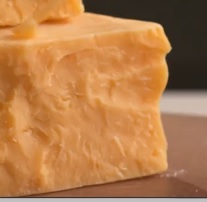
Cheddar cheese
Rating : 7
| Evaluation | N. Experts | Evaluation | N. Experts |
|---|---|---|---|
| 1 | 6 | ||
| 2 | 7 | ||
| 3 | 8 | ||
| 4 | 9 | ||
| 5 | 10 |
0 pts from Al222
| Sign up to vote this object, vote his reviews and to contribute to Tiiips.Evaluate | Where is this found? |
| "Descrizione" about Cheddar cheese by Al222 (23259 pt) | 2025-Nov-01 18:41 |
| Read the full Tiiip | (Send your comment) |
Cheddar cheese comes from England, specifically from the small town of Cheddar in Somerset. Despite this, it has also become popular in Italy, especially among foreign cheese lovers. Cheddar is known for its flavor, which varies from mild to very strong, and for its texture, which can be soft or very hard, depending on ripeness. It is used in a variety of recipes, from making sandwiches and toast to more elaborate dishes that call for melted cheese, such as some Italian versions of baked pasta or pies.
In the United States: Cheddar as a Pillar of American Gastronomy
In the United States, Cheddar is more than just a cheese; it's a cultural icon. Its presence in dishes like macaroni and cheese, cheeseburgers, and cheese fries makes it a cornerstone of American comfort food. The versatility of Cheddar in the US extends beyond home consumption, impacting the dining and fast-food industry, where it's used for its ability to add rich creaminess and distinctive flavor.
The production of Cheddar in the US is marked by diversity, with variants ranging from sweet and creamy to sharp and aged. This diversity reflects the rich American cheesemaking tradition and the ability to adapt to consumers' varying tastes. Some artisanal producers have also dedicated themselves to creating Cheddar using traditional methods, aiming to recreate and preserve the historical cheese-making techniques.

Considerations on Health and Sustainability
The discussion around Cheddar consumption in both countries includes considerations of health and sustainability. Like many cheeses, Cheddar is high in saturated fats and cholesterol, raising questions about its place in a balanced diet. However, when consumed in moderation, it can be part of a varied diet, offering benefits such as high-quality protein and calcium.
The sustainability of Cheddar production is also an increasingly important theme, with consumers growing more interested in the environmental impact of their food purchases. In response, some producers have adopted more sustainable practices, such as using milk from organic farms or improving energy efficiency in cheesemaking facilities.
In conclusion, Cheddar represents an interesting intersection between culinary cultures, offering insights into how traditional foods can adapt and enrich different culinary traditions while maintaining a balance with health and sustainability considerations.
Cheddar cheese (cow’s milk)
Description
Hard to semi-hard cheese made from cow’s milk using the cheddaring technique, with a clean dairy–nutty profile that ranges from mild (short-aged) to sharp (long-aged).
Color is white naturally or orange when annatto (bixin/norbixin) is added.
Styles include block/vacuum-sealed (little to no rind) and clothbound (natural rind), which differ in moisture loss and flavor development.
Caloric value (per 100 g)
~400–420 kcal; fat ~33–35 g, protein ~24–26 g, carbohydrate ~1–3 g (very low lactose), salt ~1.5–2.0 g, moisture ~36–39%.
Key constituents
Proteins: casein network with calcium–phosphate bridges; trace whey proteins.
Milk fat: triacylglycerols with minor phospholipids, sterols, and fat-soluble vitamins (A, D, E, K).
Minerals: high calcium and phosphorus; sodium from salting.
Colorant (optional): annatto in orange styles. Anti-caking agents and natamycin apply to shredded products where permitted.
Production process
Standardized milk (raw or pasteurized) → starter inoculation (mesophilic) → rennet coagulation → cutting/cooking curd → cheddaring (stack/turn slabs to expel whey and develop acidity) → milling and salting → pressing into blocks → ripening under controlled temperature/humidity (2–3 months to 12–18+ months).
Ripening variants: vacuum-packed (cleaner profile, higher moisture) vs clothbound (drier paste, more complex aromatics).
Quality controls under GMP/HACCP with CCP on pasteurization, pH trajectory, metal detection, and pack hygiene.
Sensory and technological properties
Texture: compact and elastic when young; increasingly crumbly/granular with age.
Melt: good meltability and controlled oiling-off when moisture/fat/calcium are balanced; drier, older cheddars melt cleanly but are less stretchy.
Flavor: dairy–buttery, nutty, with rising savory/sharp notes as proteolysis/lipolysis progress; annatto has minimal flavor impact.
Food uses
Table cheese and slices, toast/burgers/sandwiches, mac & cheese, soups and sauces (add off-boil), gratin toppings, savory baked goods, and blends with mozzarella/Monterey Jack to tune stretch and browning.
Nutrition and health
High in protein and calcium, but also energy-dense with meaningful sodium and saturated fat.
Lactose is typically low (<0.5 g/100 g) but not always zero.
For a more favorable lipid profile, moderate portion size and pair with foods richer in unsaturated fats.
Lipid profile
Typical cheddar fat pattern: ~60–70% SFA (saturated fatty acids; high intakes may raise LDL), ~25–33% MUFA (monounsaturated fatty acids, mainly oleic; generally favorable/neutral for blood lipids), ~2–5% PUFA (polyunsaturated fatty acids, linoleic/ALA; beneficial when balanced).
Contains small natural ruminant TFA (e.g., CLA) and minor MCT (medium-chain triglycerides).
Practical lever for health is portion control; consider blending with lower-fat or higher-moisture cheeses in hot applications.
Quality and specifications (typical topics)
pH 5.1–5.4, moisture ≤~39%, fat in dry matter ≥~50%, salt 1.5–2.0%.
Structure: minimal mechanical openness; defects include bitterness, late blowing (clostridia), and cracks from overdrying.
Microbiology: low counts; Listeria/Salmonella absent/25 g; surface yeasts/molds controlled.
Colorimetry (L*a*b*), texture profile analysis, melt yield and oiling-off in standardized bake tests.
Storage and shelf-life
Store at 0–4 °C in barrier packaging. Unopened shelf-life 2–6 months depending on style/pack.
After opening, use within 7–14 days, well sealed and dry; limit oxygen/humidity to prevent mold and exudation.
Freezing is possible (especially grated/portioned), with some texture change on thaw.
Allergens and safety
Contains milk (major allergen).
Raw-milk versions may be permitted when aged ≥60 days in some markets; maintain strict hygiene for ready-to-eat products.
Robust GMP/HACCP programs and environmental monitoring help control Listeria.
INCI functions in cosmetics
Cheddar is not a standard INCI ingredient. Related cosmetic materials: Lactis (Milk) Protein, Milk Fat/Lactis Lipida, Sodium Caseinate (emollient/skin-conditioning in specific formulations).
Troubleshooting
Bitterness during aging: excessive proteolysis/peptidase activity → adjust starter, salt/pH, and ripening time/temperature.
Oiling-off when heated: excessive bake temperature or too low moisture → reduce temperature/time, blend with higher-moisture cheeses, optimize salt/calcium balance.
Poor melt or grainy sauces: low pH or excessive heat/agitation → add off-boil, use starches or suitable emulsifiers.
Early mold growth: high headspace O₂ or weak seals → improve barrier and seal integrity; consider natamycin on surfaces where permitted.
Sustainability and supply chain
Dairy production carries notable GHG and water footprints; mitigations include improved feed efficiency, manure methane capture, renewable energy, and optimized cold chain.
Plants should treat effluents to BOD/COD targets, use recyclable/mono-material films, and maintain full traceability under GMP/HACCP.
Conclusion
Cheddar cheese combines protein and calcium density with culinary versatility and reliable melt performance. Tight control of pH/moisture/salt, ripening conditions, and heating parameters delivers products that are safe, stable, and sensorially consistent across a wide range of applications.
Mini-glossary
SFA — Saturated fatty acids: High intakes can raise LDL cholesterol; consider replacing with unsaturated fats.
MUFA — Monounsaturated fatty acids (e.g., oleic): Generally favorable/neutral for blood lipids.
PUFA — Polyunsaturated fatty acids (e.g., linoleic/ALA): Beneficial when balanced; more prone to oxidation.
TFA — Trans fatty acids: Small natural amounts occur in dairy (ruminant trans/CLA); industrial TFA should be avoided.
MCT — Medium-chain triglycerides (C6–C12): Minor fraction of milk fat.
GMP/HACCP — Good Manufacturing Practice / Hazard Analysis and Critical Control Points: Hygiene and preventive-safety systems with defined CCP.
CCP — Critical control point: Step where a control prevents/reduces a hazard (e.g., pasteurization, sealing, metal detection).
BOD/COD — Biochemical/Chemical oxygen demand: Indicators of wastewater impact from dairy processing.
References__________________________________________________________________________
de Hart NMMP, Mahmassani ZS, Reidy PT, Kelley JJ, McKenzie AI, Petrocelli JJ, Bridge MJ, Baird LM, Bastian ED, Ward LS, Howard MT, Drummond MJ. Acute Effects of Cheddar Cheese Consumption on Circulating Amino Acids and Human Skeletal Muscle. Nutrients. 2021 Feb 13;13(2):614. doi: 10.3390/nu13020614.
Abstract. Cheddar cheese is a protein-dense whole food and high in leucine content. However, no information is known about the acute blood amino acid kinetics and protein anabolic effects in skeletal muscle in healthy adults. Therefore, we conducted a crossover study in which men and women (n = 24; ~27 years, ~23 kg/m2) consumed cheese (20 g protein) or an isonitrogenous amount of milk. Blood and skeletal muscle biopsies were taken before and during the post absorptive period following ingestion. We evaluated circulating essential and non-essential amino acids, insulin, and free fatty acids and examined skeletal muscle anabolism by mTORC1 cellular localization, intracellular signaling, and ribosomal profiling. We found that cheese ingestion had a slower yet more sustained branched-chain amino acid circulation appearance over the postprandial period peaking at ~120 min. Cheese also modestly stimulated mTORC1 signaling and increased membrane localization. Using ribosomal profiling we found that, though both milk and cheese stimulated a muscle anabolic program associated with mTORC1 signaling that was more evident with milk, mTORC1 signaling persisted with cheese while also inducing a lower insulinogenic response. We conclude that Cheddar cheese induced a sustained blood amino acid and moderate muscle mTORC1 response yet had a lower glycemic profile compared to milk.
Murtaza MA, Ur-Rehman S, Anjum FM, Huma N, Hafiz I. Cheddar cheese ripening and flavor characterization: a review. Crit Rev Food Sci Nutr. 2014;54(10):1309-21. doi: 10.1080/10408398.2011.634531.
Abstract. Cheddar cheese is a biochemically dynamic product that undergoes significant changes during ripening. Freshly made curds of various cheese varieties have bland and largely similar flavors and aroma and, during ripening, flavoring compounds are produced that are characteristic of each variety. The biochemical changes occurring during ripening are grouped into primary events including glycolysis, lipolysis, and proteolysis followed by secondary biochemical changes such as metabolism of fatty acids and amino acids which are important for the production of secondary metabolites, including a number of compounds necessary for flavor development. A key feature of cheese manufacture is the metabolism of lactose to lactate by selected cultures of lactic acid bacteria. The rate and extent of acidification influence the initial texture of the curd by controlling the rate of demineralization. The degree of lipolysis in cheese depends on the variety of cheese and may vary from slight to extensive; however, proteolysis is the most complex of the primary events during cheese ripening, especially in Cheddar-type cheese.
Azarnia S, Robert N, Lee B. Biotechnological methods to accelerate cheddar cheese ripening. Crit Rev Biotechnol. 2006 Jul-Sep;26(3):121-43. doi: 10.1080/07388550600840525.
Abstract. Cheese is one of the dairy products that can result from the enzymatic coagulation of milk. The basic steps of the transformation of milk into cheese are coagulation, draining, and ripening. Ripening is the complex process required for the development of a cheese's flavor, texture and aroma. Proteolysis, lipolysis and glycolysis are the three main biochemical reactions that are responsible for the basic changes during the maturation period. As ripening is a relatively expensive process for the cheese industry, reducing maturation time without destroying the quality of the ripened cheese has economic and technological benefits. Elevated ripening temperatures, addition of enzymes, addition of cheese slurry, attenuated starters, adjunct cultures, genetically engineered starters and recombinant enzymes and microencapsulation of ripening enzymes are traditional and modern methods used to accelerate cheese ripening. In this context, an up to date review of Cheddar cheese ripening is presented.
Batool M, Nadeem M, Imran M, Khan IT, Bhatti JA, Ayaz M. Lipolysis and antioxidant properties of cow and buffalo cheddar cheese in accelerated ripening. Lipids Health Dis. 2018 Oct 2;17(1):228. doi: 10.1186/s12944-018-0871-9.
Abstract. Background: Buffalo milk is the second largest source of milk on the globe, it is highly suitable for the preparation of mozzarella cheese, however, it is not suitable for the preparation of cheddar cheese due to high buffering capacity, low acid development, excessive syneresis, lower lipolysis that lead to lower sensory score. Accelerated ripening can enhance lipolysis and improve sensory characteristics of cheddar cheese. Lipolysis and antioxidant capacity of buffalo cheddar cheese in conventional ripening is not previously studied. Optimization of ripening conditions can lead to better utilization of buffalo milk in cheese industry. Methods: Effect of accelerated ripening on lipolysis and antioxidant properties of cow and buffalo cheddar cheese were investigated. Cheddar cheese prepared from standardized (3.5% fat) cow and buffalo milk was subjected to conventional and accelerated ripening (4 °C and 12 °C) for a period of 120 days. Fatty acid profile, organic acids, free fatty acids, cholesterol, antioxidant activity and sensory characteristics were studied at 0, 40, 80 and 120 days of ripening. Results: Fatty acid profile of cow and buffalo cheddar in conventional (120 days old) and accelerated ripening were different from each other (p < 0.05). Free fatty acids in 120 days old buffalo and control cheddar, in accelerated ripening were 0.55% and 0.62%. After accelerated ripening, cholesterol in buffalo and control cheddars were 16 and 72 mg/100 g. After accelerated ripening, concentrations of formic, pyruvic, lactic, acetic and citric acids in buffalo cheddar cheese were, 922, 136, 19,200, 468 and 2845 ppm. At the end of accelerated ripening (120 days), concentrations of formic, pyruvic, lactic, acetic and citric acids in cow cheddar cheese were 578, 95, 9600, 347 and 1015 ppm. Total antioxidant capacity of control cow and buffalo cheddar in accelerated ripening was 77.26 and 88.30%. Colour, flavour and texture score of rapid ripened 80 and 120 days old buffalo cheddar was not different from cow cheddar. Conclusions: Results of this investigations showed that flavour profile buffalo cheddar subjected to accelerate ripening was similar to cow cheddar cheese. Accelerated ripening can be used for better utilization of buffalo milk in cheddar cheese industry.
Afshari R, Pillidge CJ, Read E, Rochfort S, Dias DA, Osborn AM, Gill H. New insights into cheddar cheese microbiota-metabolome relationships revealed by integrative analysis of multi-omics data. Sci Rep. 2020 Feb 21;10(1):3164. doi: 10.1038/s41598-020-59617-9. Erratum in: Sci Rep. 2021 Jan 25;11(1):2680. doi: 10.1038/s41598-021-82097-4.
Abstract. Cheese microbiota and metabolites and their inter-relationships that underpin specific cheese quality attributes remain poorly understood. Here we report that multi-omics and integrative data analysis (multiple co-inertia analysis, MCIA) can be used to gain deeper insights into these relationships and identify microbiota and metabolite fingerprints that could be used to monitor product quality and authenticity. Our study into different brands of artisanal and industrial cheddar cheeses showed that Streptococcus, Lactococcus and Lactobacillus were the dominant taxa with overall microbial community structures differing not only between industrial and artisanal cheeses but also among different cheese brands. Metabolome analysis also revealed qualitative and semi-quantitative differences in metabolites between different cheeses. This also included the presence of two compounds (3-hydroxy propanoic acid and O-methoxycatechol-O-sulphate) in artisanal cheese that have not been previously reported in any type of cheese. Integrative analysis of multi-omics datasets revealed that highly similar cheeses, identical in age and appearance, could be distinctively clustered according to cheese type and brand. Furthermore, the analysis detected strong relationships, some previously unknown, which existed between the cheese microbiota and metabolome, and uncovered specific taxa and metabolites that contributed to these relationships. These results highlight the potential of this approach for identifying product specific microbe/metabolite signatures that could be used to monitor and control cheese quality and product authenticity.
| Sign up to vote this object, vote his reviews and to contribute to Tiiips.EvaluateClose | (0 comments) |
Read other Tiiips about this object in __Italiano (1)
Content:   Last update:   2025-11-13 17:53:07 | Kcal/100g:   397 Family:   Threat factors:   |

