

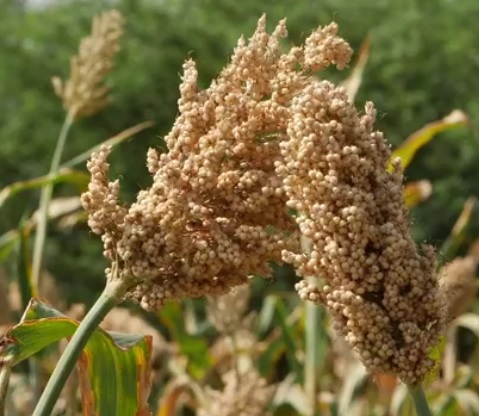
Sorghum
Rating : 7
| Evaluation | N. Experts | Evaluation | N. Experts |
|---|---|---|---|
| 1 | 6 | ||
| 2 | 7 | ||
| 3 | 8 | ||
| 4 | 9 | ||
| 5 | 10 |
0 pts from Al222
| Sign up to vote this object, vote his reviews and to contribute to Tiiips.Evaluate | Where is this found? |
| "Descrizione" about Sorghum by Al222 (23420 pt) | 2025-Nov-29 15:37 |
| Read the full Tiiip | (Send your comment) |
Sorghum (Sorghum bicolor)
Description
Sorghum is an ancient cereal grain belonging to the Poaceae family and is one of the world’s most important and versatile crops. Originating in Africa and now widely grown in Asia and the Americas, it is highly valued for its remarkable resilience to drought, poor soils and high temperatures. The grains are small, rounded and similar in size to millet, with colours ranging from white and yellow to red, brown and almost black. Sorghum is naturally gluten free and has a mild, slightly sweet, cereal-like flavour. It is used both as whole grain and as flour in a wide range of food applications, including many gluten-free formulations. Nutritionally, it is a significant source of complex carbohydrates, fibre, minerals and phytochemicals, especially phenolic compounds and antioxidants in the darker-pigmented varieties.
Synonyms: jowar, milo, durra, imphee, guinea corn, great millet, broomcorn.
![]() | ![]() |
Botanical classification
Common name: sorghum
Botanical name: Sorghum bicolor
Family: Poaceae
Origin: sub-Saharan Africa, with historical spread to India, the Middle East and later the rest of the world
General features: annual cereal highly resistant to drought, with erect stem, panicle-type inflorescence and rounded grains; several varietal groups exist (grain sorghum, forage sorghum, broom sorghum, sweet sorghum)
Cultivation and growing conditions
Climate
Typical crop of warm temperate and tropical climates.
Excellent drought tolerance thanks to a deep root system.
Tolerates high temperatures; grows well even above 35 °C.
Sensitive to frost, especially in the early stages.
Exposure
Requires full sun to ensure good photosynthesis and vigorous growth.
Shade reduces tillering, plant height, and panicle production.
Soil
Adapts to a wide range of soils, including poor and dry ones.
Prefers well-drained soils, with light or sandy-loam texture.
Optimal pH: 5.5–7.5.
Waterlogging is unfavourable and increases the risk of root rot.
Irrigation
Low to moderate water requirement; one of the most water-efficient crops.
Adequate moisture is important for germination and early vegetative growth.
Later, it can tolerate moderate water stress without drastic yield loss.
Excessive irrigation should be avoided.
Temperature
Optimal germination: 20–30 °C.
Ideal growth: 25–35 °C.
Temperatures below about 12–15 °C slow development.
Sensitive to frost at all stages.
Fertilization
Requires moderate fertilization.
Nitrogen promotes growth and yield, but excess increases lodging risk.
Phosphorus is essential for root development and grain ripening.
Potassium supports drought tolerance and grain quality.
Benefits from organic matter input.
Crop care
Early weed control (first 3–5 weeks) is important.
Once established, sorghum competes well with weeds thanks to its vigorous growth.
Crop rotation is recommended to prevent fungal diseases such as anthracnose and downy mildew.
In tall varieties, excessive nitrogen fertilization should be avoided to reduce lodging.
Harvest
Harvest when the panicle is fully mature and grain moisture is low.
Hard, well-coloured grains indicate physiological maturity.
Can be harvested manually or with combines adjusted for small grains.
Timely harvest helps to avoid losses due to birds and adverse weather.
Propagation
Propagated by seed.
Direct sowing in the field when the soil is warm and free from frost risk.
Sowing depth: 2–5 cm depending on soil texture.
Certified seed is recommended to ensure varietal purity and uniformity.
Indicative nutritional values per 100 g (raw sorghum grain)
(Approximate values; they may vary with variety and origin.)
Energy: ~330–350 kcal
Water: ~8–12 g
Protein: ~8–12 g
Total carbohydrates: ~70–75 g
Starch: main fraction
Dietary fibre: ~6–8 g
Sugars: ~1–2 g
Total fat: ~3–4 g
First occurrence of lipid acronyms: SFA (saturated fatty acids, which should be moderated if total intake is high), MUFA (monounsaturated fatty acids, generally favourable for cardiometabolic profile), PUFA (polyunsaturated fatty acids, involved in cardiovascular health and inflammatory balance). In later sections, these acronyms will appear without bold.
SFA: ~0.5–0.7 g
MUFA: ~1.0–1.3 g
PUFA: ~1.0–1.3 g
Minerals (typical averages)
Iron: ~4–5 mg
Magnesium: ~150–170 mg
Phosphorus: ~250–300 mg
Potassium: ~300–350 mg
Zinc: ~1.5–2 mg
Vitamins: mainly B-group vitamins (thiamine, niacin, vitamin B6)
Key constituents
Complex carbohydrates (starch)
Dietary fibre (soluble and insoluble fractions)
Proteins with a reasonable amino-acid profile
Minerals (iron, magnesium, phosphorus, potassium, zinc)
Phenolic compounds and antioxidants (phenolic acids, tannins and anthocyanins in pigmented varieties)
Lipids in modest amounts (sfa, mufa, pufa)
Production process
Cultivation
Sorghum requires relatively little water, tolerates high temperatures and grows on low-fertility soils, making it a key crop in semi-arid climates.
Harvesting
Panicles are harvested when the grains are fully mature and dry.
Threshing
Grains are separated from the panicles using mechanical or traditional methods.
Cleaning and grading
Removal of dust, broken kernels and plant residues by sieving and aspiration.
Decortication (optional)
Partial removal of outer layers to obtain milder flavour and improved digestibility, or to reduce tannin content in some varieties.
Milling
Grains can be milled into wholegrain or partially refined flour, depending on the intended use.
Packaging
Grains or flour are packed in moisture-protective bags or containers to prevent spoilage and infestation.
Physical properties
Small, round grains, slightly larger than millet or fonio.
Colour ranges from white and yellow to red, brown and black depending on variety.
Cooked grains have a soft yet firm texture.
Flour can be fine or medium-fine, with colour from light cream to brown.
Good storage stability when kept dry and cool, especially as whole grain.
Sensory and technological properties
Flavour: mild, slightly sweet and cereal-like; more pronounced and sometimes slightly astringent in darker, high-phenolic varieties.
Aroma: delicate, more evident after toasting or popping.
Cooking behaviour of whole grain: good water absorption, grains remain distinct if cooked with the right water ratio.
Behaviour as flour:
Good thickening capacity due to starch content.
Low elasticity because it is gluten free; doughs tend to be crumbly and need structuring aids.
Enhances moisture and softness in baked goods.
Wholegrain flours give darker colour and stronger flavour.
Food applications
Whole grain cooked and used similarly to rice, barley or millet.
Breakfast porridges and creamy cereals.
Soups and stews, where sorghum can act as both ingredient and thickener.
Grain-based patties and veggie burgers.
Flour for gluten-free baked goods: breads, pancakes, cookies, crackers, muffins.
Production of couscous-like granules, pasta and extruded snacks.
Traditional fermented beverages and porridges in Africa (e.g. local beers and cereal drinks).
Nutrition and health
Naturally gluten free, suitable for people with coeliac disease or gluten sensitivity, provided cross-contamination is controlled.
Good fibre content supports satiety, bowel regularity and glycaemic control.
Provides important minerals such as iron, magnesium, phosphorus and potassium.
Contains phenolic compounds and other antioxidants, particularly in red, brown and black varieties, which may contribute to protective effects against oxidative stress.
Modest fat content with small amounts of sfa, mufa and pufa, so its impact on lipid intake is limited compared with its carbohydrate and fibre contribution.
Tannins in some high-tannin varieties may reduce digestibility of proteins and minerals but also contribute antioxidant activity; processing techniques (decortication, soaking, fermentation) can reduce antinutritional factors and improve bioavailability.
Portion note
Typical adult serving: about 60–70 g raw sorghum grain (around 180–200 g cooked), similar to a standard serving of rice.
For flour-based applications: approximately 30–40 g sorghum flour per serving in baked goods, usually blended with other gluten-free flours and binders.
Allergens and intolerances
Sorghum does not contain gluten and is not classified among the major food allergens.
Documented sorghum-specific allergies are rare.
Risk of gluten cross-contamination exists when processed in facilities shared with wheat, barley or rye; certified gluten-free products require specific controls.
Storage and shelf-life
Store grains and flour in a cool, dry place, away from moisture and sunlight.
Whole grains: typical shelf-life of about 12–24 months under good storage conditions.
Flour: more sensitive to oxidation; typical shelf-life ~6–12 months, preferably in airtight containers; refrigeration can extend shelf-life.
Indicators of spoilage include rancid odour, clumping, visible insects or mould; such products should be discarded.
Safety and regulatory aspects
Sorghum is generally recognised as safe for human consumption when produced and stored under good hygienic practices.
Standard cereal safety controls apply (mycotoxins, pesticide residues, heavy metals, microbiological safety).
Products labelled as “gluten free” must comply with legal thresholds (commonly <20 ppm gluten) and validated cross-contamination control.
Labelling
Ingredient names: “sorgo”, “grano di sorgo”, “farina di sorgo” in Italian; in English, typically “sorghum grain” or “sorghum flour”.
Gluten-free statements can be used when legal criteria and analytical limits are met.
Where regulatory conditions are satisfied, possible nutrition claims include “source of fibre”, “high in fibre” or “source of iron” etc.
Additional voluntary indications may cover wholegrain status, organic certification, country of origin and use of traditional or pigmented varieties.
Troubleshooting
Baked goods crumble and lack structure
Cause: absence of gluten and low dough cohesion.
Solutions: combine sorghum flour with starches (rice, tapioca, corn) and hydrocolloids (xanthan, guar, psyllium); adjust hydration and mixing time.
Doughs are too dense or heavy
Cause: high water absorption and wholegrain fibre content.
Solutions: increase water content, allow resting time for full hydration, or blend with lighter flours.
Flavour is too strong or slightly astringent
Cause: use of dark, high-tannin varieties at high inclusion levels.
Solutions: blend with milder flours, reduce wholegrain proportion, use partially decorticated sorghum or lightly toast to balance flavour.
Sustainability and supply chain
Sorghum is a highly sustainable crop thanks to its low water requirement, tolerance to heat and ability to grow on marginal soils.
It contributes to food security and resilience in regions affected by drought and climate variability.
Typically requires fewer chemical inputs than some other cereals, which can reduce environmental impact when good agricultural practices are followed.
Supports agricultural biodiversity and flexible crop rotations, helping maintain soil health and reduce dependence on a small number of staple grains.
Main INCI functions (cosmetics)
(For ingredients such as Sorghum Bicolor Seed Extract, Sorghum Bicolor Bran Extract.)
Antioxidant (due to phenolic compounds and flavonoids).
Skin conditioning agent, helping to maintain smoothness and comfort.
Thickener / viscosity modifier in emulsions and gels.
Gentle exfoliant when used as a finely milled powder.
Functional component in natural and “clean-label” cosmetic formulations.
Conclusion
Sorghum (Sorghum bicolor) is an ancient, resilient and nutritionally valuable cereal that combines culinary versatility, interesting nutritional qualities and strong agronomic sustainability. Its natural gluten-free profile, good fibre and mineral content, and the presence of antioxidant phytochemicals—particularly in pigmented varieties—make it an attractive ingredient for modern healthy diets. From wholegrain dishes and porridges to gluten-free baking and traditional fermented beverages, sorghum offers a broad range of applications. In cosmetics, extracts and powders derived from the grain and bran add antioxidant, conditioning and texturising benefits. Overall, sorghum stands out as a robust, adaptable ingredient with growing relevance in both food and personal-care sectors.
Studies
Nutritional Value: Sorghum is rich in nutrients, including protein, fiber, iron, zinc, magnesium, tannins, flavonoids (1), and B vitamins. It's also high in antioxidants, which can help reduce oxidative stress and lower the risk of chronic diseases.
Gluten-Free: Sorghum is naturally gluten-free, making it a great alternative for people with celiac disease or gluten intolerance. It can be used to make gluten-free flours, breads, and other baked goods.
Energy Efficiency: Sorghum is an energy-efficient grain that requires less water and can grow in arid conditions where other grains might not thrive, making it a sustainable choice for agriculture.
Supports Digestive Health: The high fiber content in sorghum helps promote digestive health, improve bowel regularity, and can aid in weight management by keeping you feeling full longer.
Blood Sugar Regulation: Sorghum has a low glycemic index, which helps manage blood sugar levels, making it beneficial for people with diabetes (2) and those looking to control their blood sugar.
Mini-glossary
SFA – Saturated fatty acids; a class of fats that, when consumed in excess, can increase LDL (“bad”) cholesterol and cardiovascular risk.
MUFA – Monounsaturated fatty acids; fats that tend to improve lipid profiles when they replace saturated fats in the diet.
PUFA – Polyunsaturated fatty acids; include omega-3 and omega-6 families, important for cell membranes, inflammatory regulation and cardiovascular health.
References_____________________________________________________________________
(1) Dykes L. Sorghum Phytochemicals and Their Potential Impact on Human Health. Methods Mol Biol. 2019;1931:121-140. doi: 10.1007/978-1-4939-9039-9_9.
Abstract. Sorghum contains a wide array of phytochemicals and their levels are affected by the genotype. Phytochemicals identified in sorghum include phenolic acids, flavonoids, condensed tannins, polycosanols, phytosterols, stilbenes, and phenolamides. Most of these phytochemicals are concentrated in the bran fraction and have been shown to have several potential health benefits, which include antidiabetic, cholesterol-lowering, anti-inflammatory, and anticancer properties. This chapter gives an overview of sorghum genetics relevant to phytochemicals, phytochemicals identified in sorghum grain, and their potential health benefits.
Awika JM, Rooney LW. Sorghum phytochemicals and their potential impact on human health. Phytochemistry. 2004 May;65(9):1199-221. doi: 10.1016/j.phytochem.2004.04.001.
Abstract. Sorghum is a rich source of various phytochemicals including tannins, phenolic acids, anthocyanins, phytosterols and policosanols. These phytochemicals have potential to significantly impact human health. Sorghum fractions possess high antioxidant activity in vitro relative to other cereals or fruits. These fractions may offer similar health benefits commonly associated with fruits. Available epidemiological evidence suggests that sorghum consumption reduces the risk of certain types of cancer in humans compared to other cereals. The high concentration of phytochemicals in sorghum may be partly responsible. Sorghums containing tannins are widely reported to reduce caloric availability and hence weight gain in animals. This property is potentially useful in helping reduce obesity in humans. Sorghum phytochemicals also promote cardiovascular health in animals. Such properties have not been reported in humans and require investigation, since cardiovascular disease is currently the leading killer in the developed world. This paper reviews available information on sorghum phytochemicals, how the information relates to current phytonutrient research and how it has potential to combat common nutrition-related diseases including cancer, cardiovascular disease and obesity.
(2) Oh KK, Adnan M, Cho DH. Network pharmacology of bioactives from Sorghum bicolor with targets related to diabetes mellitus. PLoS One. 2020 Dec 31;15(12):e0240873. doi: 10.1371/journal.pone.0240873.
Abstract. Background: Sorghum bicolor (SB) is rich in protective phytoconstituents with health benefits and regarded as a promising source of natural anti-diabetic substance. However, its comprehensive bioactive compound(s) and mechanism(s) against type-2 diabetes mellitus (T2DM) have not been exposed. Hence, we implemented network pharmacology to identify its key compounds and mechanism(s) against T2DM. Conclusion: Our study overall suggests that the four key compounds detected in SB might ameliorate T2DM severity by activating the PPAR signaling pathway.
| Sign up to vote this object, vote his reviews and to contribute to Tiiips.EvaluateClose | (0 comments) |
Read other Tiiips about this object in __Italiano (1)
Content:   Family:   Last update:   2024-03-28 12:20:53 | Kcal/100g:   316 Threat factors:   |

