

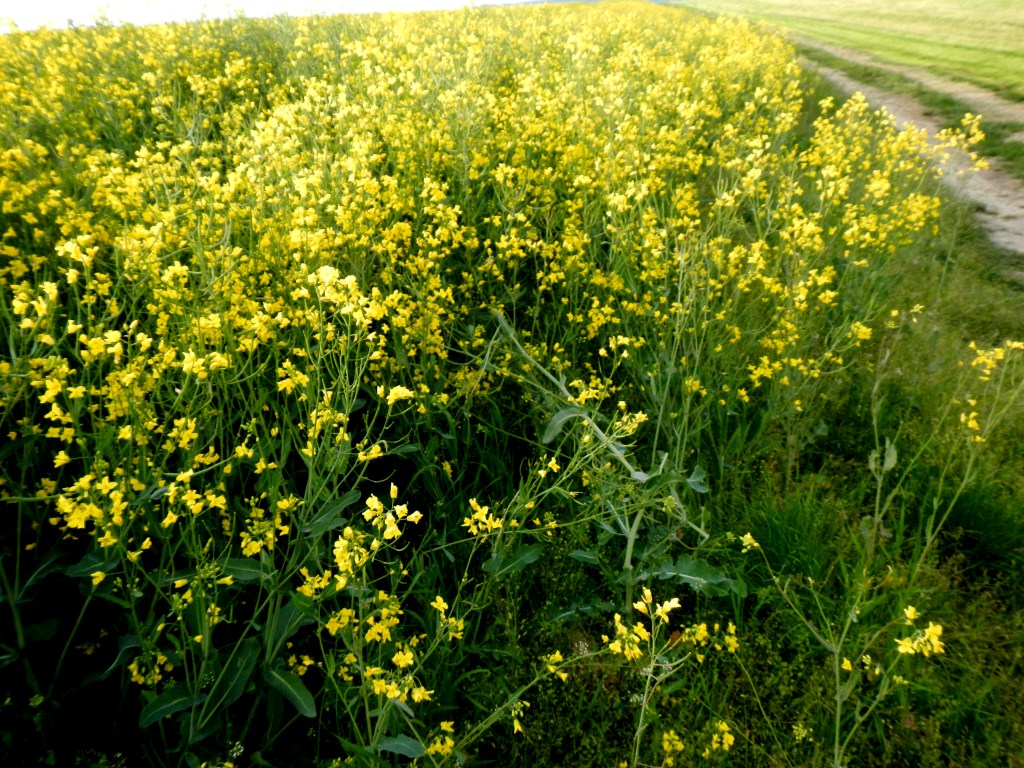
Canola oil is an oil made from a particular species of rapeseed and canola stands for 'CANadian Oil Low Acid'. It is a modified rapeseed from which the erucic acid, a problematic component for human health that I will write about later, has been removed.
Canola is also the common term used for oil obtained from specially bred low-erucic-acid, low-glucosinolate rapeseed varieties of Brassica napus (and sometimes Brassica rapa), developed mainly in Canada from the 1970s onwards to provide an oil with a more favourable and safer nutritional profile than traditional rapeseed oil. It is a clear, pale yellow to golden liquid oil with a mild flavour and light aroma, used both cold (as a dressing) and in cooking and frying thanks to its good fatty-acid profile and reasonable oxidative stability. Nutritionally it is characterised by a very low content of saturated fatty acids and a high proportion of monounsaturated and polyunsaturated fatty acids, with a useful balance between omega-6 (linoleic acid) and omega-3 (alpha-linolenic acid). Beyond edible oil, canola yields meals and cakes for animal feeding and specific fractions (such as lecithins and unsaponifiable matter) used in foods, supplements and cosmetics.

Botanical classification
Common name: canola
Botanical name: Brassica napus var. napus
Family: Brassicaceae
Origin: probably the Mediterranean and Northern Europe, with modern low-erucic, low-glucosinolate cultivars developed mainly in Canada
General features: annual or biennial oilseed crop with rapid growth, raceme-type yellow flowers, and small seeds rich in oil and proteins; selected specifically for low erucic acid and low glucosinolate content
Cultivation and growing conditions
Climate
Prefers cool temperate climates.
Sensitive to prolonged thermal stress (both heat and severe cold).
Performs best with cool springs and moderately warm summers.
Can be grown as a winter crop in mild regions.
Exposure
Requires full sun throughout the growing cycle.
Insufficient light reduces flowering, seed set, and overall yield.
Soil
Prefers deep, fertile, well-drained soils.
Optimal pH: slightly acidic to neutral (6.0–7.0).
Waterlogging should be avoided, as it promotes root diseases and fungal pathogens.
Good soil structure is important for proper root development and nutrient uptake.
Irrigation
Generally not extremely water-demanding, but adequate moisture is crucial during:
Excessive irrigation should be avoided: overly wet soils reduce seed quality and increase disease risk.
Temperature
Germination: from about 5–10 °C.
Optimal vegetative growth: around 15–22 °C.
Winter types show good cold tolerance and can withstand short frosts.
Temperatures above 30 °C during flowering can markedly reduce seed yield.
Fertilization
Requires a good supply of nitrogen, especially in the early growth stages.
Phosphorus and potassium are important for root development, flowering, and seed formation.
Beneficial response to some micronutrients (for example boron), which help reduce flower and pod abortion.
Balanced fertilization improves oil content, protein content, and overall seed quality.
Crop care
Early weed control is essential to avoid competition during the first weeks.
Crop rotation is strongly recommended to limit diseases typical of Brassicaceae (e.g. clubroot, sclerotinia).
Regular monitoring for pests such as flea beetles, aphids, and lepidopteran larvae.
Avoid excessive plant density: adequate spacing improves plant vigour and final yield.
Harvest
Performed when pods are mature but not overly dry, to limit shattering losses.
Ideal seed moisture: roughly 8–10%.
Mechanical harvesting is standard practice.
Proper timing and combine settings reduce losses due to pod dehiscence and seed scattering.
Propagation
Propagated by seed.
Autumn sowing for winter varieties; spring sowing for spring types, depending on the region.
Certified seed is recommended to ensure varietal purity and consistent agronomic performance.
Description
Vegetable oil produced from low–erucic acid, low–glucosinolate cultivars of rapeseed (Brassica napus, B. rapa) known as canola.
Sensory profile: pale straw-yellow, neutral to lightly nutty flavor, low viscosity; refined grades are more neutral than cold-pressed (more aromatic).
Typical uses: high-heat cooking, frying, emulsions (mayonnaise/dressings), bakery, and foodservice; high-oleic variants offer greater oxidative stability.
Caloric value (per 100 g)
Key constituents
Triacylglycerols rich in oleic acid (**MUFA** — monounsaturated fatty acids), linoleic acid (n-6) and α-linolenic acid, ALA (n-3) (**PUFA** — polyunsaturated fatty acids).
Phytosterols (e.g., campesterol, β-sitosterol, brassicasterol), tocopherols (α/γ), and traces of phenolics (higher in cold-pressed oils).
Erucic acid <2% by regulation (typically trace in canola varieties).
Production process
Seed preparation: cleaning, conditioning/cooking, flaking.
Oil extraction: mechanical pressing and/or solvent extraction (e.g., hexane), followed by desolventizing and solvent recovery.
Refining (RBD): degumming (remove phospholipids), neutralization (free fatty acids), bleaching (clays/activated carbon), deodorization (vacuum/high T); winterization for cold stability when required.
Co-products: canola meal (feed/protein ingredient), gums (lecithins).
Critical controls: FFA/acid value, peroxide, anisidine/TOTOX, phosphorus, trace metals, residual solvent, and 3-MCPD/glycidyl esters (minimized via process optimization).
Sensory and technological properties
Smoke point: refined ~220–230 °C; cold-pressed ~160–200 °C (varies by quality).
Stability: good due to high **MUFA**; the **PUFA** fraction necessitates protection from light/oxygen/heat. High-oleic grades are more stable for frying.
Rheology: low viscosity (good pourability); at low temperature may cloud/crystallize without safety impact.
Food applications
Frying and sautéing (refined; replace oil when polar compounds exceed limits).
Emulsions (mayonnaise/dressings), sauces, marinades.
Bakery/pastry: shortening effect and soft crumb; blends for margarines/spreads.
Plant-based products: adds juiciness/lubricity to burgers/analogs; sprays/coatings for snacks.
Nutrition and health
Low **SFA** (~6–8%), high **MUFA** (~58–65%), and **PUFA** (~28–32%: linoleic n-6 ~18–24%, ALA n-3 ~8–12%; overall n-6:n-3 ≈ 2:1–3:1).
Vitamin E and phytosterols support a favorable lipid profile.
Because **PUFA** are more oxidation-prone, prefer shorter high-heat exposures or high-oleic canola for prolonged frying.
Fat profile
**MUFA** (oleic) high → often neutral/beneficial for blood lipids and more stable than **PUFA**.
**PUFA** (linoleic n-6, ALA n-3) potentially beneficial when balanced, but less heat-stable.
**SFA** low (mainly palmitic); best kept moderate in total diet.
**TFA** negligible in non-hydrogenated oils; increase only with partial hydrogenation (to avoid).
**MCT** not present in meaningful amounts.
Quality and specifications (typical topics)
Identity/purity: low acid value/FFA (e.g., ≤0.1–0.3% as oleic), peroxide value ≤10 meq O₂/kg, anisidine controlled, TOTOX low (e.g., ≤26), moisture/impurities ≤0.1%.
Physicochemical: color (Lovibond), cold stability, trace metals (Fe, Cu low), phosphorus low (refined).
Process safety: compliant residual solvent, minimized 3-MCPD/glycidyl esters, negligible PAH in correctly managed supply chains.
In frying: monitor polar compounds, free fatty acids, and viscosity to determine end-of-life.
Storage and shelf life
Store cool, dark, airtight (preferably nitrogen-flushed); avoid contact with copper/iron.
Shelf life: refined 12–18 months; cold-pressed 6–12 months (more oxidation-sensitive).
Allergens and safety
Not a major allergen; residual proteins are minimal in refined oil.
GMO status: canola may be GM in some regions; non-GMO lines available (label per regulation).
Erucic acid limits met by canola cultivars; verify lot compliance.
INCI functions in cosmetics (when applicable)
INCI: Canola Oil, Brassica Campestris (Rapeseed) Seed Oil.
Roles: emollient, skin-conditioning, light occlusive, hair-conditioning; used in massage oils, balms, creams, and color cosmetics.
Troubleshooting
Rancid/fishy notes: oxidation → check age/storage and exposure to heat/air/light; use fresh lots.
Foaming/rapid darkening in fryers: spent oil, moisture, or food particulates → filter, keep steady temperature, replace above polar-compound limits.
Cold haze: wax/high-melting TAG crystallization → use winterized oil or return to ambient to clear.
Sustainability and supply chain
Crop rotation-friendly, high yield per hectare; canola meal is valorized in feed/protein streams.
In refining: control solvent emissions, treat effluents toward **BOD/COD** targets, optimize energy/heat recovery, employ recyclable packaging, and maintain **GMP/HACCP** and traceability.
Labelling
Names: “canola oil” or “rapeseed oil (canola)”; specify refined/cold-pressed, any high-oleic grade, country of origin, and lot.
Nutrition claims and “no **TFA**” only when compliant; non-GMO where applicable; for organic, meet the relevant standards.
Conclusion
Canola oil combines a favorable lipid profile (high **MUFA**, low **SFA**, meaningful **PUFA** with ALA n-3), neutral flavor, and process versatility. Choosing the right grade (refined vs cold-pressed/high-oleic), managing heat, and ensuring proper storage maximize stability, safety, and sensory quality in home and industrial kitchens.
Mini-glossary
MUFA — monounsaturated fatty acids: Typically neutral/beneficial for blood lipids and more oxidation-stable than PUFA.
PUFA — polyunsaturated fatty acids: Include linoleic (n-6) and ALA (n-3); beneficial when balanced, but more heat-sensitive.
SFA — saturated fatty acids: E.g., palmitic; advisable to keep moderate overall.
TFA — trans fatty acids: Negligible in non-hydrogenated oils; avoid partially hydrogenated fats.
MCT — medium-chain triglycerides: Not significant in canola oil.
TOTOX — total oxidation value: 2× peroxide + anisidine; composite index of oxidation status.
Winterization: Removal of waxes/high-melting TAGs to improve cold stability.
GMP/HACCP — good manufacturing practice / hazard analysis and critical control points: Preventive food-safety systems with validated CCPs.
BOD/COD — biochemical/chemical oxygen demand: Effluent metrics for wastewater treatment and environmental impact.
Rapeseed (Brassica napus L.) belongs to the Brassicaceae family and originated around 10,000 years ago from the spontaneous hybridisation between Brassica rapa L. and Brassica oleracea L. (1).
Oilseed is the world's third largest oilseed crop, providing around 13% of the world's vegetable oil supply (2), an oil used in industry as a lubricant, in the food sector (where it had a problematic episode in Spain in 1981. Subsequently, in 1991, the European Community established more restrictive lees for food cultivation) and in the oil sector for bio-diesel.
Flavonoids flavonols such as Quecetin, Isorhamnetin, Kaempferol and some epicatechin derivatives are found in rapeseed (3).
Rapeseed oil for cosmetic use is among the cheapest oils on the market and is extracted mechanically and chemically. Rapeseed has a very high oil content, about 40%.
It is referred to as Canola oil or rapeseed oil.

The rapeseed plants Brassica napus, Brassica rapa, Brassica juncea belong to the Brassicaceae family.
The extraction process requires large, specialised plants and goes through these stages :
Cleaning of the oily seed by dedusting and defertilisation by mechanical pressing to ensure a better yield.
- Cold pressing with mechanical extraction of the crude oil.
- Clarification of crude oil by separation from sludge (DIN V 51605).
- Filtering of the clarified oil by microfiltration to 1 micron.
- Storage of the filtered oil in approved tanks.
It contains erucic acid, an acid that can cause toxicity in high doses. However, since 1991, the European Community has established more restrictive cultivation lines for rapeseed, so the amount of this acid in rapeseed oil has drastically decreased. This oil now has a low content of erucic acid (around 2%) as well as glucosinolates.
After soya oil and palm oil, rapeseed oil is the third most popular oil in the world. Due to its composition, which includes tocopherols, sterols and phenolic compounds (synapic acid), it has antioxidant properties.
It appears as a yellow oily liquid or as a white powder with a slight nutty smell.

Typical commercial product characteristics Rapeseed oil
| Appearance | Yellow liquid |
Smoke Point
| 460 – 530oF |
Monounsaturated fat (omega 9)
| 59.1 g |
Monounsaturated fat (omega 3) (C 18:3)
| 10% |
| Saturated fat | 6.5 g |
Beta-sitosterol
| 413 mg |
| Campesterol | 241 mg |
| Gamma Tocopherol | 27.4 mg |
| Alfa Tocopherol | 17.5 mg |
| Iodine | 100 - 122 (Wijs) |
Refractive Index
| @ 40oC: 1.460 – 1.467 @20°C 1.505 to 1.512 |
Saponification Value
| 182 – 193 |
Fire Point
| 670 – 690oF |
Flash Point
| 610 – 640oF |
| Density | Min. 0.9180 Max. 0.9225 at 25°C and 4°C at 15°C: 900-930kg/m3 |
| Impurities | 0.10% Max |
Unsaponifiables Matter
| Max. 1.50 pct. |
| Lecithin | 0.02% Max |
Calorific value
| 35.000 kJ/kg |
Kinematic viscosity
| 38 mm2/3 (40°C) |
Water content
| 75mg/kg |
| Ash | 0.01 mass% |
Sulphur content
| 20mg/kg |
Phosphorus content
| 15mg/kg |
Neutralizations number
| 2,0mg KOH/g |
It protects the skin by regulating its water balance and produces a slight anti-ageing effect. This study found that certain protease-only hydrolysis products (Alcalase 2.4L FG, Protex 6L, Protamex and Corolase 7089) exerted antioxidant, anti-wrinkle and anti-inflammatory activities in vitro (4).
Used in treatments for soaps. hair, nail oils.
References____________________________________________________________________
(1) U N (1935) Genomic analysis in Brassica with special reference to the experimental formation of B. napus and peculiar mode of fertilisation. Jpn J Bot 7: 389–452
(2) . Hajduch M, Casteel JE, Hurrelmeyer KE, Song Z, Agrawal GK, Thelen JJ. Proteomic analysis of seed filling in Brassica napus. Developmental characterization of metabolic isozymes using high-resolution two-dimensional gel electrophoresis. Plant Physiol. 2006 May;141(1):32-46. doi: 10.1104/pp.105.075390.
Abstract. Brassica napus (cultivar Reston) seed proteins were analyzed at 2, 3, 4, 5, and 6 weeks after flowering in biological quadruplicate using two-dimensional gel electrophoresis. Developmental expression profiles for 794 protein spot groups were established and hierarchical cluster analysis revealed 12 different expression trends. Tryptic peptides from each spot group were analyzed in duplicate using matrix-assisted laser desorption ionization time-of-flight mass spectrometry and liquid chromatography-tandem mass spectrometry. The identity of 517 spot groups was determined, representing 289 nonredundant proteins. These proteins were classified into 14 functional categories based upon the Arabidopsis (Arabidopsisthaliana) genome classification scheme. Energy and metabolism related proteins were highly represented in developing seed, accounting for 24.3% and 16.8% of the total proteins, respectively. Analysis of subclasses within the metabolism group revealed coordinated expression during seed filling. The influence of prominently expressed seed storage proteins on relative quantification data is discussed and an in silico subtraction method is presented. The preponderance of energy and metabolic proteins detected in this study provides an in-depth proteomic view on carbon assimilation in B. napus seed. These data suggest that sugar mobilization from glucose to coenzyme A and its acyl derivative is a collaboration between the cytosol and plastids and that temporal control of enzymes and pathways extends beyond transcription. This study provides a systematic analysis of metabolic processes operating in developing B. napus seed from the perspective of protein expression. Data generated from this study have been deposited into a web database (http://oilseedproteomics.missouri.edu) that is accessible to the public domain.
(3) Qu C, Fu F, Lu K, Zhang K, Wang R, Xu X, Wang M, Lu J, Wan H, Zhanglin T, Li J. Differential accumulation of phenolic compounds and expression of related genes in black- and yellow-seeded Brassica napus. J Exp Bot. 2013 Jul;64(10):2885-98. doi: 10.1093/jxb/ert148.
Abstract. Developing yellow-seeded Brassica napus (rapeseed) with improved qualities is a major breeding goal. The intermediate and final metabolites of the phenylpropanoid and flavonoid pathways affect not only oil quality but also seed coat colour of B. napus. Here, the accumulation of phenolic compounds was analysed in the seed coats of black-seeded (ZY821) and yellow-seeded (GH06) B. napus. Using toluidine blue O staining and liquid chromatography–mass spectrometry, histochemical and biochemical differences were identified in the accumulation of phenolic compounds between ZY821 and GH06. Two and 13 unique flavonol derivatives were detected in ZY821 and GH06, respectively. Quantitative real-time PCR analysis revealed significant differences between ZY821 and GH06 in the expression of common phenylpropanoid biosynthetic genes (BnPAL and BnC4H), common flavonoid biosynthetic genes (BnTT4 and BnTT6), anthocyanin- and proanthocyandin-specific genes (BnTT3 and BnTT18), proanthocyandin-specific genes (BnTT12, BnTT10, and BnUGT2) and three transcription factor genes (BnTTG1, BnTTG2, and BnTT8) that function in the flavonoid biosynthetic pathway. These data provide insight into pigment accumulation in B. napus, and serve as a useful resource for researchers analysing the formation of seed coat colour and the underlying regulatory mechanisms in B. napus.
(4) Rivera D, Rommi K, Fernandes MM, Lantto R, Tzanov T. Biocompounds from rapeseed oil industry co-stream as active ingredients for skin care applications. Int J Cosmet Sci. 2015 Oct;37(5):496-505. doi: 10.1111/ics.12222.
Abstract. Objective. Despite the great number of substances produced by the skincare industry, very few of them seem to truly have an effect on the skin. Therefore, given the social implications surrounding physical appearance, the search for new bioactive compounds to prevent or attenuate skin ageing and enhance self‐image is a priority of current research. In this context, being rich in valuable compounds, such as proteins, phenolics, lipids and vitamins, this study is focused on the potential activity of rapeseed press cake hydrolysates to be used as raw materials for skincare applications. Methods. In this study, the protein‐rich press residue from the rapeseed oil industry was converted enzymatically into short‐chain biologically active peptides using four protease products with varying substrate specificity – Alcalase 2.4L FG, Protex 6L, Protamex and Corolase 7089. The antioxidant, anti‐wrinkle and anti‐inflammatory activities of the obtained hydrolysates were evaluated in vitro while their biocompatibility with human skin fibroblasts was tested. Results. All hydrolysates were biocompatible with skin fibroblasts after 24 h of exposure, while the non‐hydrolysed extract induced cell toxicity. Alcalase 2,4L FG and Protex 6L‐obtained hydrolysates were the most promising extracts showing improved bioactivities suitable for skin anti‐ageing formulations, namely antioxidant activity, inhibiting approximately 80% cellular reactive oxidative species, anti‐inflammatory and anti‐wrinkle properties, inhibiting around 36% of myeloperoxidase activity and over 83% of elastase activity. Conclusion. The enzymatic technology applied to the rapeseed oil industry costream results in the release of bioactive compounds suitable for skincare applications.
Lauretti E, Praticò D. Effect of canola oil consumption on memory, synapse and neuropathology in the triple transgenic mouse model of Alzheimer's disease. Sci Rep. 2017 Dec 7;7(1):17134. doi: 10.1038/s41598-017-17373-3.
Abstract. In recent years consumption of canola oil has increased due to lower cost compared with olive oil and the perception that it shares its health benefits. However, no data are available on the effect of canola oil intake on Alzheimer's disease (AD) pathogenesis. Herein, we investigated the effect of chronic daily consumption of canola oil on the phenotype of a mouse model of AD that develops both plaques and tangles (3xTg). To this end mice received either regular chow or a chow diet supplemented with canola oil for 6 months. At this time point we found that chronic exposure to the canola-rich diet resulted in a significant increase in body weight and impairments in their working memory together with decrease levels of post-synaptic density protein-95, a marker of synaptic integrity, and an increase in the ratio of insoluble Aβ 42/40. No significant changes were observed in tau phosphorylation and neuroinflammation. Taken together, our findings do not support a beneficial effect of chronic canola oil consumption on two important aspects of AD pathophysiology which includes memory impairments as well as synaptic integrity. While more studies are needed, our data do not justify the current trend aimed at replacing olive oil with canola oil.
Dupont J, White PJ, Johnston KM, Heggtveit HA, McDonald BE, Grundy SM, Bonanome A. Food safety and health effects of canola oil. J Am Coll Nutr. 1989 Oct;8(5):360-75. doi: 10.1080/07315724.1989.10720311.
Abstract. Canola oil is a newly marketed vegetable oil for use in salads and for cooking that contains 55% of the monounsaturated fatty acid; oleic acid, 25% linoleic acid and 10% alpha-linolenate [polyunsaturated fatty acid (PUFA)], and only 4% of the saturated fatty acids (SFAs) that have been implicated as factors in hypercholesterolemia. It is expressed from a cultivar of rapeseed that was selectively bred from old varieties in Canada to be very low in erucic acid--a fatty acid suspected to have pathogenic potential in diets high in the original rapeseed oil in experimental animals. Canola oil is free of those problems. It is the most widely consumed food oil in Canada, and has been approved for Generally Recognized as Safe (GRAS) status by the Food and Drug Administration (FDA) of the United States Department of Health and Human Services. The fatty acid composition of canola oil is consistent with its use as a substitute for SFAs, in meeting the dietary goals recommended by many health associations: an average diet containing about 30% of calories as fat made up of less than 10% SFAs, 8-10% PUFAs in a ratio of linoleic to linolenic acids between 4:1 and 10:1, the remainder being monounsaturated fatty acids. No single oil meets these current recommendations for ratios of PUFA/monounsaturated/polyunsaturated fatty acid ratios as the sole source of cooking and salad oil.
Ghobadi S, Hassanzadeh-Rostami Z, Mohammadian F, Zare M, Faghih S. Effects of Canola Oil Consumption on Lipid Profile: A Systematic Review and Meta-Analysis of Randomized Controlled Clinical Trials. J Am Coll Nutr. 2019 Feb;38(2):185-196. doi: 10.1080/07315724.2018.1475270.
Abstr