

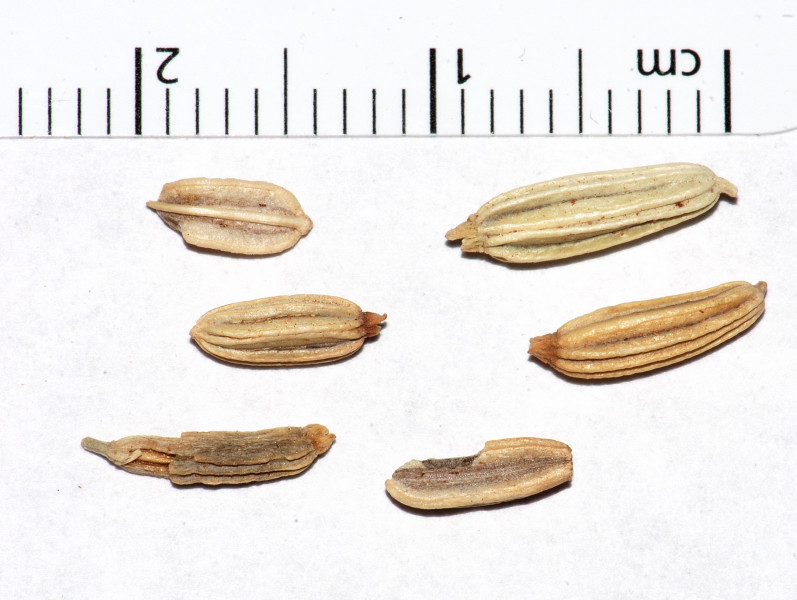
Green anise
Rating : 7
| Evaluation | N. Experts | Evaluation | N. Experts |
|---|---|---|---|
| 1 | 6 | ||
| 2 | 7 | ||
| 3 | 8 | ||
| 4 | 9 | ||
| 5 | 10 |
0 pts from AColumn
| Sign up to vote this object, vote his reviews and to contribute to Tiiips.Evaluate | Where is this found? |
| "Descrizione" about Green anise by AColumn (9402 pt) | 2025-Nov-30 12:41 |
| Read the full Tiiip | (Send your comment) |
Green anise, anise (Pimpinella anisum) is an annual herbaceous plant belonging to the botanical family Apiaceae. It has slender, branched stems, small feathery leaves toward the top, and characteristic white flowers arranged in umbels. After flowering, it produces small, oval, ribbed fruits commonly called “anise seeds” (botanically schizocarps), which are grey–green to brownish and have a very distinctive aroma.
As a food ingredient, anise (green anise) is used mainly for its seeds, whole or ground, and for anise essential oil obtained by distillation. The flavor is sweet, warm and strongly reminiscent of licorice, making it popular in bakery products, biscuits, cakes, candies and herbal teas. It is also widely used to flavor liqueurs and spirits (such as anisette, ouzo, raki, pastis) and to aromatize some breads and traditional dishes. In small amounts, anise seeds can be added to fruit salads, compotes and savory recipes to provide a gentle, aromatic note.
![]() | ![]() |
Botanical classification
Common name: green anise
Botanical name: Pimpinella anisum
Family: Apiaceae
Origin: Eastern Mediterranean and Southwest Asia; now cultivated in many temperate regions for culinary, liqueur and herbal uses
General features: Annual herb, usually 40–60 cm tall, with erect, branched stem; basal leaves broader and lobed, upper leaves finely divided. It produces umbels of small white flowers and dry fruits (“seeds”) rich in essential oil with a liquorice-like aroma (anethole).
Cultivation and growing conditions
Climate
Typical warm-temperate annual crop.
Prefers warm, dry environments with long, sunny summers.
Sensitive to late frosts: cold can damage young plants and compromise seed production.
Best suited to lowland and low-hill areas with mild spring and warm but not excessively humid summer.
Exposure
Requires full sun throughout the day to develop good vegetative growth and to accumulate essential oil in the fruits.
Too much shade leads to weak, elongated plants, reduced flowering and low seed yield.
Prefers open sites that are not excessively windy, to reduce lodging of mature plants.
Soil
Grows best in medium-textured, fertile, well-drained soils.
Adapts well to slightly calcareous soils, provided there is no waterlogging.
Ideal pH between 6 and 7.5, i.e. from slightly acidic to neutral–slightly alkaline.
Heavy, poorly drained clays favour root rot and stunted development.
Irrigation
In the early stages (germination and initial growth) it needs regular soil moisture, without waterlogging.
Once well rooted, green anise is relatively drought-tolerant, but prolonged drought during flowering and seed set can sharply reduce yield.
Moderate, spaced irrigations are preferable; excessive watering decreases essential oil content and favours fungal diseases.
Temperature
Optimal germination around 15–20 °C.
Best growth between 18 and 25 °C.
Low temperatures slow development and increase the risk of cold damage; very high temperatures combined with severe drought can accelerate flowering, shorten the cycle and produce smaller seeds.
Fertilization
A moderately demanding crop:
benefits from a good base dressing of organic matter (well-matured manure or compost) to improve soil structure and fertility,
balanced mineral fertilization with nitrogen, phosphorus and potassium supports growth and seed production.
Nitrogen should be applied with moderation: excess promotes vegetative growth at the expense of essential oil content.
Phosphorus and potassium are important for root development, flowering, seed set and aromatic quality of the fruits.
Crop care
After emergence, light hoeing is useful to control weeds, which compete for water and nutrients.
Mulching (organic or biodegradable films) can help limit weeds and reduce soil evaporation.
Avoid soil compaction and waterlogging throughout the cycle.
In professional cultivation, monitoring for aphids and foliar diseases is recommended, with preference for integrated pest management strategies.
Harvest
Green anise is grown mainly for its seeds (dry fruits).
Harvest when umbels have turned yellowish and the fruits have reached their characteristic grey–green or brownish colour and full size.
Usually the whole plants or umbels are cut in dry weather and left to dry in a ventilated place before threshing.
If harvest is too late, seed loss by shattering increases; if too early, yield and essential oil content are reduced.
Propagation
Propagated exclusively by seed.
Sown directly in the field in spring, after the risk of frost has passed and the soil has warmed slightly.
Seeds are sown in rows and the seedlings are later thinned to provide adequate spacing (overcrowded plants produce fewer seeds per plant).
In small gardens or containers, deep pots should be used, as the crop develops a taproot and does not like transplanting.
Caloric value (dry seeds, 100 g)
Approximately 330–370 kcal per 100 g (typical ≈ 337–360 kcal/100 g; practical contribution is minimal at flavoring doses).
Average composition (indicative, dry seeds, per 100 g)
Water: ~8–10 g.
Total carbohydrate: ~45–55 g (including fiber ~14–16 g).
Protein: ~16–18 g.
Fat: ~15–18 g.
Ash: ~4–5 g.
Typical aw (dry ingredient): low.
Production process
Cultivation and harvest: Spring sowing with an annual cycle; umbels harvested at the wax–dry stage to minimize shattering.
Drying and cleaning: Gentle drying away from light/humidity; threshing, aspiration, and sieving to remove impurities.
Selection and packing: Grading by size/purity, optional steam sterilization, and barrier packaging.
Essential oil: Light cracking of seeds, steam distillation, phase separation and polishing; aromatic profile standardized and verified by GC–MS.
Sensory and technological properties
Aroma and taste: Sweet, fresh, spicy notes with a persistent anethole retronasal; occasional light balsamic nuance.
Functionality in foods: Highly effective flavor at low dose; the essential oil can mask mild oxidative notes and enhance perceived sweetness.
Stability: Volatile components are sensitive to light, heat, and oxidation; whole seed retains aroma better than ground.
Food applications
Bakery (cookies, taralli, aromatic breads), confectionery and candies, liqueurs and beverages (anise, sambuca; absinthe with other herbs), teas and infusions, savory regional dishes, and flavored salts/sugars. Essential oil is used in microdoses within compounded flavors.
It should be borne in mind that when buying anise in a grocery store, it can be mixed with plant seeds of the same species, with different colors, but with similar taste and aroma.
Cosmetics
Skin conditioning agent. It is the mainstay of topical skin treatment by restoring, increasing or improving skin tolerance to external factors, including melanocyte tolerance. The most important function of the conditioning agent is to prevent skin dehydration, but the subject is rather complex and involves emollients and humectants.
Fragrance. It plays a very important role in the formulation of cosmetic products as it allows perfume to be enhanced, masked or added to the final product, improving its commercial viability. The consumer always expects to find a pleasant scent in a cosmetic product.
Nutrition and health
Use levels are small, so energy impact is minimal; seeds nonetheless provide fiber and micronutrients. The essential oil contains anethole and estragole, and formulation should follow good-use practices with internal limits for potentially critical aroma compounds. Herbal infusions are traditionally used for a “digestive” sensation and do not replace medical advice.
Quality and specification themes
Botanical purity and freedom from foreign matter; uniformly low moisture; compliant microbiology.
Essential-oil content and anethole proportion within range; analytical profile consistent by GC–MS.
For the oil: clear color, negligible PV/AV, and absence of burnt or earthy notes.
Traceability and controls under GMP/HACCP with defined CCPs for cleaning, distillation, and packing.
Storage and shelf life
Store cool, dry, and dark in well-closed, low-permeability containers; control ambient RH.
Prefer whole seed for long storage and grind close to use.
Apply FIFO rotation; for essential oil, use dark bottles, minimal headspace, and cool conditions.
Allergens and safety
Cross-reactivity may occur in individuals sensitive to other Apiaceae (fennel, celery, coriander, cumin). Airborne dust can irritate airways during handling. Essential-oil dosing must follow industrial good practice and internal guidance on specific compounds (e.g., estragole/methyl eugenol).
Cosmetic (INCI) functions
Typical listings: Pimpinella Anisum (Anise) Fruit Oil, Anise Oil, Anise Alcohol. Roles include fragrance/flavor, masking agent, light antimicrobial adjunct, and possible skin conditioning in leave-on and rinse-off formats.
Troubleshooting
Aroma loss over time: Prolonged storage or over-drying → Use whole seed, lower temperature/light exposure, and mill on demand.
Green/earthy off-notes: Immature or poorly dried material → Improve harvest timing and drying parameters.
Uneven flavor in dough: Poor dispersion → Premix with sugar/salt or dose essential oil in a suitable carrier.
Oil oxidation/yellowing: Light/air exposure → Use dark glass, minimize headspace, and consider suitable antioxidants.
Sustainability and supply chain
Low-input cultivation and traceable sourcing reduce impact. Recovery of cleaning residues as soil amendments and recyclable packaging improve the footprint. Managing wash/distillation effluents against BOD/COD targets is good practice.
Conclusion
Anise offers a distinctive and versatile aromatic profile with strong efficacy at low dose. Application quality depends on ripeness and postharvest care, disciplined control of light/oxygen, and a stable volatile profile; with these practices, products remain sensorially consistent and stable.
Mini-glossary
aw — Water activity; fraction of “free” water in a product. Low aw in dry seeds favors stability.
RH — Relative humidity; high RH drives caking and aroma loss.
GC–MS — Gas chromatography–mass spectrometry; analytical technique to fingerprint and control essential-oil quality.
PV — Peroxide value; index of primary oxidation in oils.
AV — Anisidine value; index of secondary oxidation (aldehydes).
GMP — Good Manufacturing Practice; hygiene and process controls ensuring consistency and traceability.
HACCP — Hazard Analysis and Critical Control Points; preventive food-safety system with defined CCPs.
CCP — Critical control point; a step where control prevents, eliminates, or reduces a hazard to acceptable levels.
FIFO — First in, first out; inventory rotation principle—use the oldest lots first.
MAP — Modified atmosphere packaging; occasionally used for finished foods, rarely for the dry spice itself.
INCI — International Nomenclature of Cosmetic Ingredients; standardized cosmetic ingredient naming and functions.
References______________________________________________________________________
(1) Abdel‐Reheem M. A. T., & Oraby M. M. (2015).Anti-microbial, cytotoxicity, and necrotic ripostes of Pimpinella anisum essential oil https://doi.org/10.1016/j.aoas.2015.10.001
Rossi M, Caruso F, Thieke N, Belli S, Kim A, Damiani E, Morresi C, Bacchetti T. Examining the Antioxidant and Superoxide Radical Scavenging Activity of Anise, (Pimpinella anisum L. Seeds), Esculetin, and 4-Methyl-Esculetin Using X-ray Diffraction, Hydrodynamic Voltammetry and DFT Methods. Pharmaceuticals (Basel). 2023 Dec 31;17(1):67. doi: 10.3390/ph17010067.
Abstract. Pimpinella anisum L., or anise, is a plant that, besides its nutritional value, has been used in traditional medical practices and described in many cultures in the Mediterranean region. A possible reason for anise's therapeutic value is that it contains coumarins, which are known to have many biomedical and antioxidant properties. HPLC analysis in our laboratory of the anise extract shows the presence of the coumarin esculetin. We used a hydrodynamic voltammetry rotating ring-disk electrode (RRDE) method to measure the superoxide scavenging abilities of anise seeds and esculetin, which has marked scavenging activity. A related coumarin, 4-methyl-esculetin, also showed strong antioxidant activity as measured by RRDE. Moreover, this study includes the X-ray crystal structure of esculetin and 4-methyl-esculetin, which reveal the H-bond and the stacking intermolecular interactions of the two coumarins. Coordinates of esculetin crystal structure were used to perform a DFT study to arrive at the mechanism of superoxide scavenging. Besides performing a H(hydroxyl) abstraction in esculetin position 6 by superoxide, the scavenging also includes the presence of a second superoxide radical in a π-π approach. Both rings of esculetin were explored for this attack, but only the pyrone ring was effective. As a result, one product of esculetin scavenging is H2O2 formation, while the second superoxide remains π-π trapped within the pyrone ring to form an esculetin-η-O2 complex. Comparison with other coumarins shows that subtle structural differences in the coumarin framework can imply marked differences in scavenging. For instance, when the catechol moiety of esculetin (position 6,7) is shifted to position 7,8 in 4-methyl-7,8-dihydroxy coumarin, that coumarin shows a superoxide dismutase action, which, beside H2O2 formation, includes the formation and elimination of a molecule of O2. This is in contrast with the products formed through esculetin superoxide scavenging, where a second added superoxide remains trapped, and forms an esculetin-η-O2 complex.
Dumitrescu E, Muselin F, Tîrziu E, Folescu M, Dumitrescu CS, Orboi DM, Cristina RT. Pimpinella anisum L. Essential Oil a Valuable Antibacterial and Antifungal Alternative. Plants (Basel). 2023 Jun 23;12(13):2428. doi: 10.3390/plants12132428. PMID: 37446993;
Abstract. Anise (Pimpinella anisum L.) essential oils are intensely investigated worldwide for the beneficial properties, due to the specific bioactive compound's structure. (1) Background: This study characterized the structure of the Pimpinella anisum essential oil and evaluated its antimicrobial properties. (2) Methods: An evaluation of the antibacterial and antifungal activity targeted strains of Escherichia coli (ATCC 25922), Pseudomonas aeruginosa (ATCC 27853), Staphylococcus aureus (ATCC 25923), Streptococcus pyogenes (ATCC 19615), and levure Candida albicans (ATCC 10231). Gas chromatography coupled with mass spectrometry (GC/MS) was used for structure identification, and the optical density mass loss was applied for the analysis of different dilutions of aniseed essential oils antimicrobial activity. (3) Results: A total of 13 compounds were identified, of which trans-anethole was in the highest proportion (72.49%), followed by limonene (10.01%), anisole (5%), and α-pinene (3.26%). The results obtained and statistically analyzed, utilizing one-way ANOVA with Bonferroni's multiple comparison test, indicated the antimicrobial activity (p < 0.001) of anise essential oil. (4) Conclusion: Anise essential oil is a promising phyto-remedy with important antimicrobial activity against both Gram-positive and Gram-negative pathogens. Inhibition high percentages were found for the p. aeruginosa and S. aureus strains, but also excellent antifungal activity against C. albicans was ascertained.
EFSA Panel on Additives and Products or Substances used in Animal Feed (FEEDAP); Bampidis V, Azimonti G, Bastos ML, Christensen H, Durjava M, Kouba M, López-Alonso M, López Puente S, Marcon F, Mayo B, Pechová A, Petkova M, Ramos F, Sanz Y, Villa RE, Woutersen R, Brantom P, Chesson A, Westendorf J, Manini P, Pizzo F, Dusemund B. Safety and efficacy of a feed additive consisting of a tincture derived from the fruit of Pimpinella anisum L. (anise tincture) for use in all animal species (FEFANA asbl). EFSA J. 2023 Apr 17;21(4):e07962. doi: 10.2903/j.efsa.2023.7962.
Abstract. Following a request from the European Commission, EFSA was asked to deliver a scientific opinion on the safety and efficacy of a tincture from the fruit of Pimpinella anisum L. (anise tincture) when used as a sensory additive in feed and water for drinking for all animal species. The product is a solution, with a dry matter content of approximately 1.6%. The product contained on average 0.0414% polyphenols (of which 0.0144% were flavonoids), 0.0009% anisaldehyde, 0.0003% anethole. Estragole (≤ 1.2 mg/kg) was detected in the additive. The estimated maximum content of furocoumarins was 8.2 mg/kg. The use of the anise tincture in feed was not expected to increase the exposure to furocoumarins of those target species that are already fed citrus by-products to a relevant extent (< 10%). For dogs, cats and ornamental fish not normally exposed to citrus by-products, no conclusion could be drawn. The Panel on Additives and Products or Substances used in Animal Feed (FEEDAP) concluded that the anise tincture was safe at the maximum proposed use levels in complete feed of 200 mg/kg for horses and 50 mg/kg for poultry, pigs, ruminants, rabbits and salmonids and other fin fish. Anise tincture should be considered as irritant to skin and eyes, and as a dermal and respiratory sensitiser. Since anise tincture may contain furocoumarins, they may cause phototoxicity. When handling the additive, exposure of unprotected users to estragole may occur. Therefore, to reduce the risk, the exposure of the users should be minimised. The use of the anise tincture as a flavour in animal feed was not expected to pose a risk for the environment. Since the fruit of P. anisum and its preparations were recognised to flavour food and their function in feed would be the same, no demonstration of efficacy was necessary.
Wu J, Cao Z, Hassan SSU, Zhang H, Ishaq M, Yu X, Yan S, Xiao X, Jin HZ. Emerging Biopharmaceuticals from Pimpinella Genus. Molecules. 2023 Feb 6;28(4):1571. doi: 10.3390/molecules28041571.
Abstract. Evolved over eons to encode biological assays, plants-derived natural products are still the first dawn of drugs. Most researchers have focused on natural compounds derived from commonly used Pimpinella species, such as P. anisum, P. thellungiana, P. saxifrage, and P. brachycarpa, to investigate their antioxidant, antibacterial, and anti-inflammatory properties. Ethnopharmacological studies demonstrated that the genus Pimpinella has the homology characteristics of medicine and food and mainly in the therapy of gastrointestinal dysfunction, respiratory diseases, deworming, and diuresis. The natural product investigation of Pimpinella spp. revealed numerous natural products containing phenylpropanoids, terpenoids, flavonoids, coumarins, sterols, and organic acids. These natural products have the potential to provide future drugs against crucial diseases, such as cancer, hypertension, microbial and insectile infections, and severe inflammations. It is an upcoming field of research to probe a novel and pharmaceutically clinical value on compounds from the genus Pimpinella. In this review, we attempt to summarize the present knowledge on the traditional applications, phytochemistry, and pharmacology of more than twenty-five species of the genus Pimpinella.
| Sign up to vote this object, vote his reviews and to contribute to Tiiips.EvaluateClose | (0 comments) |
Read other Tiiips about this object in __Italiano (1)
Content:   Last update:   2023-02-22 19:08:27 | Kcal/100g:   Family:   Threat factors:   |

